
In a small living room, I’m always looking for those little fixes that make the space work harder without adding more furniture. This simple remote caddy does exactly that: you turn a small leather eyeglass case into a slim storage pocket that sticks right onto the side of the couch, so remotes stay tidy, visible, and off the cushions.
What I like most about this project is that it feels polished without taking much time at all. If you can line something up and press adhesive strips in place, you can make this. It’s especially useful for apartments, condos, and any snug seating area where a side table just isn’t practical.
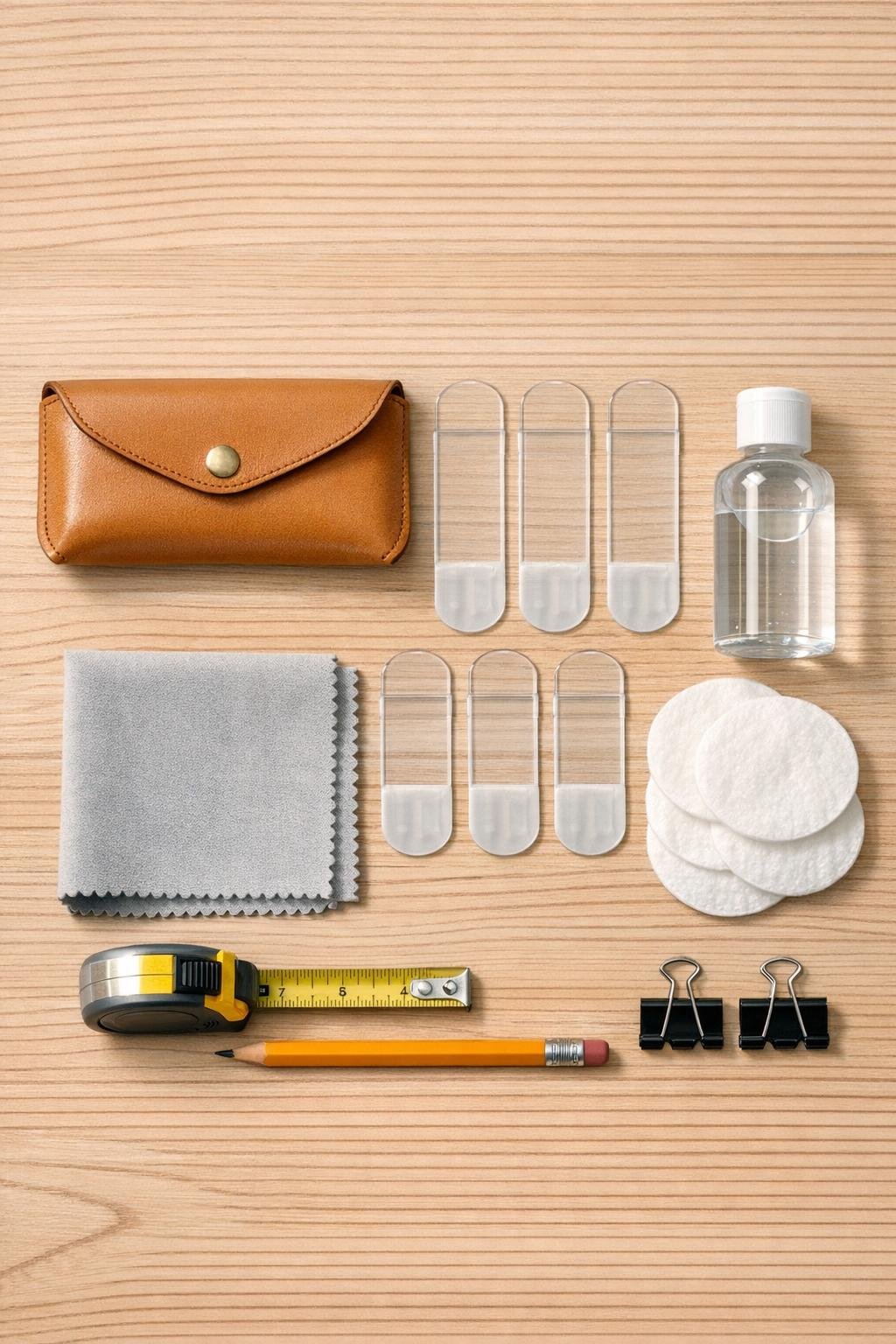
Materials
Instructions
1. Empty the eyeglass case completely and check that the back side is flat enough to sit flush against the couch arm. If the case has a flap, position it so it opens upward or toward the seat for easy access.
2. Choose the placement on the outer side of the couch armrest, about 2 to 4 inches below the top edge so the caddy is easy to reach but doesn’t interfere with sitting. Measure the spot and lightly mark the top corners with pencil or chalk.
3. Wipe the couch area where the caddy will attach with rubbing alcohol on a cotton pad, then wipe the back of the eyeglass case the same way. Let both surfaces dry fully, then buff lightly with a clean microfiber cloth.
4. Apply 2 adhesive strips vertically to the upper back of the eyeglass case and 2 more to the lower back, spacing them evenly near the corners for balanced support. Press each strip firmly for 30 seconds so it bonds well to the leather surface.
5. Remove the outer liners from the adhesive strips and line the case up with your placement marks on the couch arm. Press the case firmly onto the fabric or smooth upholstery for 30 to 60 seconds, using even pressure across the whole back.
6. If needed, clip the top edge gently with binder clips to help hold the case steady while the adhesive grabs; remove them after a few minutes. Let the caddy set undisturbed for at least 1 hour, or follow the adhesive package timing if it recommends longer.
7. Test the pocket with one remote first, then add a second slim remote if the case holds its shape comfortably. Keep the weight modest so the caddy stays secure and the leather keeps a clean, tailored look.
8. Add a simple finishing touch by conditioning the leather lightly if it looks dry, and wipe the couch fabric around the caddy so the whole setup looks intentional. Once loaded, angle the remotes neatly with the buttons facing outward for the easiest grab-and-go use.
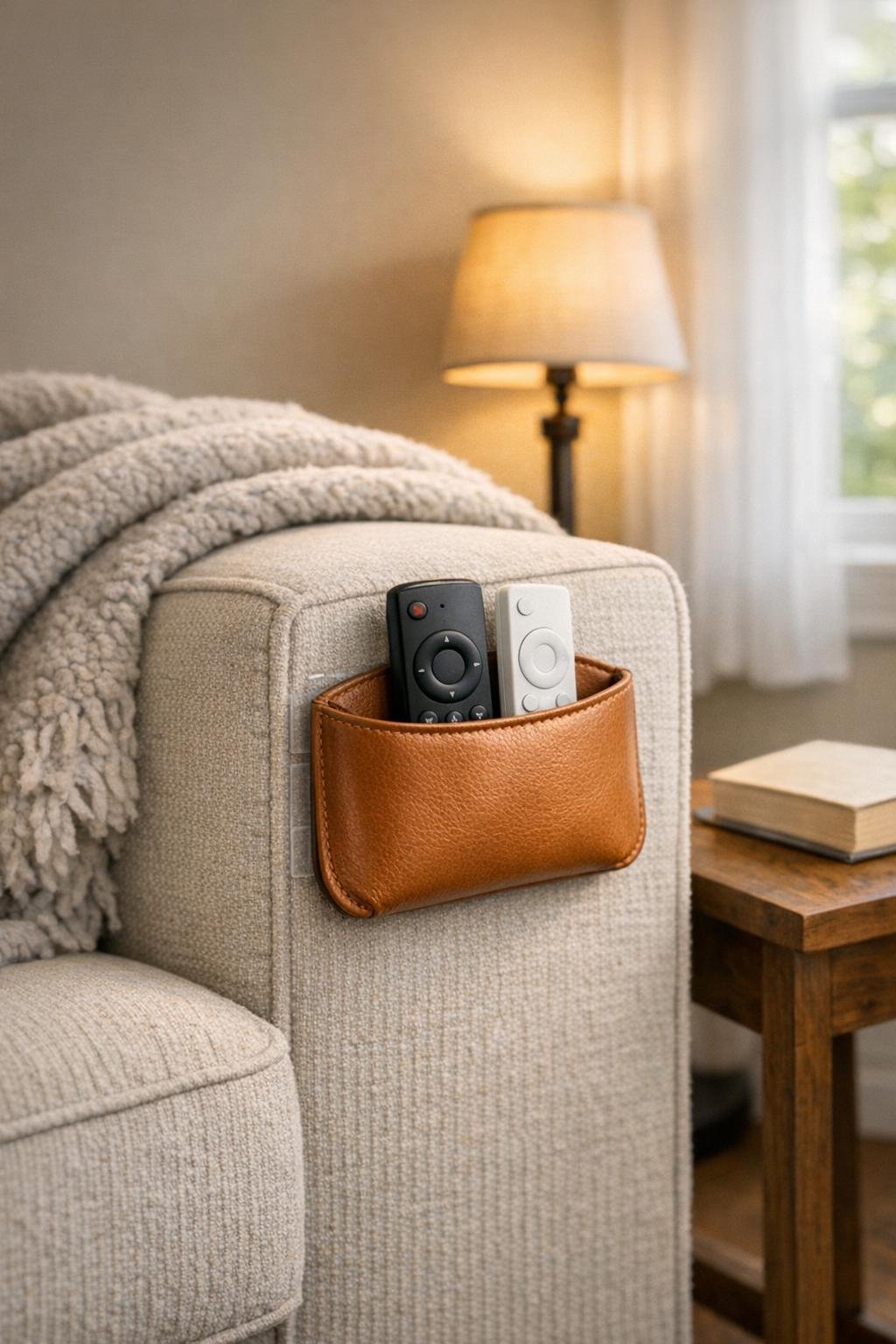
Variations & Tips
For wider armrests: Center the case on the upper half of the arm so it doesn’t look lost on a broad surface. A slightly larger eyeglass case, around 7 inches long, can also look more proportional.
For delicate upholstery: Test one adhesive strip in an inconspicuous spot first. I’m always cautious with textured fabrics, because some weaves release cleanly and others can fuzz if the adhesive is too aggressive.
For extra holding power: Use adhesive strips rated above the expected weight of your remotes, and press longer than you think you need to. In my kitchen and living room alike, good prep is half the success, and clean surfaces make a dramatic difference.
Better pocket shape: Choose a structured eyeglass case rather than a floppy pouch so the opening stays usable. A semi-rigid leather case gives you that nice balance of polish and practicality.
Color coordination: Tan leather warms up gray, cream, or beige upholstery beautifully, but black, cognac, or deep brown work just as well. Match the case to nearby accents like pillows, lamp bases, or wood tones for a more finished look.
Easy removal: When you’re ready to take it off, stretch-release the adhesive strips slowly instead of pulling the case straight away from the couch. That one patient step usually gives the cleanest result.