
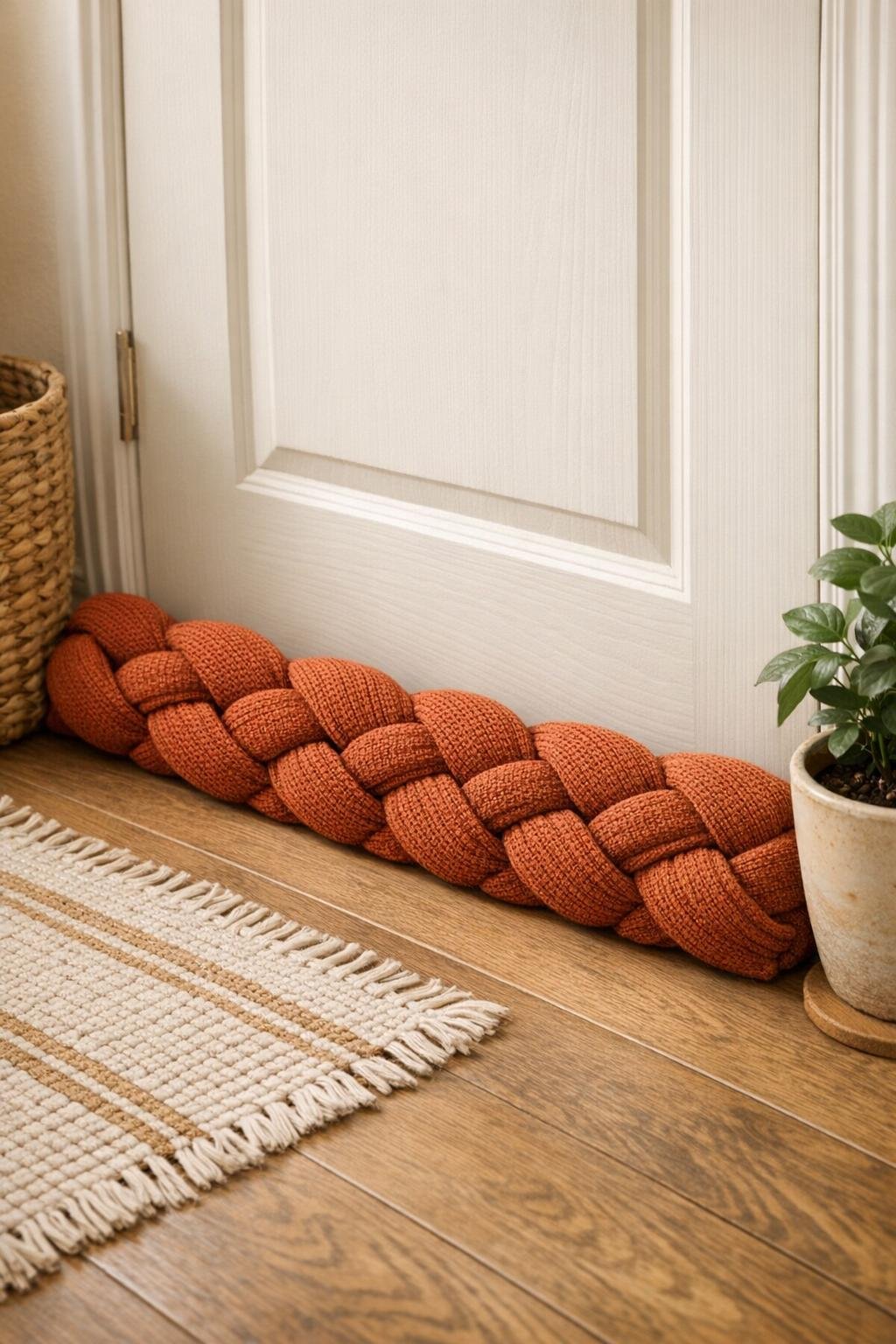
This braided towel door draft stopper is one of those wonderfully practical projects that feels almost too simple when you start, then surprisingly polished once it’s finished. You’re taking three rolled dish towels, binding them with a pantry staple, braiding them into a thick rope, and shaping that braid into a long, cushioned barrier that nestles right against the bottom of a door.
I love projects like this because they solve a real household annoyance without sending you to the store for specialty supplies. If you have a drafty back door, laundry room entry, mudroom, or even a chilly apartment hallway door, this is an easy afternoon fix that looks a lot tidier than stuffing an extra towel along the threshold.
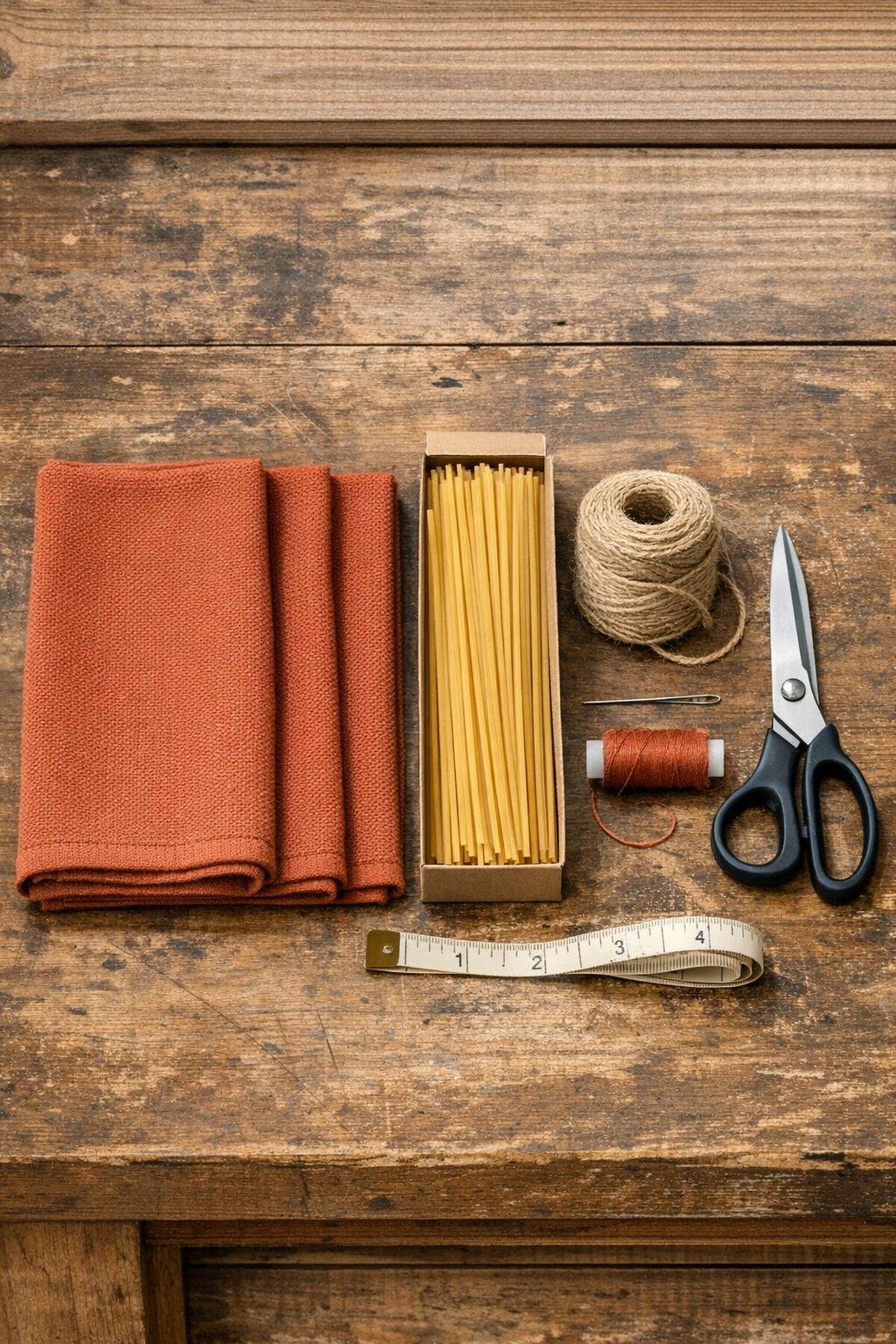
Materials
Instructions
1. Lay the three dish towels flat and stack them so the long edges run in the same direction; fold in any bulky hems at the ends if needed so each towel will roll as evenly as possible.
2. Starting at a short end, roll each towel tightly into a long cylinder, keeping the roll firm from end to end so the finished braid has even thickness.
3. Secure each rolled towel in three places with small bundles of uncooked spaghetti pushed gently through the layers like temporary pins—one near each end and one in the center.
4. Align the three rolled towels side by side and tie them together tightly at one end with the 36-inch piece of jute twine, leaving a 6-inch tail for hanging onto while you braid.
5. Braid the rolls firmly but not so tight that they buckle, crossing the outside roll over the center and alternating sides until you have a thick, even braid the full length of the towels.
6. Remove the spaghetti pins as you reach them so they do not snap inside the braid, then continue braiding until you are about 2 inches from the ends.
7. Tie the loose end tightly with the remaining length of jute twine or a short extra piece, cinching the braid so it holds its shape without springing apart.
8. Thread the needle with matching thread and stitch across both tied ends several times, catching all three rolled towels together so the braid stays secure even after the twine is removed later if you prefer.
9. Measure the width of the door where you plan to use the stopper; if the braid is longer than needed, tuck excess towel ends inward before stitching them down so the draft stopper fits snugly without bunching.
10. Fold the tied end tails neatly under the braid and whipstitch them in place for a cleaner finish, shaping the whole piece into a straight, evenly rounded draft stopper.
11. Set the finished braid along the base of the door, pressing it lightly into place so the thick center fills gaps and the full length sits flush against the floor.
Variations & Tips
For longer doors: If your towels are on the short side, use oversized dish towels or thin hand towels of the same size so the finished braid reaches most standard doors more generously.
For a heavier stopper: Slide a strip of quilt batting or a narrow length of scrap fabric into each towel before the final turns of rolling to make the braid fuller and better at blocking colder drafts.
For easier braiding: Clamp the tied end under a heavy cutting board or tuck it into a drawer pull while you work; that little bit of tension makes the braid much neater.
For washable construction: Keep the twine on the outside and use just a few hand stitches at the ends, so you can snip the thread later, unbraid, and wash the towels thoroughly before remaking the stopper.
Color coordination: Matching towels make the braid look tailored, but I also like using three tones in the same family—terracotta, rust, and clay, for example—because the braid pattern stands out beautifully.
Pantry staple tip: Uncooked spaghetti works best here because it is slim, smooth, and easy to remove as you braid; just handle it gently and insert it straight through the towel layers rather than at an angle.