
There are some garden fixes that feel downright fancy, and then there are the old-country tricks that simply work year after year. This compost turning tool falls squarely in that second camp. If you’ve got a tired old tomato cage, a pair of long handles from the shed, and a little willingness to tinker, you can make a roomy, easy-grab compost lifter that helps pull and fluff the middle of the pile without buying a specialty tool.
I’m fond of projects like this because they save money and spare good materials from the scrap heap, which is how many of us learned to garden in the first place. This one is especially good for folks with a backyard compost pile who want something bigger and more effective than a hand fork, but easier on the arms than wrestling the whole pile with a shovel.
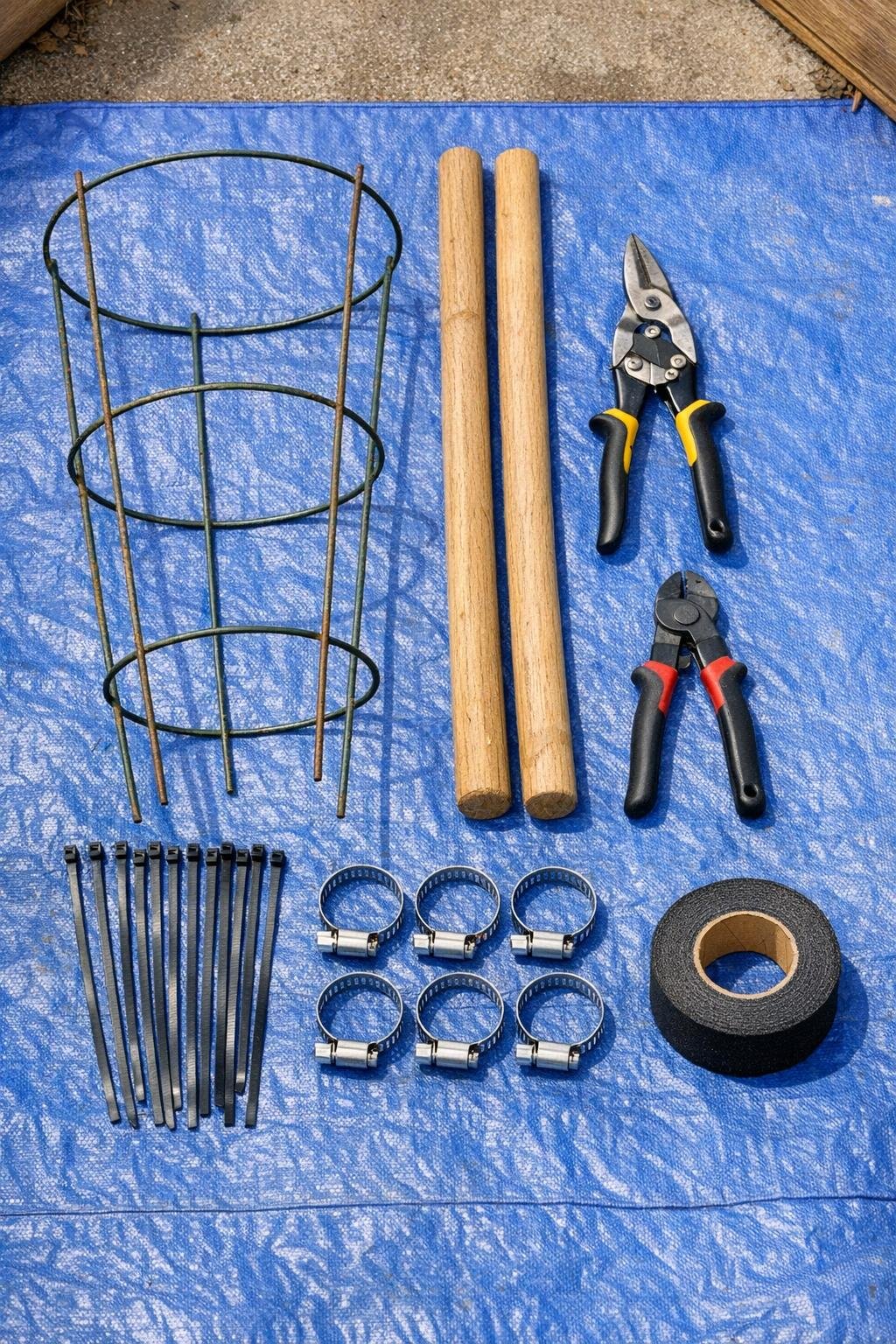
Materials
Instructions
1. Set the tomato cage upside down on a tarp and use wire cutters to remove the bottom prongs flush with the lowest ring so you’re left with a clean, open-ended wire basket.
2. Trim or bend any sharp wire ends inward with the snips, then smooth rough spots with sandpaper so the finished tool won’t snag gloves or sleeves.
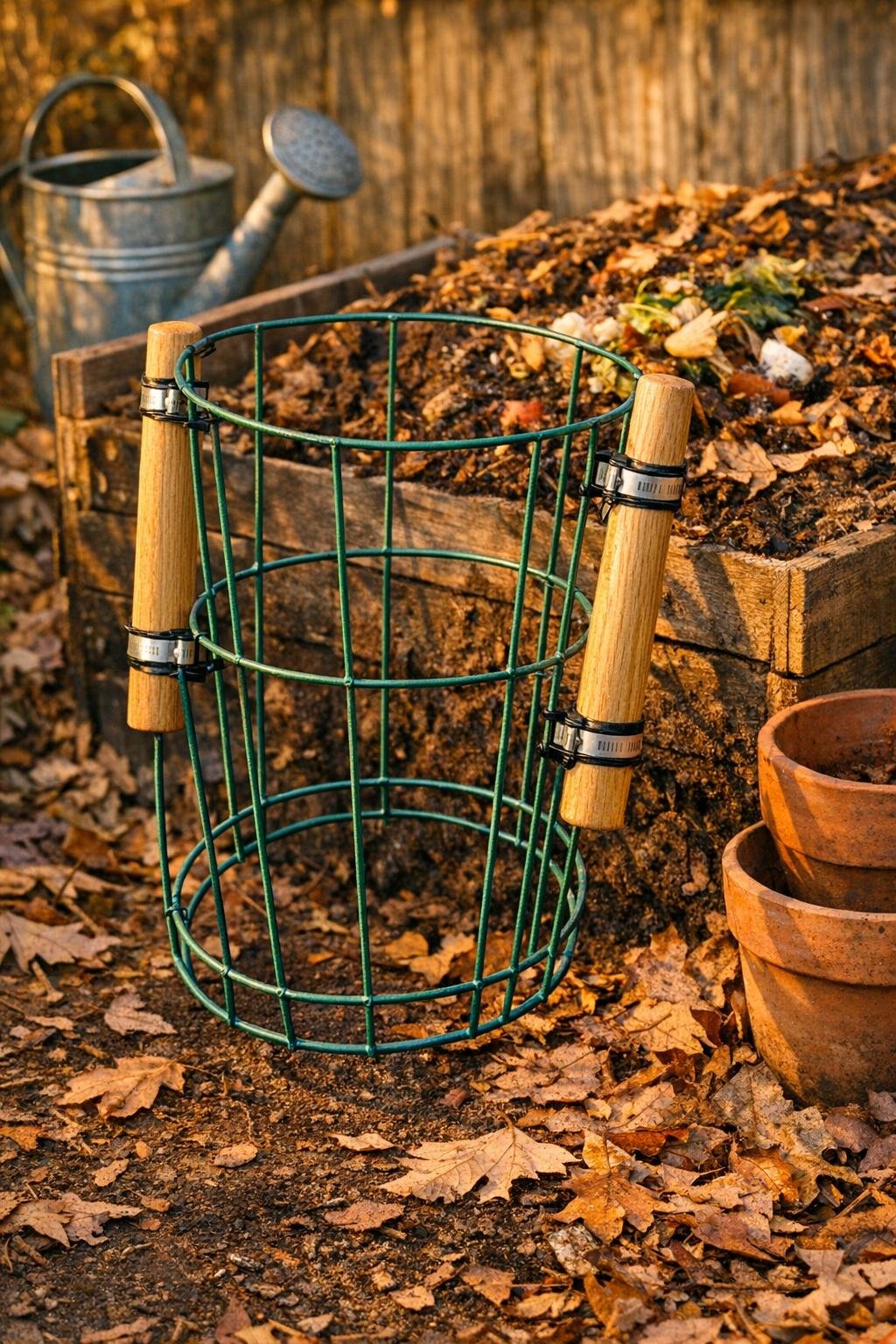
3. Place the two wooden handles on opposite sides of the cage, running from just below the top ring down to the bottom ring, so they act like long side grips for lifting and twisting.
4. Attach each handle to the cage with two hose clamps near the top ring and two near the bottom ring, tightening them firmly so the handles can’t slide or rock.
5. Add zip ties between the hose-clamp points, cinching the wire to the handles at the middle for extra stability and a snug, rattle-free fit.
6. Wrap the upper 10 to 12 inches of each handle with grip tape to make comfortable handholds, especially if you’ll be using the tool when the pile is damp and slick.
7. If you want the tool to last a few more seasons, mist the cut wire ends and rusty spots with a light coat of rust-inhibiting clear sealer and let it dry fully.
8. To use it, push the open cage end down into the compost pile, twist the handles inward slightly, and pull up to lift a generous core of material; then shake and turn that material back onto the pile to fluff and aerate it.
9. Work around the pile from several sides, repeating the lift-and-turn motion until the damp center and drier outside layers are better mixed.
Variations & Tips
If your cage is extra wide: Use thicker handles like shovel handles or old hoe handles so the tool feels balanced when it’s loaded with heavy compost.
For a smaller compost bin: Cut 4 to 6 inches off the height of the tomato cage before attaching the handles, which makes a shorter, lighter tool that’s easier to maneuver in tight spaces.
For better durability: Stainless steel hose clamps hold up especially well outdoors, and they’re worth using if your compost area stays wet most of the year.
To make it easier on the back: Keep the handles long enough that you can work standing upright; that extra reach is what makes this old trick feel so much better than digging with a short hand tool.
Best time to turn: I like to use a tool like this when the pile is moist but not soggy, because it lifts cleanly and breaks up clumps without making a heavy mess.
What it does best: This isn’t meant to replace a pitchfork for rebuilding a whole giant pile, but it does a beautiful job of pulling air into the middle, mixing kitchen scraps with dry browns, and waking up a sluggish compost heap.