
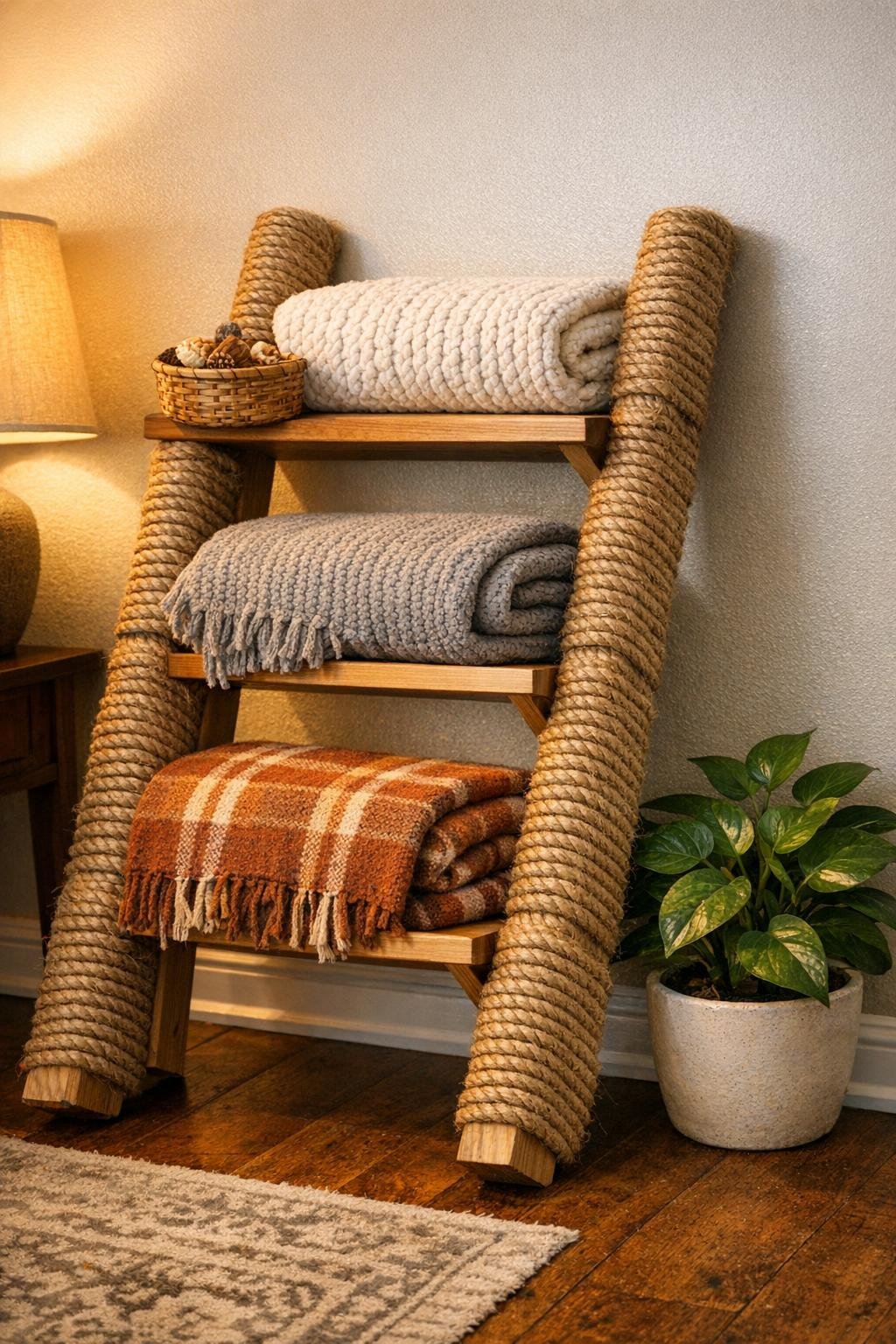
This project turns a small wooden step stool into a cozy-looking throw blanket ladder by simply laying it on its side and wrapping the frame with thick sisal rope. I love a project like this because it gives you that warm, textured living room look without needing fancy woodworking, and the finished piece is sturdy enough to hold several folded blankets while still feeling soft and natural.
If you like decorating your home in a way that feels welcoming and practical, this is a wonderful weekend project. It is especially nice for anyone who wants a rustic or coastal touch in the living room, and it is easy enough to make with basic tools and a little patience while wrapping.
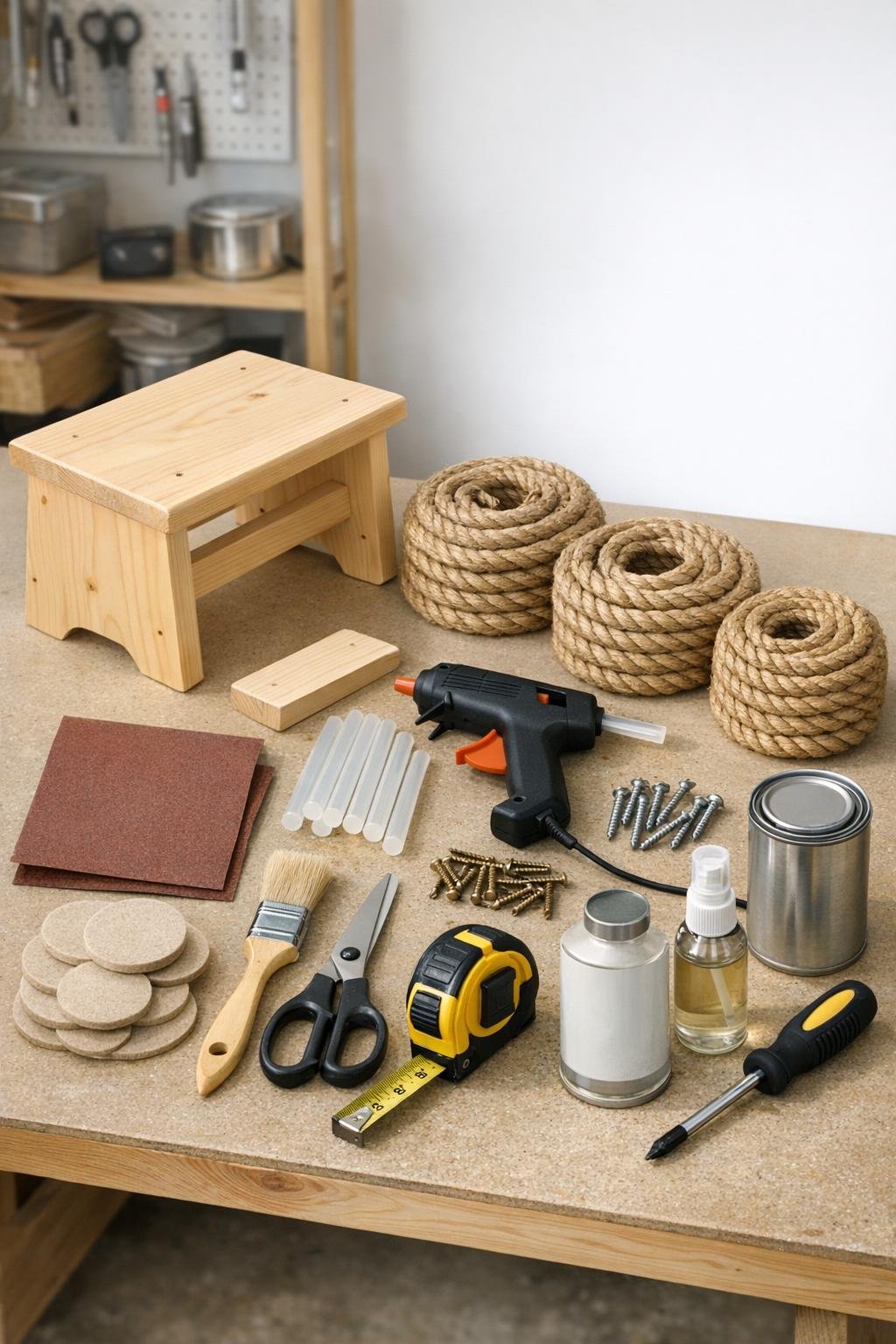
Materials
Instructions
1. Check that the step stool is solid, tighten any loose screws, and add the 1 1/4-inch wood screws anywhere the frame feels wobbly so the stool is sturdy before you begin wrapping.
2. Sand the whole stool with 120-grit sandpaper first and then 220-grit sandpaper, focusing on rough edges and corners so the rope will sit neatly and hands will not snag later.
3. Brush on a light coat of matte clear sealer over the wood and let it dry fully; this helps seal the pine and gives the finished ladder a more polished look even where wood still peeks through.
4. Lay the stool on its side so the legs become the blanket ladder sides and the steps run horizontally like rungs, then decide which face looks best for the front.
5. Start at the lower back leg and hot glue the rope end in place on an inside edge, then wrap tightly around the leg in close, even rows, adding a small bead of glue every 4 to 5 inches to prevent slipping.
6. Continue wrapping each vertical leg from end to end, pushing the rope coils snugly together as you go so the wood underneath is mostly covered and the ladder looks full and finished.
7. Wrap the front and back outer rails next, gluing at the beginning and end of each section and at the underside where the glue will be less visible, keeping the rope lines straight.
8. For the step edges that show most from the front, wrap the front-facing lip and side edges with rope but leave the top surfaces of the steps unwrapped so folded blankets can rest flat without wobbling.
9. If a section ends in an awkward spot, cut the rope cleanly, glue the end firmly on the underside or inside corner, and begin the next length in a hidden spot so the transitions disappear.
10. Cover any visible glue strings, press all wrapped sections tightly once more, and add tiny dots of glue anywhere the rope lifts so the coverage looks dense and secure.
11. Attach felt furniture pads to the two bottom points that will touch the floor and, if desired, to the upper back contact points too, so the ladder leans gently against the wall without scuffing paint.
12. Lean the finished ladder against the living room wall at a slight angle and test it with two to four folded throw blankets, arranging the thickest blanket on the bottom rung for the prettiest layered look.
Variations & Tips
Softer neutral look: If you want a lighter living room style, use bleached sisal or cotton rope instead of darker natural sisal. It gives the same texture but feels a little more airy.
Extra sturdy option: For a ladder that will hold heavier quilts, add two extra screws at each step connection before wrapping. I always say it is worth taking five more minutes on structure so the finished piece lasts.
For picky decorators: In my house, everybody has opinions, so I understand wanting options. You can keep the wood step tops natural, stain them a medium walnut, or paint them matte black before sealing for a more modern contrast with the rope.
Cleaner rope ends: Wrap masking tape tightly around the rope before cutting, then cut through the middle of the tape. This keeps thick sisal from fraying and makes the ends much easier to glue down neatly.
Best blanket styling: Use one chunky knit throw, one fleece throw, and one patterned blanket for that full layered look. Mixing textures makes the ladder feel more intentional and cozy instead of flat.
Where to use it: This also works beautifully in a guest room, nursery, or reading corner. Just keep it decorative and light-duty, since it is meant to hold blankets rather than be climbed like a real ladder.