
When I need to cover strawberries fast before a surprise cold snap, I love a project that uses what I already have on hand and still ends up looking neat enough that people think I bought it. This little strawberry crown protector is exactly that kind of fix: simple aluminum loaf pans turned into sturdy mini cloches, anchored with one common yard item so they stay put over each plant crown.
If you grow strawberries in rows, raised beds, or tucked along a sunny border, these are especially handy for early spring and late fall nights when the temperature dips and you want quick protection without dragging out row cover hoops. I like that they are lightweight, easy to stack, and reflective enough to look polished in the garden instead of makeshift.
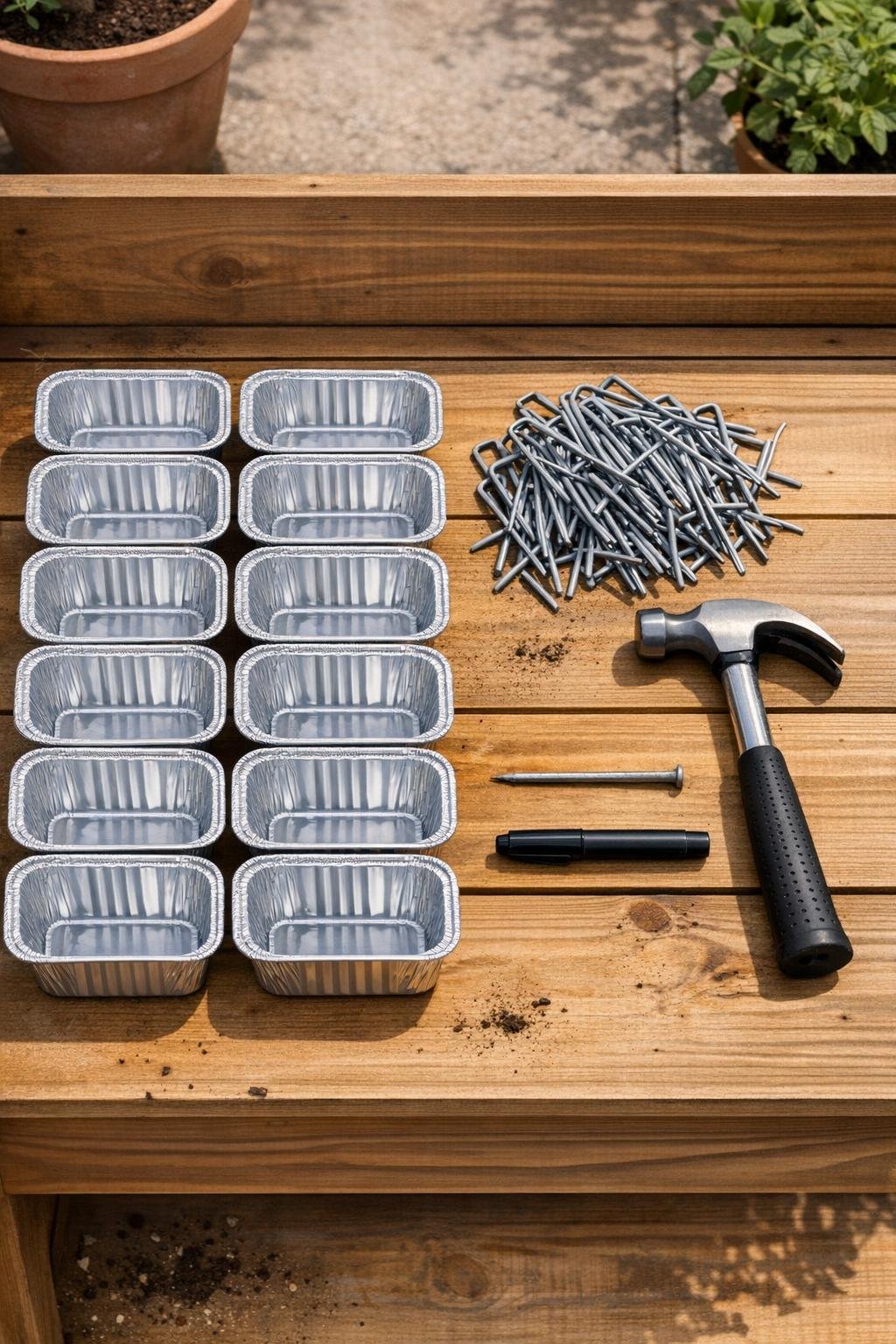
Materials
12 disposable aluminum loaf pans, standard 8 1/2 x 4 1/2 inch size
Instructions
1. Set a scrap board on your potting bench or work table, then place one aluminum loaf pan upside down so the flat bottom is facing up.
2. Use the marker to dot 8 to 10 drainage-style holes across the bottom panel, spacing them evenly so air can move through the cover without leaving one big open spot.
3. Punch through each marked spot with the nail and hammer, making small clean holes; keep the holes in the bottom only, not the side walls, so the pan still blocks wind around the crown.
4. Flip the pan right side up and press out any sharp metal points from the inside with the hammer handle or a gloved thumb so the interior stays smooth around the plant.
5. Repeat with the remaining loaf pans until you have enough protectors for the strawberry plants you want to cover; I usually make a full batch at once because cold nights never seem to arrive one plant at a time.
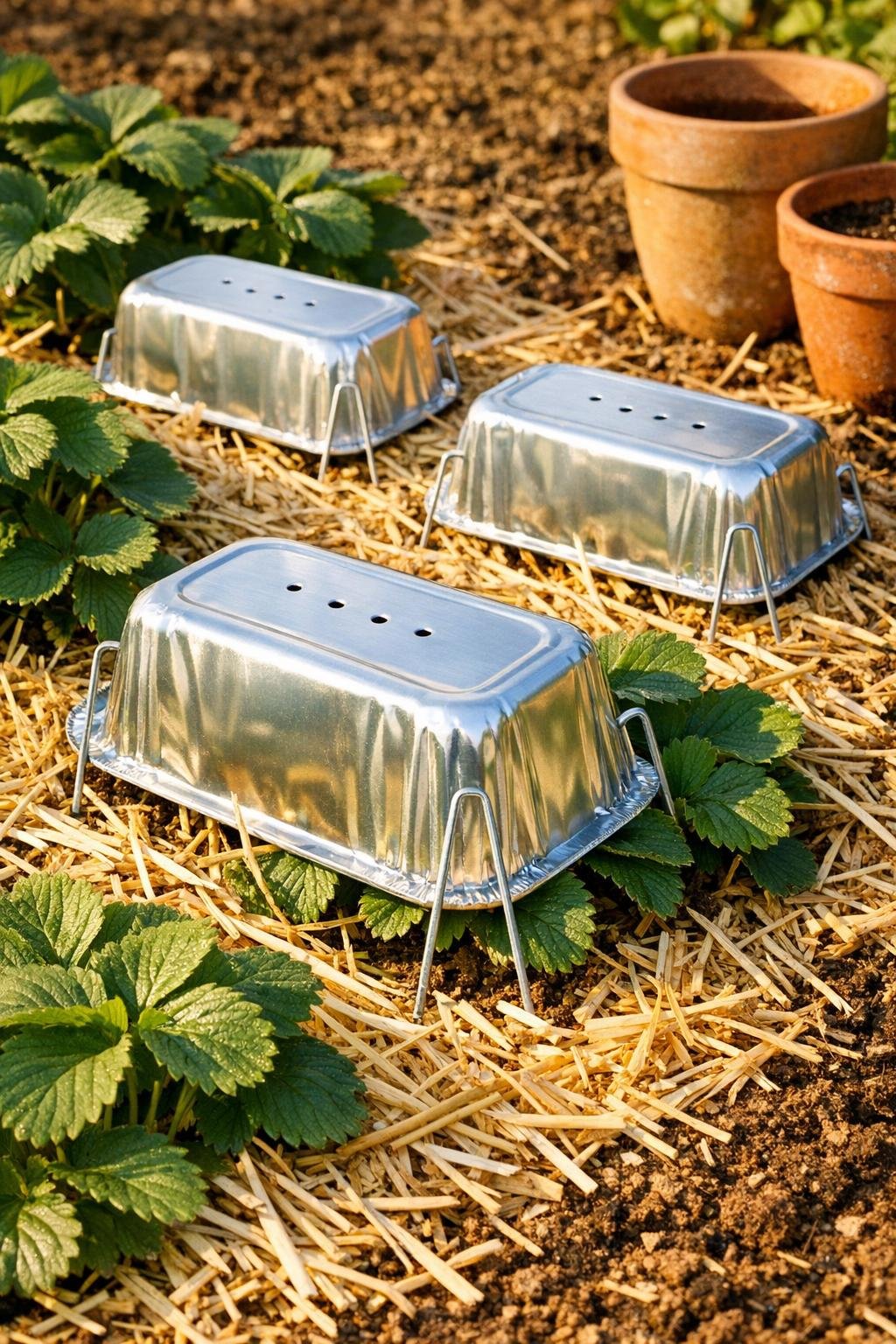
6. Before frost, gently tuck loose strawberry leaves inward with your hand and center one loaf pan over each plant crown with the open side down and the punched-hole top facing up.
7. Push one landscape staple over each long side edge of the pan, angling the legs into the soil so the staple grips the rim and keeps wind from lifting the cover.
8. Check that each pan sits low to the soil all the way around, then leave them in place overnight and remove them the next morning once temperatures rise above freezing.
9. Stack the pans inside one another when you are done, store the staples in a bucket or garden caddy, and reuse the whole set through the season whenever another chilly night pops up.
Variations & Tips
For extra-cold nights: Heap a light ring of clean straw or pine needles around the outside base of each pan after staking it down. I do this when temperatures are expected to fall well below freezing and I want a little extra insulation without smothering the crown.
For windy gardens: Use two more landscape staples, one near each short end, if your bed is exposed. It is still quick to place, but the pan will stay much steadier through gusts.
For larger strawberry plants: Choose the deepest standard loaf pans you can find so the leaves are less cramped. The shape still works beautifully, and that little bit of extra height helps when plants are full and leafy.
To avoid plant damage: Remove the covers in the morning after the frost has passed. Aluminum warms quickly in sun, so I never leave them on into a bright afternoon.
To make a bigger batch fast: Mark all the pans first, then punch all the holes assembly-line style. That is the same trick I use in my kitchen when I am prepping for a crowd, and it makes the whole job feel much lighter.
Picky-gardener version: If you like things looking especially uniform, keep all the holes in a simple grid and place every staple the same direction. It is a tiny touch, but it gives the bed that clean, intentional look that gets neighbors asking where you found them.