
This washcloth owl trio is one of those little projects that delivers a lot of charm with very little fuss. You’re essentially folding three rust-colored washcloths, stacking them into a layered owl shape, and securing the whole arrangement with a single rubber band before adding a few simple finishing details. I love projects like this because they feel a bit like good weeknight cooking: a short ingredient list, a smart technique, and a result that looks far more elaborate than the effort it takes.
If you enjoy easy giftable crafts, fall decor, or clever ways to make everyday household items look special, this is a lovely one to try. The finished trio has warm color, soft texture, and enough shape to read clearly as owls without needing advanced crafting skills, which makes it especially good for beginners or for an afternoon project at the kitchen table.
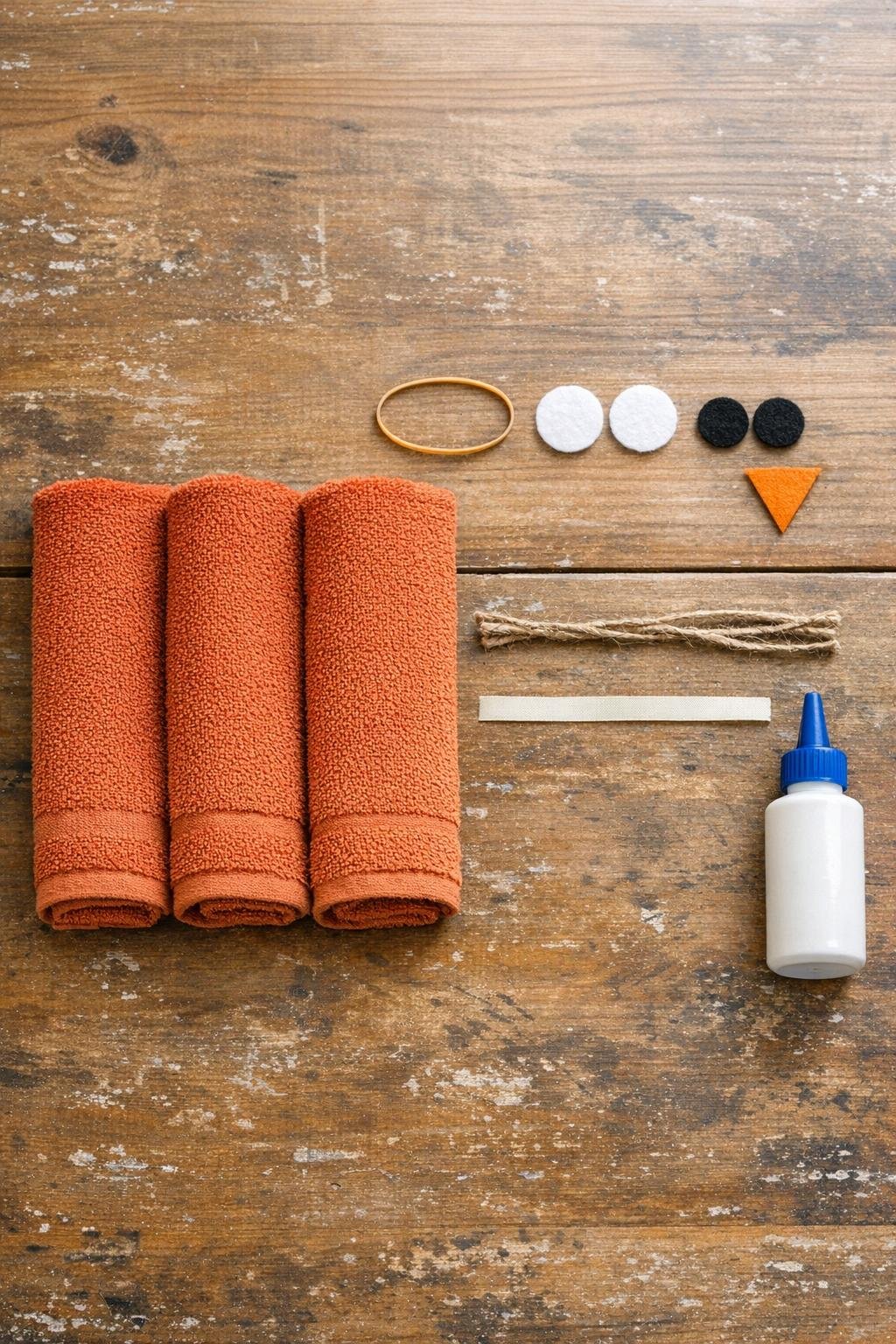
Materials
Instructions
1. Lay one washcloth flat and fold it into thirds lengthwise, just like the hands in the hero setup, then fold it once more into a compact rectangle. Repeat with the other two washcloths so all three folded pieces match in size.
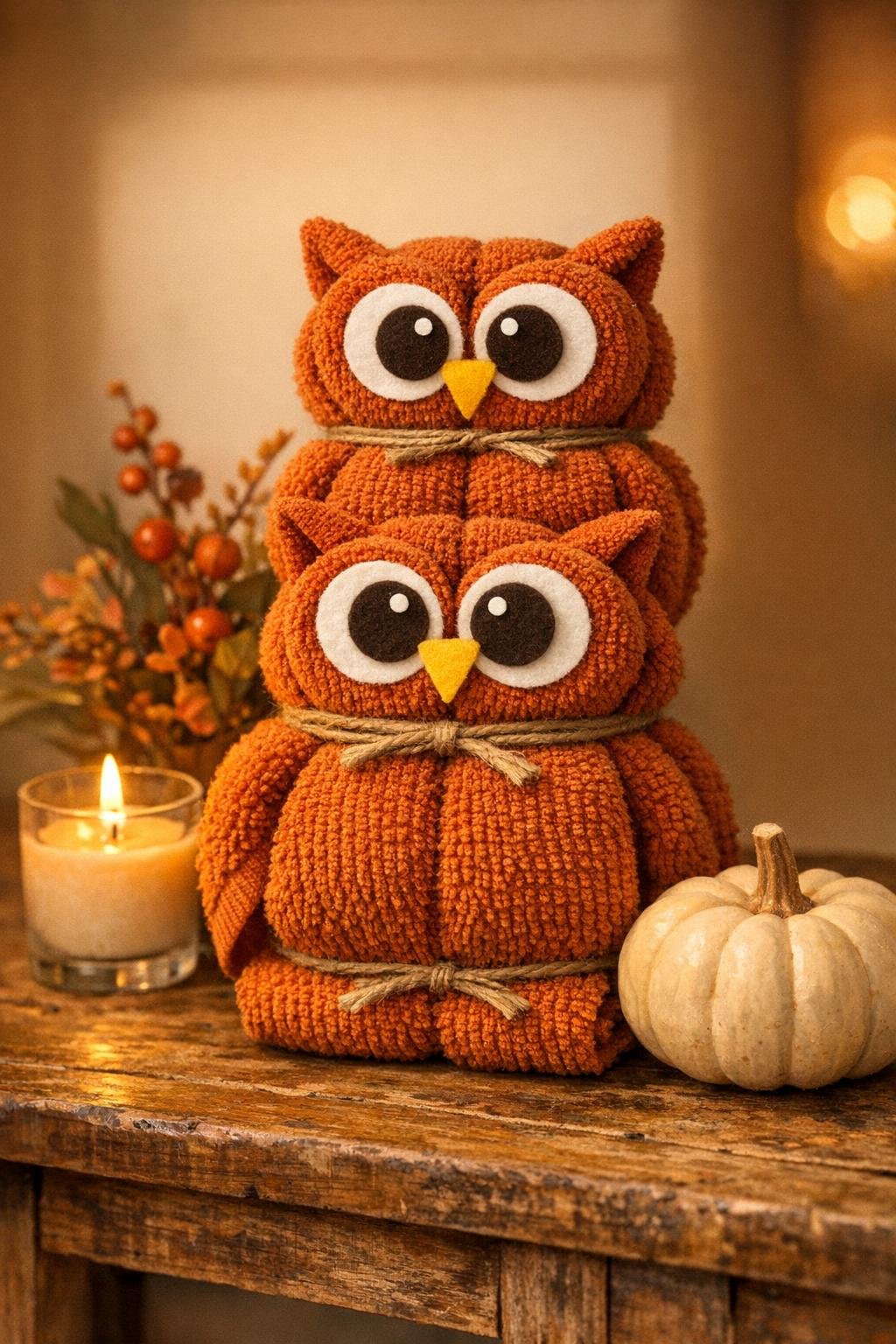
2. Stack the folded washcloths vertically from largest visual presence at the bottom to smallest at the top, offsetting them slightly so you can see three distinct layers and the shape starts to suggest an owl trio perched together.
3. Wrap the rubber band around the center of the stacked washcloths, pulling it snug enough to hold the layers firmly while gently puffing the upper corners outward to form ear tufts. Adjust the folds with your fingers until the trio looks balanced and rounded.
4. Glue the white felt circles near the upper front of the top layer, add the black circles centered on them, and place the orange felt triangle just below for the beak. Keep the features close together so the face reads clearly and stays sweet rather than scattered.
5. Tie the jute twine into a small bow or simple wrap just below the face to define the front and add a finished handmade touch. If you like a softer look, tie the cream ribbon over the twine in a small neat bow.
6. Let the glue set completely, then fluff each layer with your fingertips so the three stacked washcloth sections look full, even, and plush. Stand the finished owl trio on a shelf, guest bathroom counter, or autumn table vignette where the rust color can really show off.
Variations & Tips
Color swap: Rust is especially pretty for autumn, but mustard, cream, brown, or forest green washcloths also make a handsome owl trio while keeping that soft woodland look.
Gift idea: This makes a smart little hostess or housewarming gift because the recipient can display it first and then unfold it into usable washcloths later, which I always think is the mark of a satisfying practical craft.
Face options: If you don’t have felt, you can use self-adhesive craft foam or even glued-on buttons for the eyes, but keep them lightweight so they don’t pull at the folds.
Shaping tip: The key to making the owl look full is to fluff the corners and front surface after banding; a minute of adjusting gives you a much rounder, more polished result.
Display tip: Set the owl trio on a small plate, wooden riser, or folded napkin if you’re using it in a bathroom or on a table, since that helps it stand straighter and makes it look intentionally styled.
Make-ahead note: If you’re preparing several of these for favors or decor, fold all the washcloths first, then stack and band them assembly-line style; it goes much faster that way, rather like prepping ingredients before you start cooking.