
By late summer and into fall, I start getting mighty protective of my raised beds. That’s when the tender greens are coming on, the cool-weather seedlings are just getting settled, and every rabbit, squirrel, and scratching little visitor seems to think I planted a supper buffet just for them. This simple raised bed critter barrier uses aluminum pie tins, wooden stakes, and twine to make an easy rattling, flashing border that helps discourage pests without building a whole permanent fence.
I like this project because it’s inexpensive, fast, and especially handy for gardeners who want one more layer of protection at the end of the season without hauling out heavy materials. The pie tins catch the light, tap together in the breeze, and create movement right at bed level where curious critters tend to nose around. It reminds me of the practical little fixes folks around here have always made from whatever was close at hand, and truth be told, those are often the cleverest ones.
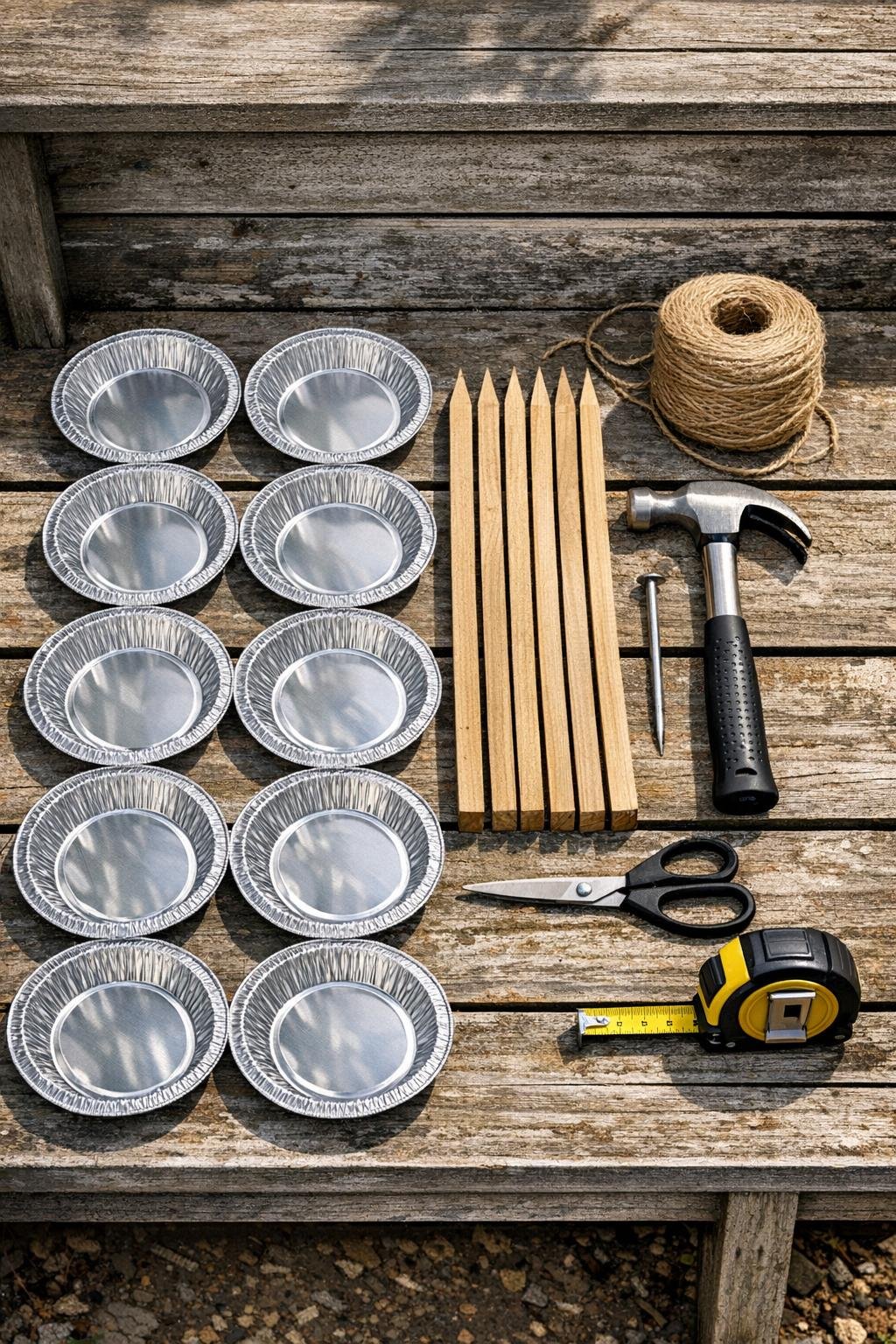
Materials
Instructions
1. Measure the outer perimeter of your raised bed so you know how many stakes and pie tin strands you need. This tutorial makes a generous barrier for one standard 4-by-8-foot raised bed, with two twine rows running around all four sides.
2. Mark each stake so you’ll place one about every 2 feet around the bed, keeping them just outside the frame. Push or tap the 8 stakes 6 inches into the soil, leaving about 18 inches above ground.
3. Punch 4 holes in each pie tin with the nail and hammer, spacing them evenly around the rim at the top, bottom, left, and right. Keep the holes about 1/2 inch in from the edge so the tins stay sturdy when they move in the wind.
4. Cut 2 long lengths of twine for each long side of the bed and 2 long lengths for each short side, adding 12 inches extra to every piece for tying. For a 4-by-8-foot bed, cut four 9-foot lengths and four 5-foot lengths.
5. Thread the first long piece of twine through the side holes of 3 pie tins, spacing the tins about 8 to 10 inches apart. Tie the twine to the stakes on one long side so the tins hang at about 6 inches above the ground.
6. Thread a second twine line with 3 more pie tins for that same long side and tie it 6 inches above the first row, placing it at about 12 inches high. Stagger the tins a little so there’s more flash and movement instead of perfect straight alignment.
7. Repeat the same setup on the second long side, using 3 pie tins on the lower row and 3 on the upper row. Pull the twine snug enough to keep the line tidy, but loose enough that the tins can wobble and tap lightly.
8. For each short side, string 2 pie tins on the lower twine row and 2 on the upper twine row, then tie them between the corner stakes. If you have extra tins, overlap one near each corner for even fuller coverage where critters often squeeze in.
9. Turn each pie tin slightly so it doesn’t sit perfectly flat against the line; a little angle helps it flash and rattle better. If your garden is windy, tie a small stopper knot on each side of every tin to keep spacing from shifting.
10. Walk around the bed and check for gaps larger than about 10 inches near the ground, then slide tins or retie twine as needed. The finished barrier should make a bright, fluttery border all the way around the raised bed without blocking sunlight from the plants.
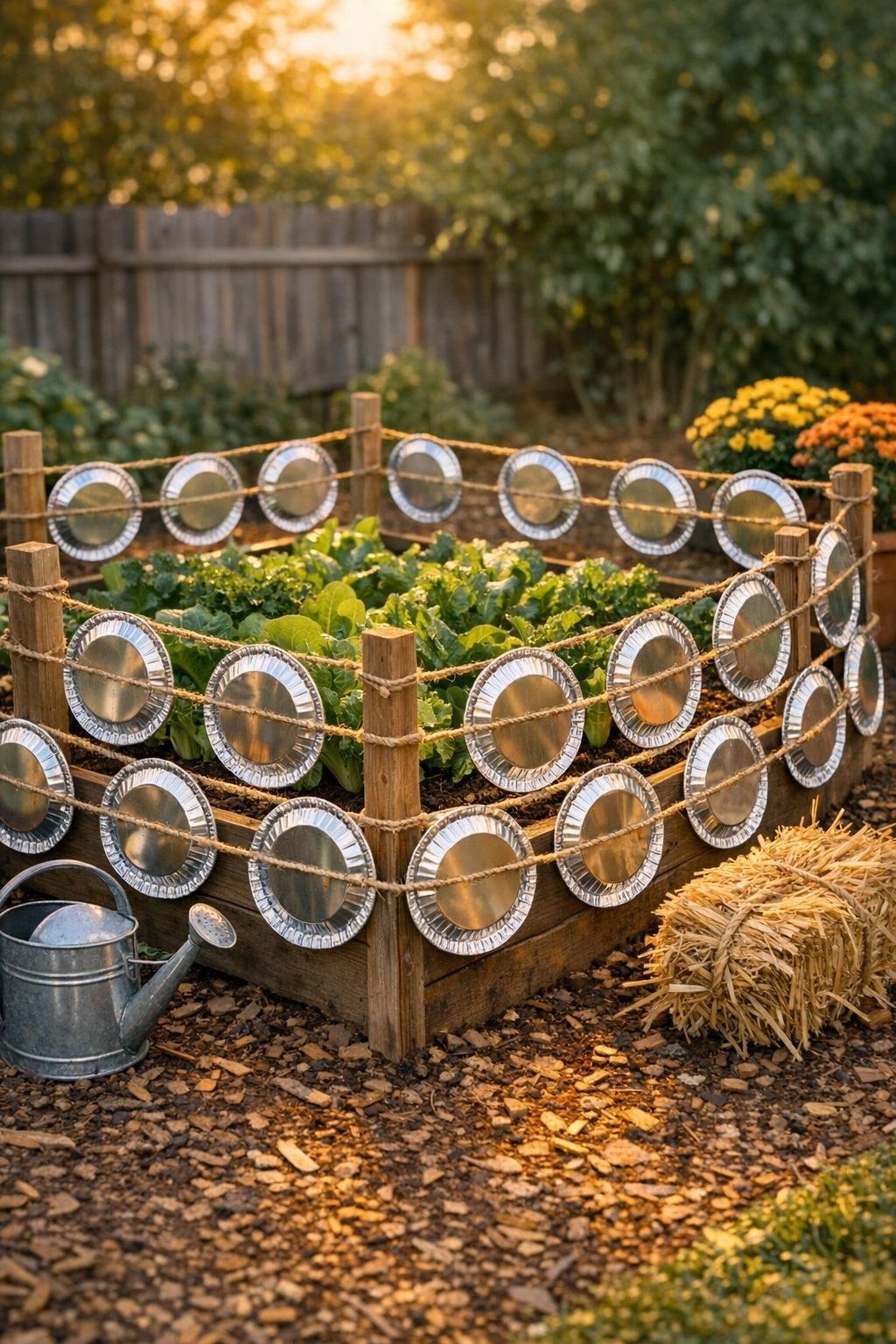
Variations & Tips
For taller pressure: If deer or larger pets are part of the problem, use 36-inch stakes and add a third row of tins at 18 inches high. It still won’t be a true fence, but the extra height and motion can make the bed much less inviting.
For small beds: On a 4-by-4-foot bed, 8 pie tins usually does the job nicely. Keep the same two-row layout so the barrier still looks full and works from top to bottom.
Twine substitute: If you garden in a very wet spot, outdoor nylon string will last longer than jute. I still like jute for a softer, old-fashioned look, but either one works.
Make it noisier: Leave a little more slack between a few tins so they tap together in the breeze. That little clatter, along with the flashing metal, is often what makes animals pause and move on.
Keep it tidy: Trim the twine ends short after tying, and double-knot each stake connection so the lines don’t sag after rain. A neat run of tins looks better and performs better too.
What it’s best for: This is most useful against rabbits, squirrels, cats, and casual scratching visitors, especially around freshly planted beds. For determined diggers or heavy pest pressure, I’d use this as one layer together with netting or hardware cloth.
End-of-season storage: When the bed is done for the year, untie the lines, flatten any bent tins, and stack everything in a dry shed. That way you can put the whole setup back together in no time next season.