
When the wind starts skimming across an open garden bed in fall, tender greens can take a real beating. This little stake system is one of those plainspoken old garden fixes I love most: strips of wire hardware cloth woven together with two humble shed staples to make sturdy, breathable windbreak panels you can push right where the weather hits hardest. It is simple, thrifty, and useful in the best Midwestern way.
I like this project for anyone trying to stretch the season on lettuce, spinach, kale, beets, or young brassicas without building a whole cold frame. Years ago, folks around here made do with what they had leaning in the shed, and that is exactly the spirit of this build. We are using hardware cloth, bamboo stakes, and baling twine to make a generous row of upright wind screens that soften harsh gusts, catch less pressure than a solid barrier, and still let light and air move through the bed.
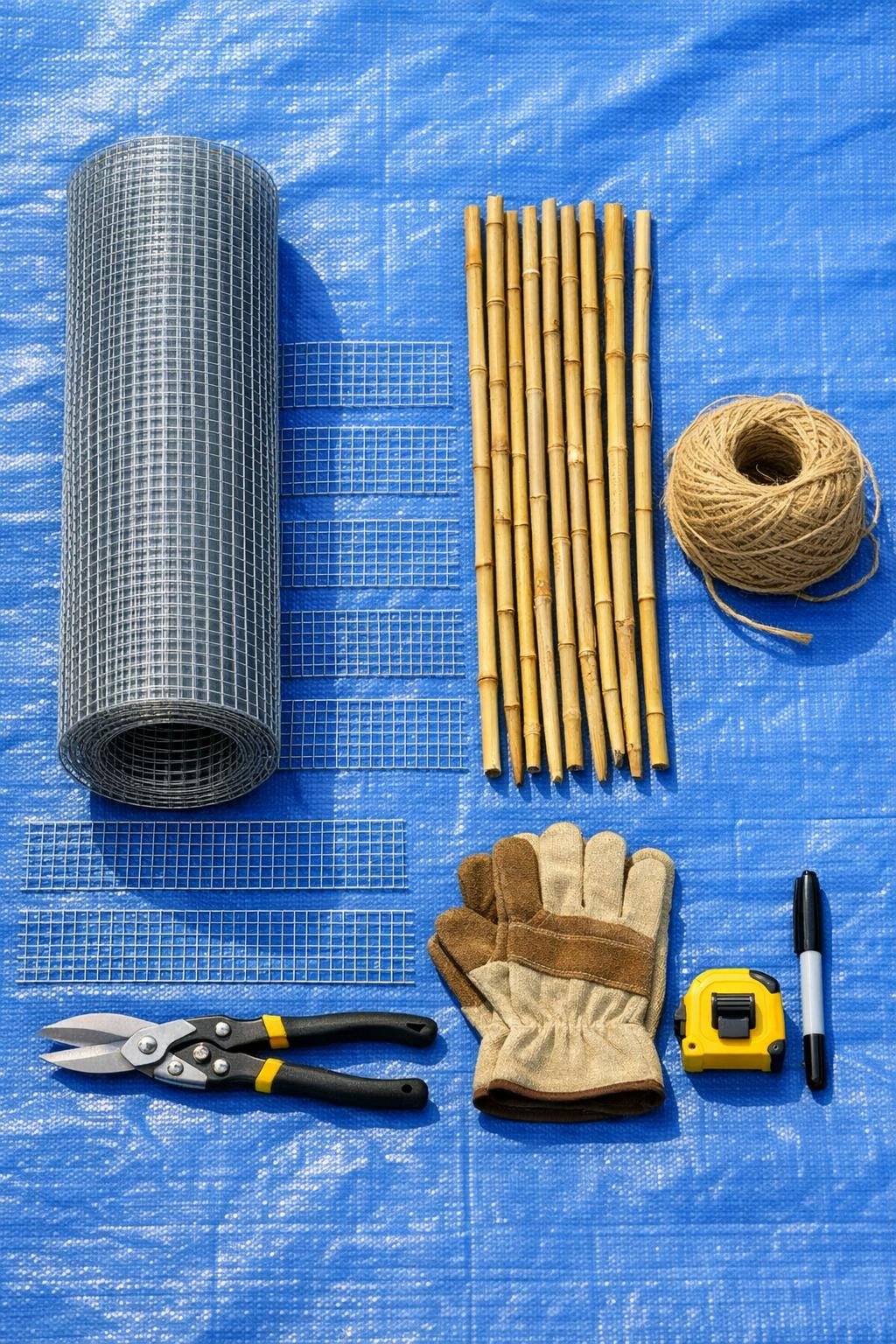
Materials
Instructions
1. Measure and mark the hardware cloth into six strips, each 16 inches wide and 24 inches tall, so you will have enough panels to protect roughly 8 feet of bed with slight overlap.
2. Put on gloves and cut along the marked lines with tin snips, leaving any trimmed wire ends as smooth as you can by clipping off sharp points that stick out.
3. Lay one strip flat and place two bamboo stakes along the short ends, then fold one grid square of wire around each stake so the panel has a firm post built right into both sides.
4. Cut four 18-inch lengths of baling twine for that panel and weave each piece in and out through the hardware cloth around the stake, tying tightly at the top and bottom on both sides to lock the wire to the bamboo.
5. Repeat with the remaining five strips until you have six matching panels, then trim the twine ends to about 1 inch so nothing tangles in the bed.
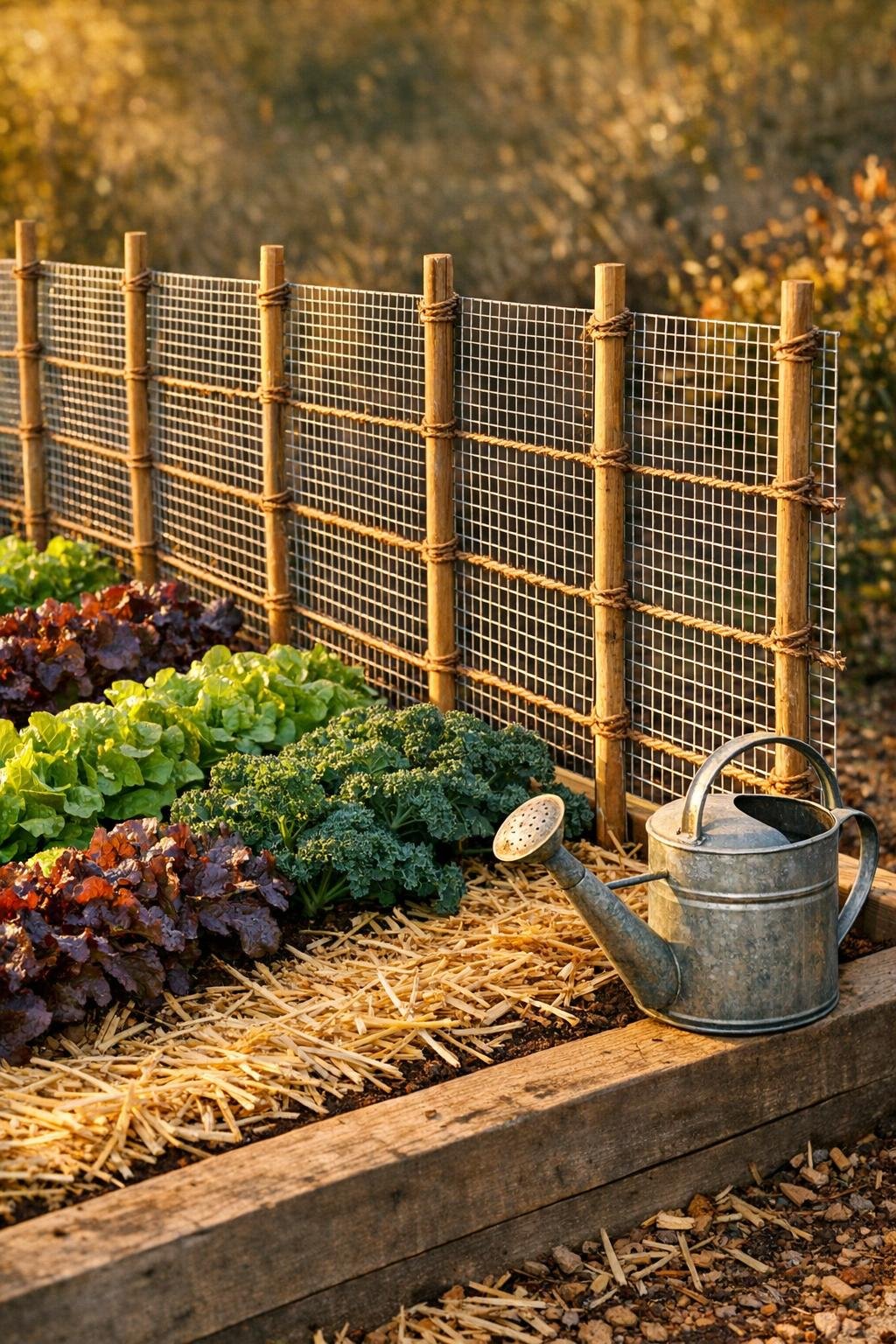
6. Carry the panels to the garden bed and set them on the windward side, overlapping each panel by 2 to 3 inches so the finished run blocks gusts without leaving big gaps.
7. Push or mallet the bamboo stakes 8 to 10 inches into the soil, keeping the hardware cloth about 14 to 16 inches above ground so it shelters young plants without shading them too much.
8. Weave one long piece of baling twine horizontally through the top row of mesh across adjoining panels, tying between stakes as you go, to make the whole run act like one continuous windbreak.
9. If your bed gets strong crosswinds, add a small zip tie at each overlap point and another around any panel that feels loose; this keeps the row neat through repeated fall gusts and watering.
10. Walk the line and straighten every panel so the top edge is even, then tuck mulch back around the stake bases and water the bed well to settle disturbed soil.
Variations & Tips
For taller crops: Use 36-inch-tall hardware cloth and 60-inch stakes if you need more protection for broccoli, cabbage, or late chrysanthemums; keep the same woven method, just drive the stakes deeper.
For extra-long beds: Make eight or ten panels instead of six and continue the top twine run across the whole stretch so the windbreak behaves like one flexible fence.
For rough weather: Angle the end panels slightly inward like bookends; that little trick helps keep the line from racking when the wind changes direction.
For easy storage: Pull the stakes after the season, stack the panels flat, and tie them in bundles of three; they slide neatly behind a potting bench or along a shed wall.
For cleaner edges: After cutting, bend any sharp wire nibs inward with pliers before you carry the panels into the garden; I have learned the hard way that this saves sleeves and knuckles.
Best placement: Put the barrier on the north or west side in most open Midwestern gardens, wherever the coldest fall wind usually comes charging across the yard.
Why this old trick works: A mesh windbreak slows and breaks up the force of the wind instead of catching it like a solid board, so plants lose less moisture, stems stay steadier, and the whole bed settles into a kinder little pocket of air.