
If your hallway closet turns into a jumble of damp mittens, gloves, and kids’ knit hats every winter, this is one of those tiny DIY fixes that makes the whole house feel more organized. I love projects like this because they take about fifteen minutes, cost very little, and solve an actual daily annoyance without eating up precious floor space in a small hallway.
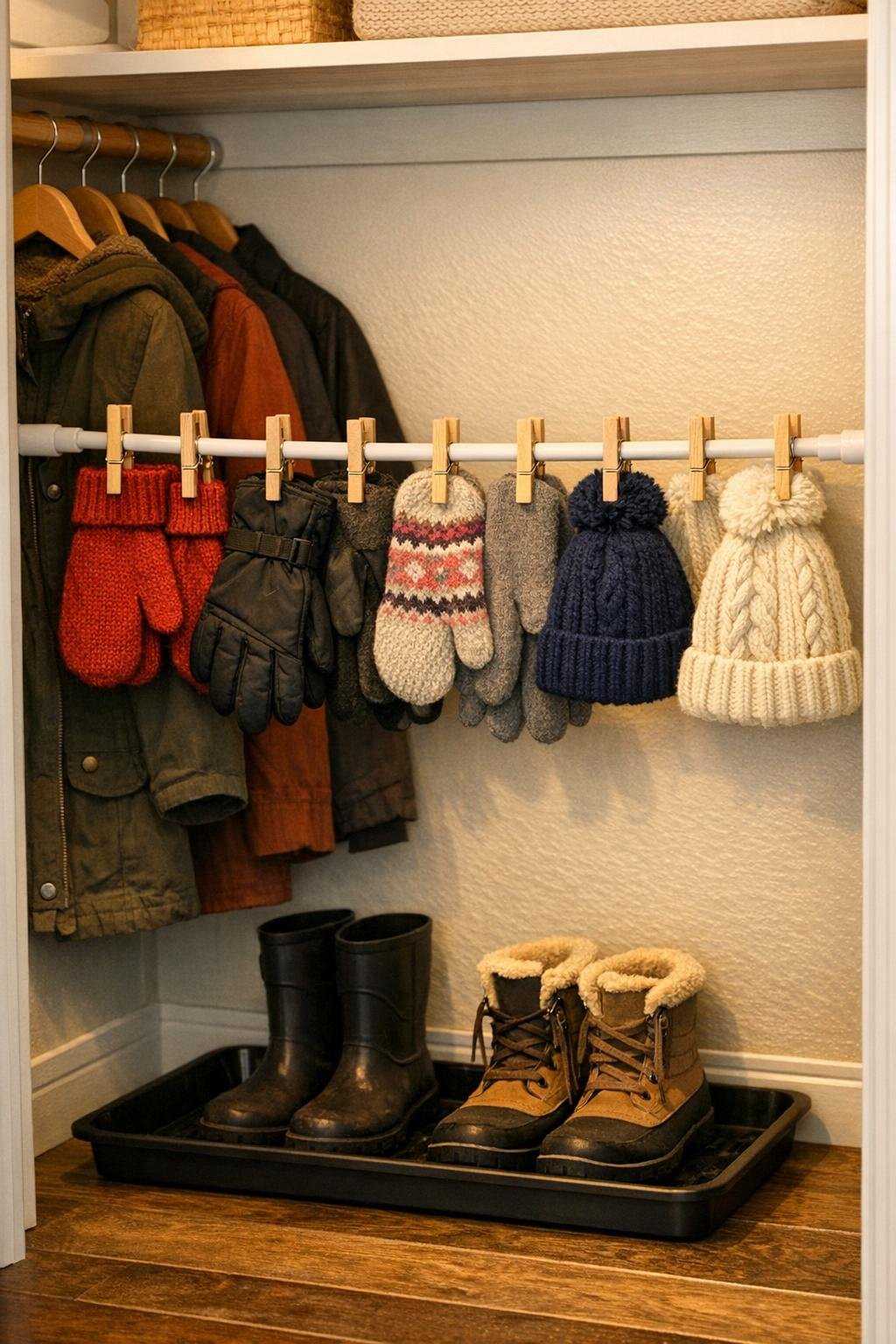
I started doing a version of this after one too many mornings of finding one dry mitten and one still-wet mitten stuffed in a coat sleeve. A simple tension rod with wooden clothespins gives you an easy place to hang wet accessories right inside the coat closet, where they can drip-dry neatly and stay out of sight. It’s especially perfect for busy families, apartment entryways, or any narrow hall where a bulky drying rack just isn’t realistic.
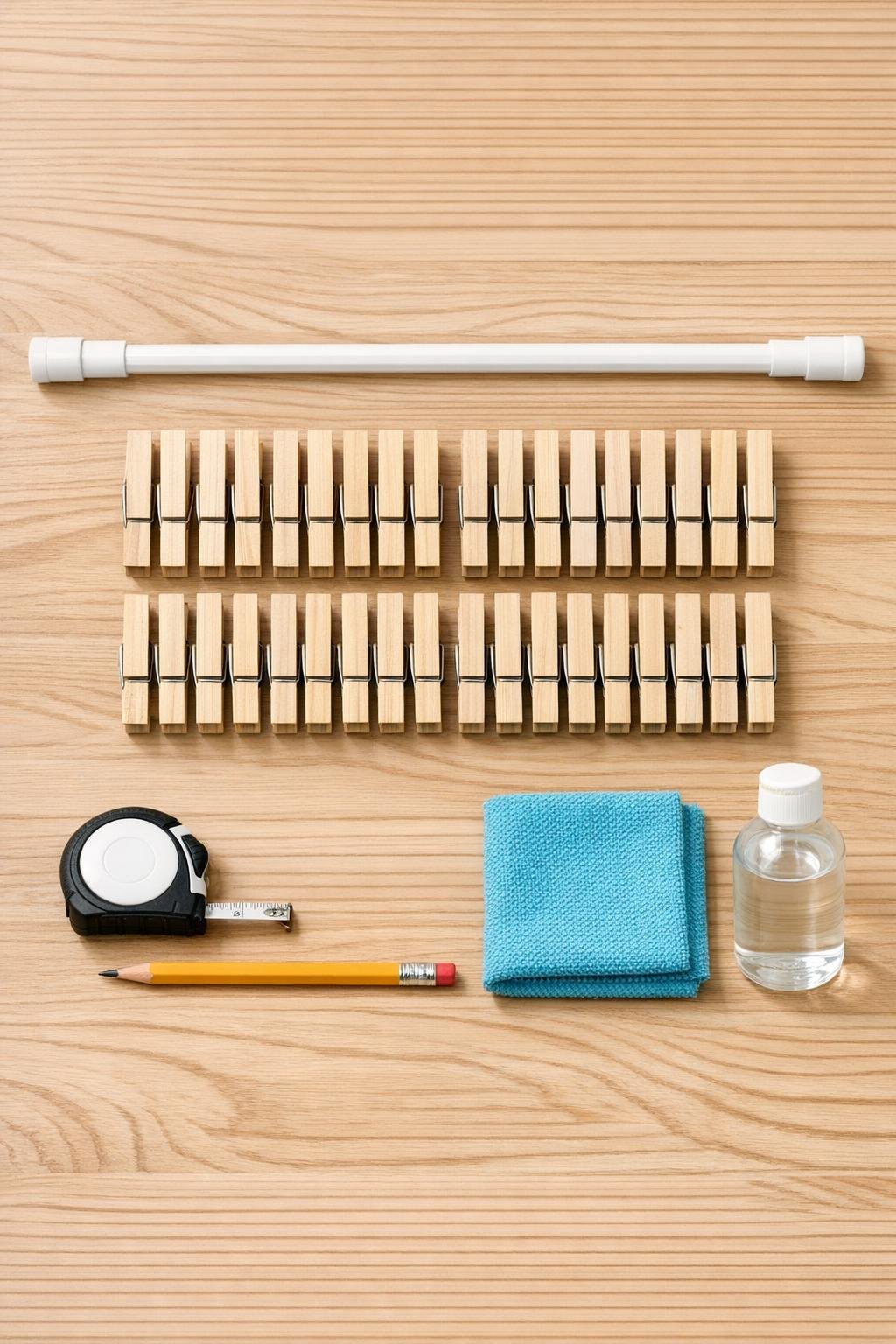
Materials
1 small white tension rod, adjustable 18 to 28 inches
Instructions
1. Empty the section of the coat closet where you want the rack to go, then choose a spot that is easy to reach but high enough that mittens won’t brush the floor or crowd hanging coats.
2. Measure the inside width of the closet at that spot, ideally leaving at least 8 to 12 inches of vertical clearance below the rod for longer gloves or folded hats.
3. Wipe both closet walls where the rod ends will press using a microfiber cloth and a little rubbing alcohol or cleaner, then let the area dry so the tension rod grips well.
4. Twist the small white tension rod to roughly the measured width, then clip on 24 wooden clothespins before installing it so you can space them more easily.
5. Hold the rod inside the closet and twist it until it fits snugly from wall to wall, then give it a gentle tug downward to make sure it does not slip.
6. Slide the clothespins along the rod so they are evenly spaced, leaving a little extra room between every few pins for bulky ski gloves or doubled-up mitten pairs.
7. Test the setup by clipping on a pair of mittens, a set of gloves, and a knit hat to confirm the rod stays secure and the items have enough airflow around them.
8. Group the clothespins in practical zones, such as one section for each family member or one area for mittens and another for hats, so the rack works as an everyday system instead of just a one-time fix.
9. If your closet floor tends to get slushy, place a boot tray or washable mat directly underneath the drying rack to catch any drips and keep the hallway cleaner.
10. Use the rack daily by clipping damp winter gear open rather than bunched up, which helps everything dry faster and keeps pairs together for the next outing.
Variations & Tips
Add more capacity: If your closet has extra width or a second open section, install a second matching rod below or beside the first so you have one level for adult items and one for kids’ gear.
Use all-wood clothespins: Standard wooden spring clothespins are the easiest option, but simple all-wood pinch-style clothespins also work if you like a slightly more classic look.
Prevent slipping: If your closet walls are slick laminate, tighten the rod a bit more than you think you need and test it with a few heavier gloves before fully loading it.
Make it look polished: I like keeping the rod white and the clothespins natural wood because it blends into most closets and still looks tidy when the door is open, but you can also paint the clothespins a soft neutral if you want it to match your closet interior.
Speed up drying: Clip mittens cuff-side down or slightly open at the wrist so warm air can move through them instead of getting trapped inside.
Keep pairs together: This is the little trick that saves me the most time on rushed mornings: clip each pair side by side on neighboring pins the second it comes off, so no one is hunting for matches later.