
One of the handiest little garden helpers I’ve made lately started with three very ordinary things: a galvanized trash can, a stack of black nursery pots, and a good scrubby filler. Once the bottoms are cut out of the pots and the rings are stacked inside the can, you get a simple tool-cleaning station that scrubs dirt off trowels, hori horis, hand rakes, and pruners in seconds while keeping the mess contained.
I love projects like this because they solve a real problem without asking for fancy supplies or a whole weekend. If you garden in raised beds, containers, or a full backyard plot, this is an easy build that makes cleanup faster and helps your tools last longer. It’s also a smart way to reuse all those nursery pots that seem to multiply in every garage corner.
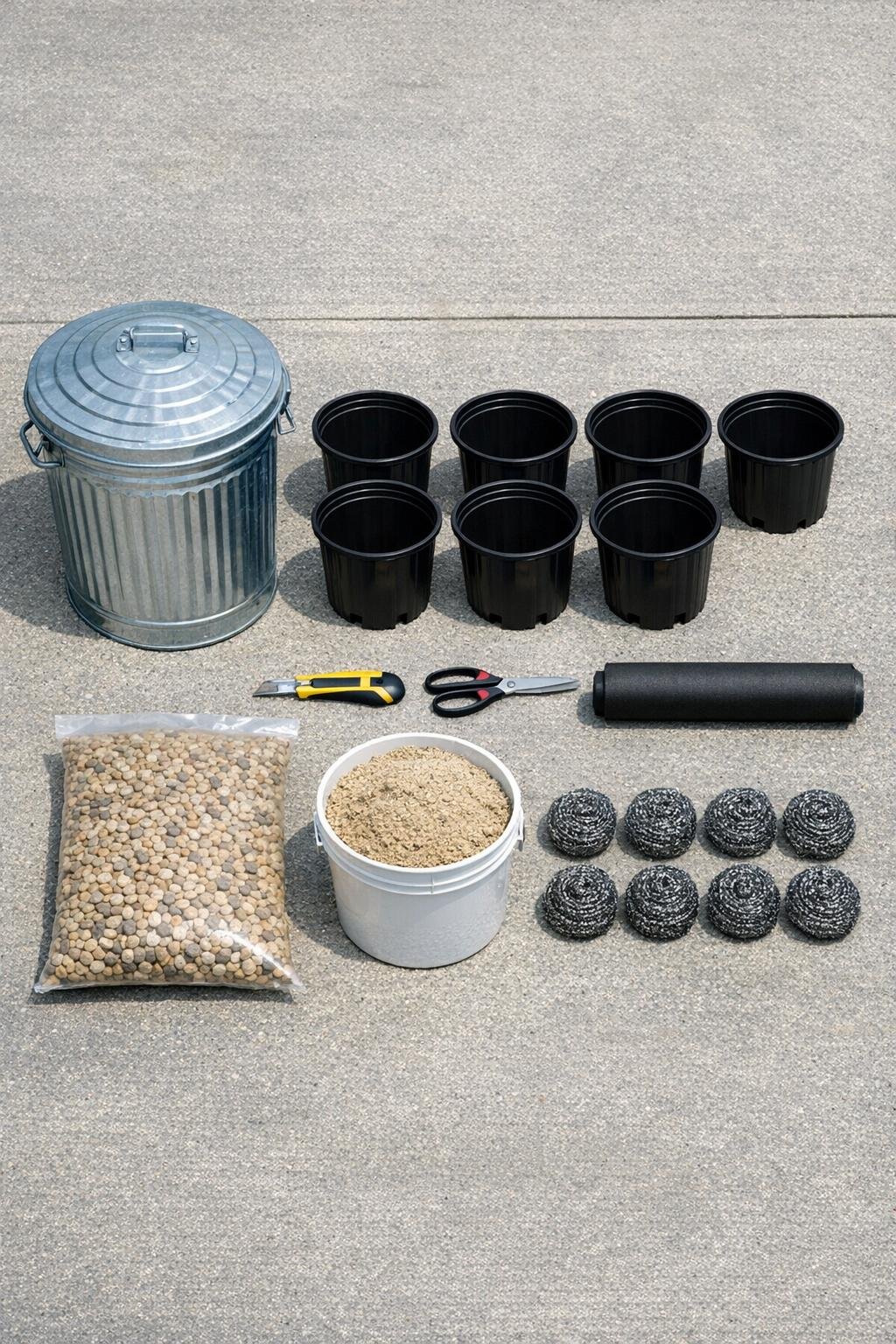
Materials
Instructions
1. Wash and dry the galvanized trash can and nursery pots so no soil, stickers, or nursery residue gets trapped inside the finished station.
2. Put on gloves, turn each nursery pot upside down, and use a utility knife to pierce the center of the base; cut around the inner edge to remove the bottom completely and create six open rings.
3. Trim any jagged plastic with scissors so the rings stack neatly and won’t snag gloves or scratch tool handles.
4. Set the trash can upright and place the landscape fabric flat in the bottom to keep the sand from slipping down into the gravel layer over time.
5. Pour 4 inches of pea gravel into the bottom of the can to create drainage and weight, then press it level with your hand.
6. Stack the six cut nursery-pot rings inside the trash can, widest rims aligned, so they form a tall inner column with lots of ribbed edges for holding the scrub material in place.
7. Wrap one cable tie around the upper third of the stacked rings inside the can, or use two short strips of duct tape, just to keep the column from shifting while you fill it.
8. Tuck the stainless steel scrubber pads evenly into the gaps between the pot rings and the can wall, spacing them all around the circle so every tool hits a scrubby surface as it slides in.
9. Pour coarse sand slowly into the center of the stacked rings until the can is about three-quarters full, shaking the can lightly every few scoops so the sand settles into the rings and locks the structure in place.
10. Push a dirty hand tool down into the sand and twist it a few times to test the fit; add more sand until the tool stands upright and the scrubber pads brush the blade or tines on the way in and out.
11. Fold a 2-inch strip of duct tape over any sharp cut rim that feels rough at the top edge, then wipe the can clean and spray the outside with a light coat of clear sealer if you want extra weather protection.
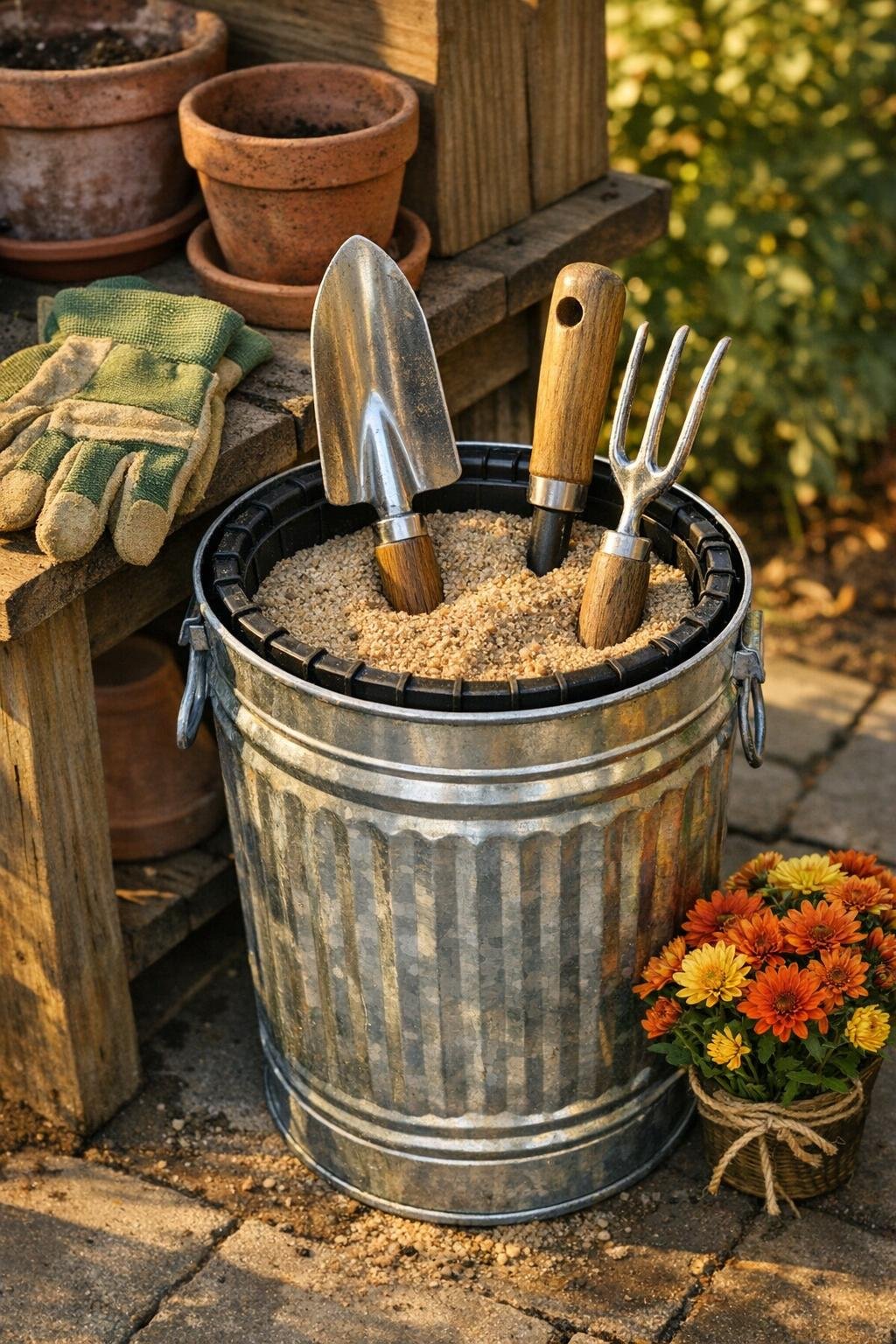
12. Set the finished station near the garden gate, potting bench, or shed door, and use it by plunging tools into the sand for quick scouring after each gardening session.
Variations & Tips
For heavier tools: Use a 31-gallon galvanized can and 8 to 10 larger nursery pots if you want to clean long-handled hand forks, soil scoops, or narrow trenching tools without tipping the station.
For extra scrubbing power: Mix in 1 cup of food-grade mineral oil with the top few inches of sand if you want the station to clean and lightly protect metal tool heads at the same time.
If you don’t have stainless scrubbers: Substitute strips of stiff coconut coir mat or sections of heavy synthetic pot scrubber pads tucked around the rings.
Best pot size: I’ve found 10-inch nursery pots hit the sweet spot in a 20-gallon can because they leave enough side space for scrubbers while still creating a generous sand core.
Keep it draining well: If your station will live outdoors year-round, drill 3 or 4 small holes in the very bottom of the trash can before assembly so rainwater can escape instead of turning the sand muddy.
Make it look finished: A simple wrapped handle of jute rope on each side, secured high on the can where it stays dry, gives the station a more polished garden-shop look without changing how it works.