
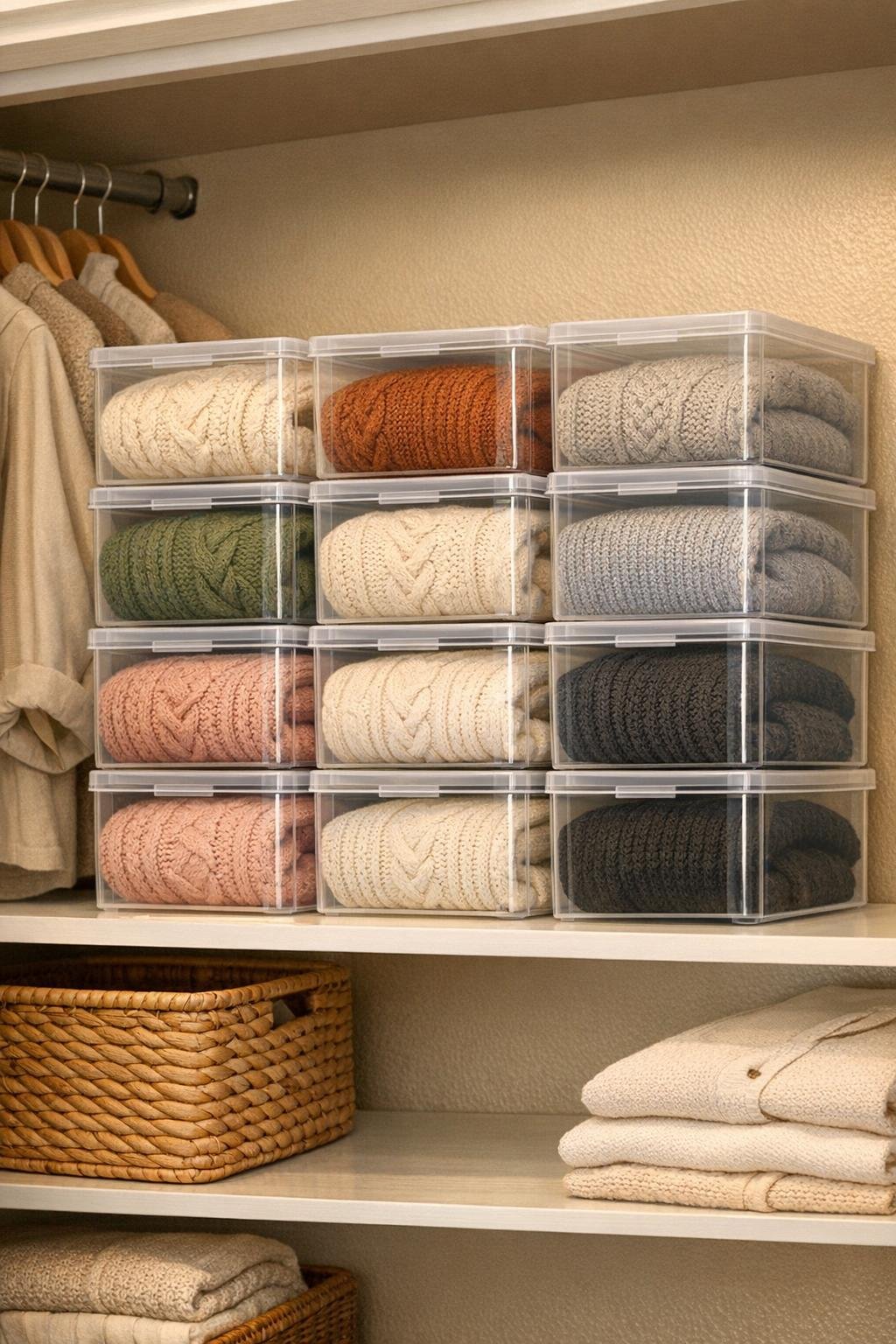
If your sweater shelf turns into a soft avalanche every time you pull one thing out, this simple cubby system is such a satisfying fix. I love projects like this because they do not require power tools, paint, or a whole afternoon, but the finished result looks tidy enough that people really do stop and ask how you did it. Clear plastic shoe boxes turn one plain closet shelf into individual little sweater cubbies, so each folded knit stays neat, visible, and easy to grab.
This is especially nice for bedrooms with limited drawer space, shared closets, or anyone who wants a cleaner morning routine without spending a fortune on custom organizers. I also like that you can set it up in under an hour and adjust it as your family’s storage needs change through the seasons.
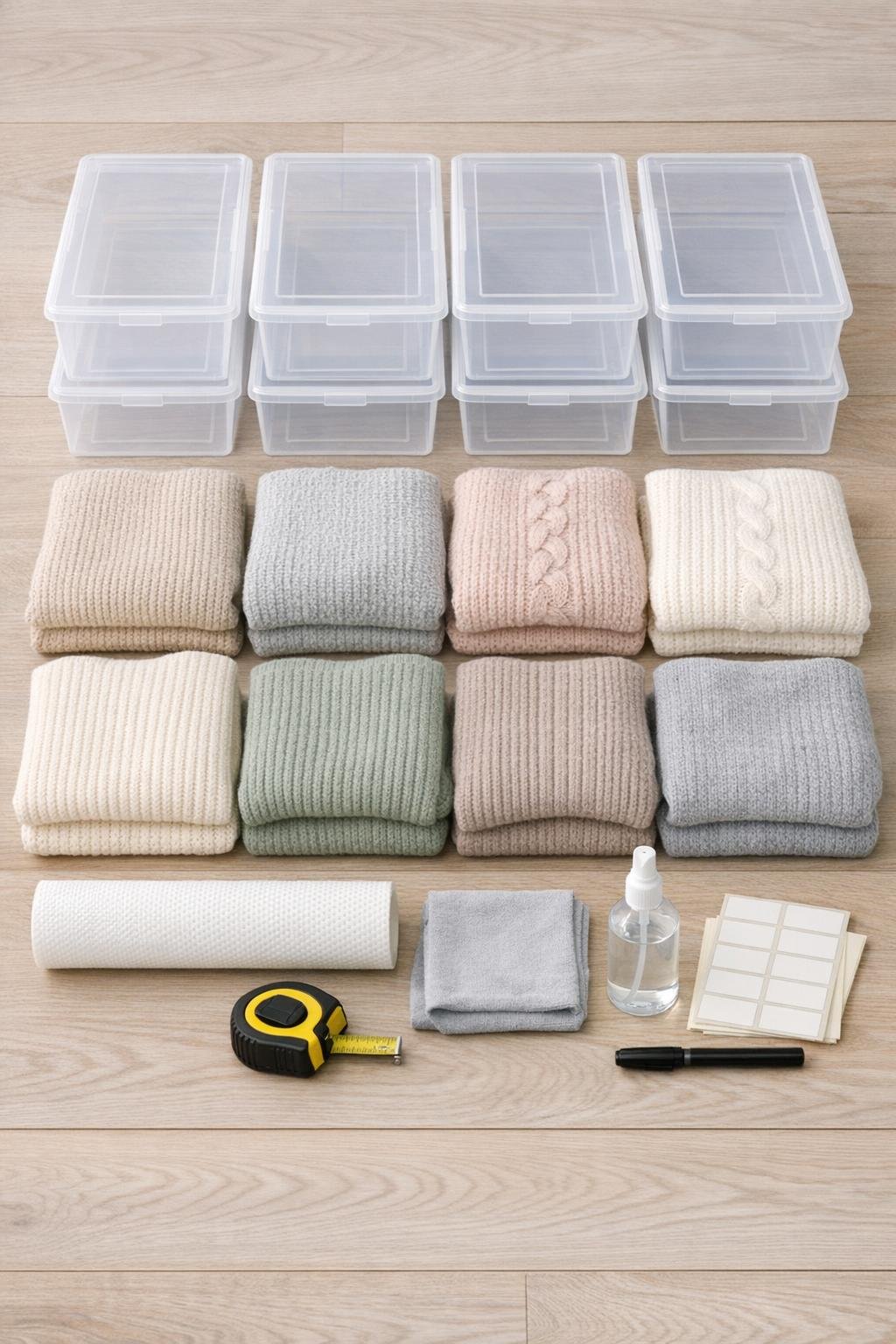
Materials
Instructions
1. Measure the width, depth, and height of your closet shelf to be sure your shoe boxes will fit in a tidy row and can stack safely without pressing into the shelf above.
2. Remove everything from the shelf and wipe the surface clean with gentle cleaner and a microfiber cloth so the boxes sit flat and do not collect dust underneath.
3. Cut the non-slip shelf liner to fit the shelf, covering the full area where the boxes will sit to help keep the stacks from sliding when you pull a sweater out.
4. Place the clear shoe boxes on the shelf in one or two neat rows, depending on your closet depth, and test the arrangement with lids on to make sure the stack feels stable and easy to reach.
5. Fold each sweater into a smooth rectangle slightly narrower than the box, tucking in sleeves so the stack stays thick and even instead of bunchy.
6. Slide one folded knit into each box with the prettiest side or most recognizable texture facing outward, so you can tell at a glance what is inside through the clear plastic.
7. Add the lids if you want a dust-free look, or leave the lids off for the quickest daily access; I usually keep the lids on top or snapped loosely so the shelf still looks polished.
8. Stack the filled boxes carefully, keeping heavier bulky knits on the bottom and lighter cardigans or thinner pullovers on top for the safest, cleanest setup.
9. Label the front corner or lid edge of each box by category, color family, or person, which makes the system especially helpful in a shared bedroom or linen-style closet.
10. Step back and make small adjustments so the boxes line up evenly, then keep one box partly open while you style the shelf to make grabbing a sweater feel easy and natural every day.
Variations & Tips
For bulky winter sweaters: Use boot-sized clear boxes instead of standard shoe boxes if your knits are extra thick, and reduce the number per shelf so the stacks stay easy to lift and slide.
For picky family organizers: If not everyone in the house will refold things the same way, sort by person instead of by sweater type so each box becomes a simple grab-and-go cubby.
For a softer look: Choose boxes with white trim or frosted lids if you want the storage to feel less utilitarian while still letting you see what is inside.
Dust-control tip: Closed lids are best for off-season knits, especially in older closets where dust settles quickly, but everyday favorites can stay lid-free for faster access.
Shelf safety: Do not overstack higher than you can comfortably reach, and always keep the heaviest boxes at the bottom so nothing tips forward when a sweater is removed.
Best folding trick: I get the neatest fit by folding sweaters to the exact width of the box first, then folding upward into thirds, which keeps the front edge nice and square.
Budget variation: If you already own mixed clear bins, use matching labels and line them up by height so the finished shelf still looks intentional and polished.