
I love a good thrift-store flip, especially one I can finish in a single afternoon and style all season long. These faux pottery mantel vases start with inexpensive glass vases and a simple baking soda paint mixture that gives them that soft, chalky, aged stoneware look without needing any special supplies.
This is the kind of project I reach for when I want a big decorating payoff but my week is packed. If you can stir paint in a paper cup and dab with a brush, you can do this. The best part is that each vase comes out a little different, so even the cheapest mismatched thrifted shapes end up looking collected and intentional.
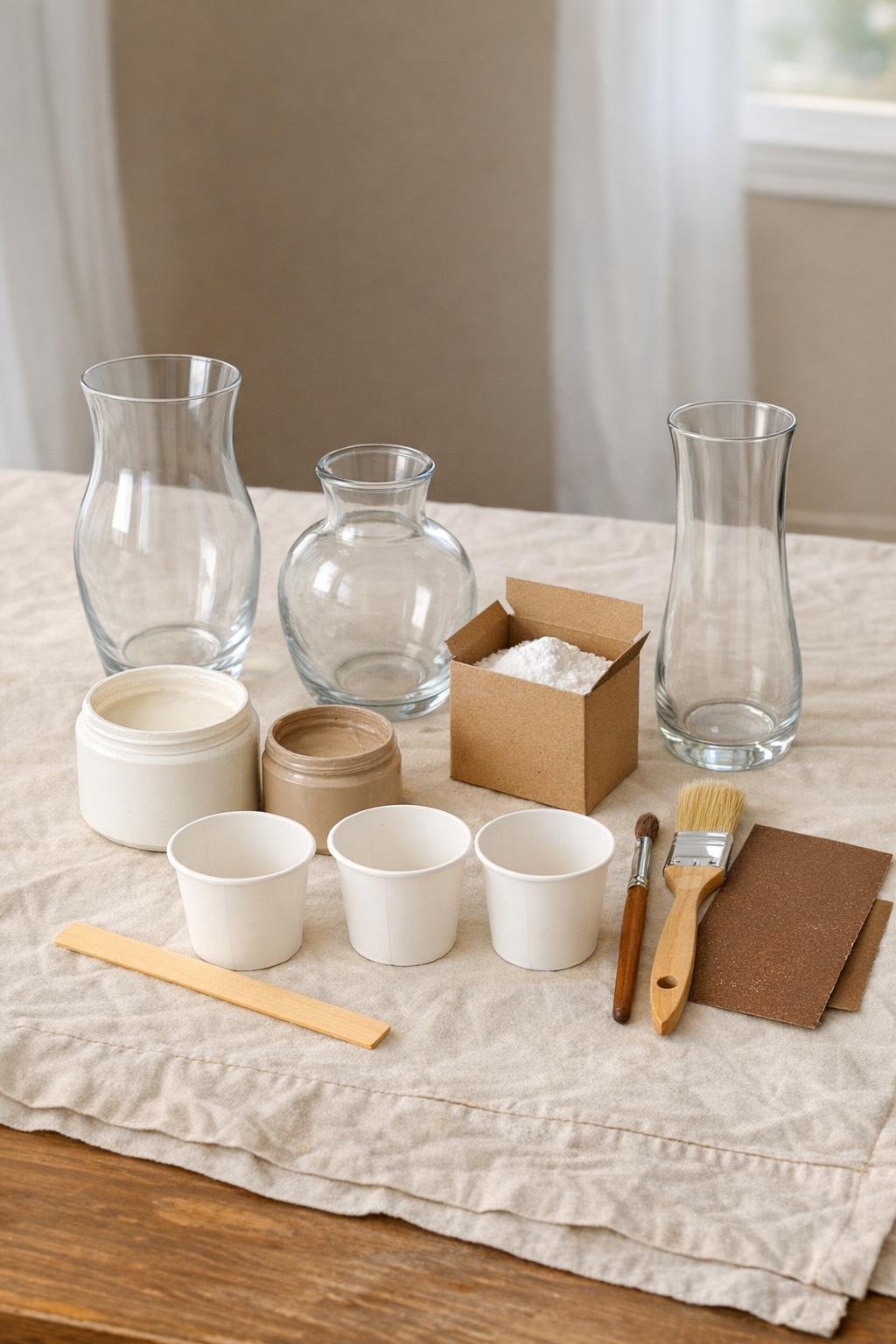
Materials
Instructions
1. Cover your work surface with a drop cloth and wash the glass vases with warm soapy water, then dry them completely so the paint mixture grips evenly.
2. Pour 1/2 cup of paint into a paper cup and stir in 2 tablespoons of baking soda until the mixture turns thick, matte, and slightly gritty; repeat in a second cup if you want a second batch ready for later coats.
3. Test the texture on the bottom of one vase by dabbing the brush into the mixture and pouncing it on instead of brushing it smooth; if it feels too stiff, stir in a few drops of water.
4. Dab the first coat over the entire outside of each vase, working in small sections and varying the pressure slightly so you get a hand-shaped pottery texture with no obvious brush lines.
5. Use the smaller brush around narrow necks, rims, and curved details, keeping the texture consistent but not overly thick at the opening.
6. Let the first coat dry for 30 to 45 minutes, until it looks chalky and no longer feels cool or tacky to the touch.
7. Mix the paint again if it has settled, then dab on a second full coat to build up a fuller ceramic look and hide any remaining glass shine.
8. Let the second coat dry for 45 to 60 minutes, then lightly sand just the raised high spots and edges with 220-grit sandpaper to soften the texture and give the finish an aged, worn pottery feel.
9. Wipe away the sanding dust with a dry lint-free cloth and set the vases aside for another 30 minutes so the surface fully settles before styling.
10. Add only dry stems once the finish is fully dry, and keep water out of the vases since moisture can soften the baking soda coating.
Variations & Tips
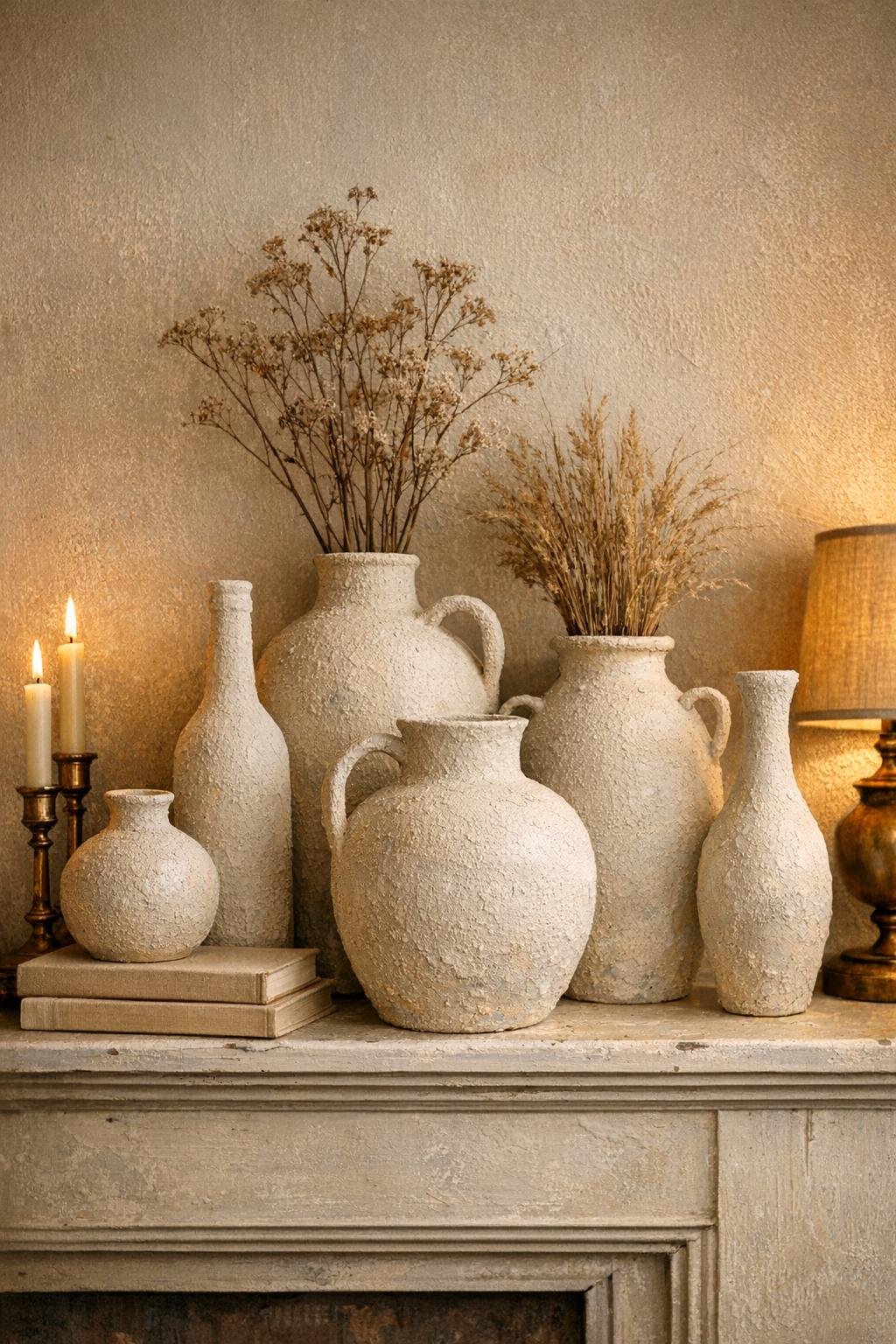
Color choice: I get the most believable pottery look from warm white, mushroom, taupe, or sandy beige paint. Super bright white can still be pretty, but the softer earthy shades read more like real stoneware on a mantel.
Best vase shapes: I like to mix one taller bottle-shaped vase, one rounder belly vase, and one slimmer neck vase for that collected look. When I’m thrifting, I look for interesting silhouettes more than perfect color, since the paint unifies everything.
Texture control: For a rougher pottery finish, use a thicker mix and more dabbing. For a softer ceramic look, keep the mixture just slightly looser and pat the surface lightly after application to even out the peaks.
Drying on a busy schedule: This is one of those projects I squeeze in between other weekend chores. I paint the first coat, unload the dishwasher or prep dinner, then come back for the second coat once everything is dry enough to handle.
For a more aged finish: Sand a little more around the rim, shoulder, and widest curves where natural wear would happen. Keep it subtle so the vases still look refined instead of chipped.
Stem styling: Use dry stems only, like preserved eucalyptus, pampas, wheat, or bunny tails. If you want the look of fresh flowers, tuck a small watertight container inside only if it does not touch the painted outer surface.
What to avoid: Don’t seal these with a glossy topcoat, because it removes the powdery pottery effect. I also skip placing them in bathrooms or on covered porches where humidity can slowly soften the finish.
Make it look expensive: Group the vases in odd numbers and vary the heights, then leave a little breathing room around them on the mantel. That simple styling trick makes even dollar-store finds feel a lot more elevated.