
There are some little projects that feel almost old-fashioned the minute you start them, and this is one of my favorites. A clove orange pomander is simply a fresh orange studded all over with whole cloves, but the scent is rich and cozy in a way that makes a whole room feel gentler. I’ve made these on cold afternoons when the kitchen was quiet except for a teakettle, and they always remind me that the prettiest things are often the simplest.
If you want a handwork project that is easy, inexpensive, and satisfying, this one is a dear little choice. It’s especially nice for anyone who enjoys holiday homemaking, natural decorations, or old kitchen traditions, and all it takes is a good orange, a jar of cloves, and a bit of patience while you work in tidy rows.
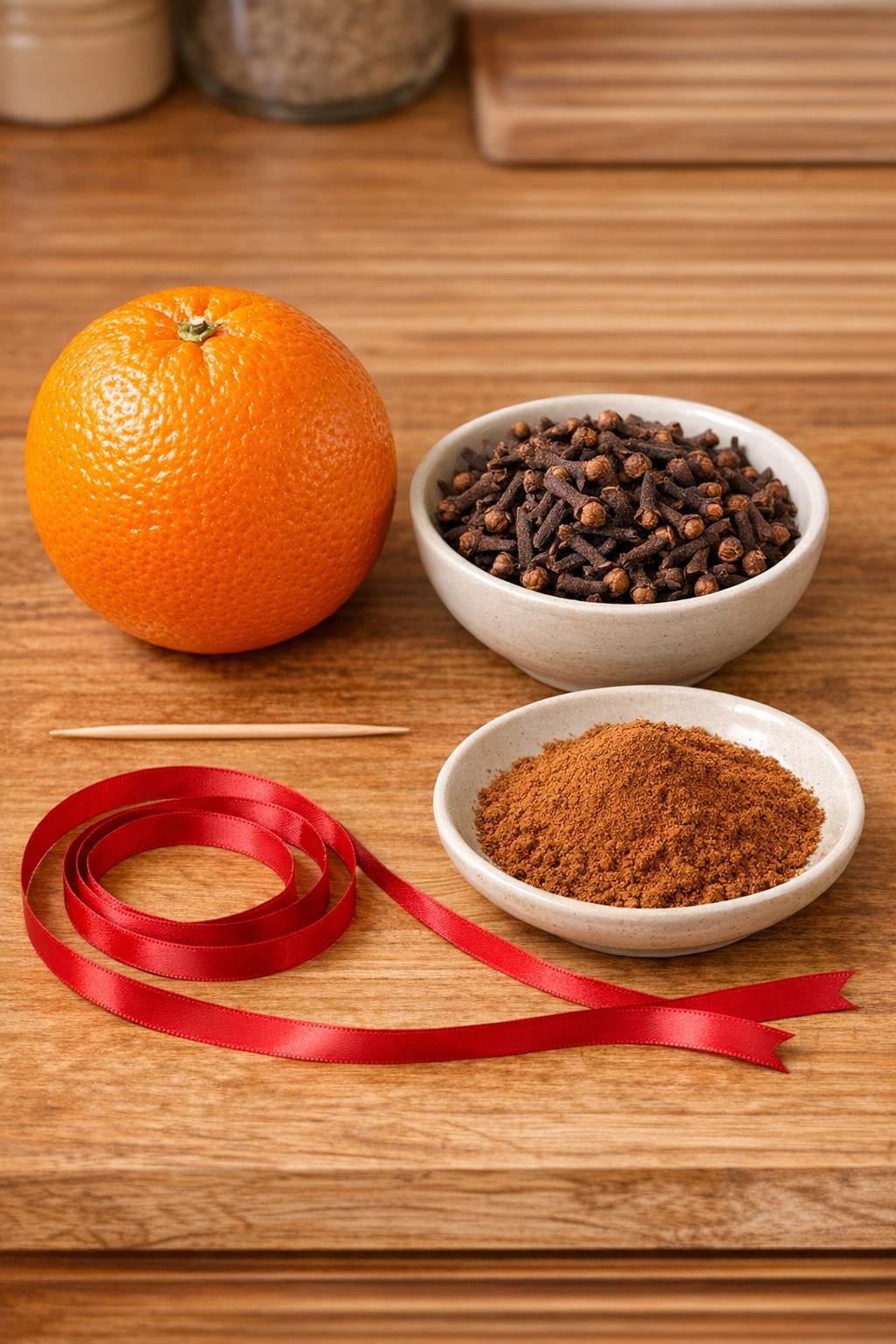
Materials
Instructions
1. Wash the orange, dry it very well, and set out your cloves, toothpick, cinnamon, and ribbon so everything is within easy reach.
2. Decide on your pattern before you begin; spiral rows or narrow bands are the easiest way to keep the cloves neat and evenly spaced.
3. Use the toothpick to poke one small hole at a time, then press a clove stem into that hole right away so the peel does not crack and the clove does not snap.
4. Continue around the orange in orderly rows, keeping the cloves close together so the surface looks full and handsome rather than spotty.
5. Rotate the orange as you work and fill it with at least 100 cloves, adding a few extra if needed to keep the spacing even and the pattern balanced all the way around.
6. Pour the cinnamon into a shallow dish and gently roll the clove-studded orange in it, turning until the exposed peel has a light, even coating.
7. Set the orange on a paper towel or plate in a cool, dry spot and let it dry for 2 to 3 weeks, turning it every day or two for the first week so it dries evenly.
8. When the orange feels firmer and lighter, tie the ribbon snugly around it or into a simple hanging loop, then trim the ends neatly.

Variations & Tips
Choose a good orange: A firm, thick-skinned orange is much easier to work with than a thin-skinned one. If the fruit has soft spots, it is more likely to mold before it dries properly.
Work in small sections: I like to poke and fill just a few holes at a time instead of pre-poking the whole orange. That old peel can be contrary, and this method keeps the pattern neat.
For a fuller look: If you want a richer, more ornate pomander, keep the rows very close and use 120 or even 140 cloves on a medium orange. The denser clove coverage gives it that precious finished look.
Try bands instead of spirals: Wide clove bands circling the orange are easier for beginners and still look lovely. You can leave narrow cinnamon-colored strips of peel showing between each band.
Drying tip: Keep the pomander in a cool, airy place, not sealed in a container. Good airflow is what helps it dry rather than spoil.
Easy gift idea: Once dry, tuck the pomander into a small bowl, hang it from a cupboard knob, or tie it onto a package. It has the kind of homespun charm my generation has always loved, and it still feels just as special now.