
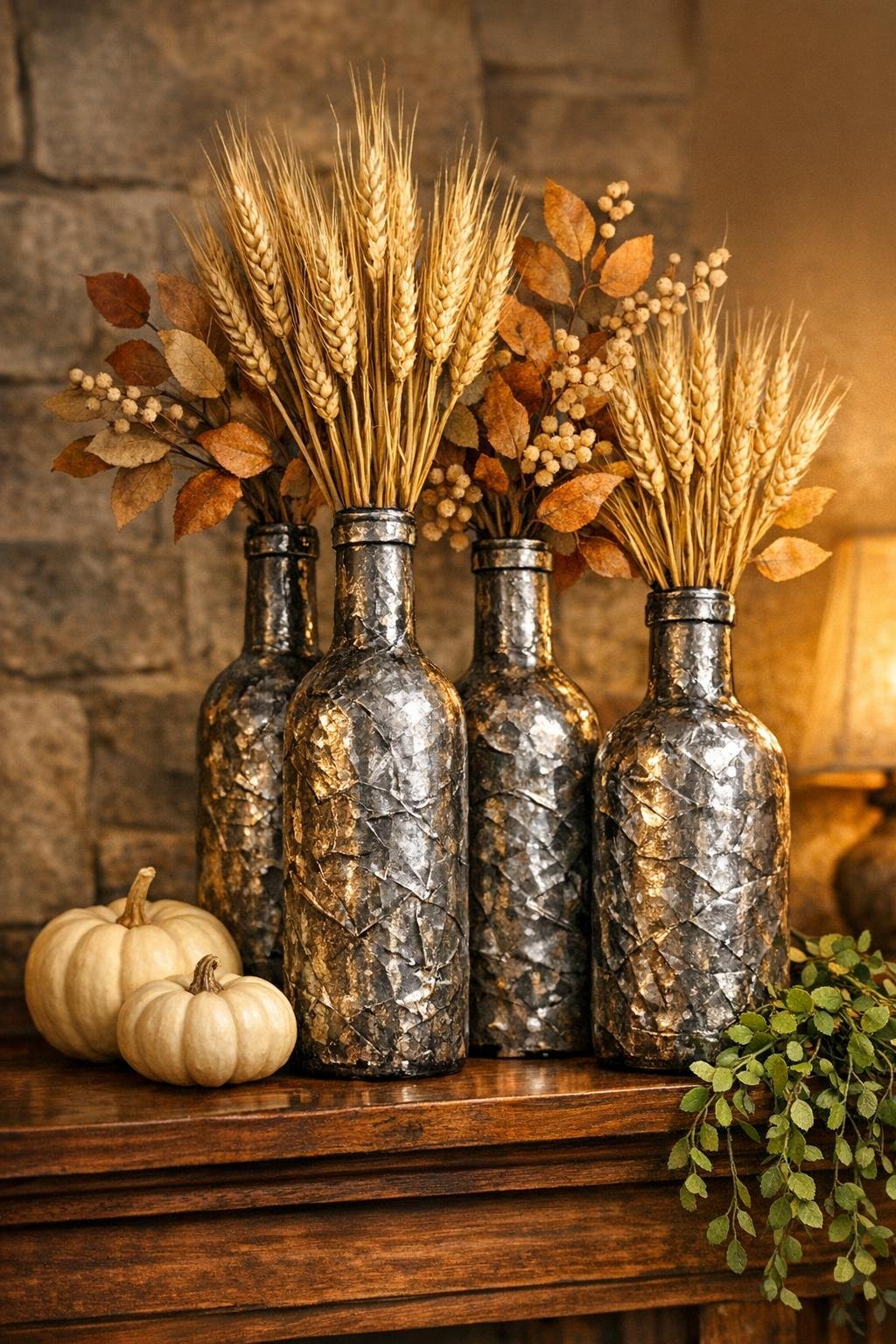
There are some thrift-store-looking finishes that never quite fool me, and then there’s this one. Wrinkled kitchen foil, a little glue, a dark wash, and all at once those plain empty wine bottles start looking like old hammered pewter pulled from a cupboard my grandmother would have prized. It’s a wonderfully forgiving project, and because the texture does so much of the work, you don’t need a fancy craft room or a steady painter’s hand to make it come out handsome.
I especially like this project for anyone who wants a big decorating payoff from odds and ends already in the house. Three bottles together make a far better statement than one, and the grouped height gives that collected, old-world harvest feel I love on a mantel, sideboard, or autumn table. The best part is that little imperfections only make them look more believable.
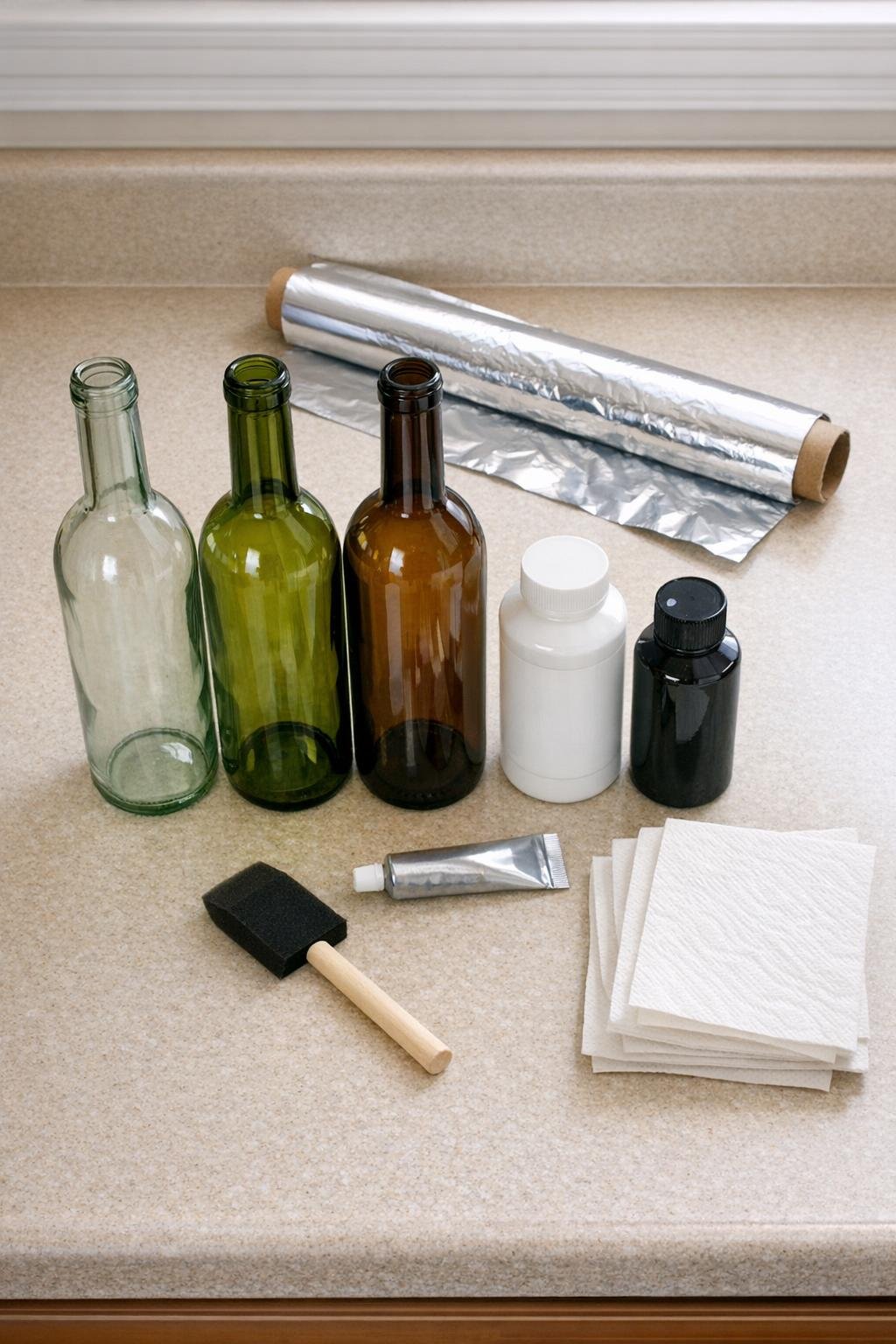
Materials
Instructions
1. Wash the three wine bottles, remove all labels and adhesive, and let them dry completely so the foil and glue can grip well.
2. Tear the foil into pieces about 6 to 8 inches across; plan on 10 to 12 pieces per bottle so you can overlap generously without fighting giant sheets.
3. Crumple one foil piece into a tight ball in your hand, then gently open it back up into a loose flattened patch, keeping all those fine wrinkles intact.
4. Brush a section of the bottle with a thin, even coat of decoupage glue, working on an area just slightly smaller than one foil patch.
5. Press the wrinkled foil patch shiny side out onto the glued area, smoothing only enough to make contact while leaving the crinkles and ridges raised.
6. Continue adding foil patches around the bottle, overlapping the edges by about 1/4 inch so the whole surface gets dense coverage and no glass peeks through.
7. Cover the shoulder and neck with smaller torn patches, pressing them into curves and folds; if a piece tears through, simply glue another wrinkled patch right over it.
8. Repeat the same layering on the other two bottles, then let all three dry for 30 to 45 minutes until the foil feels firmly attached and the glue is no longer milky.
9. Brush black acrylic paint over one bottle at a time, pushing it into all the wrinkles and seams so the entire foil surface is darkened.
10. Immediately wipe the bottle with a folded paper towel, removing most of the black paint from the high spots and leaving the dark color down in the creases.
11. Let the painted bottles dry for 15 to 20 minutes, and if you want deeper age in the texture, add a second light black wash and wipe it back again.
12. If using silver Rub ’n Buff, apply a tiny amount to a paper towel and lightly skim it over the raised areas to catch the texture and brighten the hammered effect.
13. Buff gently with a clean paper towel until the bottles have a soft pewter sheen, then let them sit another 15 minutes before styling them.
Variations & Tips
For a fuller arrangement: These bottles really shine as a trio with something tall in them. I like dried wheat, faux bittersweet, seed heads, or a few sturdy branches so the pewter finish still shows between the stems.
If the foil feels too smooth: Crumple tighter before reopening. The tiny wrinkles are what create that believable hammered-metal look after the black paint settles into them.
For easier neck coverage: Tear smaller foil pieces for the bottle shoulders and necks instead of wrestling one big patch. Little pieces overlap more neatly and keep the bottle shape crisp.
To tone the finish warmer or cooler: Wipe off more black for a brighter silver-pewter look, or leave more in the creases for a moodier antique finish. I’ve found old-looking finishes nearly always improve with restraint on the shine.
For holiday use beyond harvest: Skip the wheat and fill the vases with winter greenery, bare branches, or even simple cream-colored faux berries. The pewter look is wonderfully flexible clear through Christmas and into January.
About durability: These are best used as decorative vases for dry stems only. Because the finish is foil over glue, I treat them gently, just as I would an old family keepsake.
My favorite styling trick: Group the three bottles close together in staggered heights so they read as one generous arrangement. In decorating, just as in country cooking, abundance almost always looks more welcoming than stinginess.