
If you’ve already got a few cinder blocks in the shed corner and a couple of basic garden supplies hanging around, this is one of those practical little projects that feels almost too simple for how useful it is. I love a garden fix that takes five minutes to understand, doesn’t cost much, and still makes the bed look tidy and intentional. This fall staking system uses stacked cinder blocks as the base, then turns them into a sturdy anchor point for protecting flopping stems, young shrubs, and anything that needs a little help standing up to autumn wind and chilly rain.
For busy home gardeners, especially if you’re trying to keep things looking nice without spending your whole weekend outside, this is a really satisfying setup. I like it because it’s adjustable, easy to remove in spring, and heavy enough that it stays put. If you’ve got mums, small rose bushes, pepper plants still finishing out the season, or fresh fall plantings that need support, this is a good one to keep in your back pocket.
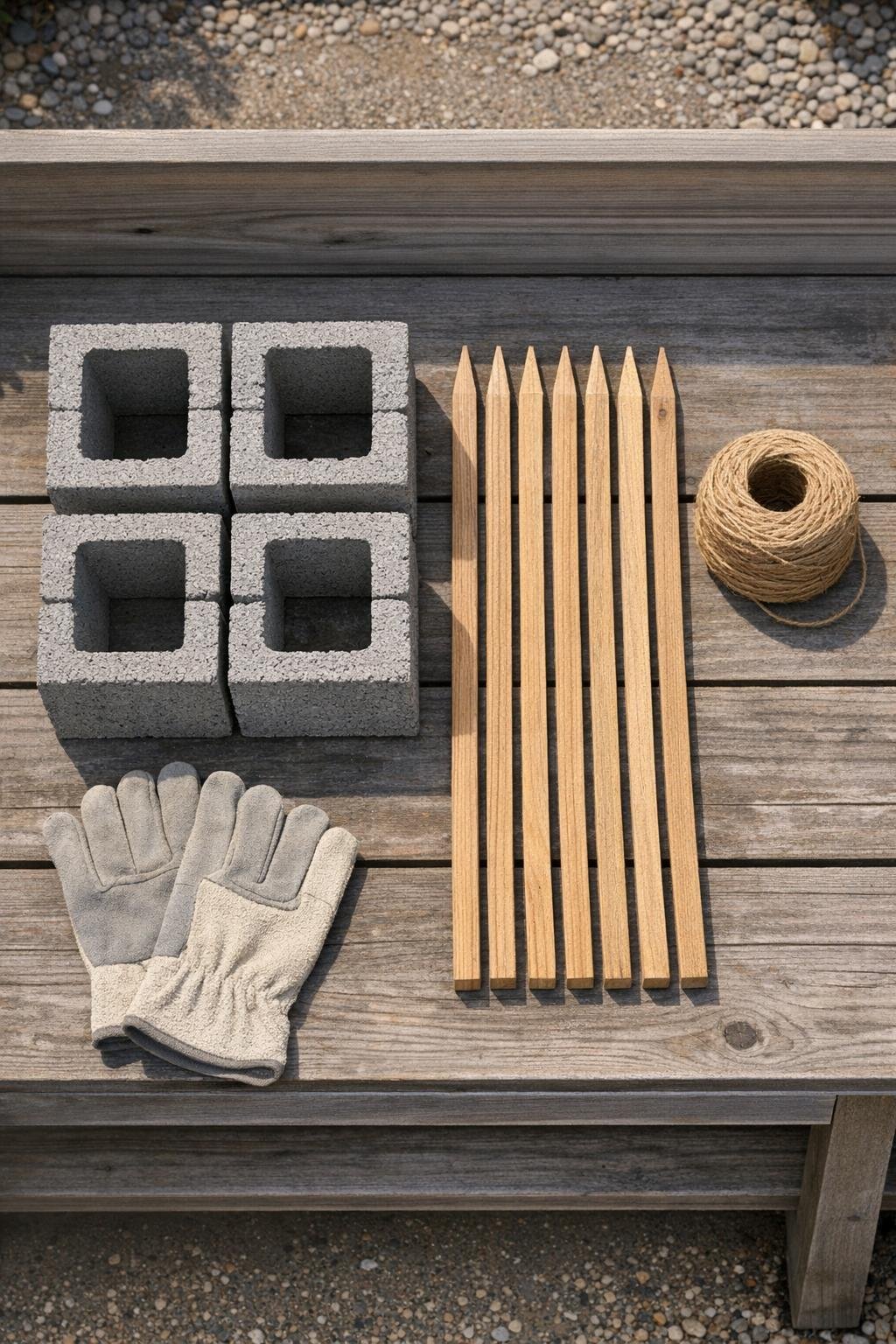
Materials
Instructions
1. Clear the edge of the garden bed where you want the support line to run, and level the soil so the cinder blocks sit flat without rocking.
2. Set the first two cinder blocks on their sides with the hollow openings facing outward, then stack the next two directly on top to make two low support towers spaced 3 to 5 feet apart.
3. Push one wooden stake down through a hollow core in each block tower, driving it 10 to 12 inches into the soil so the block stack can’t shift.
4. Add two more stakes in the soil just outside the towers, one on each end, so you have a stable point for wrapping and tightening the twine.
5. Tie the jute twine securely to one outside stake about 8 inches above the soil, then run it across to the opposite end, weaving it through the cinder block openings to keep the line straight and supported.
6. Wrap the twine around the far outside stake two or three times, pull it snug, and tie it off so it creates a low support rail along the front of the plants.
7. Add a second line of twine 16 to 20 inches above the soil, again weaving through the block openings and pulling it taut to create a taller support level for top-heavy stems.
8. For wider or bushier plants, use the remaining two stakes midway between the ends and tie short lengths of twine from them to the main lines to prevent sagging.
9. Gently gather leaning stems or branches inside the twine rails, leaving enough room for air flow and natural movement instead of cinching plants tightly.
10. Backfill around the block bases with a little extra soil if needed, then press everything firm and give the twine a final tightening so the whole system looks neat and solid.
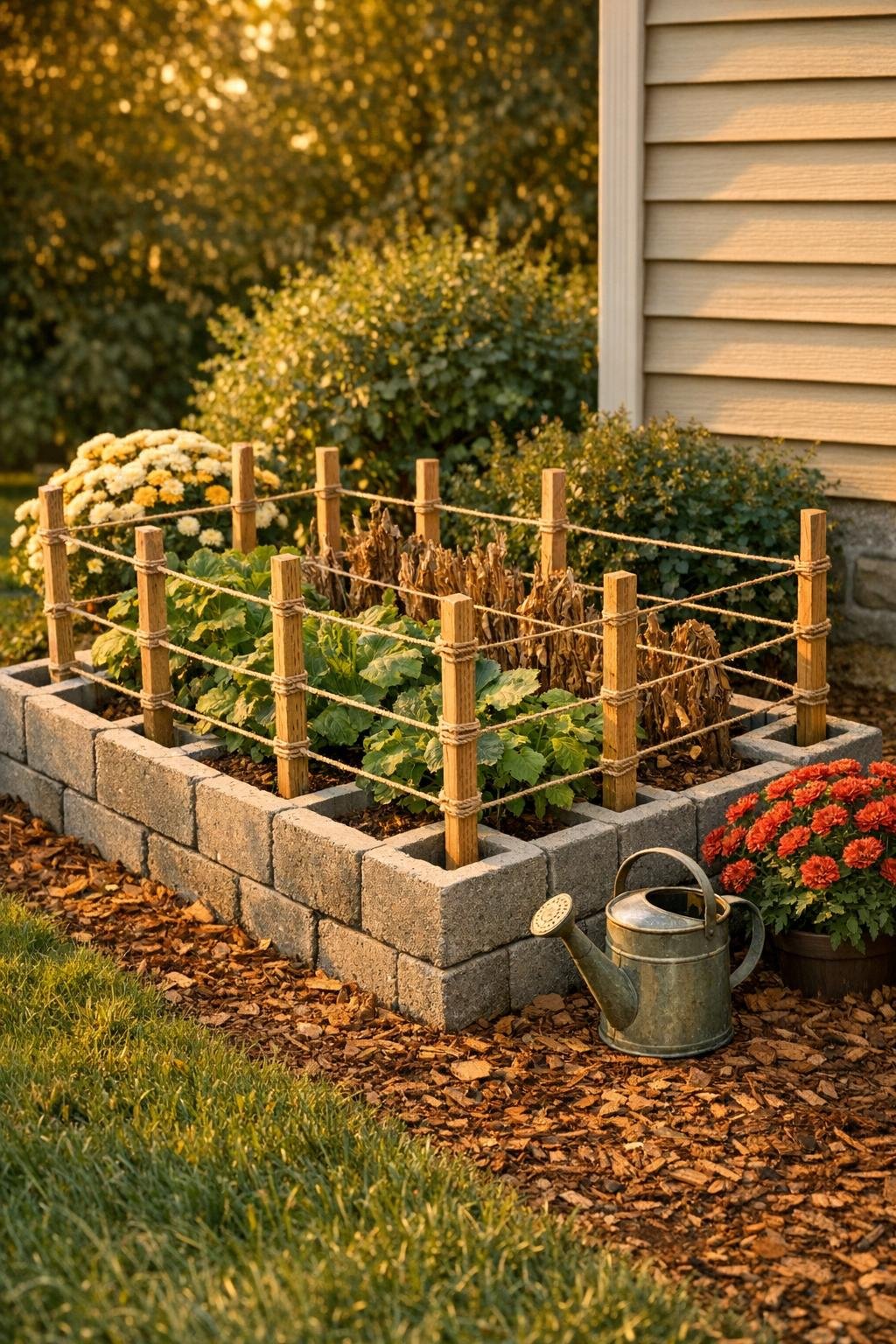
Variations & Tips
For floppy flowers: This works especially well for mums, asters, and fall-blooming daisies that like to splay open after a rain. I usually place the twine a little wider around the clump so the plant still looks full instead of pinched.
For vegetable beds: If you’re protecting late-season peppers, eggplants, or determinate tomatoes, set the lower twine line closer to 10 inches high to catch loaded branches before they droop onto the soil.
For picky gardeners who want it prettier: Natural jute blends in nicely, but green garden twine disappears even more against foliage. If the bed is right by your front walk, that small swap makes the whole thing look more finished.
For windy spots: Use longer stakes, around 48 inches, and drive them deeper through the block openings if your garden gets hard autumn gusts. The heavier base already helps a lot, but extra depth adds peace of mind.
To protect tender stems: Don’t pull the twine drum-tight against the plants. I always leave just enough give that the stems can move a bit, because that keeps them from rubbing and breaking.
To make it longer: Repeat the same pattern with additional pairs of stacked cinder blocks every 4 feet. It’s a very easy way to create a long support run down one whole side of a big bed.
End-of-season cleanup: Untie the twine, pull the stakes, and leave the blocks stacked by the shed or use them as winter pot risers. I’m a big fan of projects that earn their keep twice.