
There is something mighty satisfying about taking a plain, forgettable thrift store find and giving it the sort of age-softened character that looks like it has always belonged in the house. This little paint trick does exactly that. With just a few inexpensive supplies, you can turn shiny glass into something with that dry, velvety, weathered finish we all associate with old pottery pulled from a cupboard in late September.
I love projects like this because they ask so little and give back so much. If you enjoy easy seasonal decorating, flea-market makeovers, or simply fussing over a mantel until it feels just right, this one is for you. It is quick, forgiving, and just rustic enough to make a room feel warmer the minute you set everything in place.
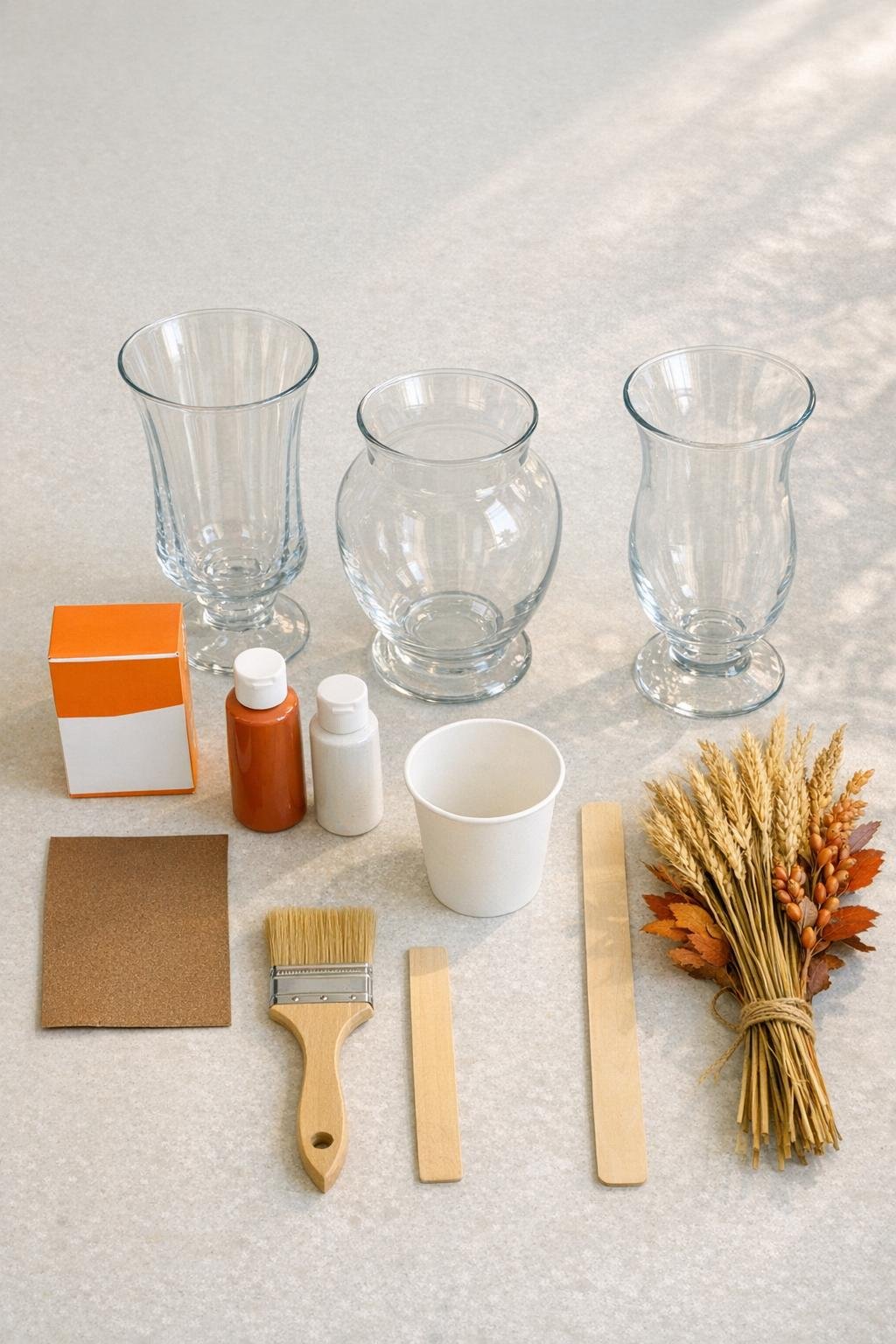
Materials
3 thrift store glass vases, medium size, about 8 to 12 inches tall each
Instructions
1. Wash the glass vases with warm soapy water, rinse well, and dry them completely so the paint will grab instead of sliding around on the surface.
2. Lightly scuff the outside of each vase with 220-grit sandpaper, then wipe away all dust with a clean cloth; you only want to dull the shine, not scratch deeply.
3. In the paper cup, stir together 1/2 cup terracotta or rust acrylic paint, 2 tablespoons baking soda, 1 teaspoon white acrylic paint, and up to 1 tablespoon water until the mixture is smooth, thick, and spreadable like pancake batter.
4. Brush the first coat onto one vase using long, slightly uneven strokes, working all the way around and covering the glass completely while letting a little brush texture show.
5. Repeat with the other two vases, then let all three dry for 20 to 30 minutes until the surface feels matte and no longer cool or tacky.
6. Mix a second batch if needed using the same ratio, then dab and brush on a second coat, concentrating extra paint around rims, curves, and lower portions to build that pottery-like body.
7. Let the second coat dry for another 30 minutes, then very lightly sand a few edges and raised spots so the finish looks softly worn instead of freshly painted.
8. If you want more depth, dry-brush a tiny amount of white acrylic paint over the highest texture and immediately soften it with your fingers or a dry cloth so it reads like natural variation, not stripes.
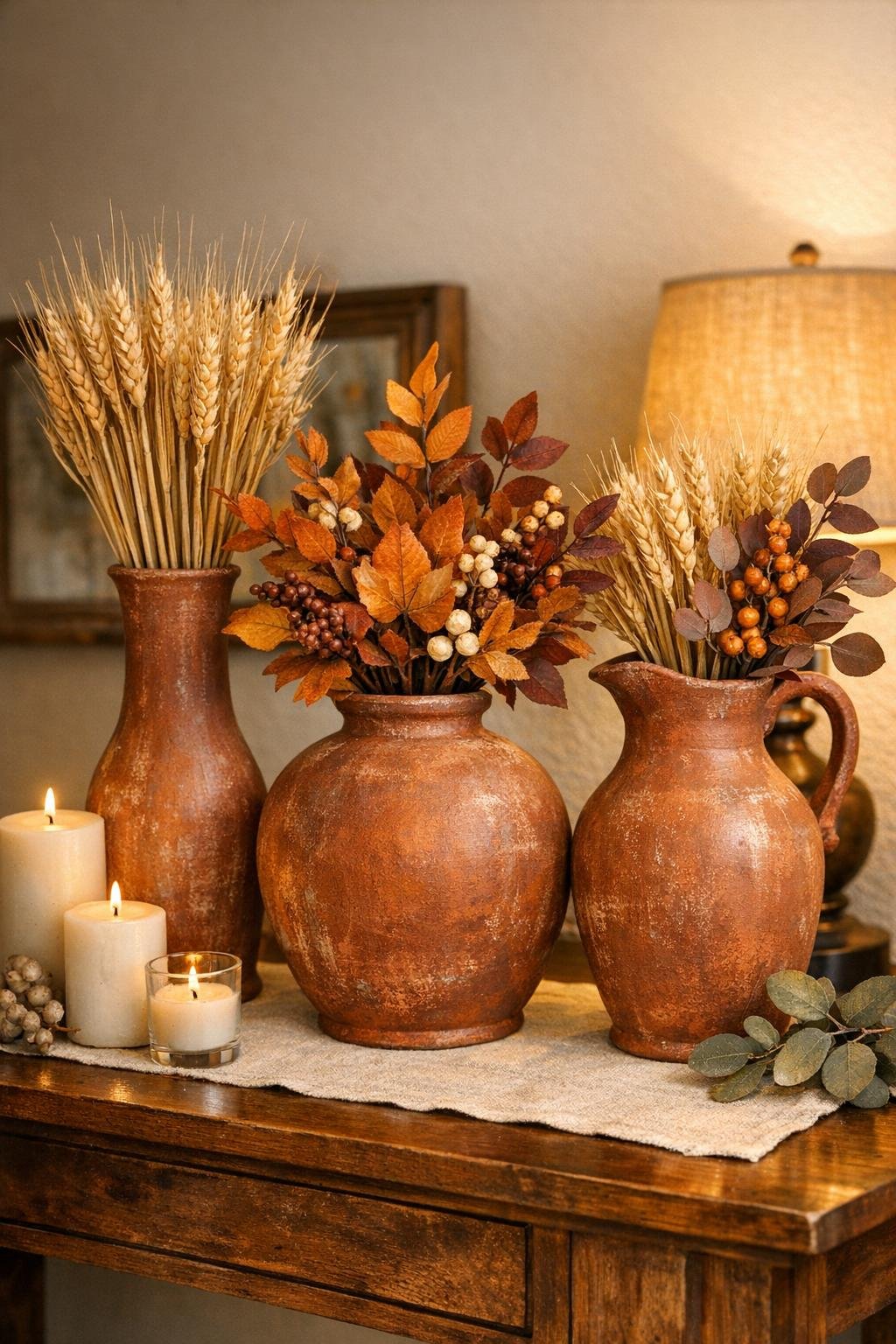
9. Allow the finish to cure for at least 1 hour before handling much, then divide the dried wheat or faux fall stems among the three vases, fluffing them so each arrangement looks full and generous.
10. Set the vases together as a grouped display, staggering the heights and turning the most textured sides forward for the prettiest, old-world look.
Variations & Tips
Use mixed vase shapes: I like combining one taller vase with two rounder or shorter ones because the group looks collected over time rather than bought all at once.
Adjust the color: If your rust paint is very orange, add a little more white to soften it; if it is too pale, add a touch more terracotta paint so the finish leans closer to aged clay.
Keep the texture believable: The prettiest finish comes from two solid coats, not one extra-thick one. Too much paint at once can slump on glass and look gummy instead of pottery-like.
Try a dry-brushed finish: For an older farmhouse look, brush on the second coat a little more loosely so some tiny tonal shifts show through. That layered, imperfect surface is where the charm lives.
Style in odd numbers: Three vases together nearly always look better than two. It is an old decorating habit of mine, and just like setting biscuits on a platter, a fuller arrangement always feels more generous.
Best placement: These are happiest indoors or on a covered porch. Because the finish is acrylic paint with baking soda, hard rain or soaking moisture can shorten the life of the texture.
Make them last: Once fully dry, handle them by the lower body instead of the rim, and dust with a dry cloth. If you want extra durability, you can mist on a very light matte sealer, though I usually skip it to keep that soft chalky touch.