
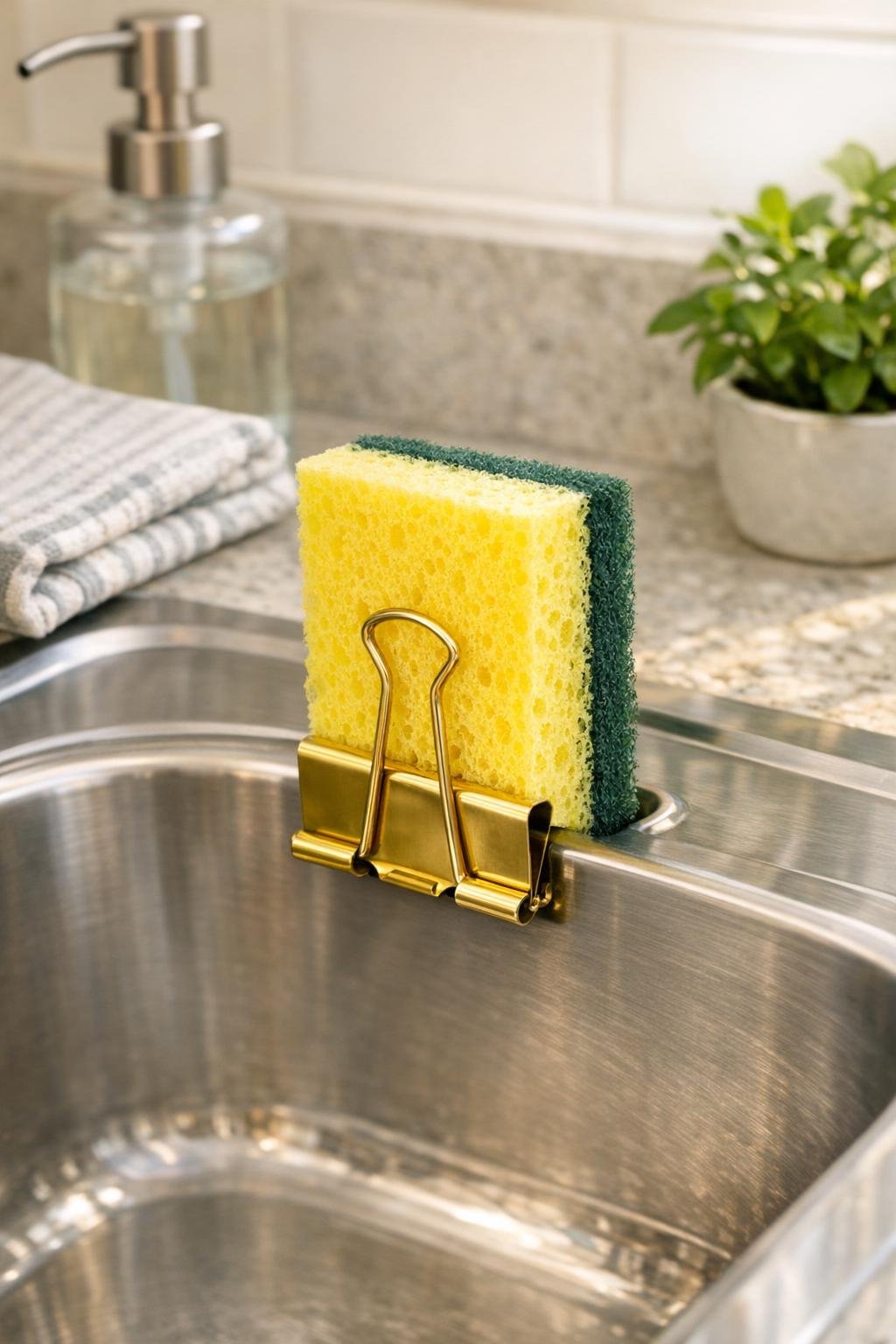
Some of the smartest kitchen fixes are the ones that take about ten seconds and use something you already have in a drawer. This little sponge holder is exactly that: a large binder clip attached to the inside rim of the sink basin, creating a simple perch that keeps your sponge up off the sink floor so it can drain and dry faster.
I like this kind of project because it solves a real annoyance without asking you to buy a plastic gadget that may or may not fit your sink. If you have a stainless steel sink with a flat enough inner rim and a large binder clip, you can make a tidy, practical holder in minutes, and it is especially handy for small kitchens where every inch around the sink matters.
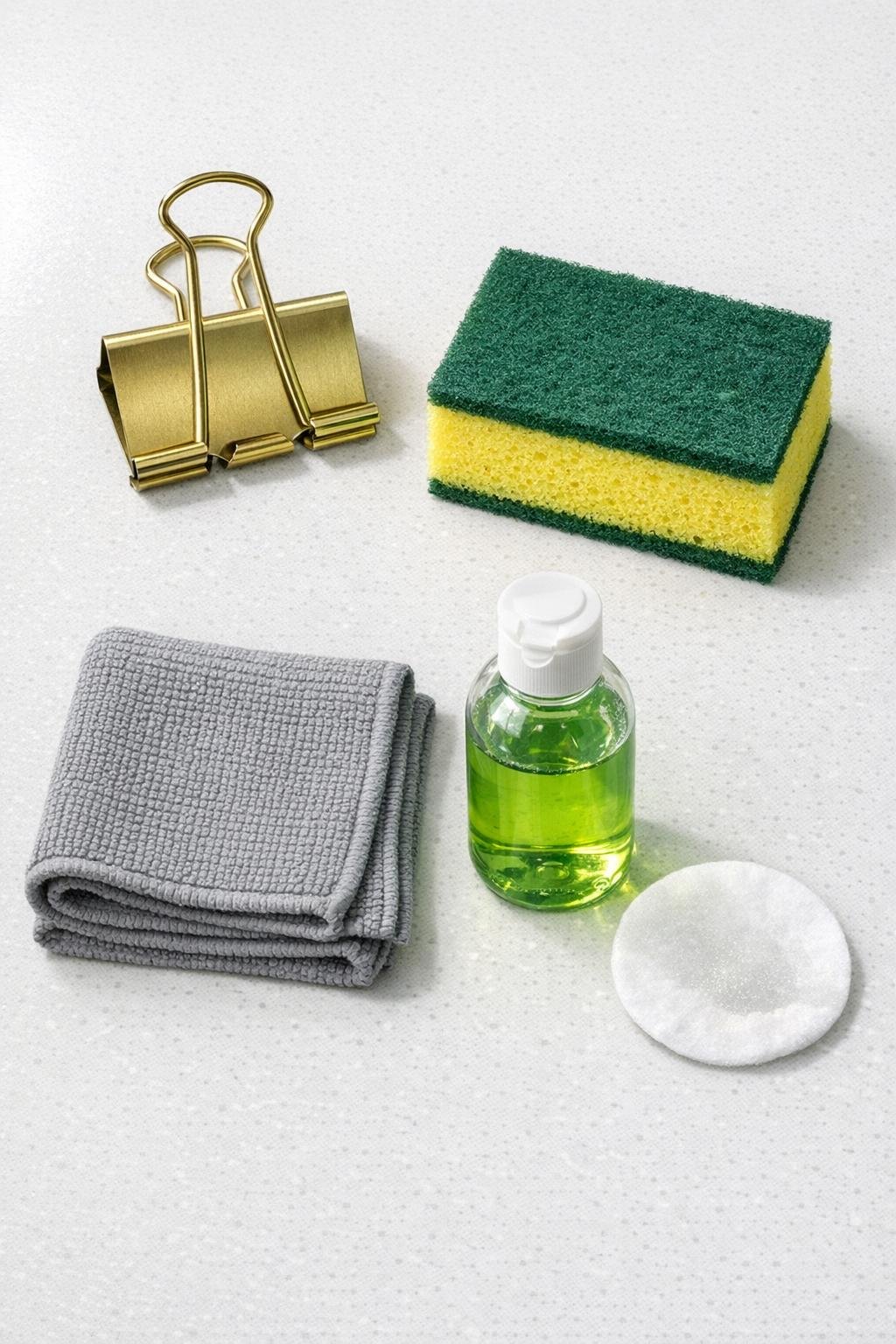
Materials
Instructions
1. Empty the sink area and choose a spot along the inside rim of the basin where the sponge will be easy to reach but not directly under the faucet stream. I usually place it on a side wall near the front corner so it drains well and stays out of the way of dishes.
2. Wipe the chosen section of the sink rim thoroughly with the microfiber cloth, then go over it with the rubbing alcohol or cleaner to remove soap film and grease. Dry the area completely so the clip grips clean metal instead of residue.
3. Open the large brass binder clip and test it on the inside rim of the stainless steel sink basin. The flat body of the clip should sit inside the sink, with the jaws gripping the rim securely without wobbling.
4. Rotate the silver wire handles upward and outward so they create a small cradle in front of the clip body. This is the clever part: the sponge will lean on the clip and rest against the handles, which helps air circulate around it.
5. Set the sponge into the holder so the bottom edge rests lightly against the clip and the sponge stands upright or slightly angled. Adjust the wire handles until the sponge feels balanced and can drip back into the sink instead of onto the counter.
6. Press lightly on the sponge once or twice to make sure it does not slip when wet. If it shifts, move the clip to a flatter section of rim or angle the wire handles a bit wider for a better perch.
7. Use the holder as usual, rinsing the sponge and setting it back in place after each wash-up. Give the clip and sink rim a quick wipe every few days to keep soap residue from building up and to keep the setup looking neat.
Variations & Tips
For thicker sink rims: If your binder clip feels too tight or will not open wide enough, try an extra-large binder clip instead of forcing it. A secure fit matters more than the exact size.
For double sponges: Use one clip on each side of the basin if you like to keep a scrub sponge and a soft sponge separate. I find this especially useful when I am juggling greasy pans and delicate glasses.
Handle position tip: Leave the wire handles attached, since they help support the sponge and make the holder more functional. If the handles poke out too far, fold them into a lower angle rather than removing them.
Best sponge shape: A standard rectangular sponge works better than a round or very flexible cellulose sponge because it stands up more reliably in the clip.
Keep it polished: Choose a brass binder clip for a warmer, more intentional look against stainless steel. It is a tiny detail, but in a kitchen, those small visual choices can make a quick fix look surprisingly put together.
Cleaning routine: Remove the clip once a week, rinse away trapped soap, and dry both the clip and the sink rim before reattaching. That little habit keeps the holder sanitary and helps prevent water marks.