
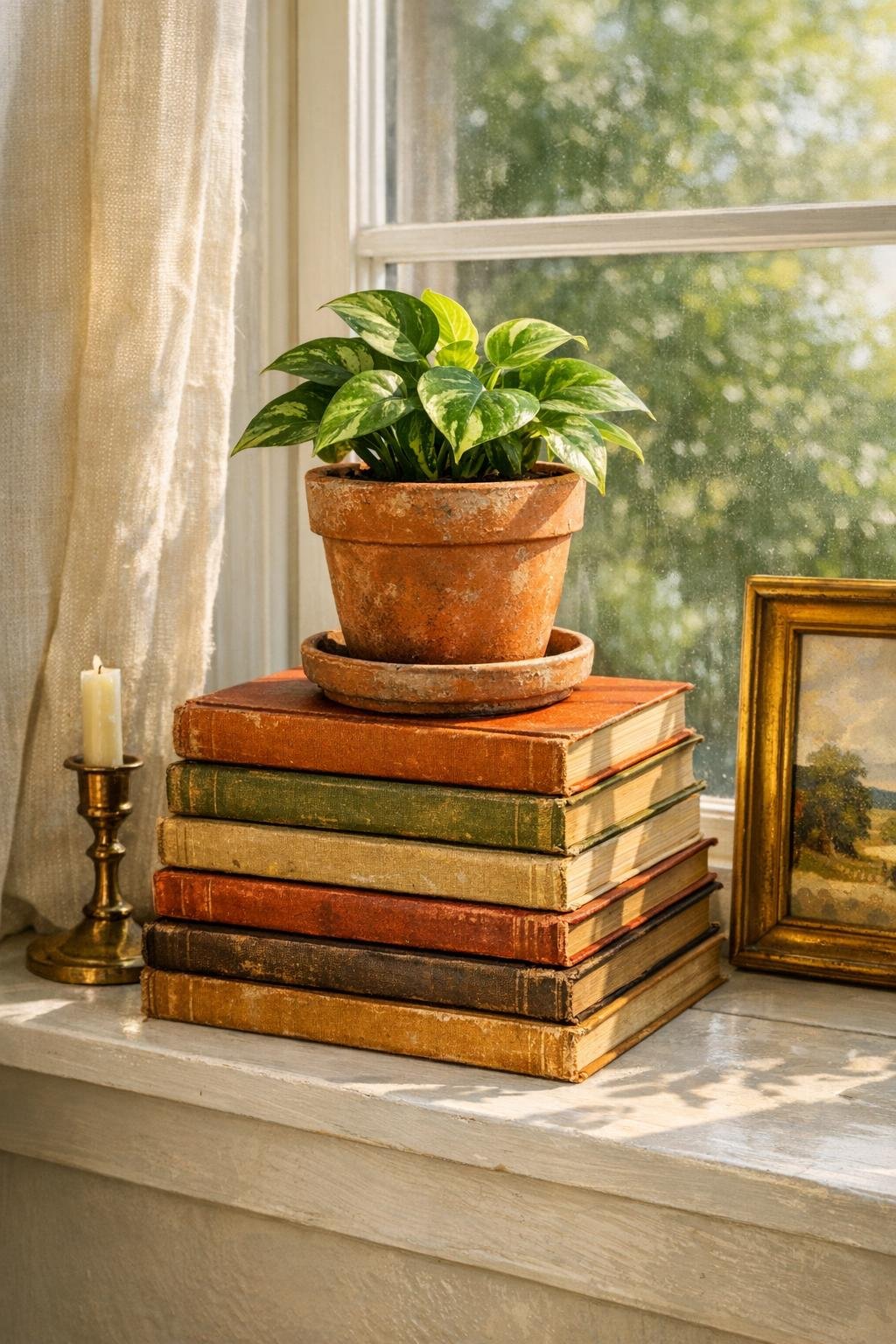
There’s something wonderfully satisfying about turning everyday objects into decor that looks intentional, layered, and a little bit collected over time. For this plant riser, I stack a few autumn-toned vintage hardcover books under a small terra cotta pot to give a houseplant more height on a living room windowsill, and the result feels warm, literary, and polished without requiring any real building skills.
I love projects like this because they solve two decorating problems at once: they lift a plant closer to the light, and they make a plain windowsill feel styled. If you enjoy a home that looks thoughtfully put together but you don’t want to break out power tools, this is exactly the kind of easy, high-payoff trick that works beautifully.
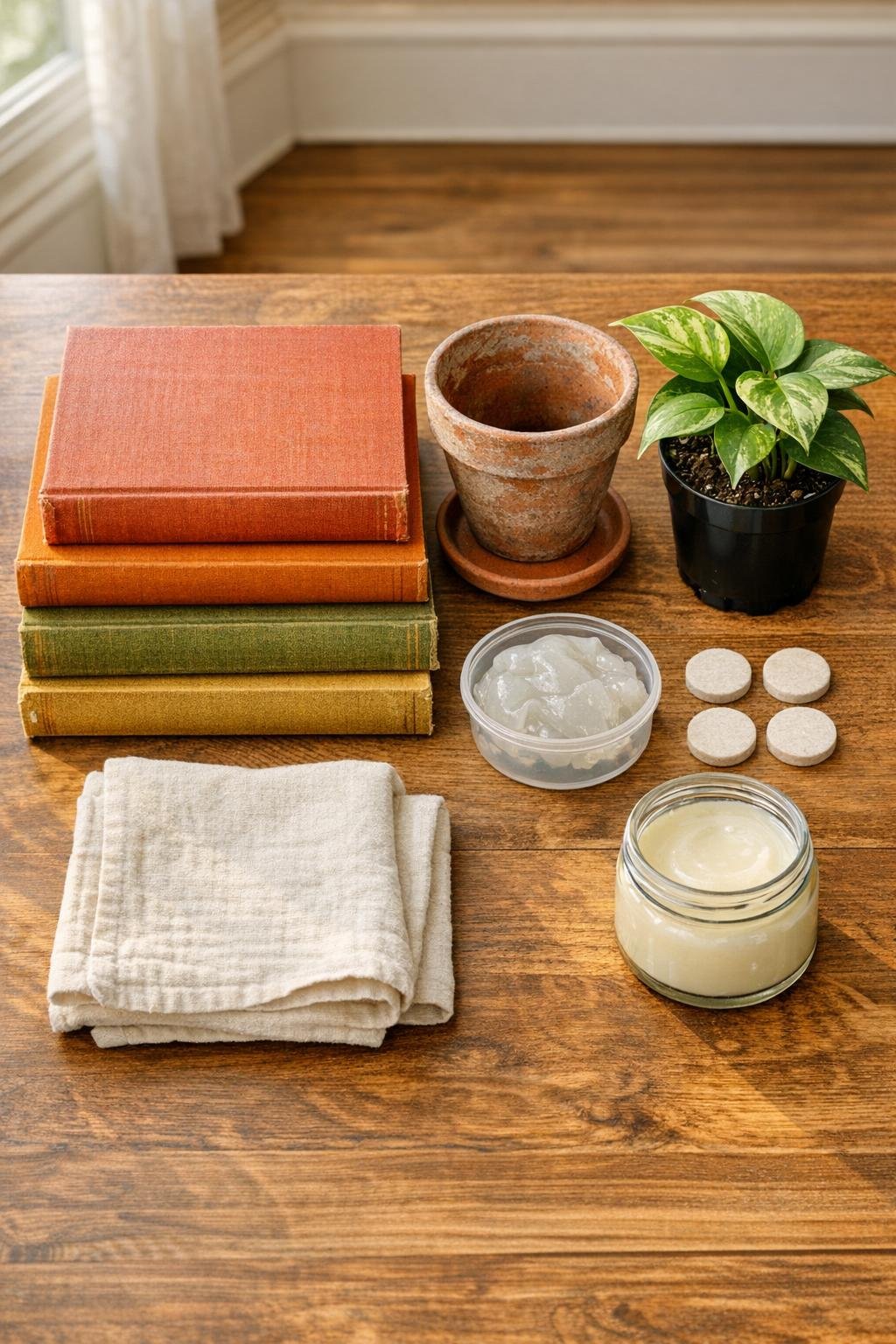
Materials
Instructions
1. Choose three hardcover books with sturdy spines, flat covers, and colors that work together; the prettiest stacks usually mix one darker book, one medium tone, and one lighter neutral.
2. Wipe the books, pot, and saucer with a dry soft cloth so dust doesn’t get trapped under the plant or make the stack look dingy.
3. If the book covers feel delicate, rub on a very thin coat of matte clear wax or sealant over the top and edges of each cover, then let them dry fully to help protect them from light moisture and handling.
4. Add one felt pad to each bottom corner of the lowest book so the stack won’t scratch the windowsill and will stay level.
5. Stack the books from largest and heaviest on the bottom to smallest on top, rotating them until the edges line up neatly and the pile looks balanced from the front.
6. Press small pea-sized bits of museum putty between each book near the corners, then gently press the books together so the stack stays secure without becoming permanent.
7. Place a few more small bits of museum putty on top of the upper book, set the terra cotta saucer in the center, and press lightly so it won’t slide if the sill is bumped.
8. Put your houseplant, still inside its nursery pot or planted securely in the terra cotta pot, onto the saucer and turn it until the fullest side faces into the room.
9. Check the arrangement from both the side and front; if it needs more presence, shift the stack slightly off-center on the sill so the books and plant read as a styled vignette instead of a straight line.
10. For a finished look, touch up any badly scuffed spots on the book edges with a tiny bit of brown or tan paint, or tie a soft ribbon around the bottom two books and knot it loosely at the side or front.
Variations & Tips
Best plant choice: Stick with a compact plant that stays light in weight, like pothos, peperomia, pilea, or a small philodendron. I avoid anything top-heavy because this project looks best when it feels effortless and stable.
Moisture control: Always use a saucer under the pot, even if the plant is in a nursery pot tucked inside. In my kitchen and living room alike, I’ve learned that a tiny barrier saves surfaces and keeps pretty styling from becoming a cleanup job.
Book selection: Hardcover books with cloth or matte paper covers grip each other better than slick dust jackets. If your books still have jackets, remove them before stacking so the pile doesn’t slide.
Color story: Autumn tones make the arrangement feel especially rich, but you can shift the mood with other palettes like cream and sage for a softer look or navy and oxblood for something moodier and more traditional.
Windowsill safety: If your sill gets strong direct sun or condensation, seal the books well and keep the stack a couple of inches back from the glass. Old books are charming, but they do best with a little protection.
Extra polished finish: Tuck the plant into the terra cotta pot with a little sheet moss or smooth pebbles on top of the soil. It’s a small detail, but it makes the whole riser look more styled and intentional.
Make it taller: If your windowsill is deep and sturdy, use four books instead of three, but keep the widest one on the bottom and the smallest on top. I like a stepped, generous stack because it gives the plant a little drama without making the project any harder.