
By the end of the growing season, my raised beds always seem to hit that awkward phase where the tomatoes are still producing, the beans are leaning hard, and the original trellis has started to wobble just when I need it most. This little trellis anchor is one of those practical garden fixes that looks almost too simple to matter, but once it’s in place, it makes a huge difference. Using stacked wire coat hangers plus two easy dollar store finds, you can make a sturdy anchor that braces a tired trellis and helps squeeze a few more good weeks out of the bed.
I love projects like this because they’re cheap, fast, and genuinely useful for busy people who don’t want to rebuild a whole garden setup in September. If you’ve already got a raised bed trellis made from netting, twine, bamboo, or lightweight panels, this is the kind of last-minute support trick that keeps everything upright without a lot of fuss.
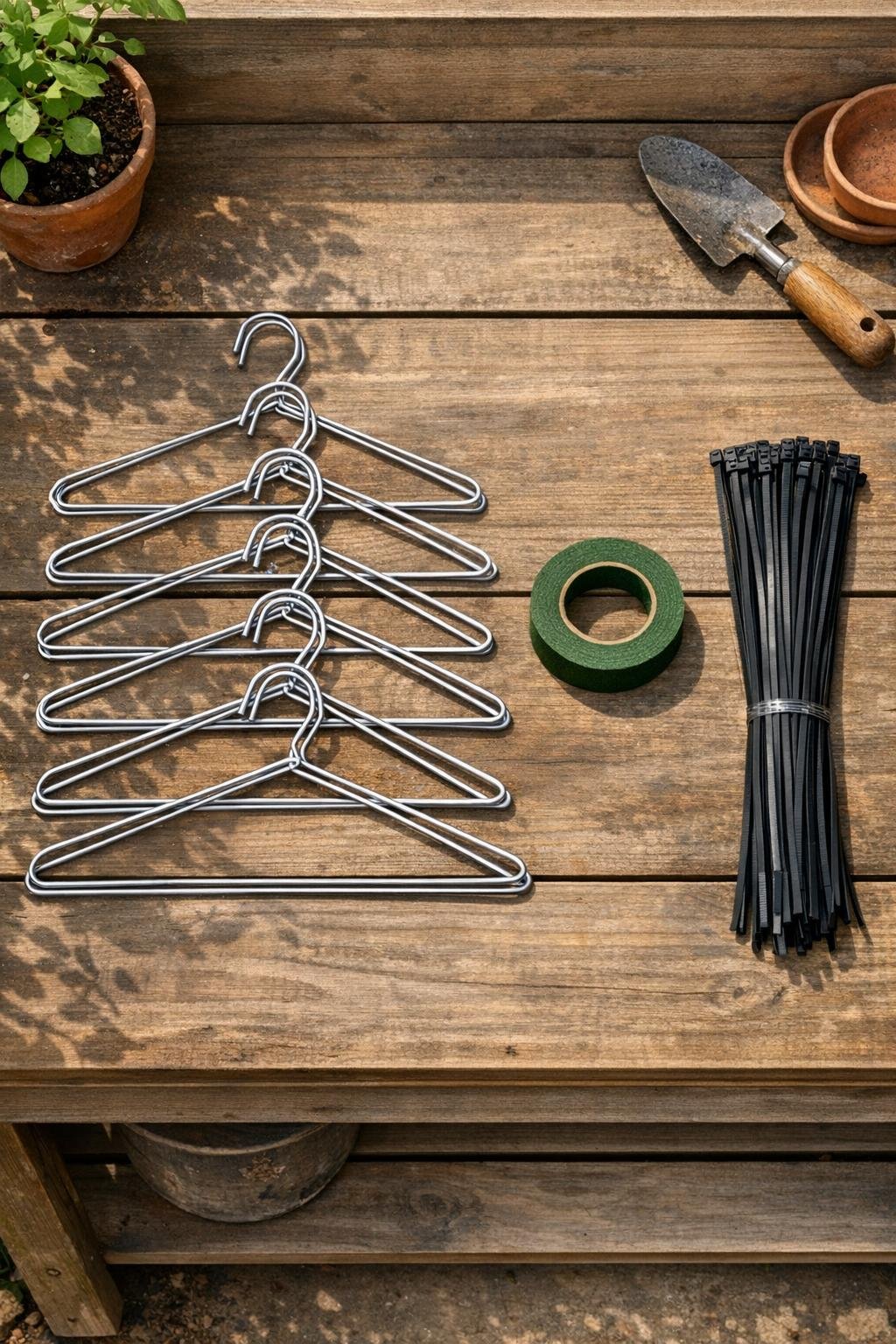
Materials
7 silver wire coat hangers, standard adult size, approximately 16 to 17 inches wide each
Instructions
1. Unhook all 7 wire coat hangers at the neck with pliers and straighten each hanger into one long wire as much as possible, leaving only a slight curve where needed.
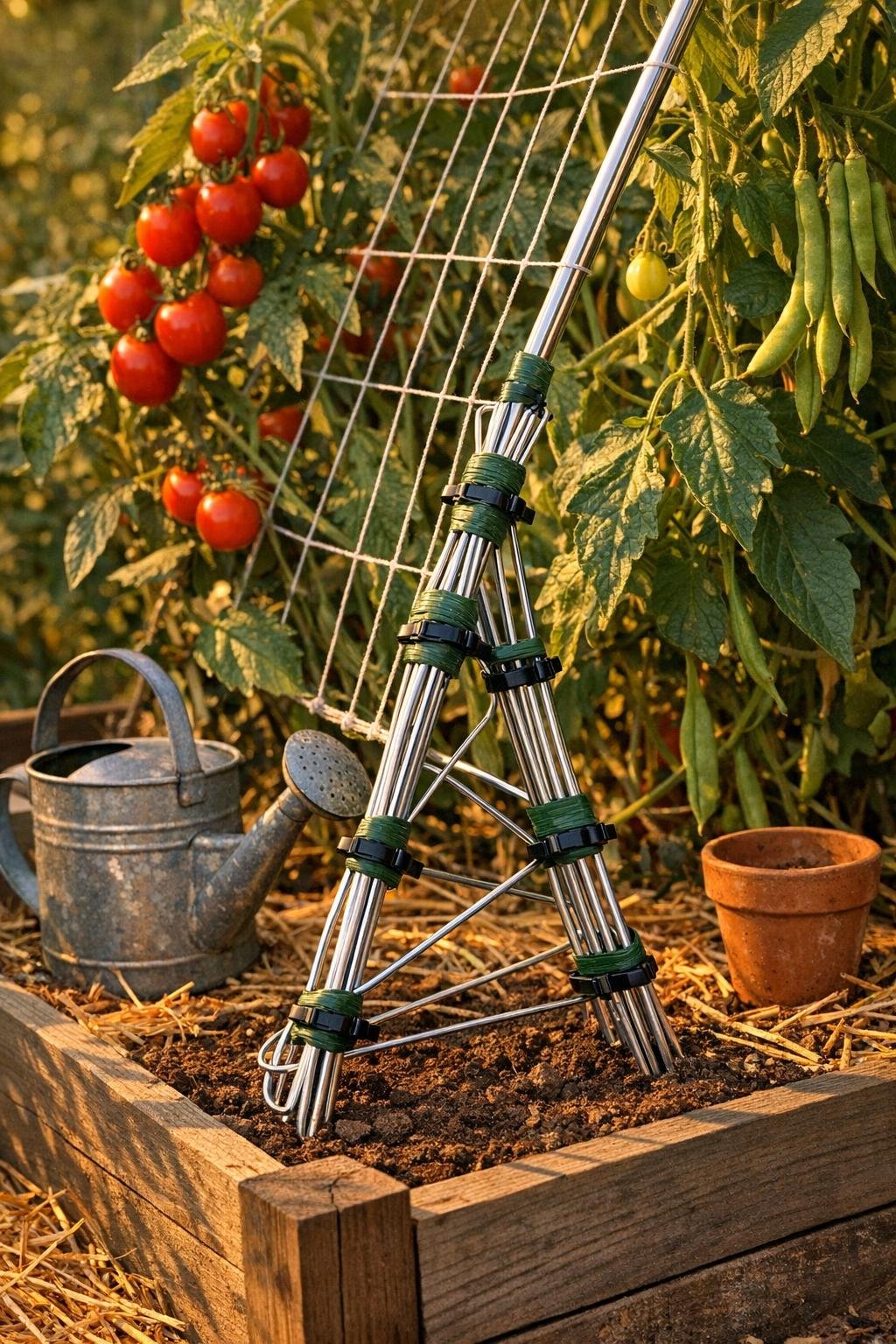
2. Stack 4 of the straightened wires together and wrap floral tape around them every 3 inches from top to bottom to create one thick anchor stake.
3. Stack the remaining 3 wires together and tape them the same way to make a second, slightly slimmer brace stake.
4. Bend the top 6 inches of each bundled stake into a shallow hook shape so it can grab onto the top rail, string line, or vertical side of your raised bed trellis.
5. Push the thicker 4-wire stake 8 to 10 inches down into the raised bed soil at the outside corner or midpoint where the trellis is leaning the most.
6. Set the 3-wire brace stake into the soil 4 to 6 inches away at a slight angle, leaning it toward the first stake to form a strong bracing pair.
7. Zip-tie the upright stake directly to the trellis at the top, middle, and lower section, pulling each tie tight so the trellis straightens as you secure it.
8. Zip-tie the angled brace stake to the upright stake in two places, one near the top bend and one around the middle, to lock the support into a rigid frame.
9. Add the remaining zip ties anywhere the trellis still flexes, especially around heavy tomato stems, cucumber vines, or netting that sags under fruit.
10. Press the soil firmly around both stakes with your foot or a hand trowel, then wrap a final bit of floral tape over any sharp wire ends so the anchor is safe to work around.
Variations & Tips
For heavier crops: If your bed is loaded with big indeterminate tomatoes, use 5 hangers for the main stake and 2 for the brace instead of splitting them more evenly. That extra thickness really helps when the plants are at their heaviest.
For net trellises: Thread the zip ties through the net squares and around the wire stake instead of just cinching around the outer edge. I’ve found that keeps the whole panel from billowing forward after a windy day.
To protect stems: Keep the stake just behind the trellis line rather than pressing it into the plant itself. Late-season vines are more brittle than they look, and I’ve definitely snapped a tomato branch by rushing this job after work.
For cleaner finishes: Wrap the top hook and any cut or twisted spots with extra floral tape. It takes one extra minute and makes the finished support look intentional instead of like a quick emergency repair.
If your soil is hard: Water the spot first or use a screwdriver to make a pilot hole before pushing in the bundled wire. That makes installation much easier and helps the hanger wires stay straight.
Best use case: This works best as an end-of-season rescue for lightweight or medium-duty raised bed trellises, not as a full-season replacement for cattle panels or heavy wood framing. Think of it as the garden equivalent of a last-weeknight dinner shortcut: fast, affordable, and exactly what you need right now.