
There’s something mighty satisfying about turning the plainest little things into a garden helper that looks like it came from a tidy catalog. This clothespin vine support clip is one of those tricks I wish I’d started years ago. With soaked wooden clothespins and a length of common garden jute, you can make a whole bundle of pretty, useful support clips that help peas, clematis, sweet peas, and tender tomato side stems stay where you want them without a lot of fuss.
I especially like this project for early spring, right before everything takes off and starts reaching for the sky. The soaking step gives the clothespins that rich, aged brown finish that makes them look far more special than they are, and the jute turns them into ready-to-hang support ties you can fasten all along a trellis or cage. It’s easy enough for a beginner, inexpensive enough to make by the dozen, and polished enough that folks really do think you bought them somewhere nice.
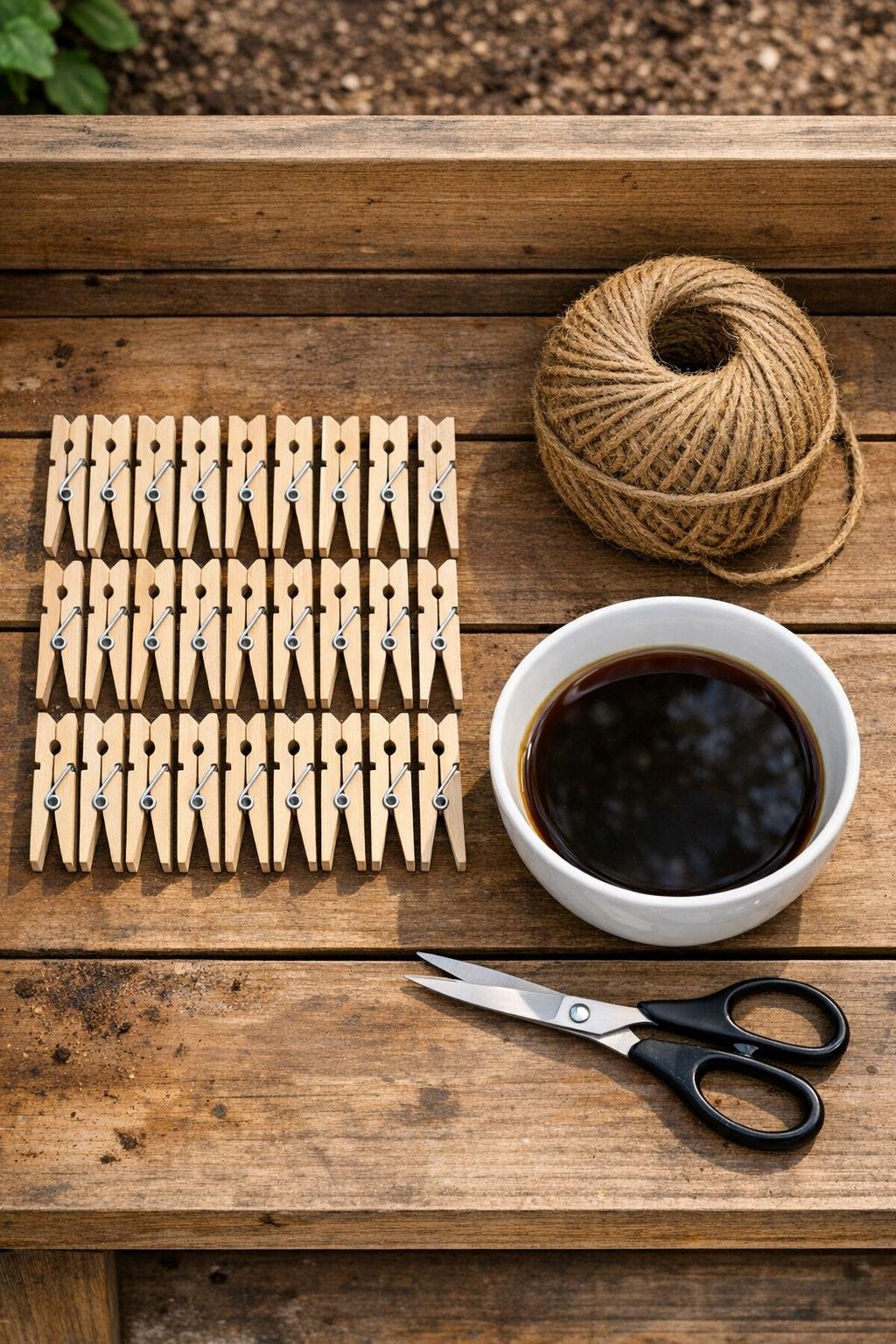
Materials
36 unfinished wooden spring clothespins, standard size about 3 1/4 inches long
Instructions
1. Brew 4 cups of very strong black tea or coffee, pour it into the bowl, and let it cool completely so the clothespins won’t warp from heat.
2. Add the wooden clothespins to the dark liquid and turn them a few times so all sides get wet; soak them for 2 to 4 hours for a rich, weathered garden color.
3. Lift the clothespins out and spread them on the towel or paper bags in a single layer; let them dry fully overnight so the stain sets and the wood feels dry to the touch.
4. Cut 36 lengths of jute twine, each 30 inches long; this gives you enough length to tie each clip to a trellis, tomato cage, branch, or stake with room for adjustment.
5. Tie one piece of jute securely around the metal spring neck of each clothespin with a double knot, keeping the knot snug so it won’t slide when the clip is opened and closed.
6. Trim the twine ends evenly if needed, then test each clothespin by pinching it open and closed to be sure the knot doesn’t interfere with the grip.
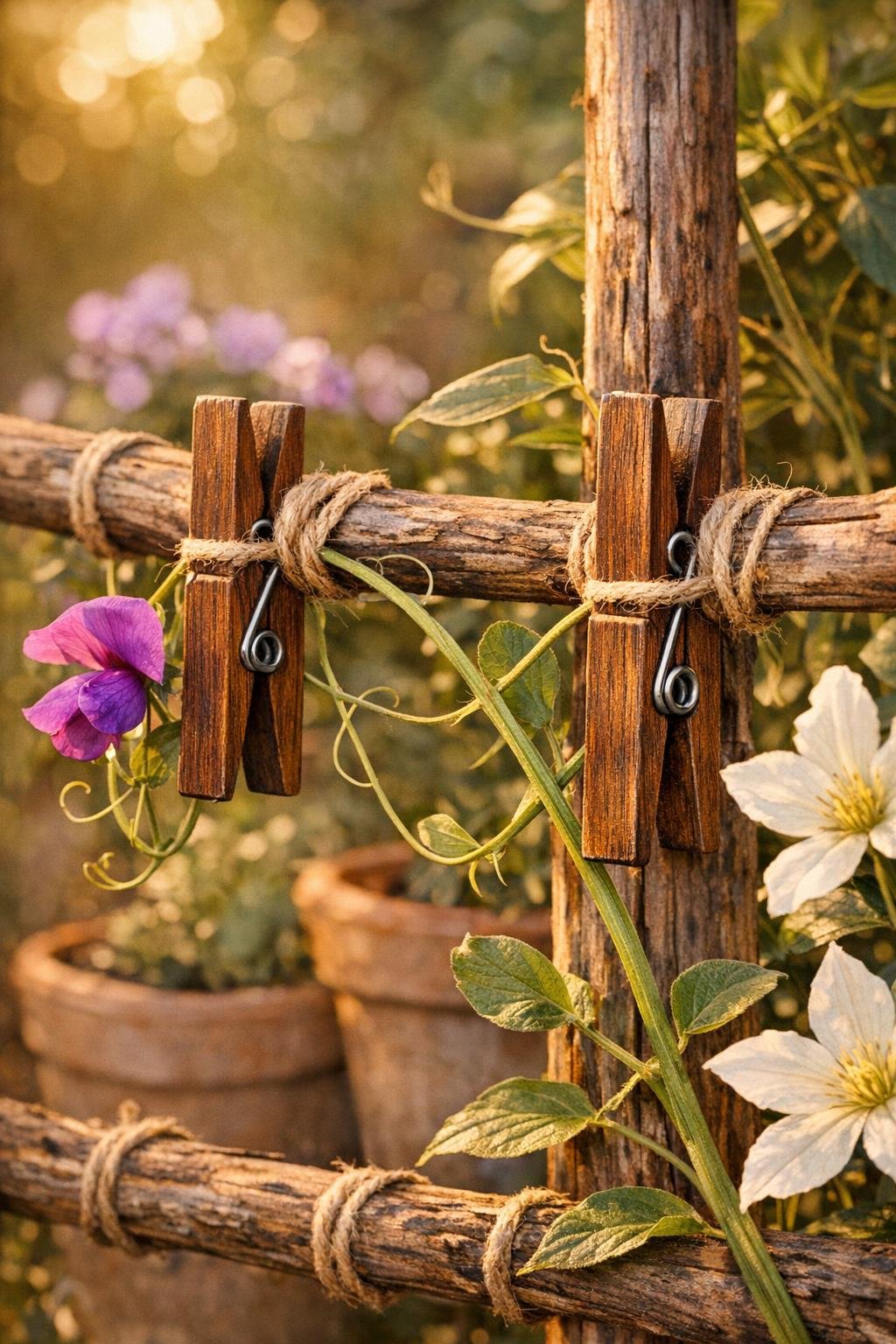
7. Fasten the free end of each jute tie to your support structure with a simple bow or double knot, spacing the clips every 6 to 10 inches anywhere your vine will need guidance.
8. Gently gather a vine or tender stem and clip it loosely in place, catching enough foliage to guide the plant upward without pinching the stem itself.
9. Add as many clips as needed to create a full line of support, then step back and adjust the spacing so the vine looks naturally trained instead of pulled too tight.
Variations & Tips
For darker color: If you want an even deeper aged finish, soak the clothespins overnight and let them dry a full day before tying on the jute.
Best plants for these: I use these most on sweet peas, black-eyed Susan vine, clematis, pole bean starts, and the lighter side stems of tomatoes. They’re best for gentle guiding, not for heavy load-bearing.
For a cleaner look: Use all the same length of twine and tie every clip at the same height on your support. That little bit of consistency makes the whole planting look planned and polished.
Weather tip: Natural wood and jute will age outdoors, which I happen to love, but if you want them to last a little longer through a wet season, store extra clips in a dry shed and only hang what you need.
Gentle clipping: Always clip around leaves, tendrils, or a small bundle of growth instead of pressing directly on one tender stem. Plants need a little wiggle room to stay happy.
Make a big batch: Once I start, I never make just a handful. A batch of 36 goes quickly in the garden, and having extras tucked into an apron pocket saves a lot of back-and-forth on a busy planting morning.