
If deer, rabbits, and curious neighborhood critters treat your garden bed like an all-you-can-eat buffet, this is the kind of quick fix I absolutely love. This project turns a few plain aluminum loaf pans plus two common shed staples into a light, reflective protective barrier that startles pests, adds movement in the breeze, and helps define the edge of a garden bed without building a big permanent fence.
I like this one for busy gardeners, beginners, and anyone who wants a low-cost layer of protection around lettuce, herbs, beans, strawberries, or young flowers. It is especially handy in smaller beds where you need coverage fast, and because the pans stay visible in the finished project, it has that clever “made it from what I had” charm that feels right at home in a Midwestern backyard like mine.
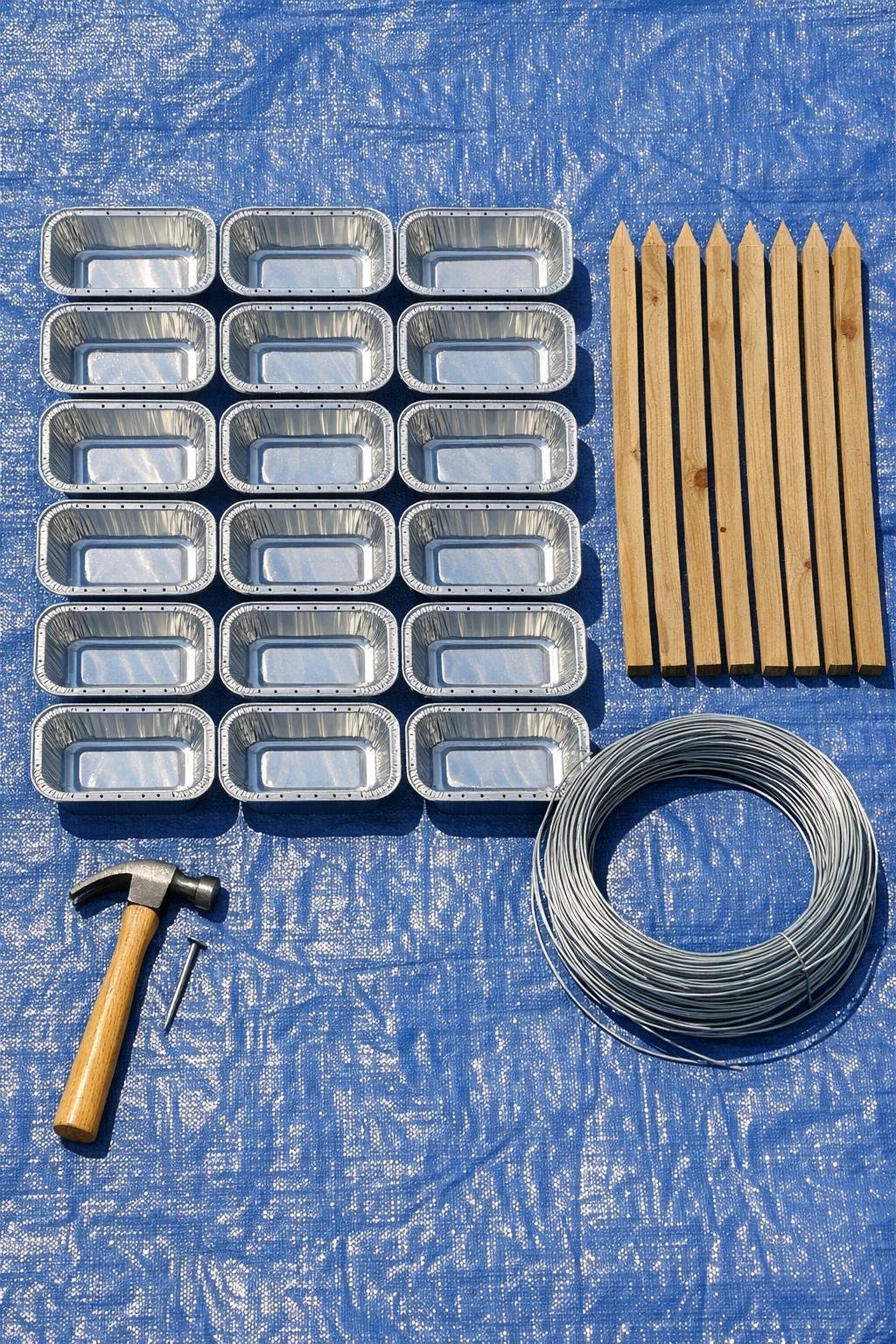
Materials
Instructions
1. Measure the side of the garden bed you want to protect and mark stake spots every 16 to 18 inches so the barrier looks full and stays steady in the wind.
2. Use the hammer and nail to punch 2 holes along one long rim of each aluminum loaf pan, spacing the holes about 1 inch in from each end; if needed, flatten any sharp burs gently with pliers.
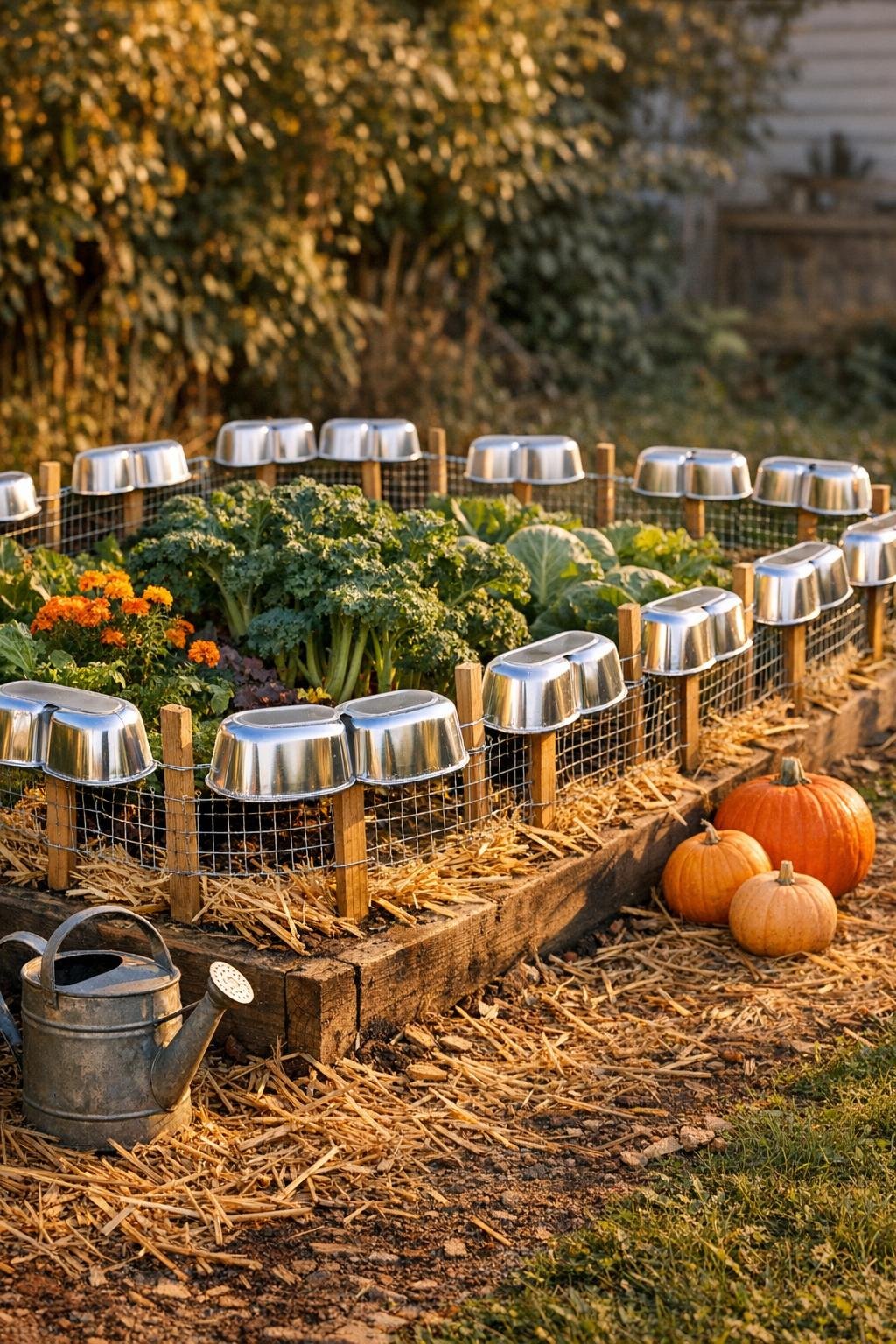
3. Stack 2 loaf pans side by side against each stake, with the open sides facing outward in opposite directions so they catch light and move a little instead of acting like a solid sail.
4. Cut two 10-inch lengths of galvanized wire for each pair of pans, thread the wire through the punched holes and around the stake, then twist snugly with pliers so the pans stay secure but not crushed.
5. Repeat with the remaining stakes until you have 9 pan clusters total, which gives you a generous, attention-grabbing barrier for a bed edge about 12 to 14 feet long.
6. Push or tap the stakes into the soil 6 to 8 inches deep, keeping the loaf pans 10 to 14 inches above the ground so rabbits notice them and deer catch the flash of movement.
7. Angle every other stake slightly left or right to create a staggered reflective line rather than a flat row; this fuller layout gives better visual disruption for skittish animals.
8. For extra movement, gently bend the outer corners of a few pans outward by hand so they flutter and glint more easily in even a light breeze.
9. Walk the bed and tighten any loose wire, then make sure no sharp edge points into pathways where kids, pets, or pant legs might brush against it.
10. Water the bed as usual and leave the barrier in place through the vulnerable growing period, repositioning a few stakes now and then so local critters do not get too used to the pattern.
Variations & Tips
For raised beds: If your bed has a wooden frame, place the stakes just outside the boards so the pans hover near the crop without crowding the soil surface.
For picky critters: In my yard, changing the angle of a few pans every week helps more than leaving everything perfectly lined up; animals notice patterns, so a little inconsistency works in your favor.
For windy spots: Use slightly shorter stakes or set them deeper if your garden gets strong gusts, and keep the pans a bit lower so they flash and rattle lightly instead of whipping hard.
To protect tender greens: This works especially well around lettuce, spinach, young beans, and strawberries when plants are small and most tempting.
For a neater finish: Trim wire tails short and bend them inward with pliers so the project looks tidy and polished instead of snaggy.
To add more scare effect: If you already have extra shed odds and ends, a few loose pebble-sized stones inside selected pans can add a gentle clatter in the wind, but keep it light so the stakes stay stable.
Seasonal tip: I like using this in fall when garden pressure seems to pick up and every last salad green feels precious, but it is just as useful in spring when seedlings first go in.