
There’s something deeply satisfying about turning a humble shed find into a hard-working garden helper, and this cold frame anchor is exactly that kind of project. By cutting the bottom off a galvanized trash can and pairing it with two simple garden staples, you get a sturdy, wind-resistant protector that warms the soil, shelters tender plants, and keeps a lightweight cover from skittering across the yard on every blustery fall afternoon.
Out here, we’ve always stretched the season any way we could, from old windows over lettuce beds to feed sacks draped over tomato cages on chilly nights. This version is especially handy for gardeners who want something quick, tough, and genuinely useful without building a full wooden cold frame. If you’ve got a small garden bed, a patch of greens, or a row of late herbs you’re trying to baby through the first frosts, this one earns its keep fast.
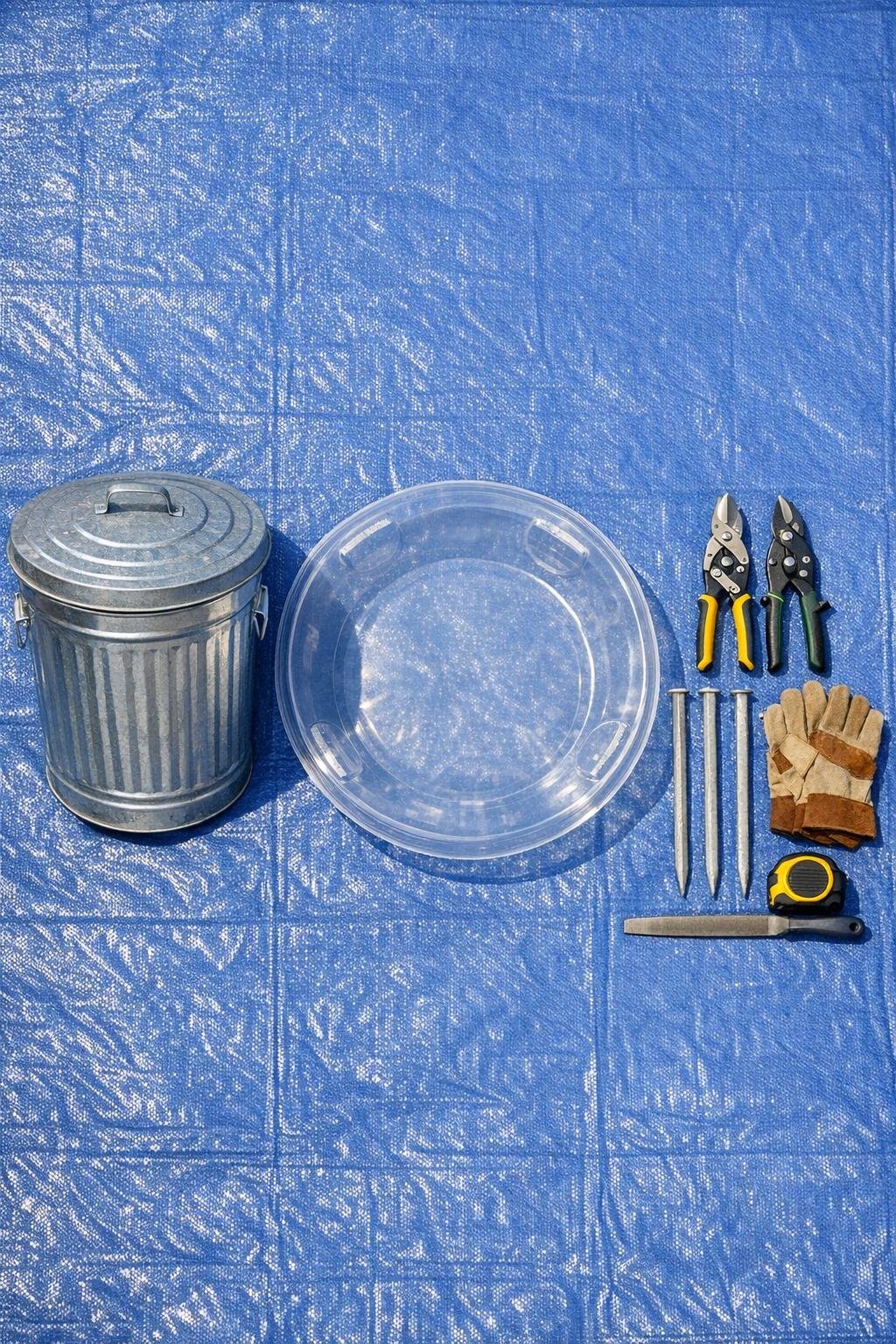
Materials
Instructions
1. Turn the galvanized trash can upside down on a tarp and use tin snips to cut out the entire bottom, staying just inside the rolled edge so the body keeps its strength.
2. Smooth the freshly cut edge with sandpaper or a metal file, then wrap that edge with foil tape so it’s safer on hands and gentler on the soil surface.
3. Choose a fall bed with low crops like lettuce, spinach, kale starts, or parsley, and rake the soil level so the trash can ring will sit flat without gaps.
4. Press the bottomless trash can about 1 inch into the soil around the plants, twisting slightly as you go so it makes a snug collar that blocks drafts and holds warmth close to the bed.
5. Drive the four galvanized landscape spikes into the soil just outside the ring at four evenly spaced points, leaving about 1 inch above ground so the can cannot shift or lift in wind.
6. Set the clear plastic saucer sled over the top as a lid, centering it so it overlaps the metal ring evenly and traps warmth like a simple cloche.
7. If your cover wants to slide, add short strips of clear outdoor repair tape at two opposite edges to keep the lid aligned while still easy to lift for watering and airflow.
8. On especially cold or windy nights, place the brick or paver inside on the soil near the edge, and vent the cover during sunny afternoons so the plants don’t overheat.
9. Check the frame after the first rain and first freeze, pressing the ring back into the soil if needed and making sure the spikes are still firm and the cover sits tight.
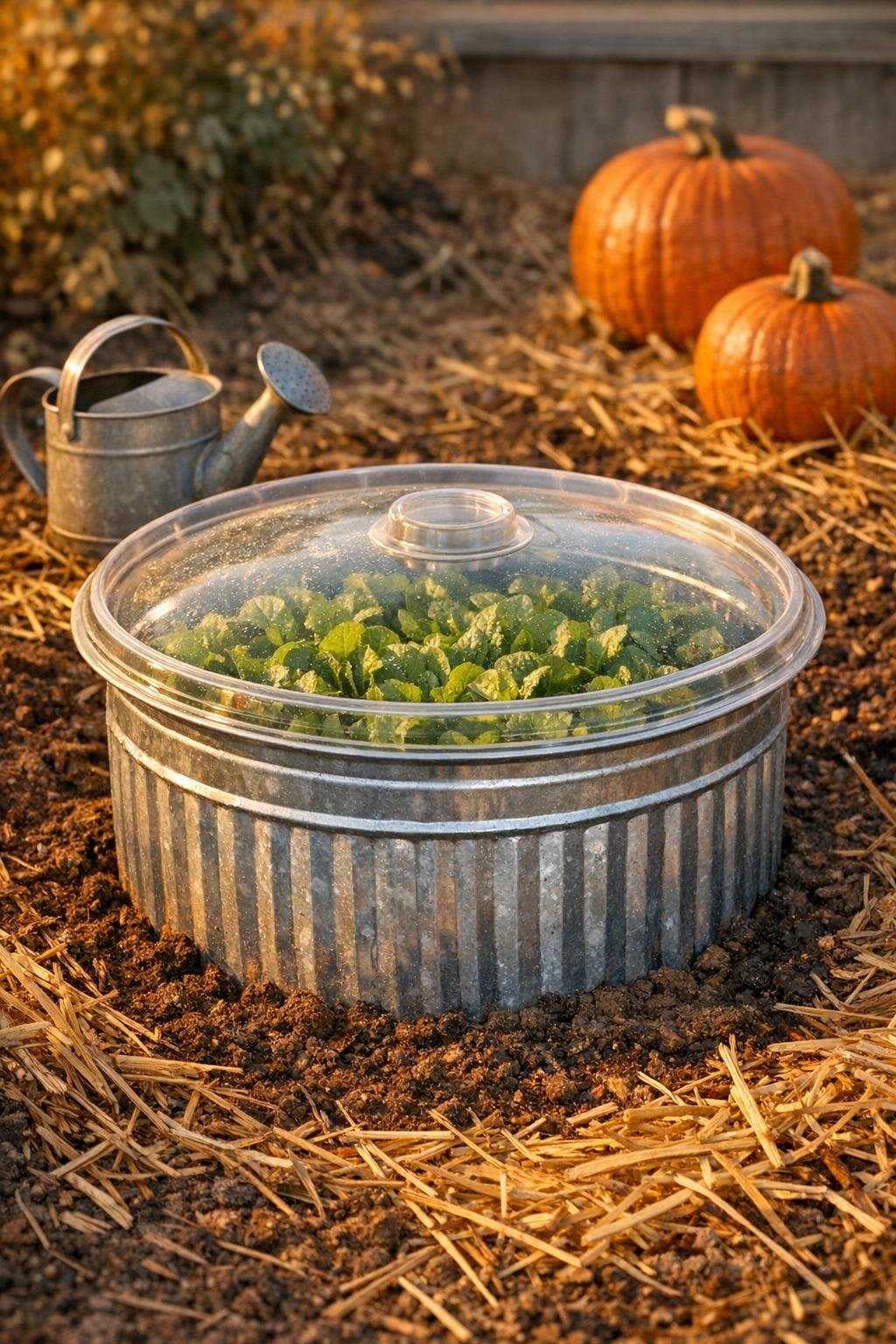
Variations & Tips
For larger plants: Use the same method with a taller 31-gallon galvanized can to shelter compact kale, chard, or a cluster of celery, giving yourself more headroom without adding much work.
For extra insulation: Tuck straw mulch 2 to 3 inches deep around the outside base of the metal ring to help hold soil warmth overnight. We did versions of this around tender plants years ago, and that little buffer makes a bigger difference than folks expect.
For easier venting: Prop one side of the clear lid up 1 to 2 inches with a small stick on mild afternoons. Cold frames gather heat quickly, especially when the sun comes out after a frosty morning.
For sharper weather: Drape an old towel or frost cloth over the plastic lid after sunset, then remove it in the morning once temperatures rise above freezing.
If you don’t have a saucer sled: A rigid clear plastic tote lid that overhangs the can by at least 1 inch on all sides works nicely too, as long as it is stiff enough not to sag into the plants.
Safety note: Galvanized metal edges can be sneaky sharp even after filing, so always wear gloves and take your time on the cut edge. I like to tape it generously rather than skimp, because this is one of those quick jobs that should stay pleasant all season.
Best use: This style shines over dense, low-growing crops rather than tall stems. Think salad greens, baby brassicas, cilantro, and parsley—the sort of kitchen garden patch you’ll be glad to keep picking a few weeks longer.