
If your sweater shelf tends to start the week looking tidy and end it looking like a fabric avalanche, these simple divider panels are the kind of fix that makes everyday life easier. I love projects like this because they solve a real problem without asking for a whole Saturday, and they use basic materials to create something that looks surprisingly polished once it's in place.
I designed these dividers from sliding cardboard gift box lids wrapped in oatmeal linen so they stay lightweight, slim, and easy to slide between folded stacks on a bedroom shelf. They’re perfect for anyone who wants a calmer closet without buying specialty organizers, and especially nice if, like me, you’re always trying to make a busy week run more smoothly with a few practical upgrades at home.
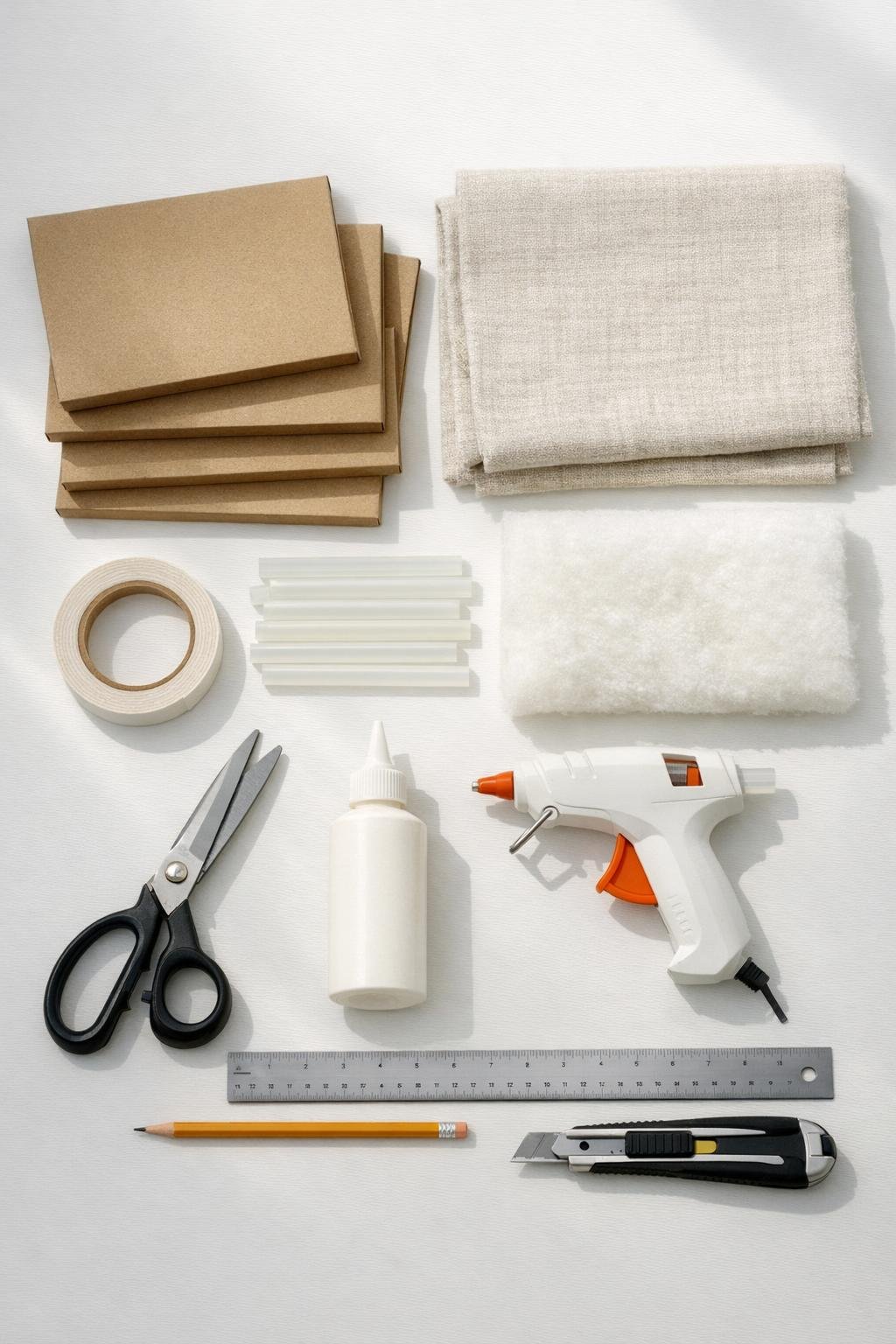
Materials
Instructions
1. Measure the height and depth of your sweater shelf, then compare it to the gift box lids so you know whether they need trimming; the divider should slide in easily while standing tall enough to separate full folded stacks.
2. Trim each cardboard lid to fit if needed, keeping the front edge straight and the corners square; for most shelves, a finished size around 10 1/2 inches tall by 13 inches deep works well.
3. Cut four pieces of batting the same size as the lids and glue one to the top face of each lid; this soft layer gives the linen a smoother, more finished look instead of showing every bit of the cardboard underneath.
4. Cut four pieces of oatmeal linen 2 inches larger than each lid on all sides, then press or smooth the fabric flat so you don’t wrap wrinkles into the finished dividers.
5. Place one lid batting-side down onto the wrong side of a linen piece, add double-sided tape along the long edges, and pull the fabric snugly over to the back; clip it in place so the front stays smooth.
6. Fold the short ends like wrapping a present, tucking the corners neatly, then secure them with hot glue or craft glue on the back side; repeat with the remaining lids.
7. Add a thin bead of glue over any raw linen folds on the back and press them flat with a damp cloth so the divider stays slim and won’t catch on sweaters when you slide it in and out.
8. Let the wrapped lids dry fully for 20 to 30 minutes, then test one on the shelf between folded stacks; if it feels tight, trim a tiny amount from the bottom or back edge and rewrap that edge neatly.
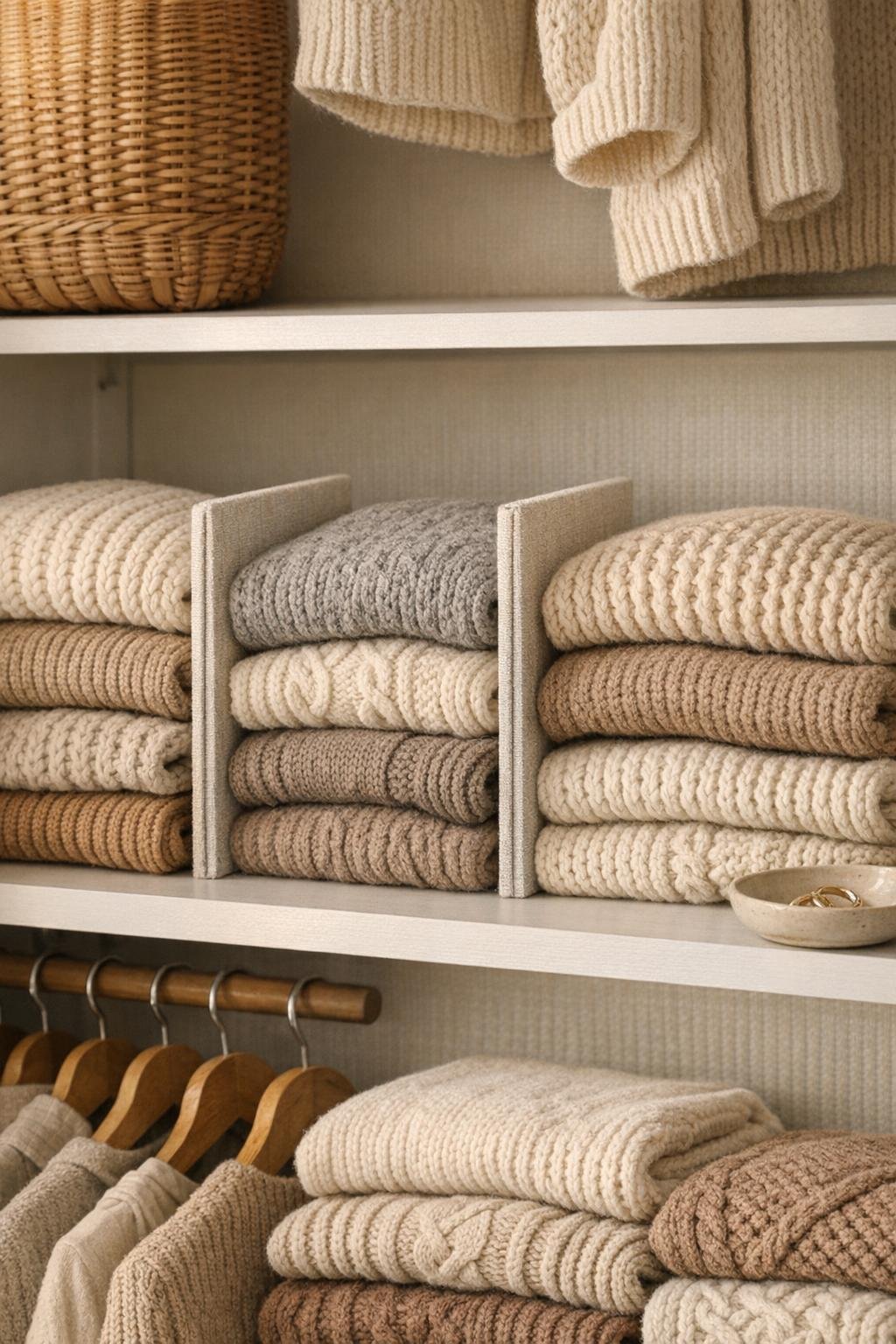
9. Arrange your folded sweaters into generous stacks, then slide one divider between each category—cardigans, pullovers, work knits, or lounge sweaters—so every pile keeps its shape even when you pull one item out.
10. For the cleanest finish, place the smoothest wrapped side facing out and line the front edges up evenly across the shelf; it takes about a minute and makes the whole setup look intentional instead of improvised.
Variations & Tips
For deeper shelves: If your shelf is extra deep, use larger gift box lids or overlap and glue two lids together before wrapping so the divider runs farther back and supports the whole stack.
For a firmer divider: Slip a piece of thin corrugated cardboard or poster board inside the lid before wrapping if your sweaters are bulky winter knits; that little bit of extra structure helps the panel stay upright.
For easy color-coding: Use different neutral fabrics for different clothing types, like oatmeal linen for sweaters and gray cotton for jeans or tees, while still keeping the closet calm and cohesive.
For a cleaner edge: If you have pinking shears, trim the hidden back-side seam allowance with them before gluing; I do this when I want less bulk at the corners.
Budget shortcut: If you already have plain box lids at home, this is a great upcycle; I’ve done versions of this after holiday gift season, and it always feels satisfying to turn packaging into something I use every single day.
Care tip: Vacuum or lint-roll the linen occasionally so it keeps that soft tailored look, especially on open shelves where fabric organizers tend to collect dust faster than you think.