
There are a lot of fancy garden gadgets on the market now, but out where I live, the handiest fixes still tend to come from the shed. This simple fall garden bed protective cover clamp is one of those old-useful tricks: you cut the bottoms off sturdy orange 5-gallon buckets, then pair those bucket rings with two basic shed staples to make strong hold-down clamps for row cover, plastic sheeting, or frost cloth stretched over a raised bed.
I like this project because it turns something ordinary into a real workhorse right when the weather gets touchy. If you grow lettuce, kale, late carrots, beets, or even keep chrysanthemums and tender herbs going a little longer, these clamps help keep wind from whipping your cover loose. It is easy enough for a beginner, but practical enough that seasoned gardeners still swear by it for those cold, blustery autumn nights.
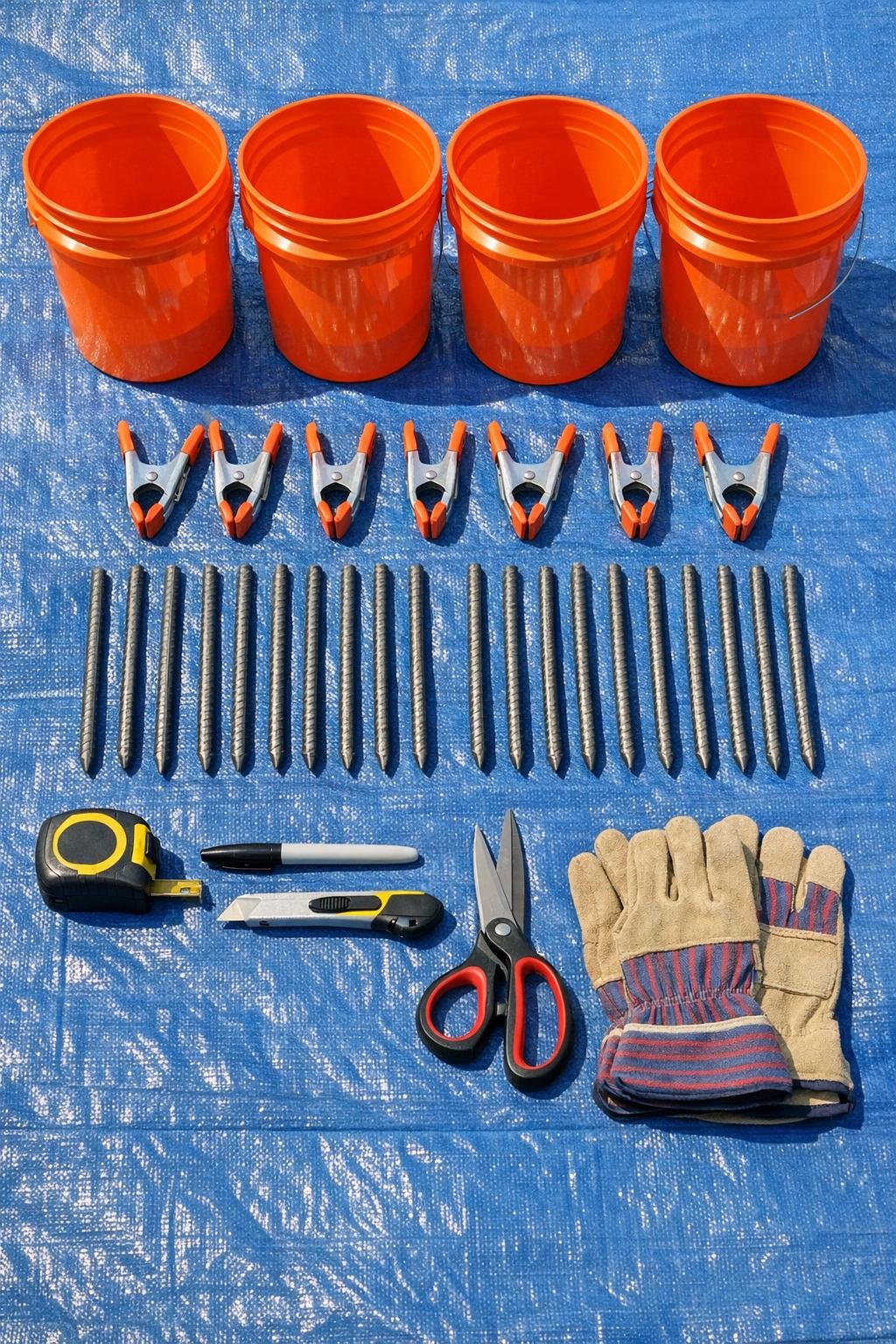
Materials
Instructions
1. Wash and dry the buckets, then set them upside down on a tarp or scrap plywood so the plastic does not slide around while you cut.
2. Measure 1 inch up from the bottom rim of each bucket and mark a cutting line all the way around; this gives you a wide, sturdy ring that will not flex too much in the wind.
3. Wearing gloves, pierce the bucket near your marked line with the utility knife and carefully cut around the bottom until it separates; repeat for all 4 buckets to make 4 strong plastic rings.
4. Trim any rough plastic edges with heavy scissors so the rings are smooth enough not to snag frost cloth when you press them down over the bed.
5. Set your hoops or low support frame over the garden bed, then drape the frost cloth or row cover over the top with at least 10 to 12 inches of extra fabric hanging down on every side.
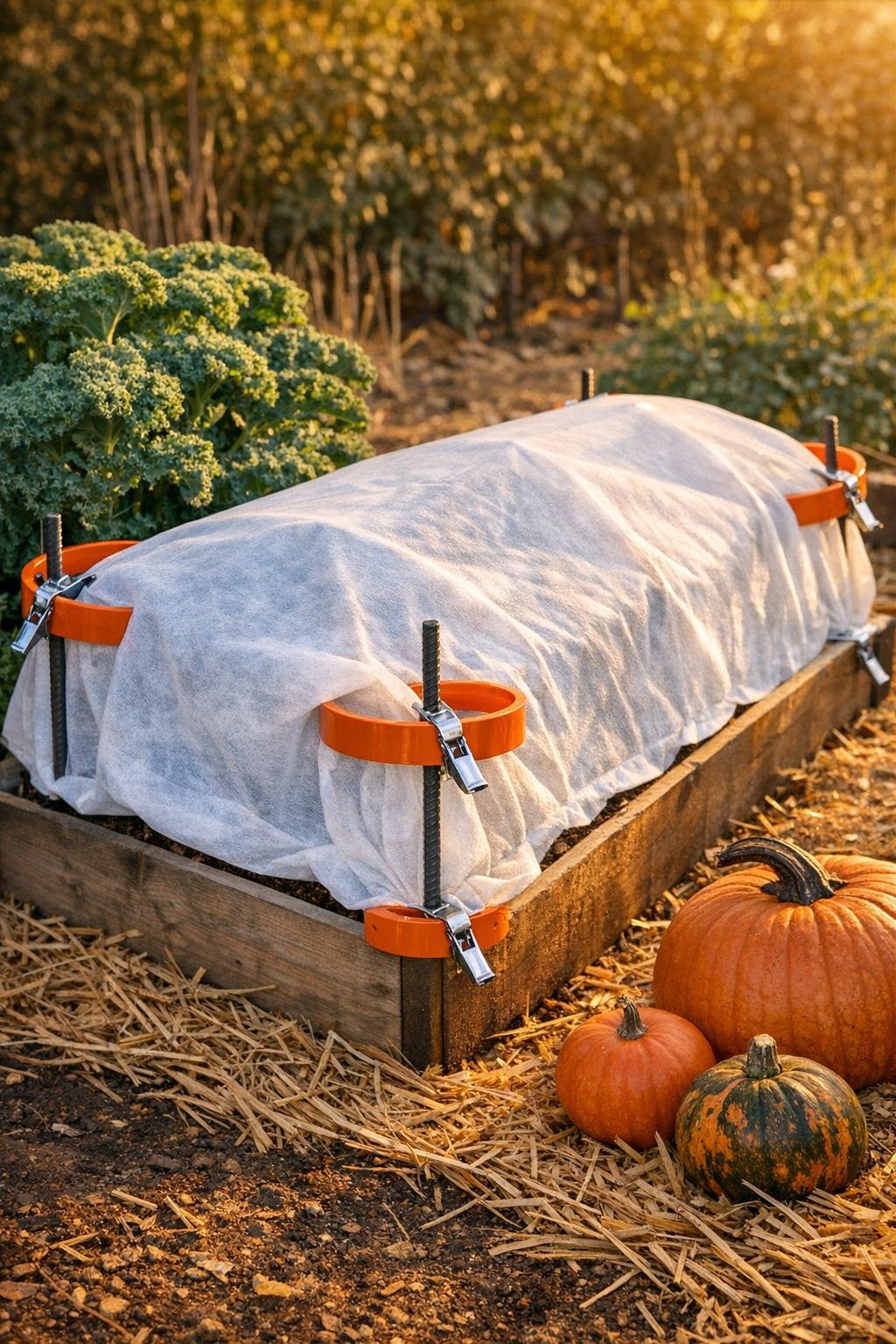
6. At one corner, gather the extra fabric flat against the outside of the bed and slide one orange bucket ring over it so the ring traps a wide band of cloth against the wood or soil edge.
7. Clip the ring firmly in place with 2 spring clamps, spacing them opposite each other so the plastic ring presses evenly and does not twist.
8. Push 1 to 2 rebar stakes through the open center of the bucket ring and into the soil at a slight angle; this anchors the clamp so wind cannot lift it.
9. Repeat the same setup at the remaining corners and along any long side that needs extra hold, using the rest of the bucket rings, clamps, and stakes to create a tight, wind-resistant seal.
10. Check that the cover still has a little loft over the plants, then tug the fabric smooth and reposition any ring so the cloth stays snug without crushing stems or leaves.
11. For cold nights, double-check every clamp before dusk and press the ring edges down evenly; if you need daytime ventilation, simply pop off one spring clamp and lift the ring back.
Variations & Tips
For longer beds: Make 6 to 8 bucket rings instead of 4 and place extra clamps midway down the long sides so the cover stays tucked during hard wind.
For heavier plastic sheeting: Use the same bucket rings with clear greenhouse plastic, but leave a little slack and vent on sunny days so heat and condensation do not build up too fast.
Smoothest cut: A fresh utility blade makes all the difference; dull blades skid on bucket plastic and leave jagged edges that can wear holes in fabric over time.
Best bucket size: Standard 5-gallon buckets are ideal because the rings are wide and rigid enough to hold a generous swath of cloth, which is what gives this trick its bite.
Easy storage: Stack the finished bucket rings inside one another and keep the clamps clipped onto the stack so everything is ready when that first surprise frost rolls in.
Extra old-timer trick: If your site gets fierce crosswinds, angle the rebar stakes in opposite directions through the ring. That little crisscross hold reminds me of the way folks around here used to pin down tarps over feed and firewood, and it works just as well in the garden.