
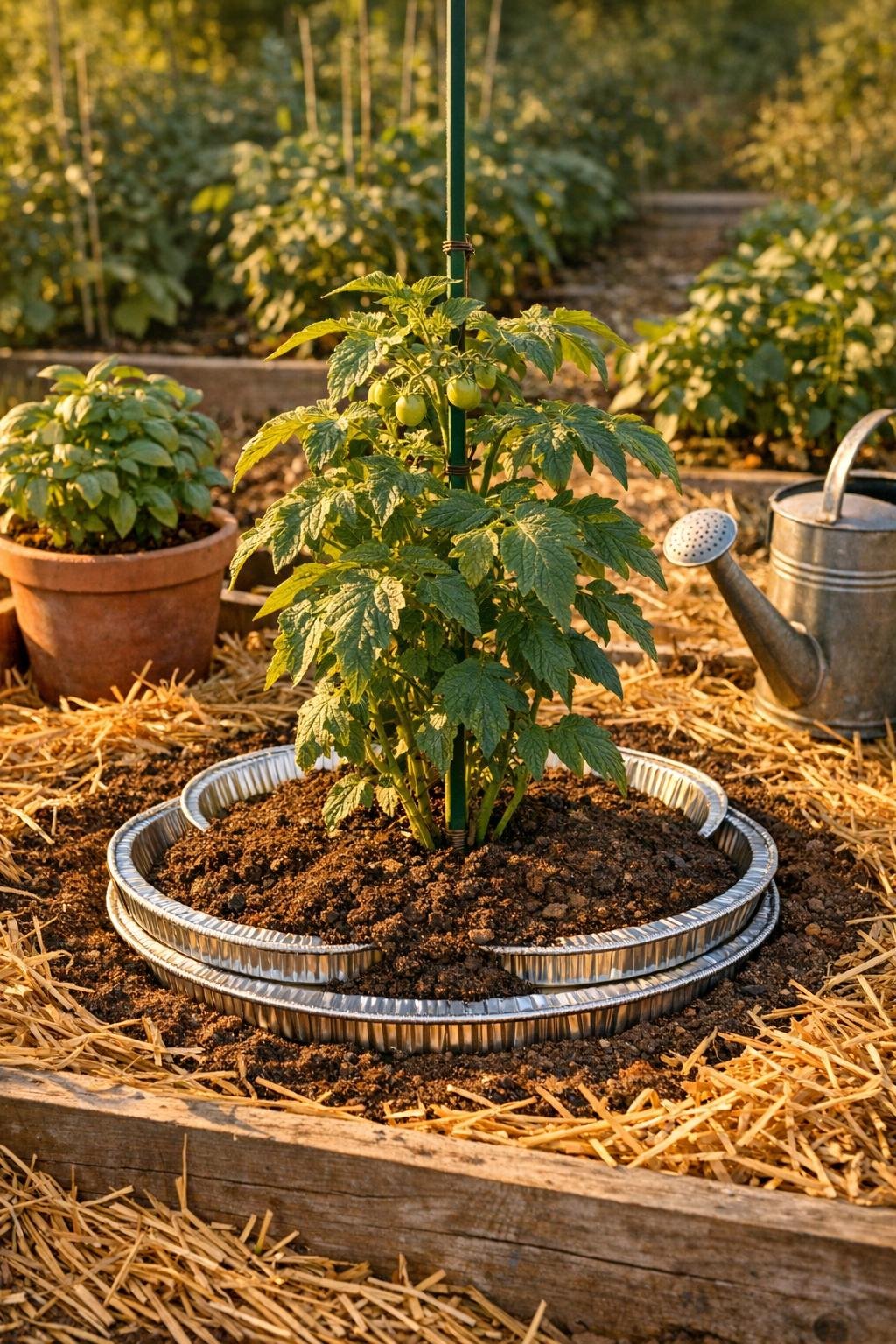
There are some garden tricks that look almost too plain to matter, and then they quietly earn a permanent place in your routine. This little pre-frost root zone heat sink is one of those for me. By stacking simple aluminum pie tins and burying them around tender plants, you create a small pocket of buried metal that helps hold daytime warmth in the soil and slow down those sharp nighttime temperature swings that catch roots off guard in early spring and late fall.
I like this project because it is quick, inexpensive, and easy to tuck into vegetable beds, flower borders, or big patio containers without making the garden look fussy. It is especially handy for folks trying to stretch the season for peppers, tomatoes, dahlias, basil, or young transplants. Around here, where a pretty afternoon can turn into a nippy evening by supper time, I have learned to appreciate any simple trick that gives a plant a fighting chance.
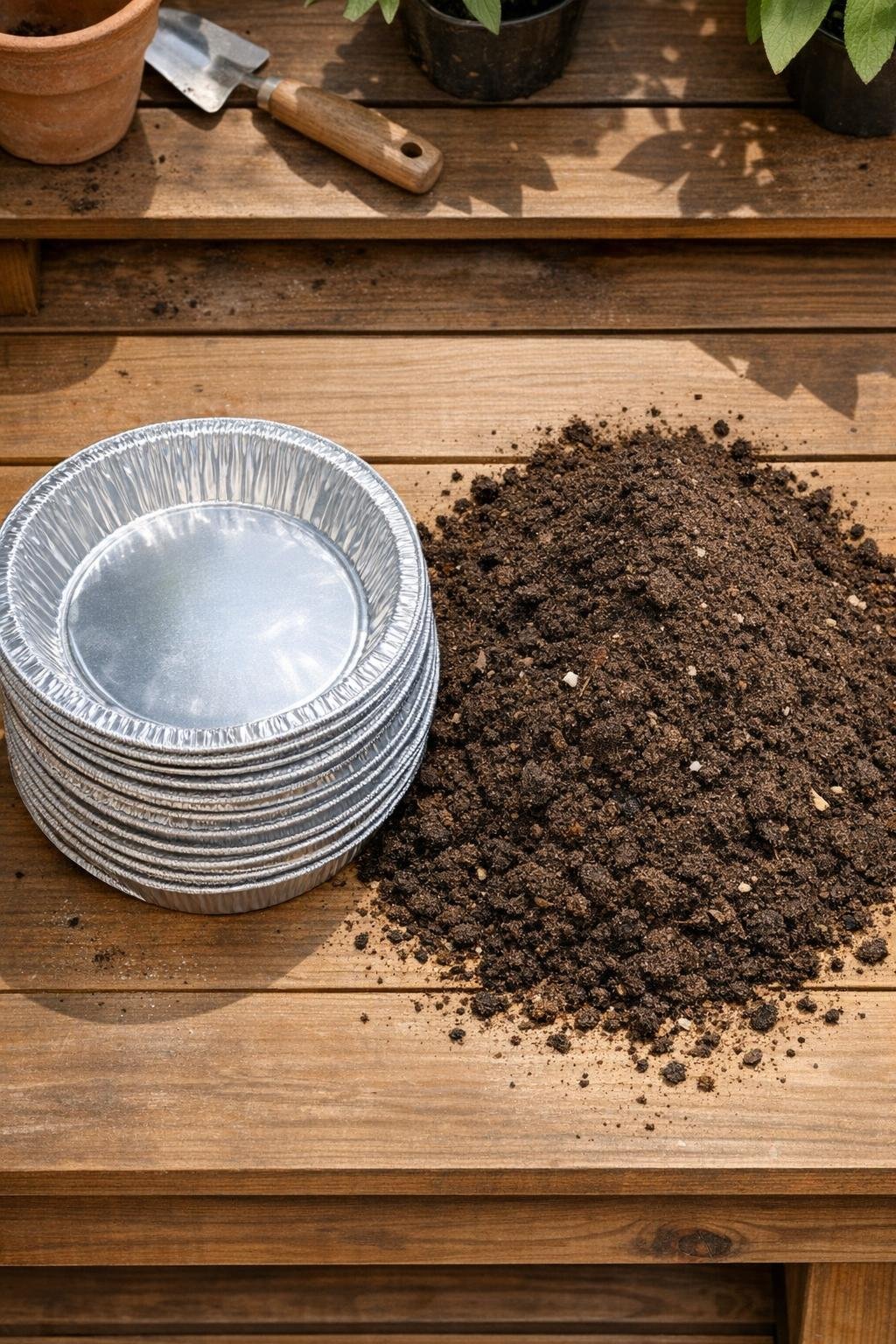
Materials
Instructions
1. Choose the plant you want to protect and mark a ring 4 to 6 inches away from the main stem so you do not disturb the root crown. For a larger plant, plan on placing 3 to 4 buried tin stacks evenly around the drip line.
2. Make one heat sink by pressing 3 aluminum pie tins snugly inside each other to form a sturdier nested stack. Repeat until you have 4 stacks total from the 12 tins.
3. Dig a narrow hole for each stack about 7 inches deep and just wide enough to fit the tins, keeping the holes vertical so the metal sits close to the root zone. Leave 1 inch of the stacked rim above soil level so you can find and remove them later if needed.
4. Set one stacked tin unit into each hole with the open side facing down, then press soil firmly around the outside to remove air gaps. The buried metal should feel secure and upright, not wobbly.
5. Water the area lightly after backfilling so the soil settles tightly around the buried tins. This helps the metal make better contact with the surrounding earth and capture warmth from the day.
6. Add a 1- to 2-inch layer of loose mulch between the plant and the tin stacks, but do not bury the exposed rims. The mulch helps hold that gathered warmth in the soil overnight while still letting you spot the tins easily.
7. Use the heat sinks before forecasted chilly nights, especially during spring planting or the first light frosts of fall. For extra protection, pair them with a frost cloth over the top of the plant in the evening and remove the cover once the morning warms.
Variations & Tips
For container plants: Use 2 or 3 stacked tin units around the inside edge of a large patio pot, keeping them a few inches away from the main root ball. This works nicely for basil, peppers, and dwarf tomatoes when cool nights sneak in.
For larger plants: Increase to 5 or 6 stacks around the outer root zone of one big plant rather than crowding them too close to the stem. I have found that a wider ring helps more than packing all the metal in one spot.
Best timing: Install these before the cold snap arrives so the soil and metal have time to absorb daytime warmth. They are most useful for light frost protection and season extension, not for hard freezes that last all night and into the day.
Mulch matters: Straw, shredded leaves, or fine bark all work well, but keep mulch loose and breathable. A heavy, soggy layer right against the crown can do more harm than good.
Easy removal: If you only need the heat sinks for shoulder-season weather, leave that little rim showing above the soil. Come steady warm weather, you can tug them out, rinse them off, and store them flat in the shed.
A practical note: This is one of those old-fashioned garden experiments I enjoy because it uses what you have and asks very little of you. In my experience, the best results come when you combine simple tricks like this with good watering, mulch, and a close eye on the forecast.