
I’ve yet to meet a household that doesn’t have a small graveyard of lonely socks: the one whose partner vanished in the dryer, the pair with thin heels, the holiday set that looked cute once and never again. As a cook, I’m used to finding second lives for odds and ends in my kitchen, so it makes perfect sense to me to do the same with textiles. Old socks are soft, stretchy, and surprisingly useful for quick projects that cost almost nothing.
Below are 20 sock reuses that are actually worth making, not just “cute in theory.” I kept this list practical and visual, with projects that come together in minutes or an afternoon, and that genuinely look good sitting on a shelf, by a front door, or in a gift basket. A few lean cozy for fall and winter, while the rest work any time of year.
1. Sock puppets
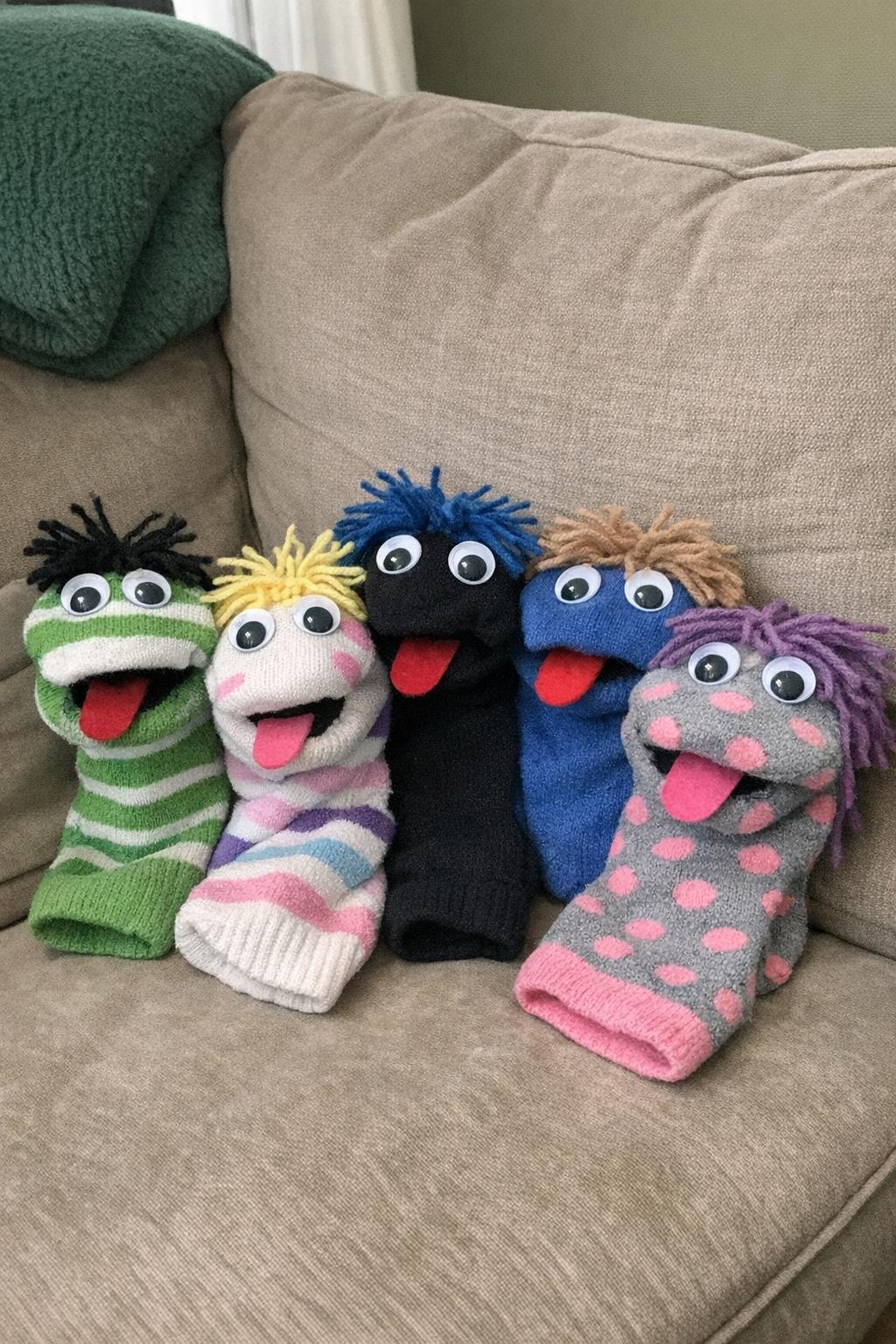
Mismatched socks make the best puppet family because each one already has a personality. I like to use crew socks for adults and ankle socks for “kids,” then glue on two googly eyes, a felt tongue about 2 inches long, and short strands of yarn for hair. A little row of felt teeth or a tiny bow tie can make each puppet distinct without much effort.
If you’re making these with kids or for a rainy-day craft box, keep the layout simple: one sock, two eyes, one mouth, one hair color. Hot glue holds fastest, but fabric glue works if you let everything dry flat for 6 to 8 hours. Once finished, they look charming in a basket or lined up on a sofa arm.
2. Sock gnomes
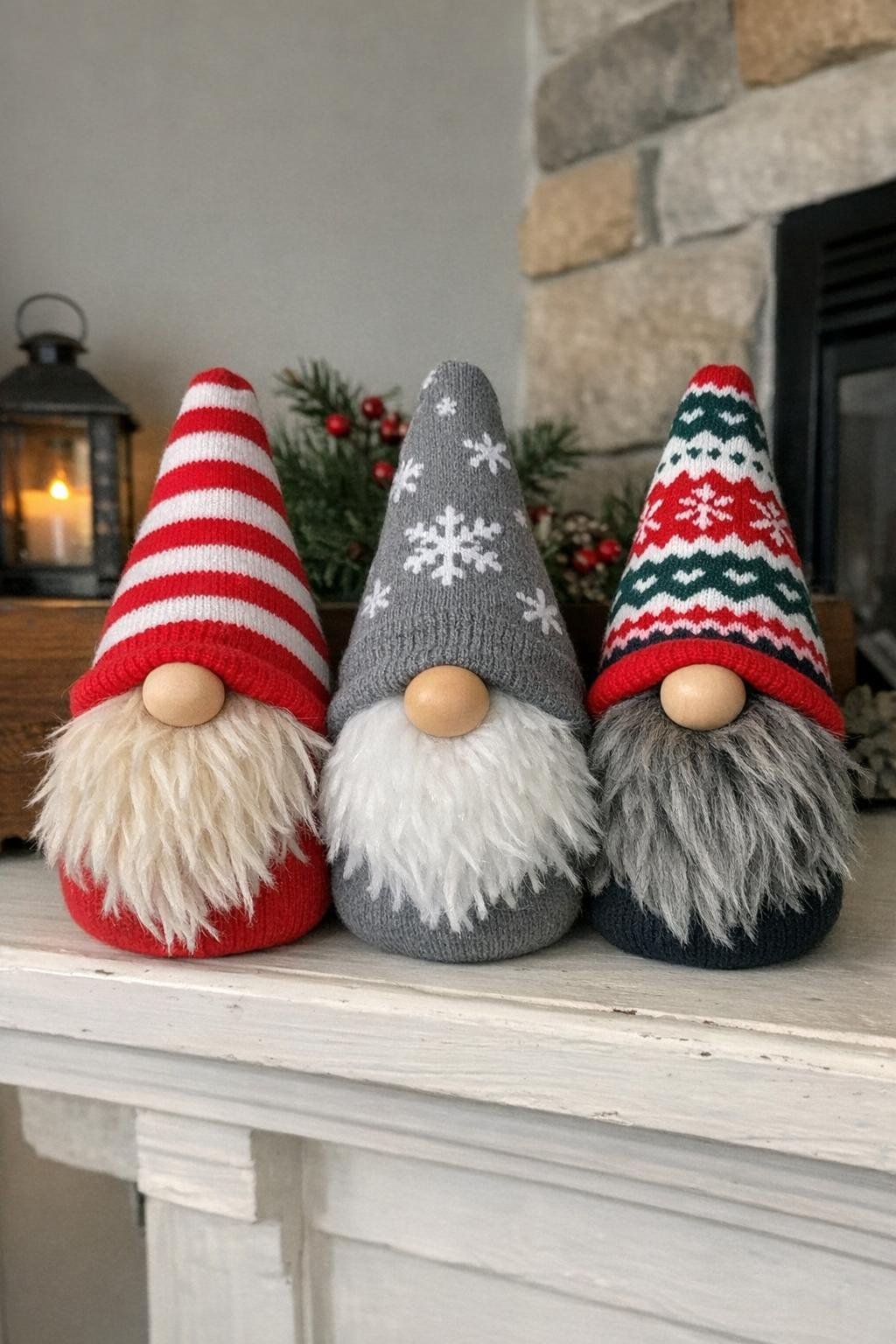
For a Christmas gnome, fill a white or neutral sock with about 2 cups of uncooked rice so it has a sturdy, squat body, then tie it tightly with twine. Glue on a faux-fur beard cut into a rounded triangle, add a wooden bead or small pom-pom nose, and pull a cone hat made from a second sock down low so the eyes stay hidden. That low hat line is what gives a gnome its classic look.
I’ve made these in sets of three for mantels and entry tables, varying the heights by 1 or 2 inches. Use red, forest green, or cream socks for a festive palette, and if the body feels unstable, flatten the rice slightly on the bottom before standing it up. They look far more polished than their materials would suggest.
3. Scented drawer sachets
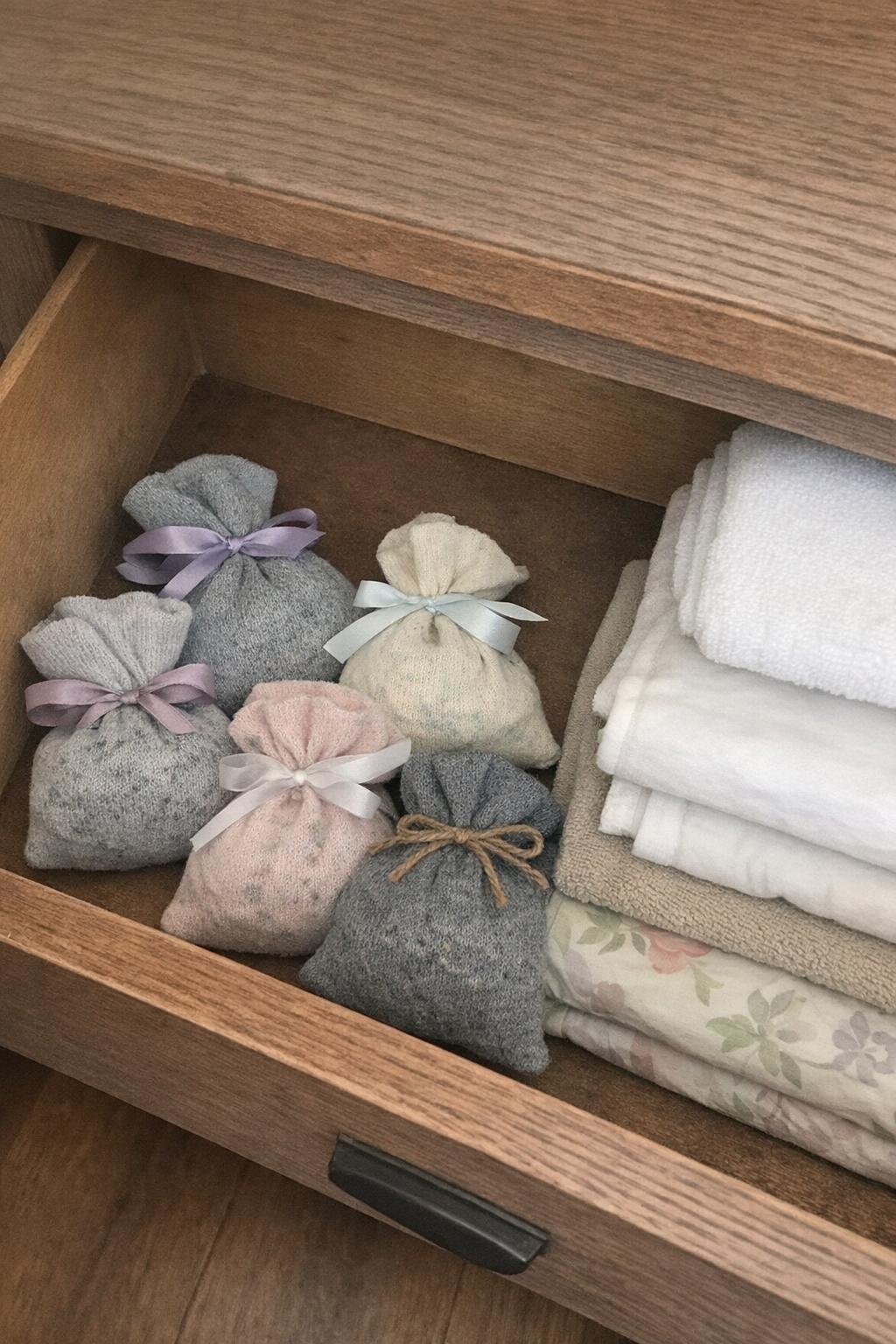
A thin cotton sock is perfect for a no-sew sachet. Fill it with 1 cup of dried lavender, or use a mix of 1/2 cup lavender and 1/2 cup cedar shavings, then tie the open end with ribbon or cotton string about 3 inches above the filling. The finished pouch slips neatly into a lingerie drawer, linen closet, or storage bin.
If you want a tidier shape, trim the sock after tying and fold the tied end under. I refresh mine every few months with 4 or 5 drops of lavender oil worked into the fabric from the outside. It’s one of the easiest ways to make old socks useful again without any sewing at all.
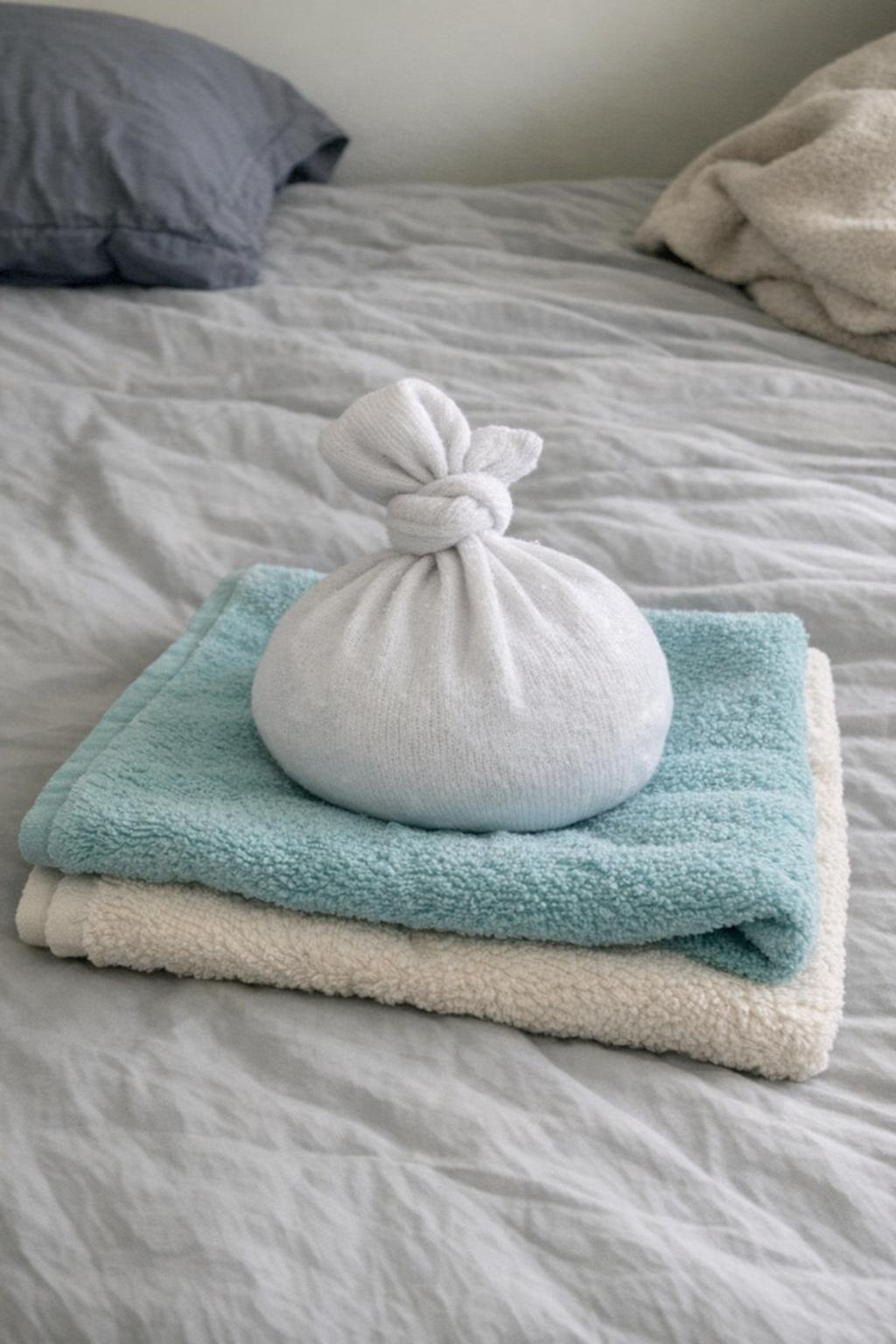
4. Microwave rice heating pad
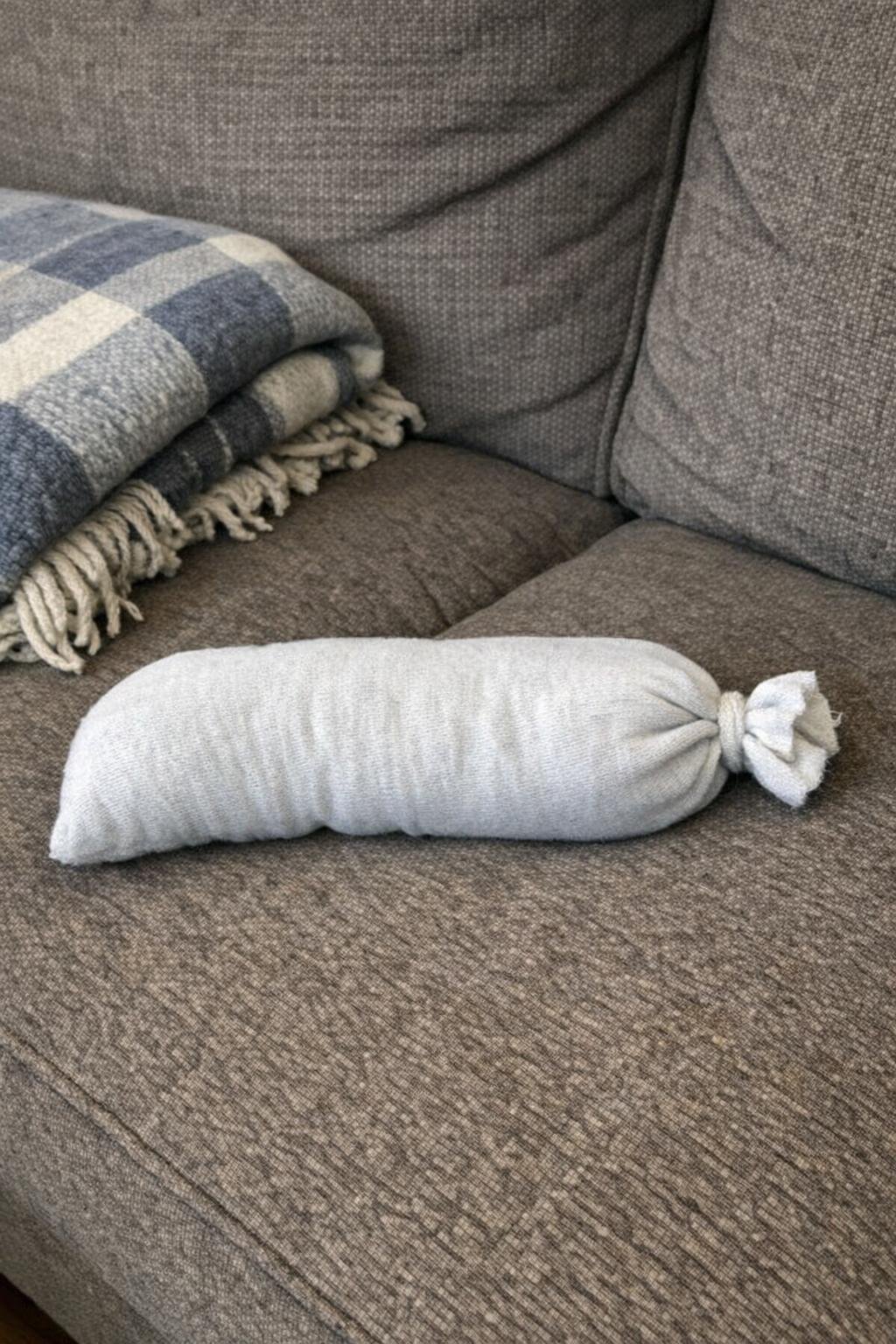
A clean tube sock turns into a reliable heating pad in under 5 minutes. Fill it with 3 cups of uncooked rice, tie the end firmly, and, if you want a softer drape, divide the rice into 3 sections with tied-off bands. Heated for about 90 seconds in the microwave, it becomes a flexible warm compress for shoulders, lower back, or cold feet.
I always test the temperature after 60 seconds the first time, since microwaves vary. Avoid using socks with metallic threads, and keep the pad dry at all times. For a gentle scent, add 1 tablespoon of dried lavender to the rice before tying it shut.
5. No-sew coffee cup sleeve
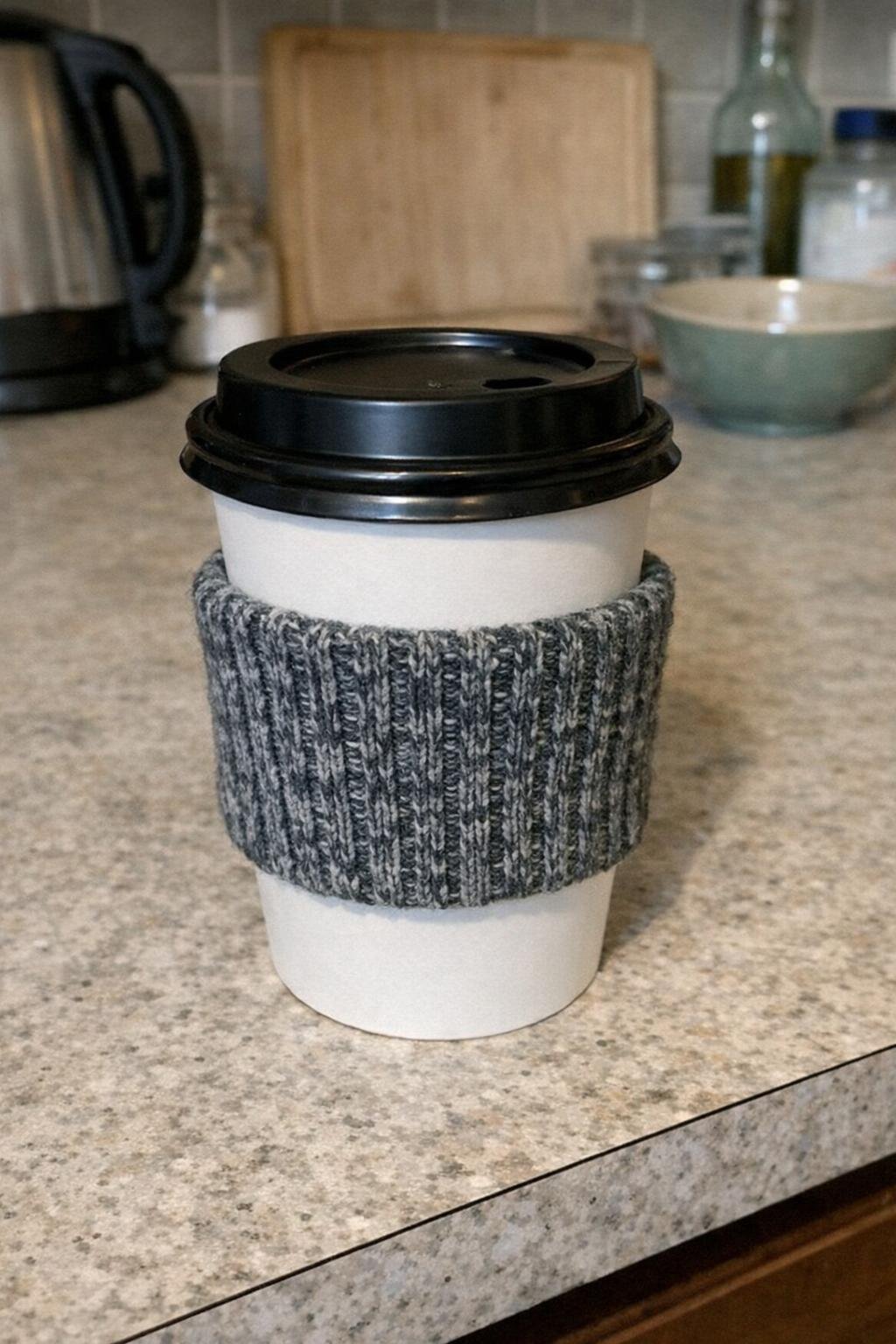
The ribbed cuff of a thick sock is almost tailor-made for a takeaway cup. Cut off a 3- to 4-inch section from the top, slip it over the middle of a hot paper cup, and you’ve got a reusable sleeve with better grip than most cardboard versions. Wool-blend or chunky knit socks work especially well because they cling without sliding.
If the sock is very loose, fold the cut edge under by 1/2 inch to tighten the fit. I’ve used these for homemade coffee stations at brunch, and they make even plain cups look warmer and more intentional. Wash and air-dry after a few uses.
6. Sock pumpkins
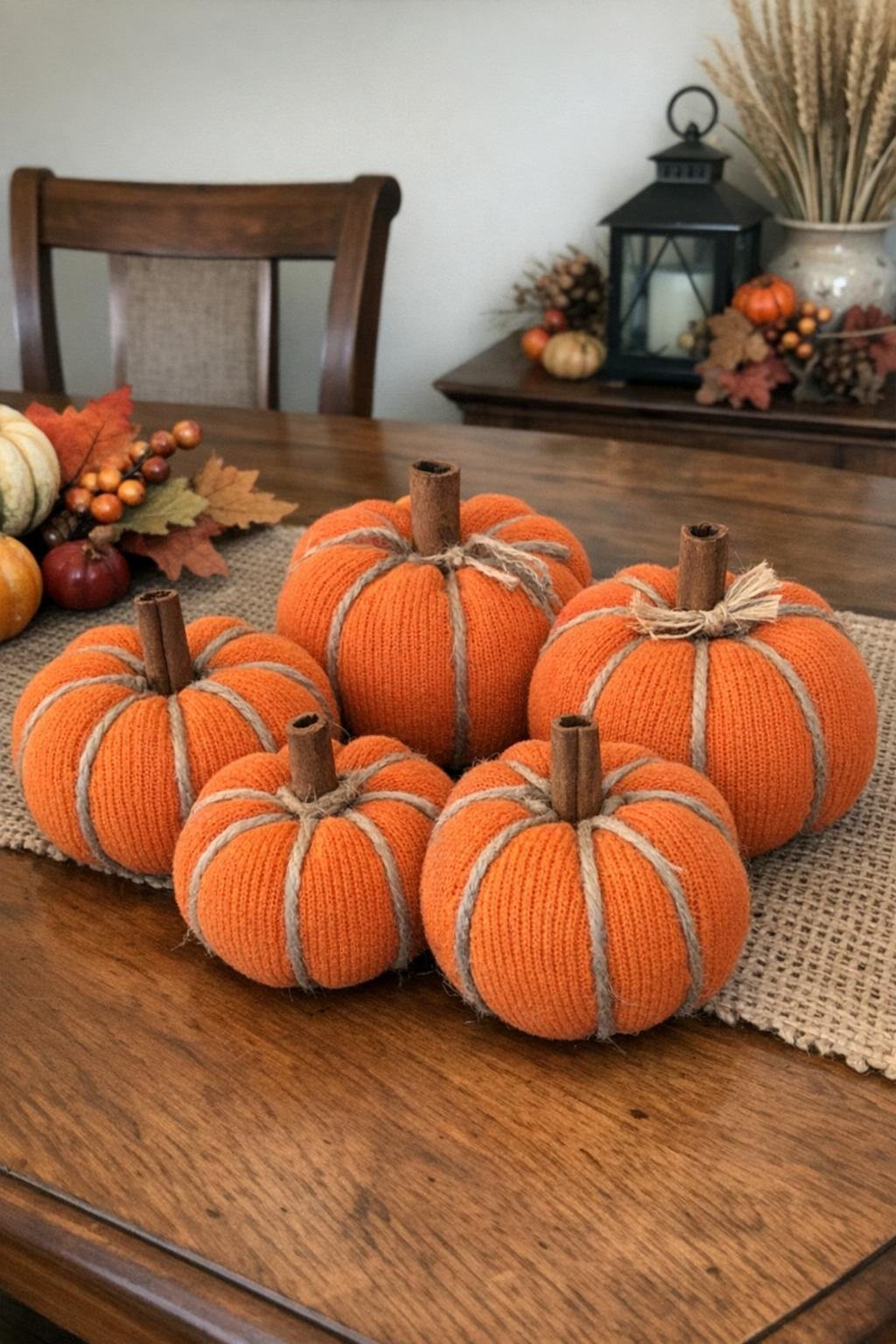
Orange socks make especially good fall pumpkins because the knit texture gives them a soft, cozy finish. Fill one with fiberfill until it forms a round 4- to 5-inch ball, tie the top, then wrap twine around it vertically 6 times to create pumpkin segments. Tuck a cinnamon stick into the center as the stem and add a small felt leaf if you like.
These look lovely grouped in threes on a tray with acorns or pinecones. I’ve also made cream and rust versions when I wanted something less bright. Because they’re fabric, they store flat once you remove the stem, which I appreciate in a small city closet.
7. Sock planter covers
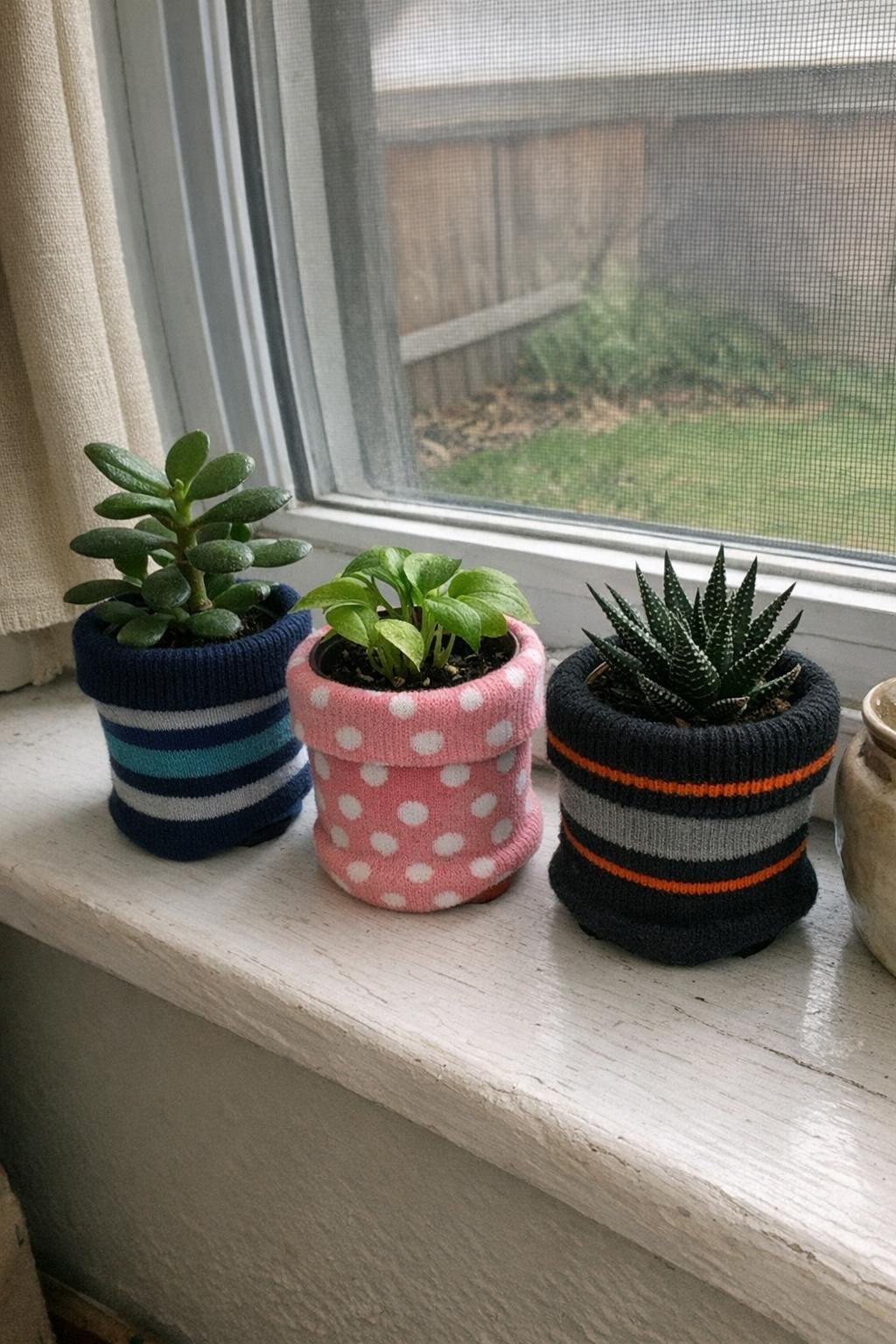
If you have plain 4-inch nursery pots, slip patterned socks right over them and fold the cuffs down once for a finished edge. This is an easy way to disguise flimsy plastic pots on a windowsill or bookshelf without repotting anything. Socks with stripes, fair isle patterns, or simple solids all work.
Choose plants that don’t need bottom watering through the cover, or remove the sock when you water and let the pot drain fully before replacing it. I’ve used this trick for herbs in the kitchen and pothos cuttings in the living room, and it instantly softens the look of utilitarian containers.
8. Sock snowman family
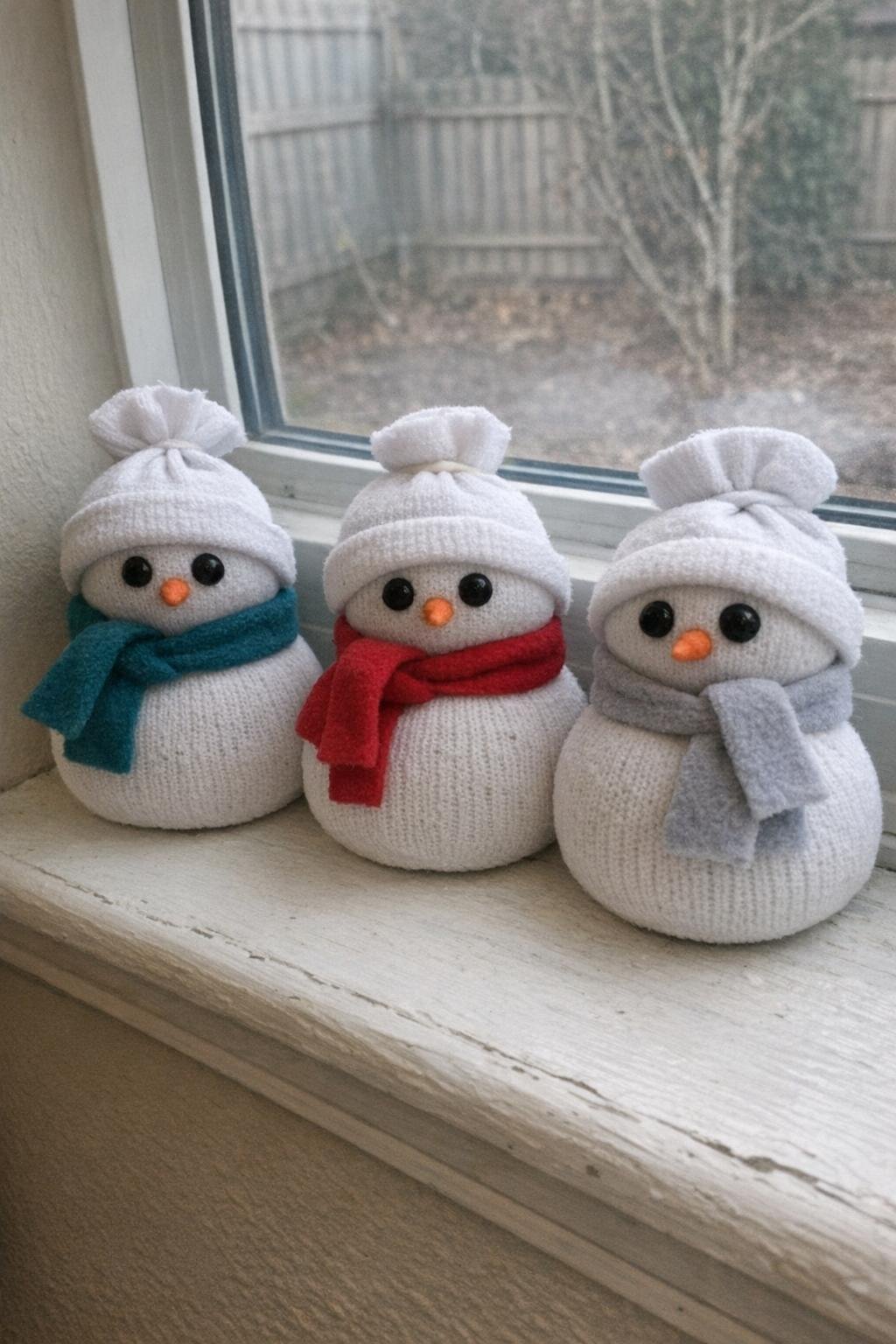
White socks turn into cheerful winter snowmen with hardly any materials. Fill each sock with rice, tie off the body, then cinch again about halfway up to create two stacked sections. Button eyes, a scrap fleece scarf, and a tiny felt carrot nose are enough to finish the look, and making them in three sizes gives you a whole snowman family.
I usually use about 1 cup of rice for a small snowman, 1 1/2 cups for medium, and 2 cups for large. Set them on an entry table or windowsill with a few evergreen sprigs around them. They hold their shape beautifully and don’t crumble the way some glitter-heavy holiday crafts do.
9. Wrist warmers
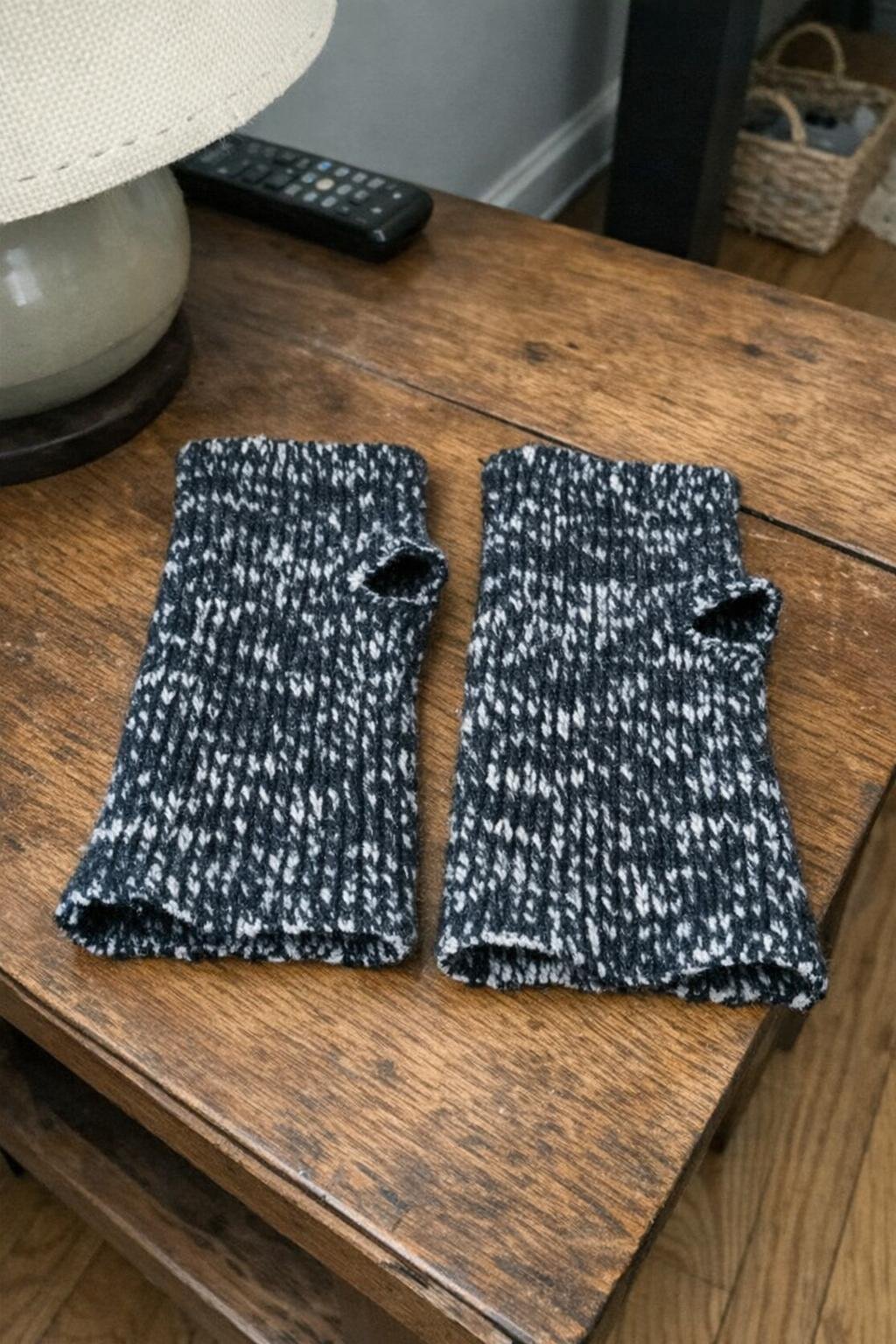
A chunky knit sock can become a pair of wrist warmers in about 2 minutes. Cut off the toe, snip a 1-inch thumb slit about 2 inches below the cuff, and leave the raw edges as they are. The slight curl at the cut edge actually looks relaxed and intentional, especially with thicker knit socks.
These are useful when you’re typing in a chilly room or reading in bed without wanting full gloves on. If the sock is long, cut each piece to 6 or 7 inches for a better proportion. I prefer men’s socks for this because they give a little more length over the wrist and lower palm.
10. Braided dog tug toy
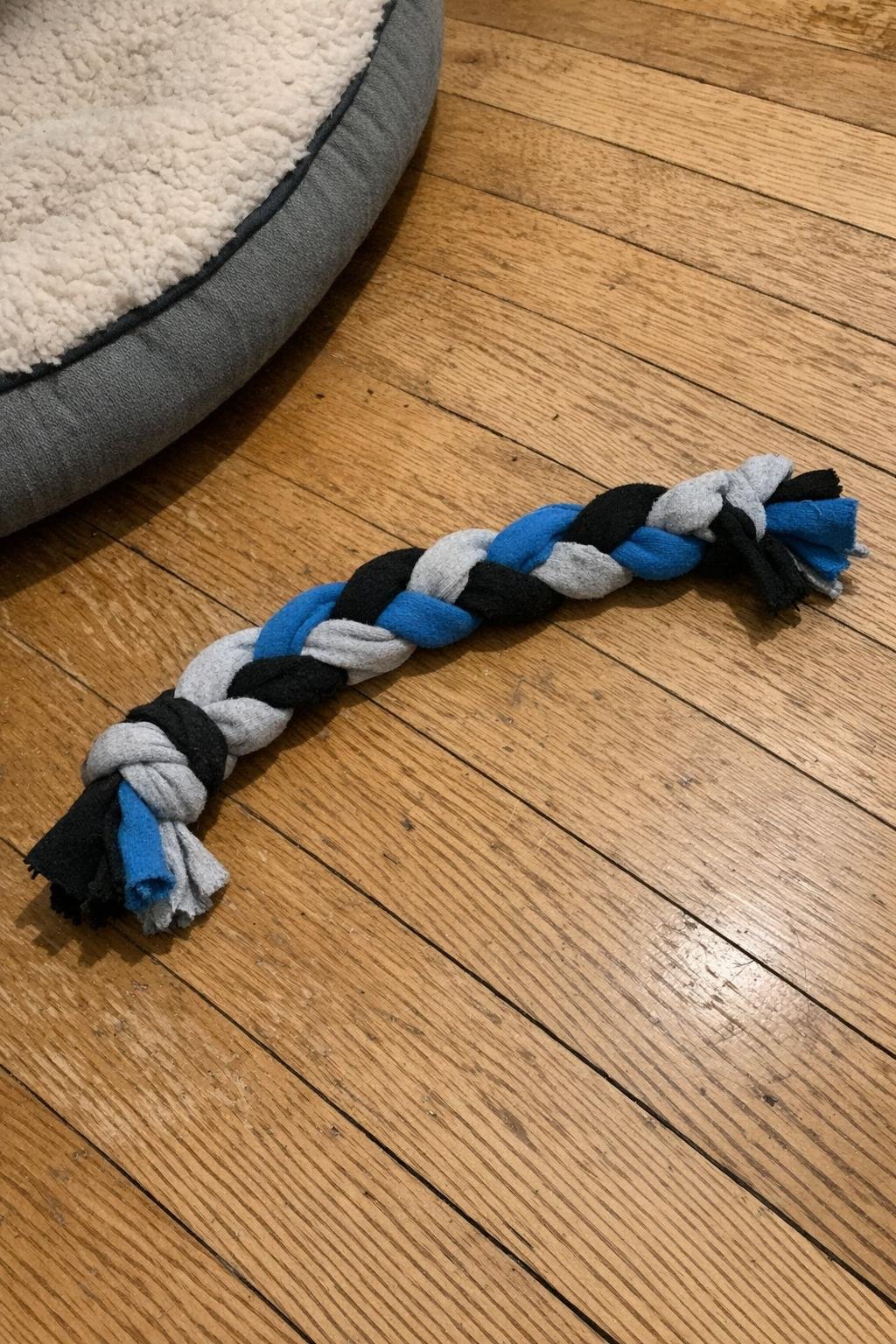
For a sturdy dog toy, use three long socks, bunch them together at one end, knot tightly, then braid as firmly as you can and knot the opposite end. The finished tug usually ends up around 12 to 16 inches long, depending on sock size. Thick athletic socks hold up especially well for medium-size dogs.
This is a smart use for socks that are too worn for crafting but still strong in the leg and cuff. Wash the finished toy first if the socks have been sitting in a drawer for a while. Replace it once the braid loosens or starts to tear.
11. Dusting mitts
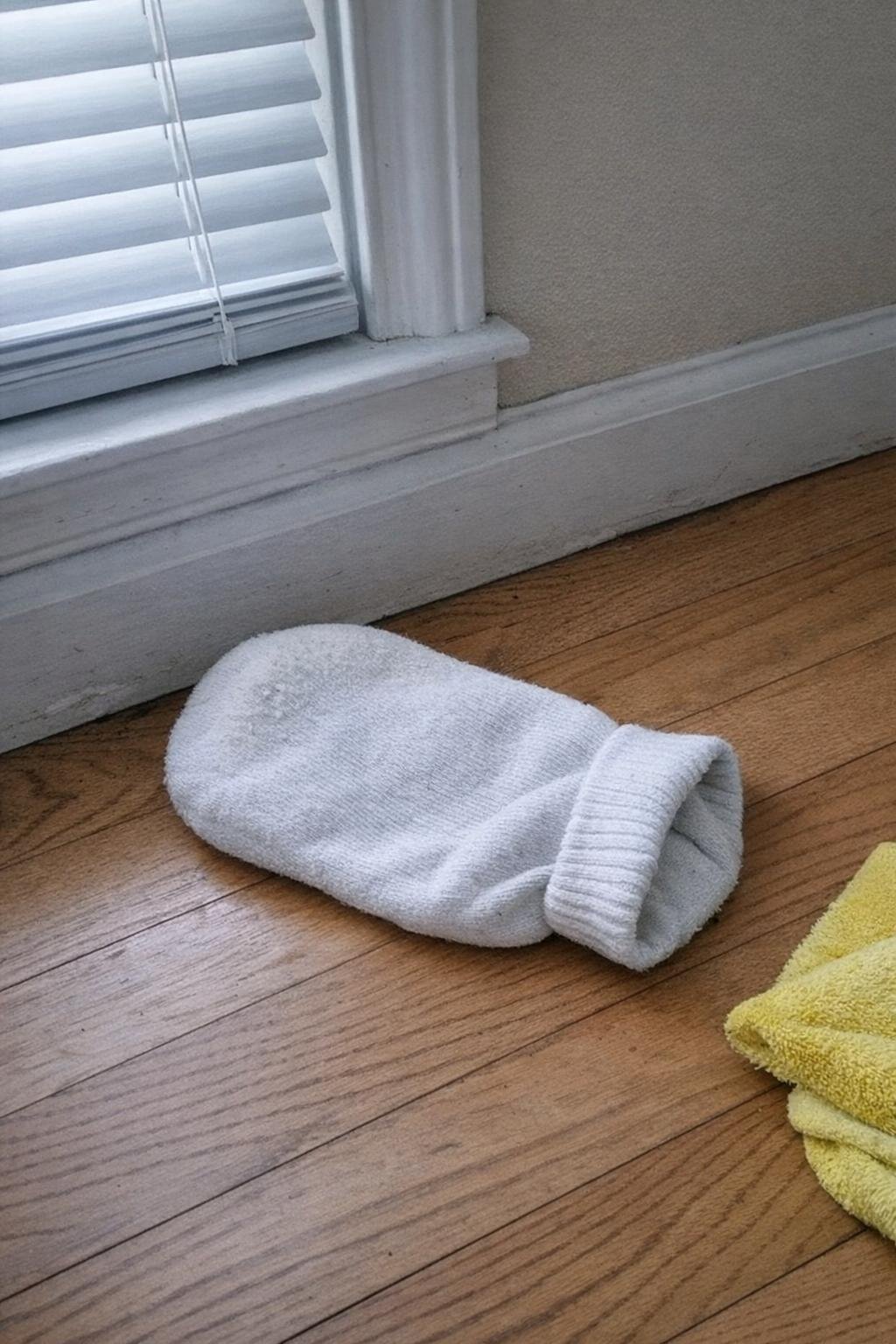
Sometimes the simplest reuse is the best one. Slip a sock over your hand, dampen it lightly with water, and run it along each blind slat, baseboard, or shelf edge. The fabric grabs dust surprisingly well, and unlike a flat cloth, it wraps around trim and corners.
I keep one designated dusting sock under the kitchen sink and another with cleaning supplies upstairs. For blinds, close them one way, wipe, then reverse and repeat. If the sock gets very dirty, toss it straight into the wash with cleaning rags.
12. Door draft stopper
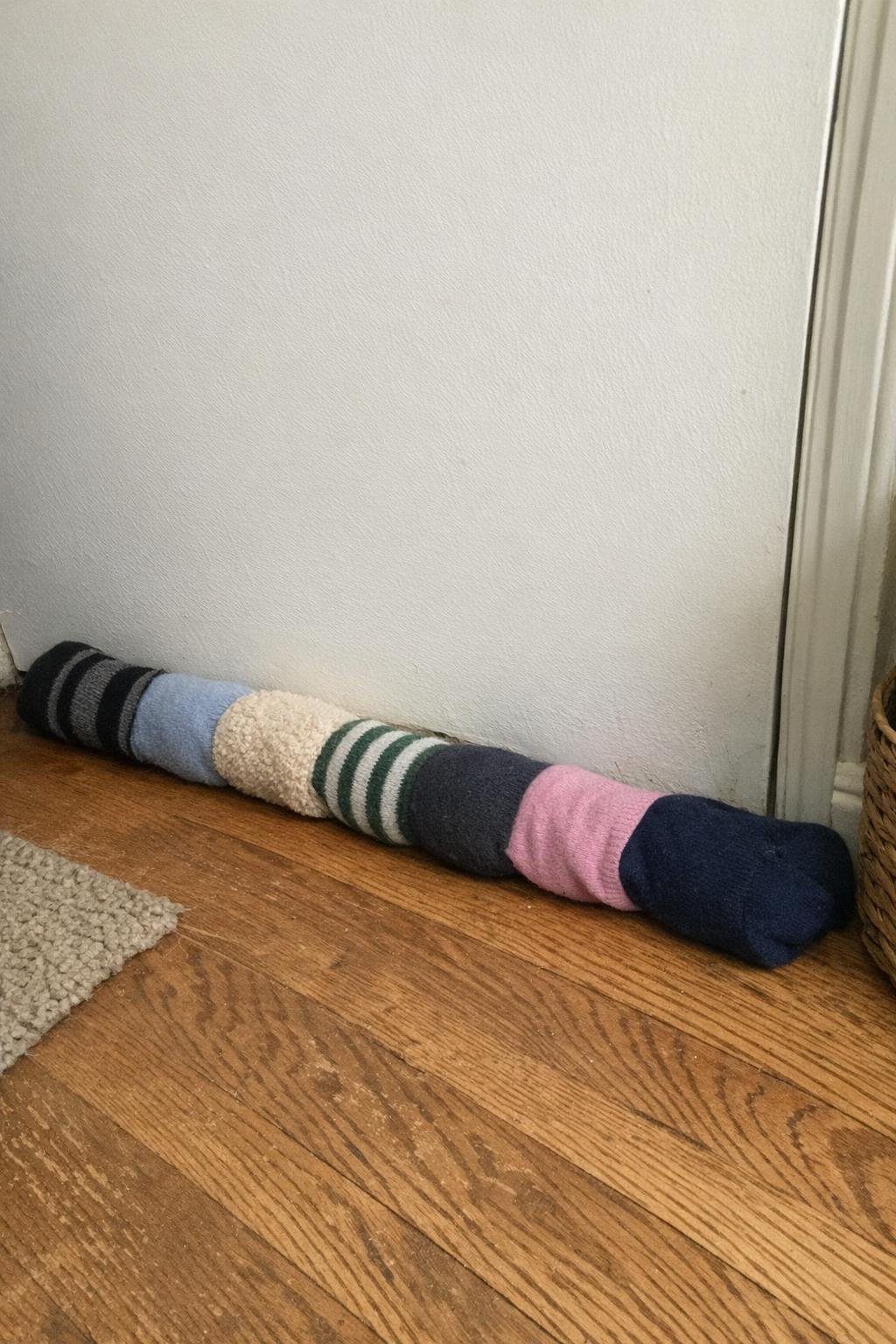
For an inexpensive winter draft blocker, sew four socks end to end into a tube about 36 inches long, then fill it with rice until it’s full but still flexible enough to bend against the floor. Stitch or tie the final end securely. This size fits many standard interior doors and works especially well in older homes with uneven thresholds.
If you want a fuller look, use tube socks in similar colors so the seams blend visually. I’ve used one by a back hallway door in January, and it made a noticeable difference in comfort near the floor. Set it in place only when the fabric is completely dry and clean.
13. Crinkle cat toy
A cat toy doesn’t need to be elaborate to be a hit. Stuff a sock with a clean empty chip bag or other crinkly food-safe plastic, add 1 tablespoon of catnip, and knot the end shut. The mix of soft exterior, noisy interior, and scent is usually all it takes.
Keep the finished toy compact, around 5 to 6 inches long, so it can be batted easily across the floor. If your cat is rough on toys, double-layer with a second sock over the first and knot both. It’s a clever way to reuse two things headed for the trash.
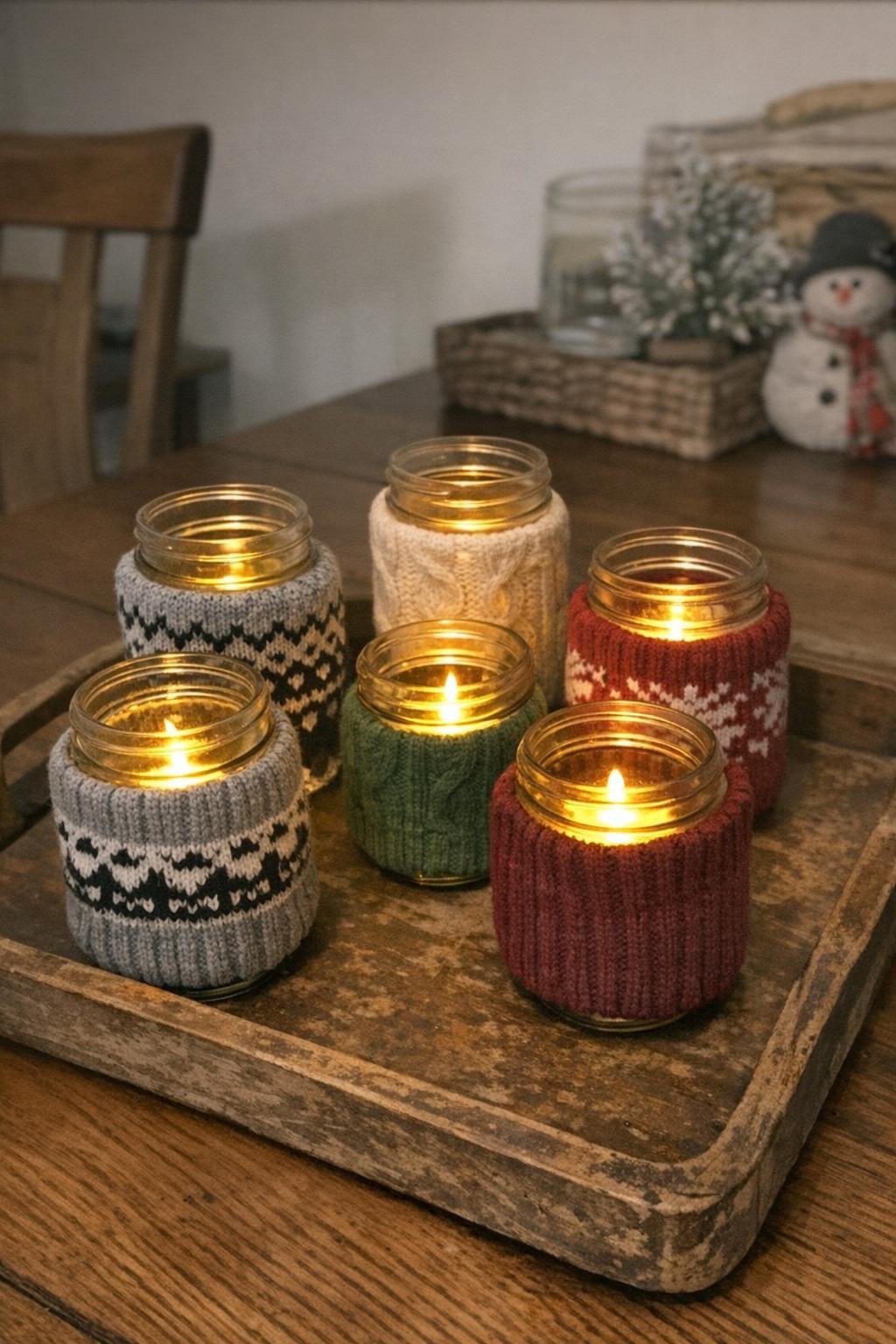
14. Sock jar luminaries
This is one of my favorite winter table decorations because it looks cozy without much effort. Pull a knit sock cuff over a mason jar so the glass shows slightly at the top, then place a battery tealight inside. The light glows through the knit texture and gives the jar a soft, sweater-like look.
Use white, gray, or cream socks for a snowy effect, or mix subtle patterns for a more casual centerpiece. I group three jars of different heights on a tray, often with evergreen clippings around them. Battery lights are the safest option here and still photograph beautifully in evening light.
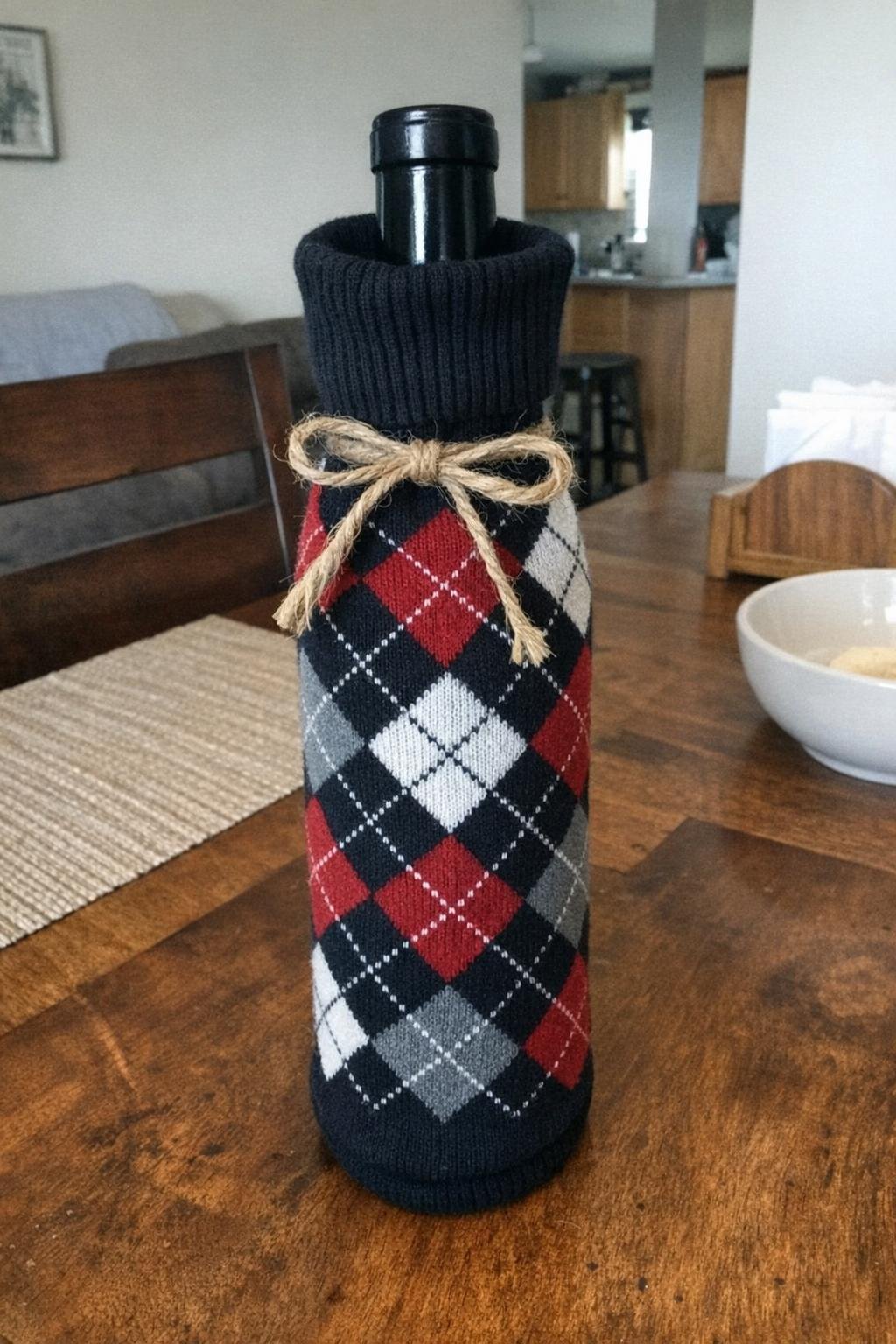
15. Wine bottle gift sleeve
A long argyle or patterned sock turns a plain bottle into a surprisingly polished host gift. Pull the sock over the bottle, smooth it down so the heel falls to the back, and tie twine or ribbon at the neck. A men’s dress sock usually fits a standard 750-milliliter bottle best.
I like this for casual dinner invitations because it feels festive without requiring a gift bag. Tuck in a sprig of rosemary or a small wooden gift tag if you want to dress it up a bit more. It’s quick, tidy, and far more reusable than tissue paper.
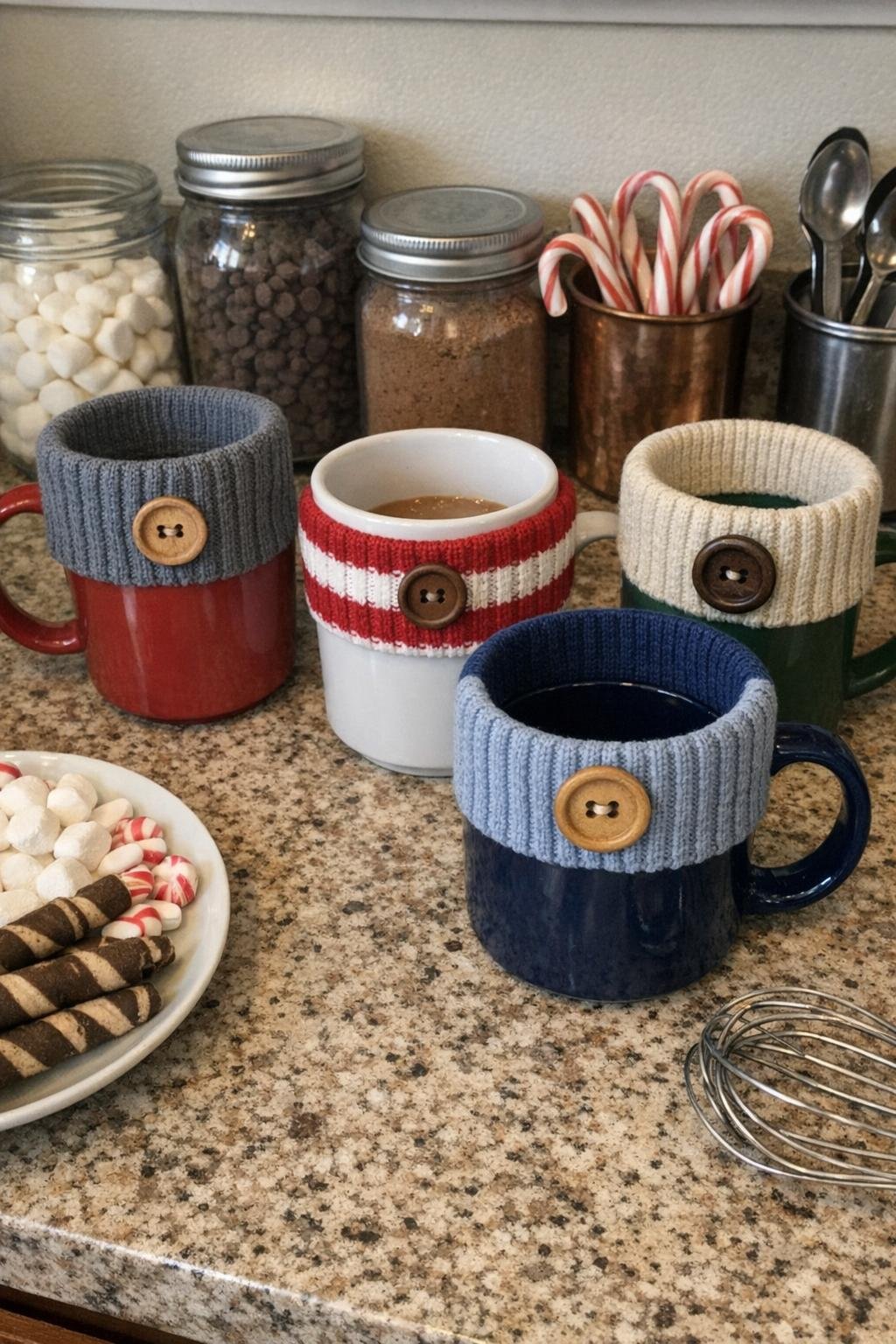
16. Cocoa-bar cup cozies
For winter gatherings, cut sock cuffs into 4-inch-tall rings and sew one button onto each just for decoration and a handmade touch. Slip them over mugs at a cocoa bar or coffee station to make everything look coordinated. Thick sweater socks work best because they hold their shape and feel substantial.
I’d make at least 6 at a time if you entertain often, using socks in cream, red, charcoal, or plaid patterns. They wash easily and stack flat in a drawer between parties. On a tray with mugs, cinnamon sticks, and marshmallows, they look especially inviting.
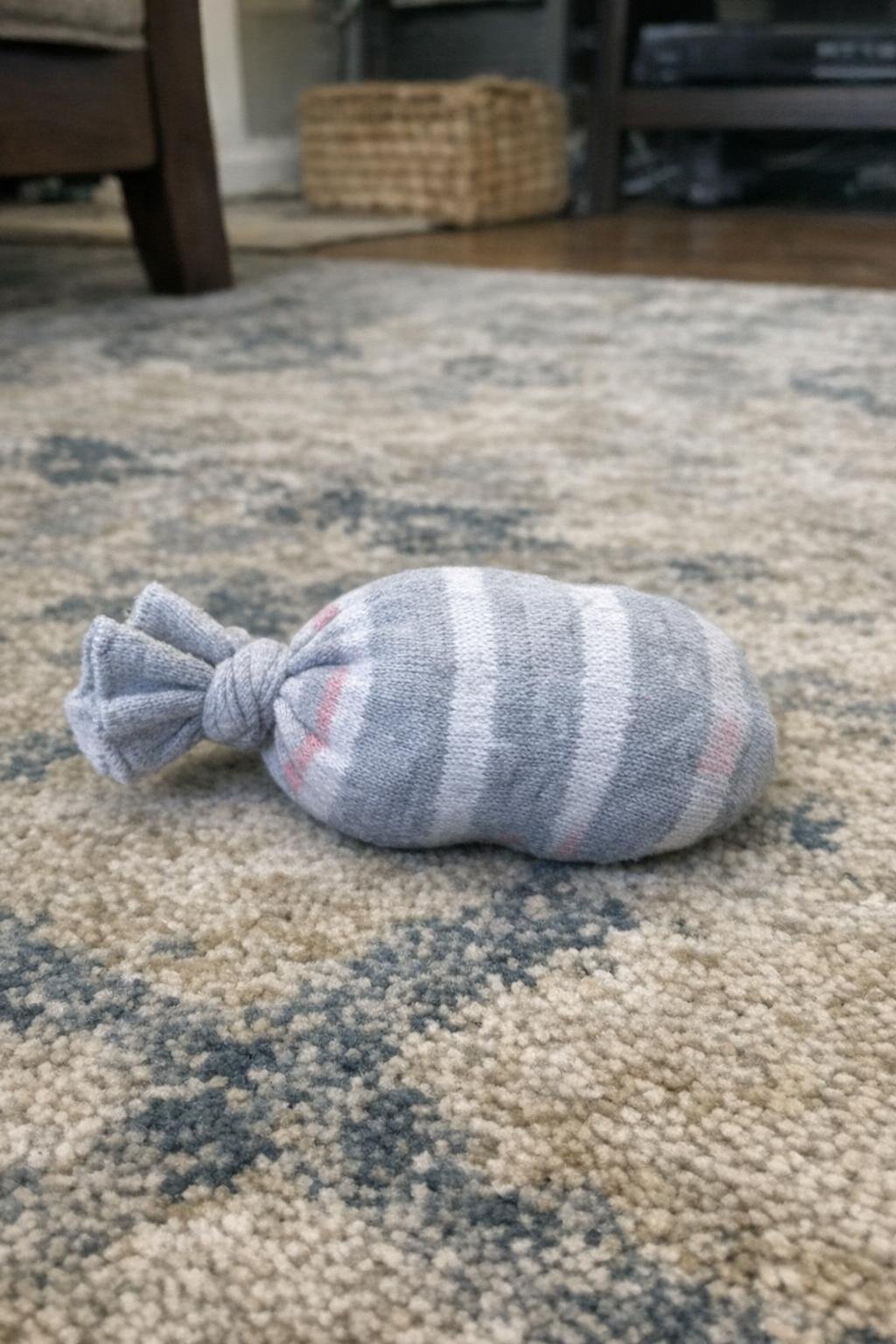
17. Instant ice pack
When you need something cold in a hurry, a sock works beautifully as a soft ice pack cover. Fill it with about 2 cups of ice cubes or frozen peas, knot the end, and wrap it around a knee, ankle, or shoulder. The knit fabric makes it less harsh against skin than a loose plastic bag.
I keep one old athletic sock in the freezer drawer for exactly this purpose. It’s especially handy after a long walk or an overenthusiastic weekend of gardening. Just be sure to use a clean sock and let it dry thoroughly between uses if you’re filling it with ice rather than frozen vegetables.
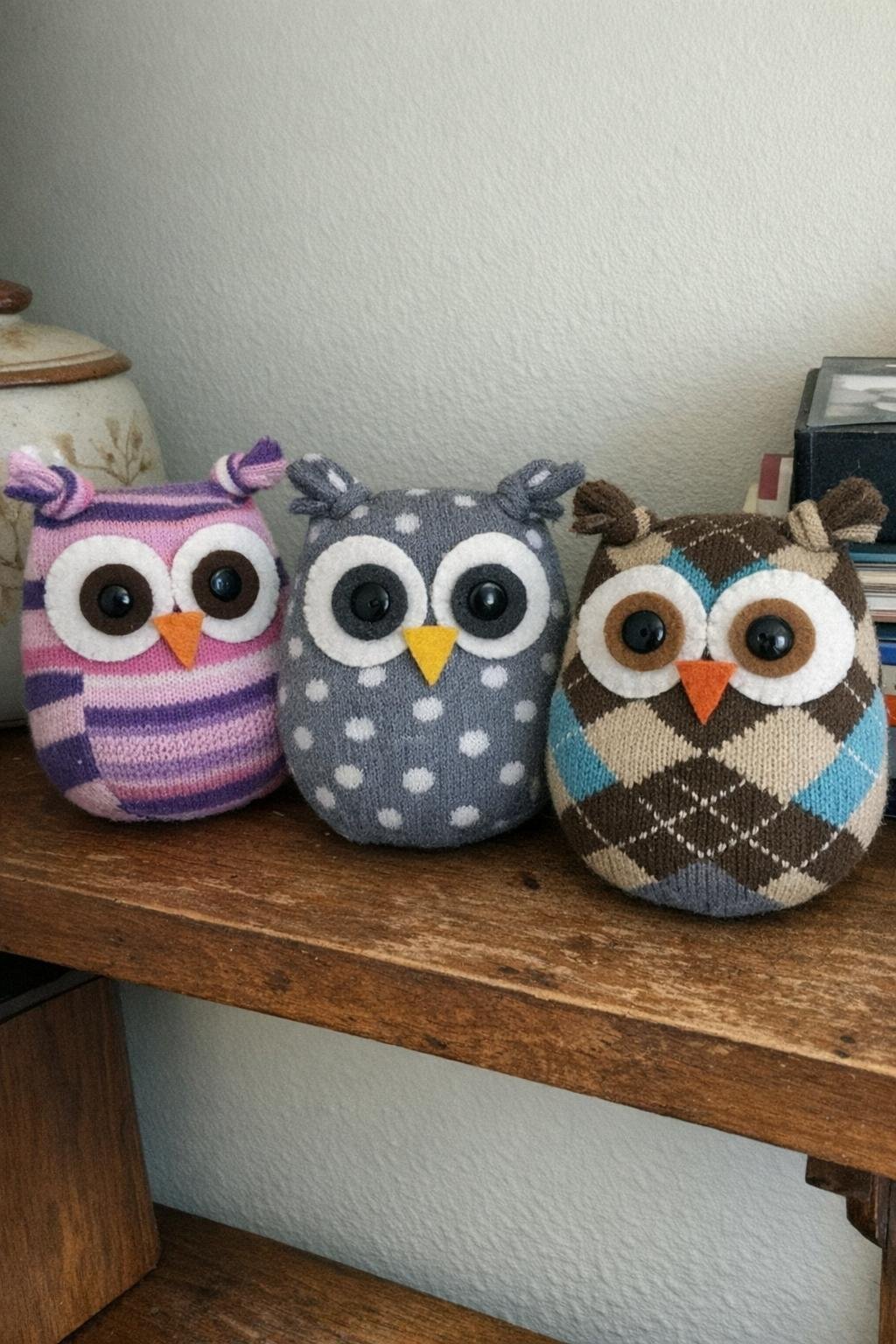
18. Sock owl plushies
Sock owls are one of those crafts that somehow come out charming even when they’re slightly imperfect. Stuff a sock firmly, tie off the top corners to form ears, then glue on two felt circle eyes and a small triangle beak. The squat body shape makes them ideal for sitting upright on a shelf.
Rice gives a heavier, doorstop-like owl, while fiberfill keeps it soft and toy-like. I prefer patterned socks here because stripes and dots make the “feathers” more interesting. A group of two or three in different sizes looks especially sweet in a nursery or reading nook.
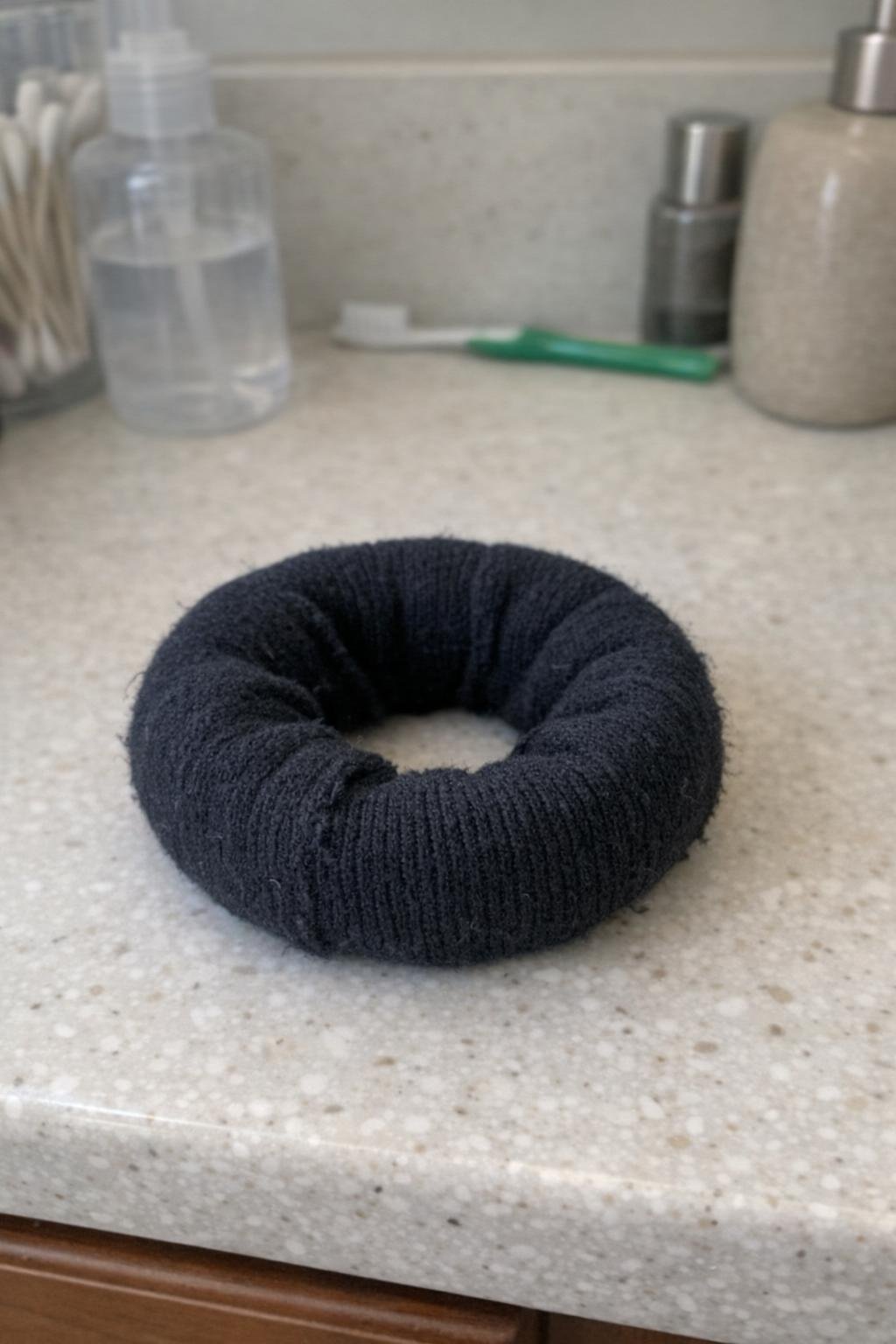
19. Sock-bun hair donut
This may be the most classic sock hack for a reason: it works. Cut off the toe, then roll the tube tightly into a ring about 3 to 4 inches across. To use it, pull a ponytail through the center, spread the hair around the ring, and roll downward until the bun sits in place.
A thin dress sock makes a smaller, neater donut, while a thicker sock gives more volume. If the sock is dark and your hair is light, or vice versa, choose a closer color match for less show-through. It’s a practical beauty fix that costs absolutely nothing.
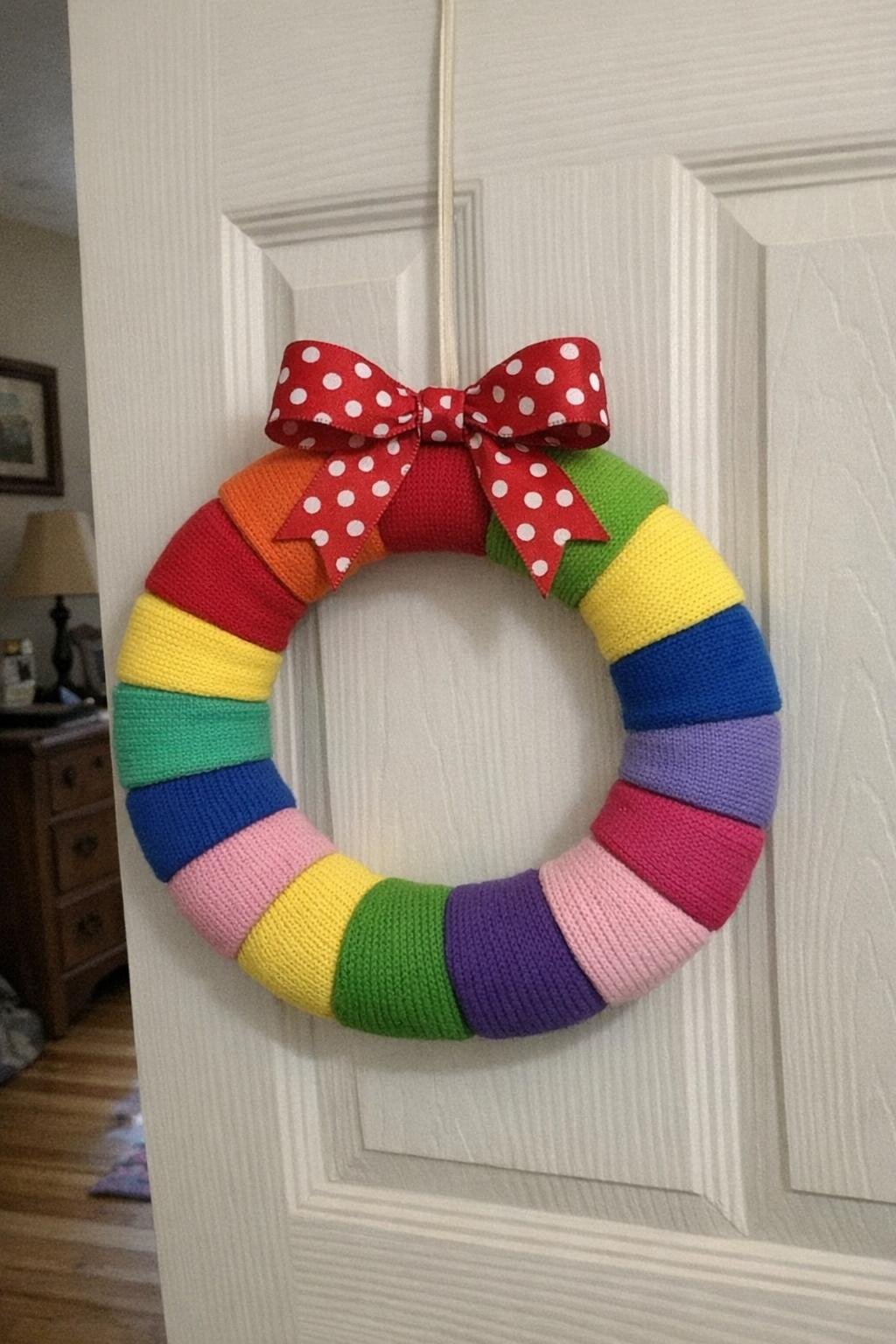
20. Sock wreath
For a bright, playful wreath, cut or gather 12 colorful sock cuffs and wrap them around a 12-inch foam ring, tucking and pinning the ends at the back. Finish it with a bow at the top in ribbon or fabric. The mix of colors and knit textures gives the wreath a cheerful, handmade fullness.
You can keep the palette coordinated with just blues and greens, or go completely mixed for a more whimsical front-door look. I’d use straight pins or hot glue sparingly so the surface stays soft and full. Hung in a mudroom or craft room, it’s a conversation piece people never guess started as old laundry.
Once you start looking at old socks as craft material instead of laundry leftovers, they become oddly versatile. Whether you want something decorative, practical, or giftable, there’s probably a sock in that drawer ready for one more very good use.