
When my raised beds are winding down for the season, I always look for one last small project that pays me back all winter and into spring. This simple worm tower is one of my favorites: you sink a hole-drilled metal coffee can into the bed, add kitchen scraps as they happen, and let worms and soil life do the rest right where your garden needs it most.
What makes this version especially satisfying is that it uses just three inexpensive main materials: a large metal coffee can, a plastic plant saucer for a lid, and a small bag of decorative stones to help with drainage and stability. If you can drill holes and dig one hole in the bed, you can make this. I like it for gardeners who want less waste, richer soil, and an easy composting system that looks a little more polished than a random bucket stuck in the dirt.
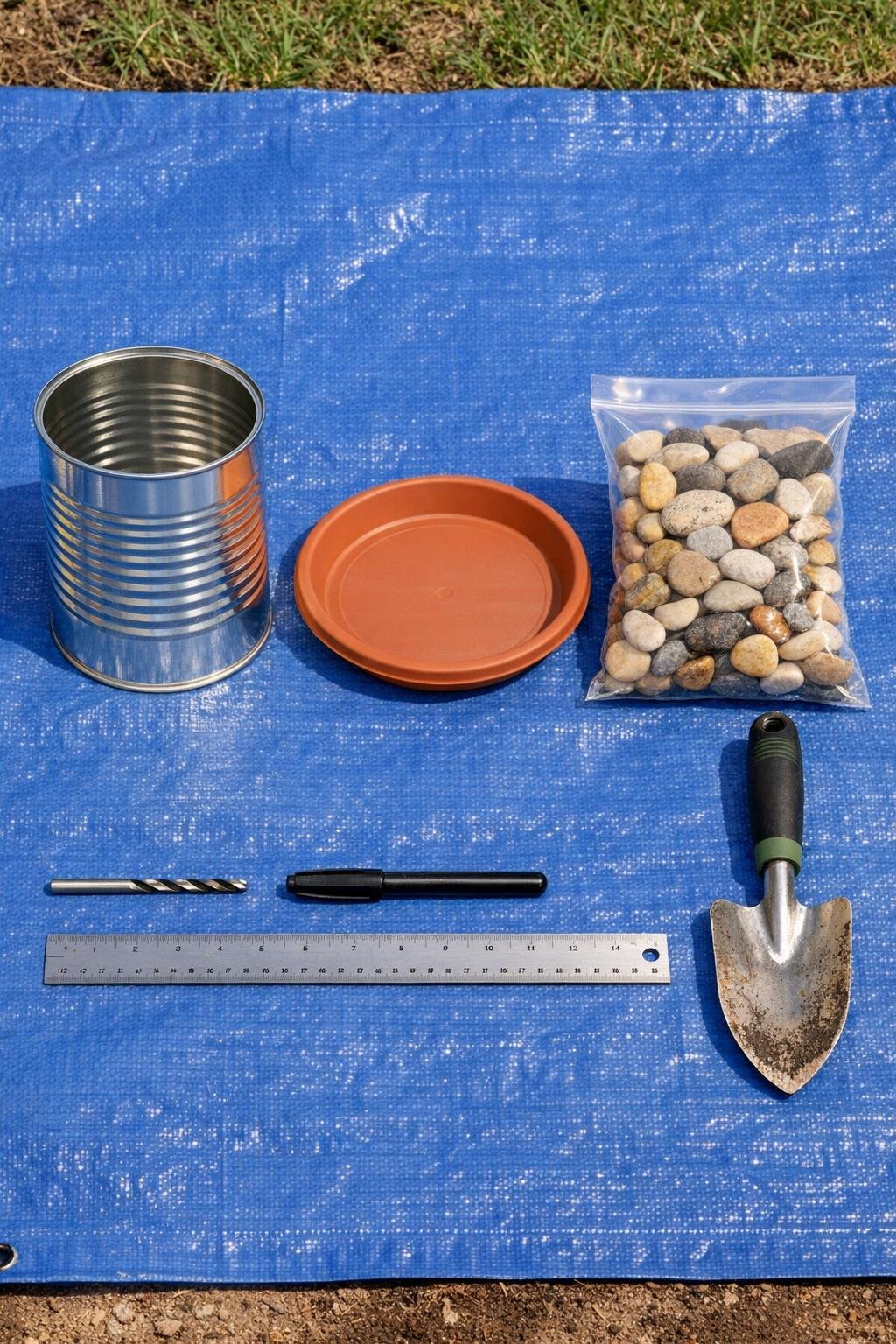
Materials
Instructions
1. Wash the coffee can well, remove the label, and smooth any sharp top or bottom edges with sandpaper so the finished tower is safe to handle in the garden.
2. Use the marker and ruler to mark rows of holes around the sides of the can, starting 2 inches up from the bottom and continuing to about 3 inches below the top, spacing the holes roughly 1 1/2 inches apart.
3. Drill 1/4-inch holes at every marked point around the sides of the can, then drill 6 to 8 holes in the bottom so extra moisture can move into the soil instead of pooling inside.
4. Drill 3 or 4 small holes near the rim of the plastic saucer lid so rainwater does not collect on top, but keep the center solid enough to block pests and reduce odor.
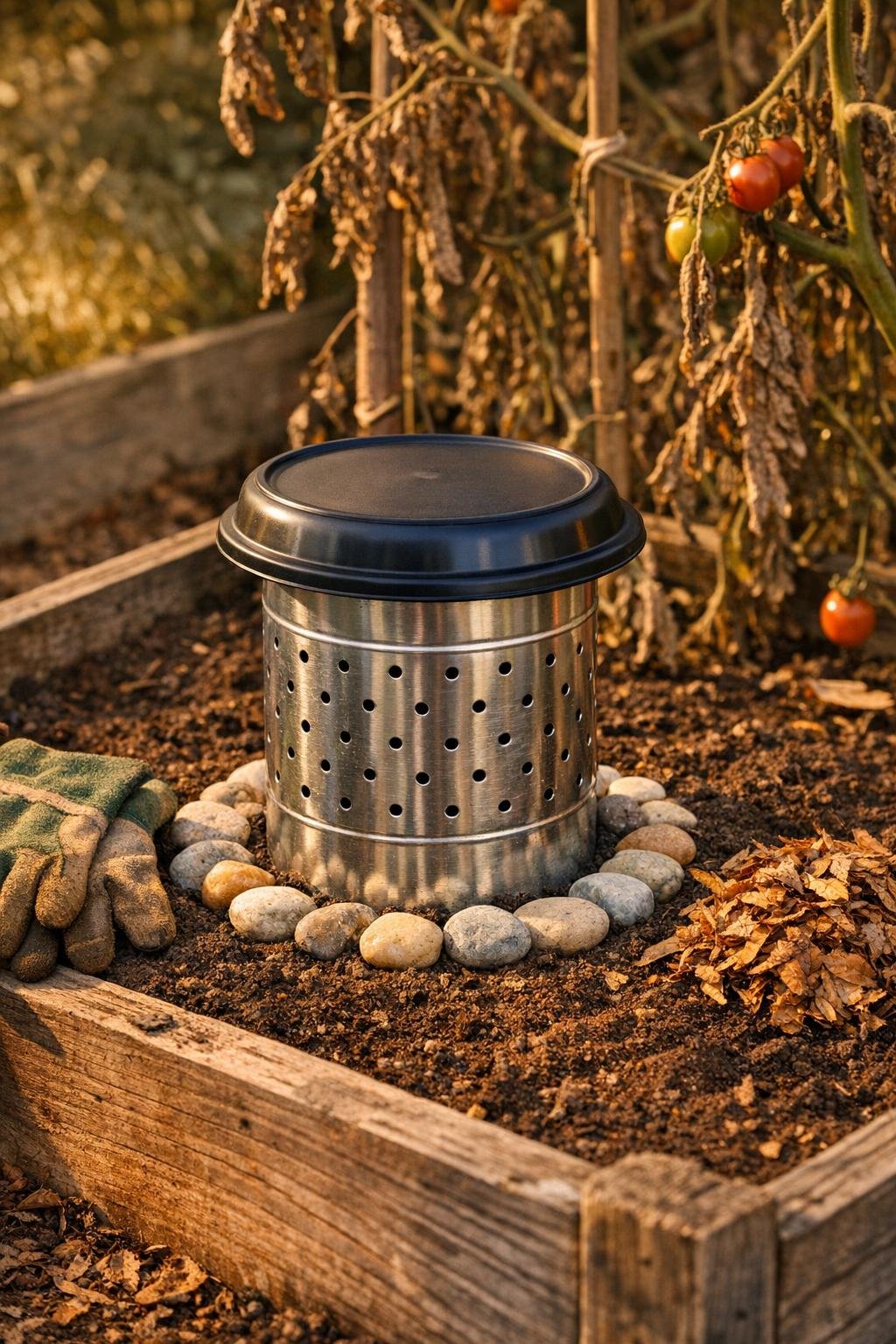
5. Choose a spot in the raised bed near heavy feeders like tomatoes, squash, or peppers, and dig a hole deep enough that the can will sit with its bottom and most of its sides underground while the top 2 inches stay above the soil.
6. Sprinkle the decorative stones into the bottom of the hole and around the lower outside edge of the can as you set it in place; this helps keep the tower stable and creates a tidy, well-drained collar where the metal meets the soil.
7. Backfill firmly around the can, pressing soil so it stands straight, then check that the side holes are mostly below soil level where worms can easily travel in and out.
8. Add a loose base layer of 1 cup dry brown material, then a layer of chopped kitchen scraps, then 1 to 2 cups of compost or garden soil; repeat once more to nearly fill the can without packing it tight.
9. Pour in 2 to 3 cups of water until the contents are evenly damp like a wrung-out sponge, then place the plastic saucer upside down over the top as a simple fitted lid.
10. Feed the tower with small amounts of chopped scraps as the bed finishes out the season, always covering fresh scraps with a handful of dry browns or soil, and leave the tower in place so worms can keep working through fall and beyond.
Variations & Tips
For deeper beds: If your raised bed is more than 12 inches deep, use an extra-tall coffee can if you have one. The more buried sidewall you give the worms, the more feeding access points they get.
Best scraps to use: I get the quickest breakdown with chopped vegetable peels, fruit scraps, coffee grounds, crushed eggshells, and tea leaves. Avoid meat, dairy, oily foods, and large citrus loads, which can invite pests and slow things down.
Keep it active: A worm tower works best when the contents stay lightly moist and never become a compacted sludge. I treat it a bit like a good braise in the kitchen: balanced moisture, airflow, and layers make all the difference.
Cold-weather trick: At the very end of the season, top the contents with extra shredded leaves and snap the lid back on. That little blanket helps hold heat and moisture a bit longer for continued breakdown.
If you do not have river stones: Pea gravel works just as well, and even a few broken terracotta pieces can help stabilize the can. I still prefer stones because they give the top edge a more finished, intentional look.
Placement tip: Put the tower 6 to 8 inches away from the root zone of your biggest plants rather than right against the stem. You want worms and nutrients moving outward through the bed, not a soggy pocket directly at the crown.
Make feeding easier: Keep a small lidded bowl in the kitchen for worm-tower scraps and empty it every few days. That rhythm makes the system feel effortless, which is usually the secret to any garden habit actually sticking.