
In late summer and early fall, I start behaving the way I do before a big holiday dinner: I prep ahead, I protect what matters, and I use the practical little tricks that save the whole spread. This simple garden-bed tarp clamp is one of those tricks. You soak plain wooden clothespins, pair them with two basic shed staples, and turn them into quick clamps that help hold a protective tarp or row cover right where you want it over a fall bed.
What I like about this method is that it’s inexpensive, fast, and surprisingly effective for small backyard beds, especially if you need to shield tender greens from chilly nights, hard rain, or blustery wind. If you’ve got a raised bed or a low in-ground bed and you want a no-fuss way to secure a cover without fancy clips, this is a very manageable afternoon project.
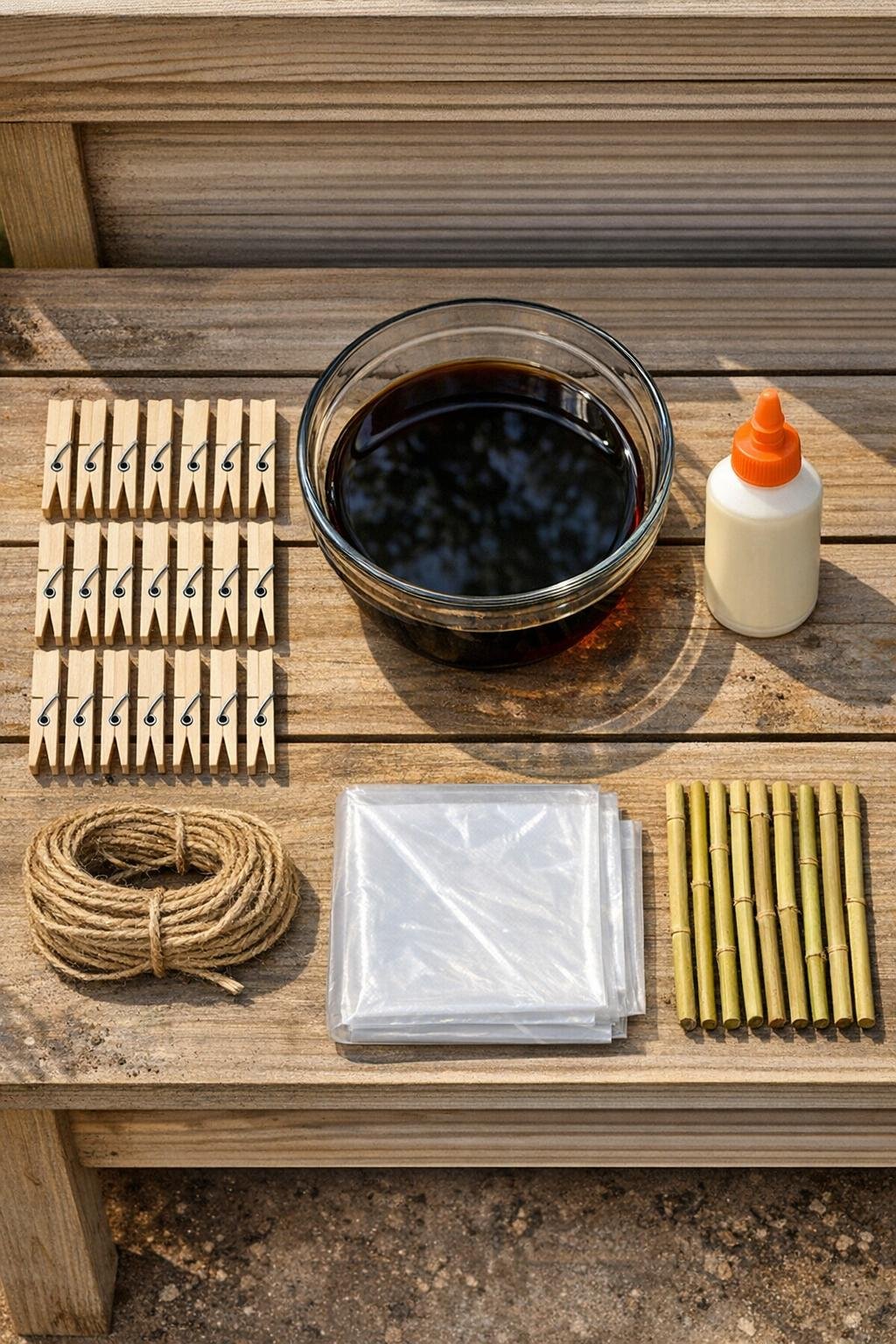
Materials
Instructions
1. Brew the black tea or mix your soaking liquid, pour 4 cups into a large glass bowl, and add the wooden clothespins so they are fully submerged for 2 to 4 hours.
2. Remove the clothespins, pat them dry with an old towel, and let them air-dry until they are just slightly damp instead of dripping.
3. Add a thin bead of exterior wood glue along the inside shoulders of each clothespin where the wood halves meet near the spring, then press them together a few times to work the glue into the contact points without sealing the clamp shut.
4. Let the glued clothespins rest for 20 to 30 minutes, then brush on a light coat of outdoor-safe clear sealer if you want them to last through a full damp fall season.
5. Cut the jute twine into twelve 12-inch pieces and tie one piece around the spring neck of each of 12 clothespins, leaving a 4-inch tail to use as a tie-down.
6. Push the bamboo stakes into the soil around your garden bed, spacing them about 18 to 24 inches apart so they create regular anchor points along the edges.
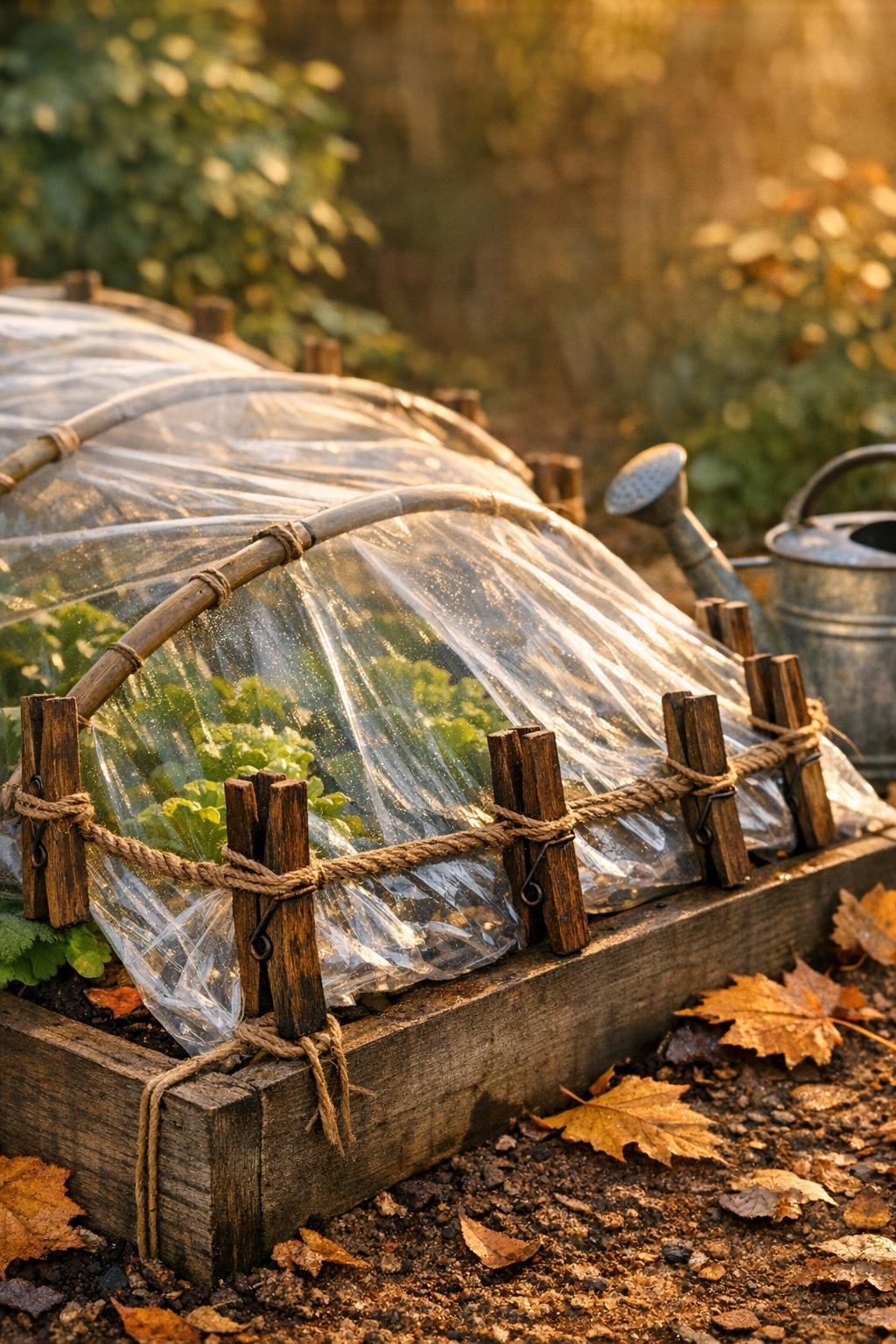
7. Drape the clear tarp over the bed so it fully covers the plants and reaches the stakes on all sides, keeping enough slack for airflow and to avoid pressing hard on tender leaves.
8. Clip the tarp edge with the prepared clothespins at each stake, catching both the tarp and a little fold of twine in the clamp for extra grip.
9. Wrap each twine tail once around its nearby bamboo stake and tie a simple half-knot so the clothespin cannot slide off the tarp edge in wind.
10. Add the remaining clothespins between the stakes anywhere the tarp lifts or flaps, spacing them closer on the windward side for a snug, even hold.
11. Check that the tarp forms a gentle tent over the bed, then adjust the clips so the cover stays secure while still venting a little at soil level on mild days.
12. Remove the tarp during warm sunny afternoons if needed, then reclip it in the evening; once you’ve made these clamps, putting the cover on and off takes only a minute or two.
Variations & Tips
For windy beds: Use all 24 clothespins instead of 12, doubling up at the corners and along the side that catches the strongest gusts.
For raised beds: If your bed has thick wooden sides, tie the twine to short screws, cup hooks, or handles already attached to the frame instead of bamboo stakes.
For lighter covers: This same clamp setup works beautifully with frost cloth, old sheets, or insect mesh, and the gentler fabric usually grips even better than slick plastic tarp.
Why the soaking helps: Soaking swells the wood slightly and conditions a dry clothespin before outdoor use; once dried, the pins often feel a bit tighter and less brittle, which is exactly what you want in chilly weather.
Make them last longer: Store the clothespin clamps indoors between cold snaps so the springs stay rust-free and the wood doesn’t stay waterlogged for days.
My favorite timing trick: I keep the clamps in a small basket by the back door during shoulder season, the same way I keep finishing salt near the stove; when a sudden cold night is forecast, being organized is half the victory.