
When the garden is winding down and the beds still have a few tempting greens, bulbs, or fresh-fall plantings hanging on, I like to put up one last simple line of defense before the weather really turns. This easy raised bed critter deterrent uses soaked wooden popsicle sticks plus two inexpensive dollar store supplies to create a strong-smelling, low little barrier that helps discourage nibbling visitors from stepping right into your bed.
I love this kind of project because it is quick, budget-friendly, and easy to tuck into that end-of-season cleanup window when I already have my hands in the garden. If you have a raised bed that keeps attracting squirrels, chipmunks, rabbits, or curious neighborhood cats, this is a practical little trick that looks neat, goes together fast, and can be refreshed as needed.
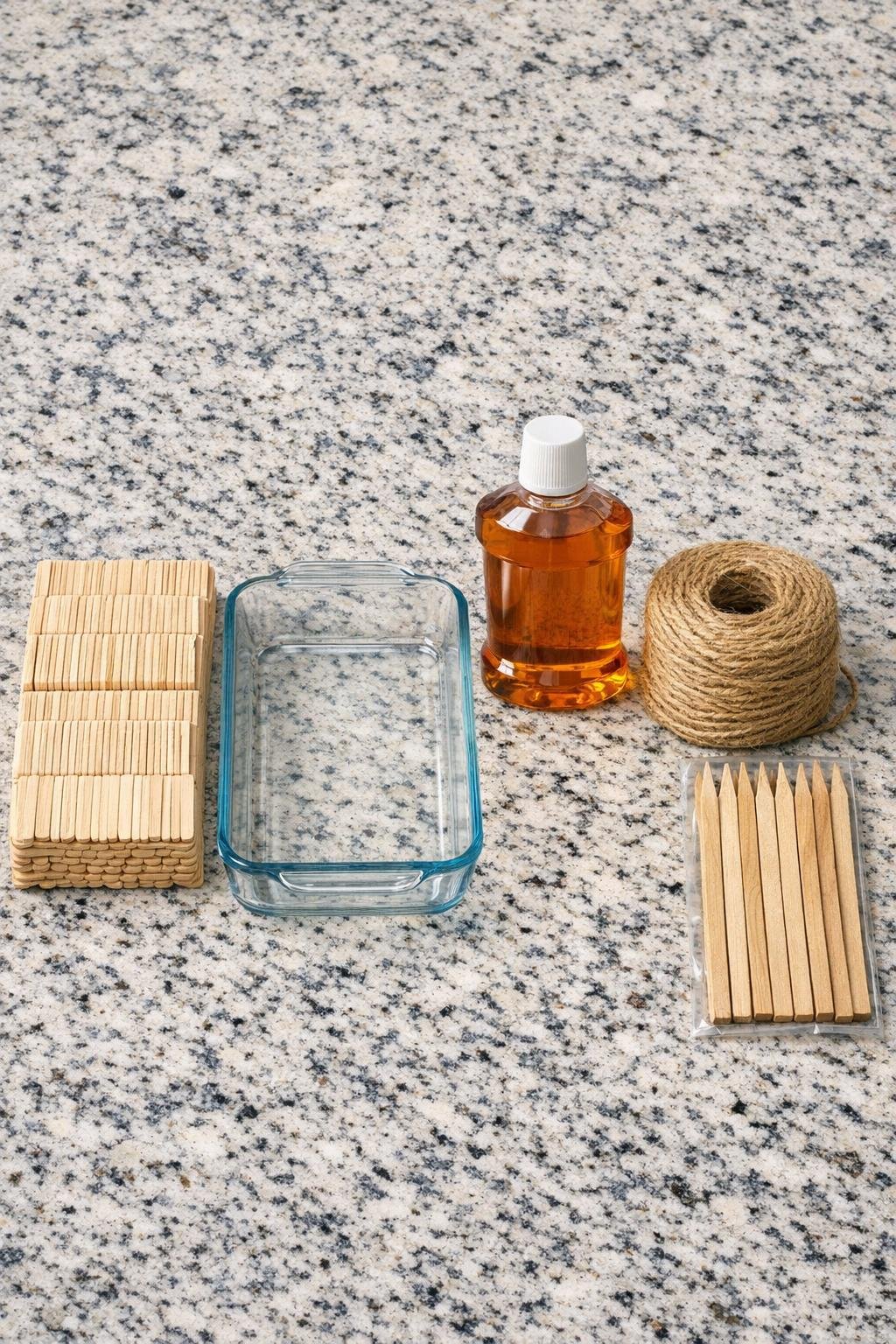
Materials
250 wooden popsicle sticks, standard craft size 4 1/2 inches long
Instructions
1. Pour the amber mouthwash into the glass baking dish, add the popsicle sticks, and press them down so as many as possible are fully soaked; let them sit for 2 to 4 hours, or overnight for a stronger scent.
2. Lift the sticks out onto an old towel and let them air-dry until they are no longer dripping but still hold that strong scent, usually 20 to 30 minutes.
3. Push the 12 wooden stakes around the inside edge of your raised bed, spacing them about every 12 to 18 inches to outline the bed closely.
4. Tie the jute twine to one corner stake about 3 inches above the soil, then wrap it around the bed from stake to stake, pulling it snug to make one continuous perimeter line.
5. Add a second line of twine 6 to 7 inches above the soil, tying it to each stake so you create a simple two-level fence that gives the soaked sticks more places to hang.
6. Tie or weave the soaked popsicle sticks vertically onto the lower and upper twine lines, placing them 1 to 2 inches apart all the way around the bed so the barrier feels full instead of patchy.
7. Cluster extra sticks more tightly at corners and near any spot where critters usually enter, because those little pathways are often where the most digging and nibbling starts.
8. Check the barrier once a week and after heavy rain; replace any missing sticks and re-soak a fresh batch whenever the scent fades, usually every 7 to 14 days depending on weather.
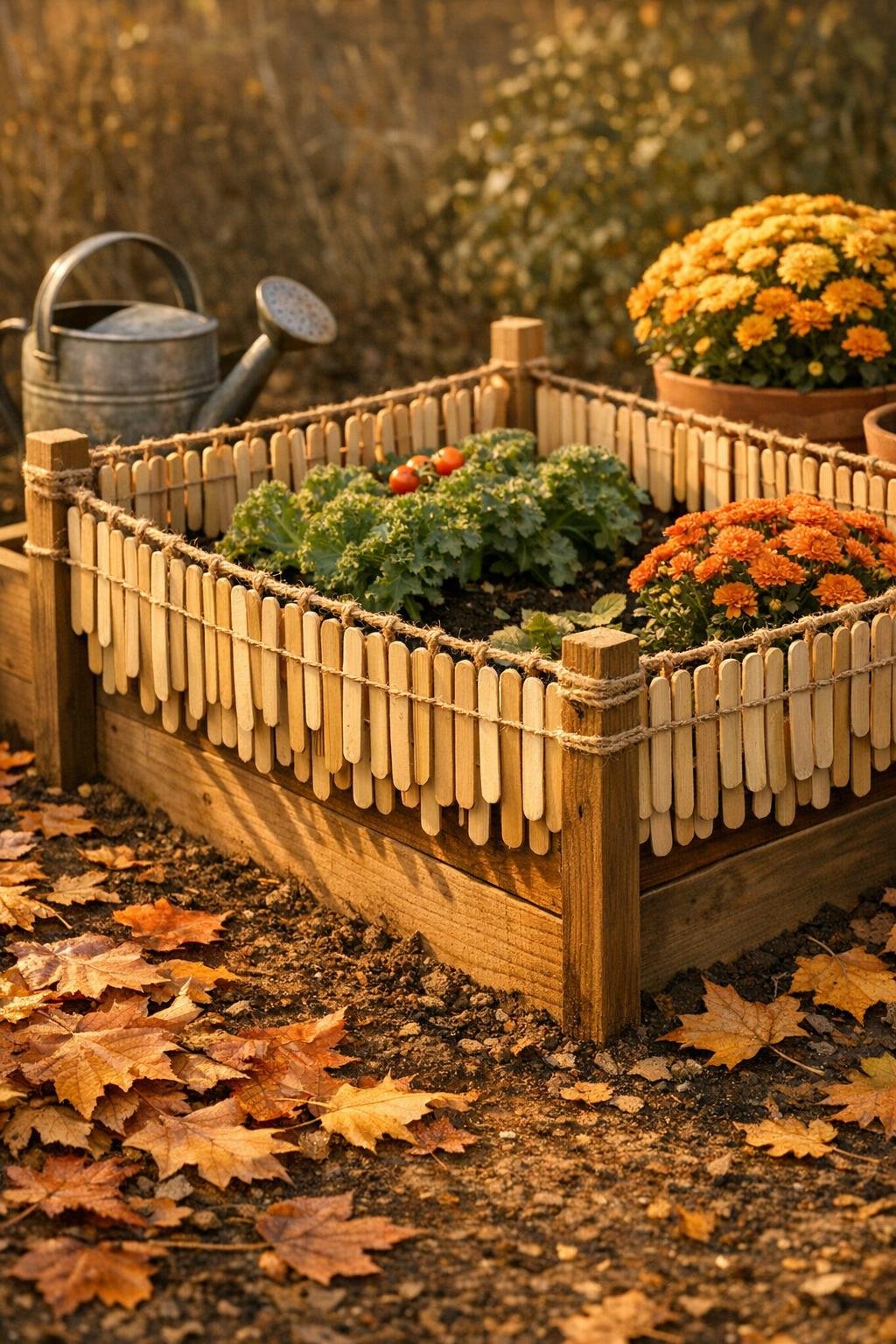
Variations & Tips
For rabbit pressure: Add a third row of twine low to the soil and hang the sticks even more densely near the bottom. That fuller lower edge helps if your garden visitors tend to nose in from ground level.
For squirrels and chipmunks: Lay 8 to 10 extra soaked sticks flat on the soil surface near freshly planted bulbs or tender starts. I have found that combining the hanging border with a few scented sticks inside the bed gives better coverage.
For picky garden spots: If only one corner gets bothered, make a half-border just across that section instead of doing the full bed. It is a nice way to stretch supplies if you are protecting several beds at once.
To keep it looking tidy: Trim the twine tails short and keep the stake tops even. Little details like that make a simple deterrent look intentional instead of like a last-minute fix.
Weather tip: After a big rain, the scent will weaken faster, so I like to keep a small second batch of sticks soaking and ready. It is the garden version of having leftovers planned ahead, and it saves time when the weather turns busy.
Plant-safe placement: Keep the sticks around the perimeter instead of pressed directly against tender stems or leafy herbs. That way you get the deterrent effect without crowding the plants you are trying to protect.