
When a fall bed is freshly planted, the hardest part often is not the planting itself. It is keeping lightweight row cover, burlap, or garden netting from lifting in the first sharp wind. One of my favorite low-cost fixes uses exactly the kind of thing most of us already have tucked behind the shed: broken terracotta pot pieces, a few sturdy garden stakes, and a length of twine.
I like this trick because it is practical, fast, and wonderfully forgiving. The terracotta adds weight without looking out of place in the garden, and the stacked shard anchors help hold protective covering down along the edge of a bed without needing fancy pins or store-bought weights. If you have a fall vegetable bed, newly mulched perennials, or cold-tender herbs you want to shield from gusty weather, this is an easy old-school method that still earns its keep.
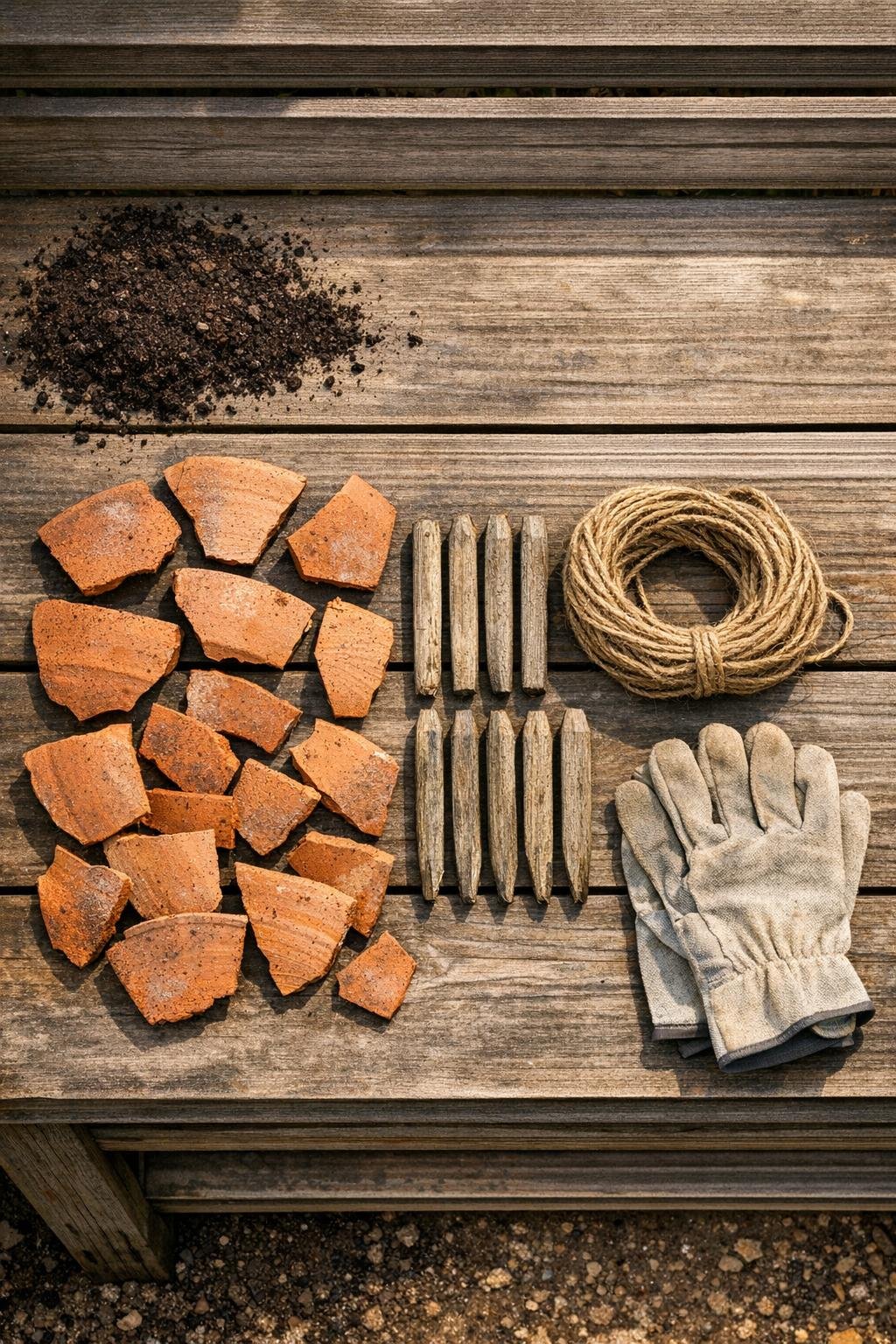
Materials
12 to 16 large broken terracotta pot shards, each about 4 to 8 inches across
Instructions
1. Sort the terracotta pieces into larger curved side shards and flatter cap pieces, keeping the biggest, heaviest pieces for the bottom of each anchor stack.
2. Choose three spots along the windward edge of your garden bed, spacing them about 18 to 24 inches apart where your cover tends to lift first.
3. Push two wooden stakes into the soil at the first spot, setting them 3 to 4 inches apart and leaving 5 to 6 inches above the soil so they form a narrow cradle.
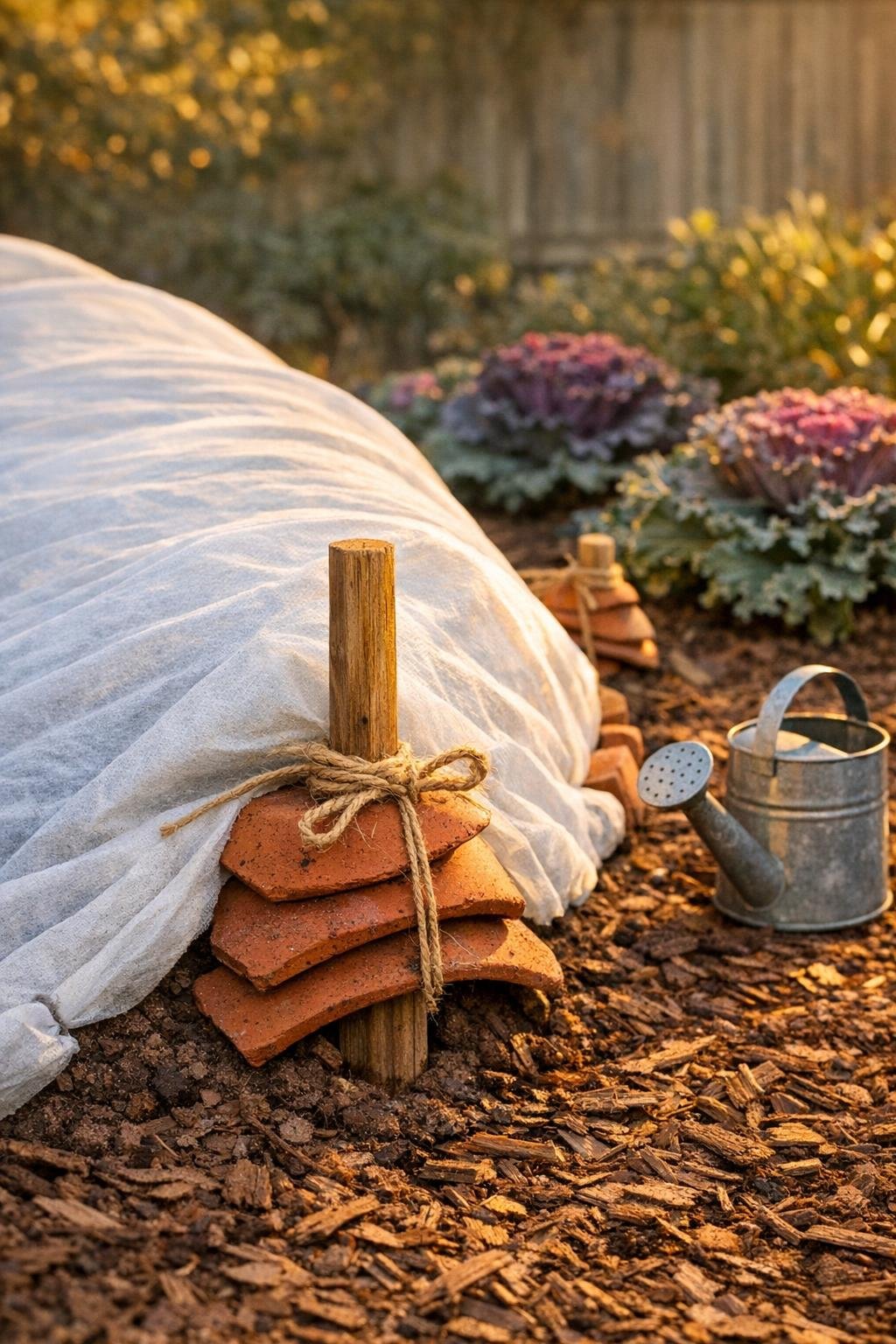
4. Lay the edge of your row cover, burlap, or netting between the stakes, then begin stacking terracotta shards on their sides so their curved shapes lean into one another and press the fabric down.
5. Build the stack 6 to 8 inches high with 4 to 5 shards, placing the broadest pieces at the bottom and tucking smaller pieces on top so the weight is low and stable.
6. Wrap twine once around the outside of both stakes and across the front of the shard stack, then tie it snugly with a square knot so the pieces cannot tip forward in a gust.
7. Repeat the same stake-and-shard stack two more times along the bed, keeping the height and spacing similar so the cover is held evenly across the whole edge.
8. If the bed is especially exposed, run one longer length of twine from one anchor station to the next, weaving it around each pair of stakes to create a continuous hold-down line.
9. Press any loose soil or mulch lightly around the stakes and the base shards to lock everything in place without burying the fabric edge completely.
10. Test the setup by lifting the cover gently between anchors; it should flex in the middle but stay pinned securely at each stack without slipping free.
Variations & Tips
For burlap frost wraps: This works especially well with folded burlap because the rough texture grips under the terracotta better than slick plastic sheeting.
For raised beds: Set the stakes just outside the wood frame and let the shard stack pinch the cover right at the bed edge so you do not crowd your plants.
If your pot shards are small: Make shorter but wider stacks by using three stakes per station in a shallow triangle and filling the middle with more pieces.
Best shard shape: Curved sidewall pieces from a larger terracotta pot are ideal because they nest together naturally and create a surprisingly solid little weighted column.
Weather tip: In very wet weather, check the twine after a day or two; natural jute can loosen slightly as it absorbs moisture, so a quick re-tie keeps the anchor firm.
Safety note: Knock off razor-sharp points before stacking, and wear gloves while handling broken pottery since terracotta edges can be rougher than they look.
Seasonal storage: At the end of fall, untie the stacks, rinse off the shards, and keep them in a bucket or crate near the shed so next season's wind protection is ready to go.