
When fall cleanup ramps up at my house, I always end up with the same pileup: bags of leaves, faded annuals, and all those garden trimmings that feel too useful to throw away but too bulky to ignore. This simple compost bin aerator is one of those wonderfully low-effort projects that makes a big difference, and it uses three basic shed staples: PVC pipe, a drill, and a sturdy stake to help get air deep into the compost so it breaks down faster and smells better.
I love this project because it’s practical, cheap, and absolutely doable in one short afternoon, even if you’re balancing work and trying to squeeze in yard chores before dark like I usually am. If your compost pile tends to get soggy, compacted, or slow, this old gardener trick gives you an easy way to boost airflow without turning the whole pile every other day.
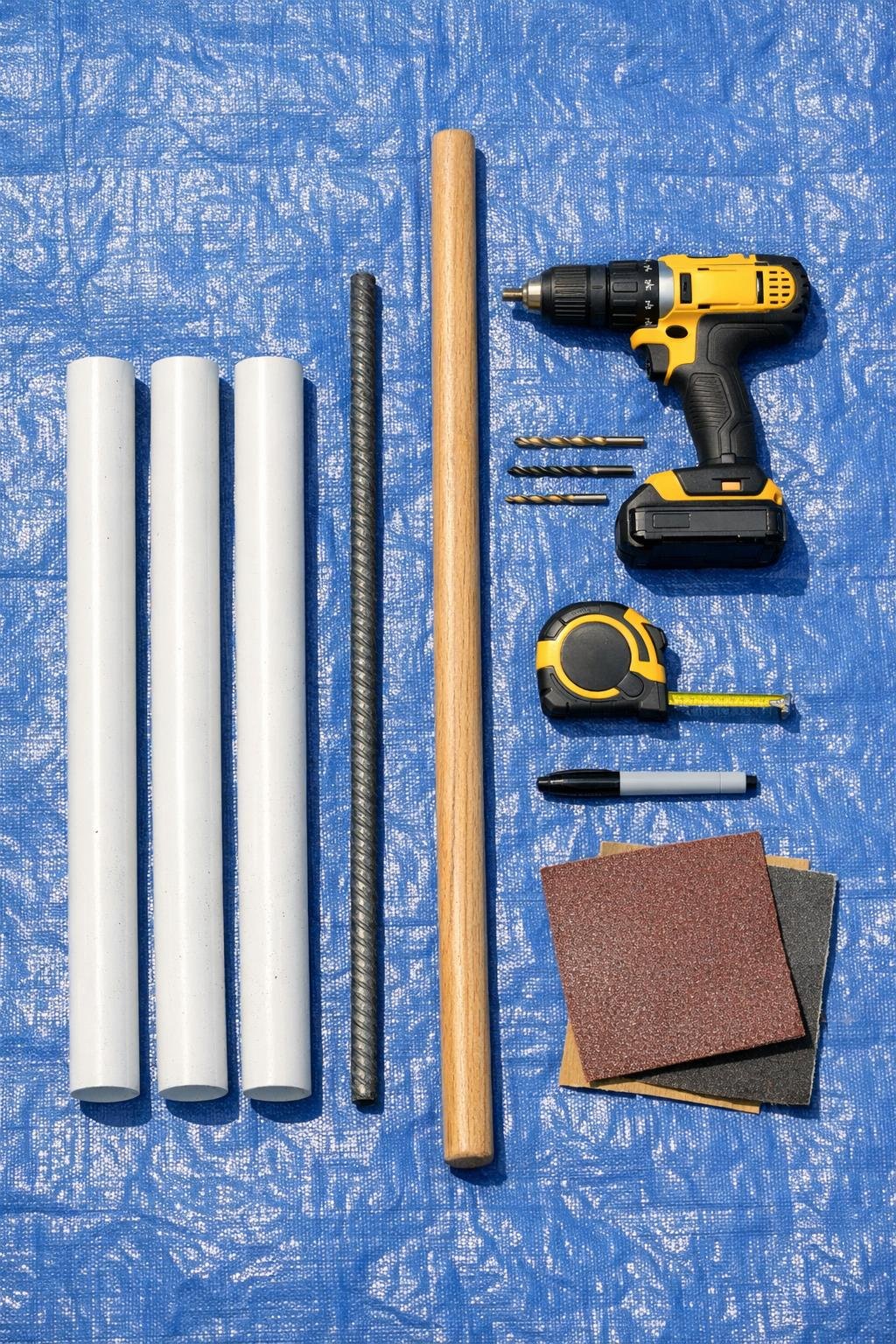
Materials
3 white PVC pipe sections, 1 1/2-inch diameter x 24 inches long each
Instructions
1. Measure and mark each 24-inch PVC section every 2 inches, starting 3 inches from one end and stopping 3 inches from the other end. Stagger the marks around the pipe so the air holes will circle the tube instead of lining up in one strip.
2. Drill 1/2-inch holes at every marked spot on all three PVC pieces. Rotate the pipe as you go so the holes wrap all the way around, which helps compost breathe from every direction.
3. Use the 1/8-inch bit to drill a small pilot hole near the top of each PVC tube, about 1 inch from the end. This gives you a spot to hook, twist, or hang the aerator if you want a little more control when pulling it out of the pile.
4. Sand all the drilled openings inside and out until the edges feel smooth to the touch. Don’t skip this step, because rough PVC burrs can catch on leaves and make the tubes harder to insert and remove.
5. Push the rebar stake straight down into your compost pile to create the first channel, going 24 to 30 inches deep if your pile is tall enough. Wiggle it slightly to widen the opening, then pull it back out.
6. Slide one drilled PVC pipe into that channel until just a couple of inches remain above the compost surface. Repeat with the other two pipes, spacing them evenly across the pile or bin for broad airflow.
7. Use the broom handle to tamp compost lightly around each pipe so it stands upright and stays in place. The handle also works as a quick poker to loosen any packed spots around the tubes without tearing everything apart.
8. Leave the aerators in place during the heavy fall cleanup season, then lift and reinsert them in new spots every week or two. That simple move refreshes the oxygen pockets and helps moisture and heat distribute more evenly through the pile.
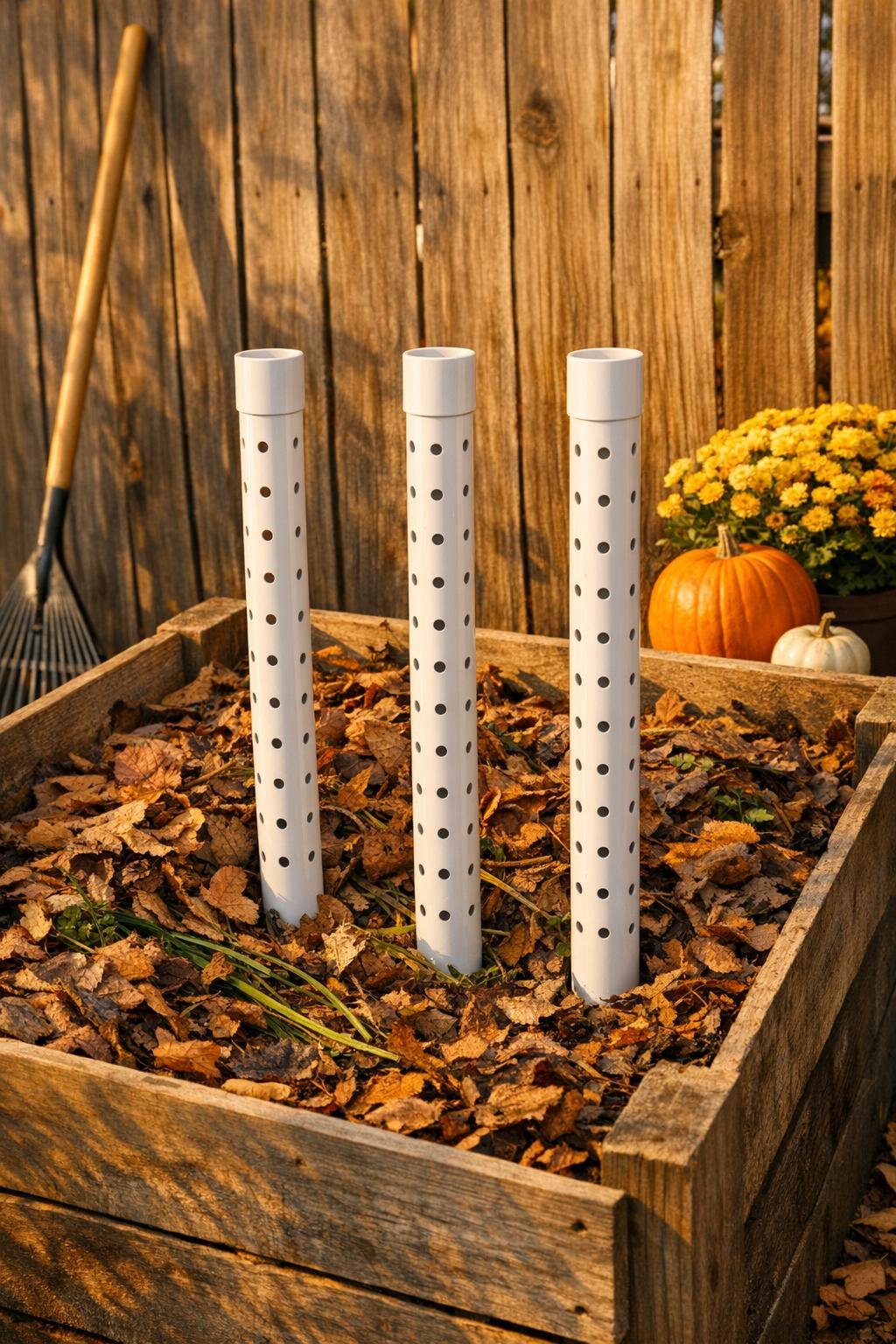
Variations & Tips
For a larger pile: Make 5 or 6 pipes instead of 3 if your compost area is wider than about 4 feet across. More vertical aerators give you better coverage and cut down on the need for full turning.
For wet compost: Add extra holes closer together on the lower half of each pipe if your pile tends to stay dense and soggy. That lower airflow is especially helpful once wet leaves start matting together.
For easier handling: Thread a short piece of outdoor twine through each small pilot hole at the top to create a pull loop. I like this if I’m wearing gloves and moving quickly before work.
Placement tip: Keep the pipes a few inches away from the very edge of the bin so air reaches the center, where material usually compacts the most. Center airflow is what really speeds things up.
Best compost mix: This aerator works best when your pile includes a good balance of browns and greens, like dry leaves mixed with grass clippings, coffee grounds, or kitchen scraps. Airflow helps, but the right mix is what makes the whole system hum.
Seasonal maintenance: In late fall, I usually pull the pipes once, knock off any stuck debris, and reinsert them after adding a fresh layer of leaves. It takes maybe five minutes and keeps the pile from turning into a cold, compacted block by November.