
Every fall, when I’m tidying up the garden beds and putting the season to bed, I like to set a few simple traps for the slugs that always seem to think my lettuce, pansies, and tender greens were planted especially for them. This little old-fashioned trick uses aluminum soup cans and a couple of plain shed staples, and it’s about as practical as anything I’ve learned over the years. It costs next to nothing, goes together in minutes, and it still does exactly what it’s meant to do.
If you’ve got a vegetable patch, hosta bed, or any damp corner where slugs linger after cool nights, this is the sort of no-fuss project worth doing before you call the garden cleaned up. I’m giving you the version I use for three traps at once, so you get good coverage instead of setting one lonely can and hoping for the best.
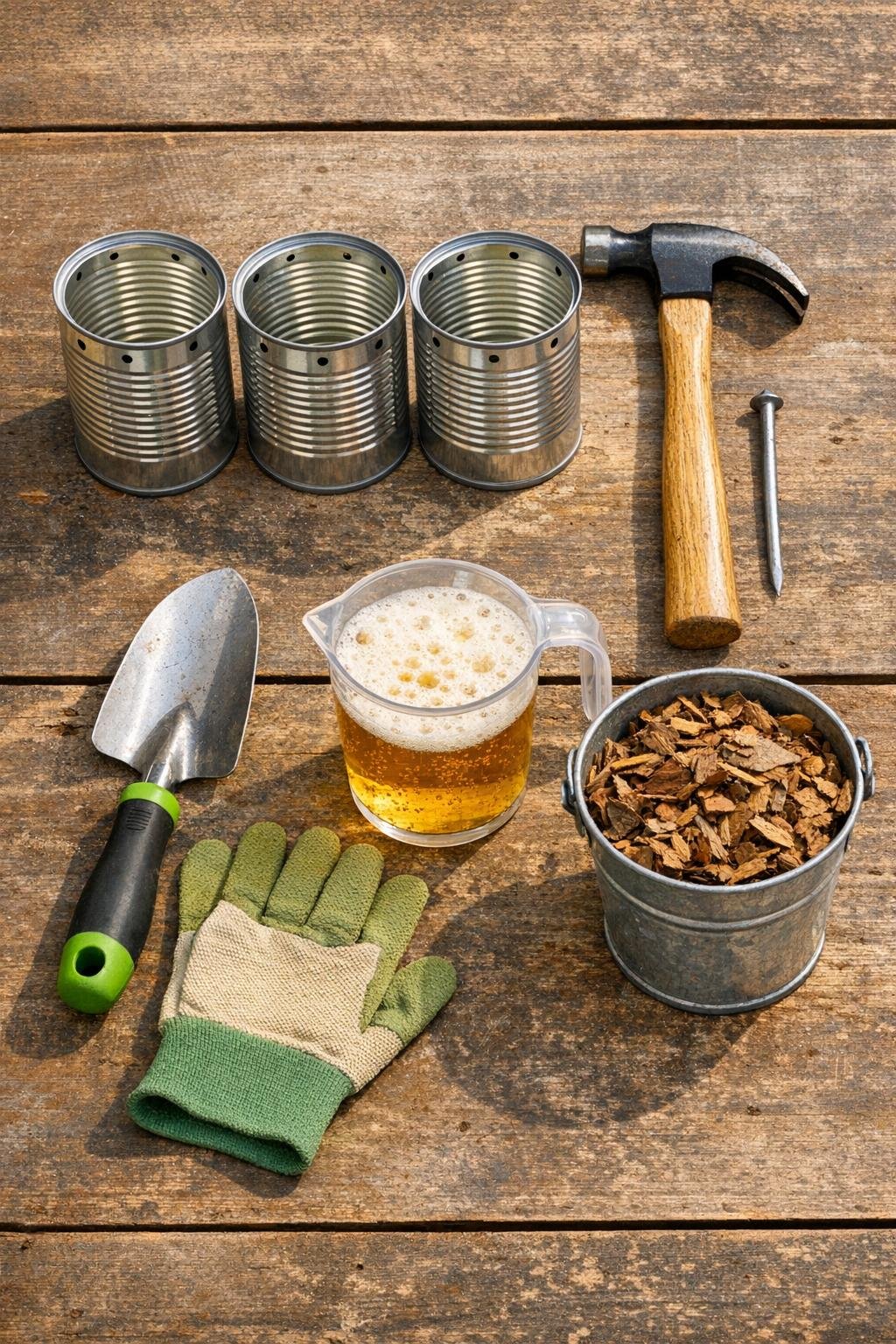
Materials
3 empty aluminum soup cans, 10 to 14 ounces each, washed with labels removed
Instructions
1. Wash the three soup cans well, smooth any sharp edges if needed, and remove the paper labels so the metal is clean and easy to handle.
2. Use the hammer and nail to punch 3 to 4 small holes near the upper rim of each can, spacing them evenly around the sides so rainwater can drain off instead of flooding the trap.
3. Choose three slug-prone spots in the garden bed, placing the traps about 3 to 4 feet apart near hostas, leafy greens, or other tender plants where the soil stays cool and damp.
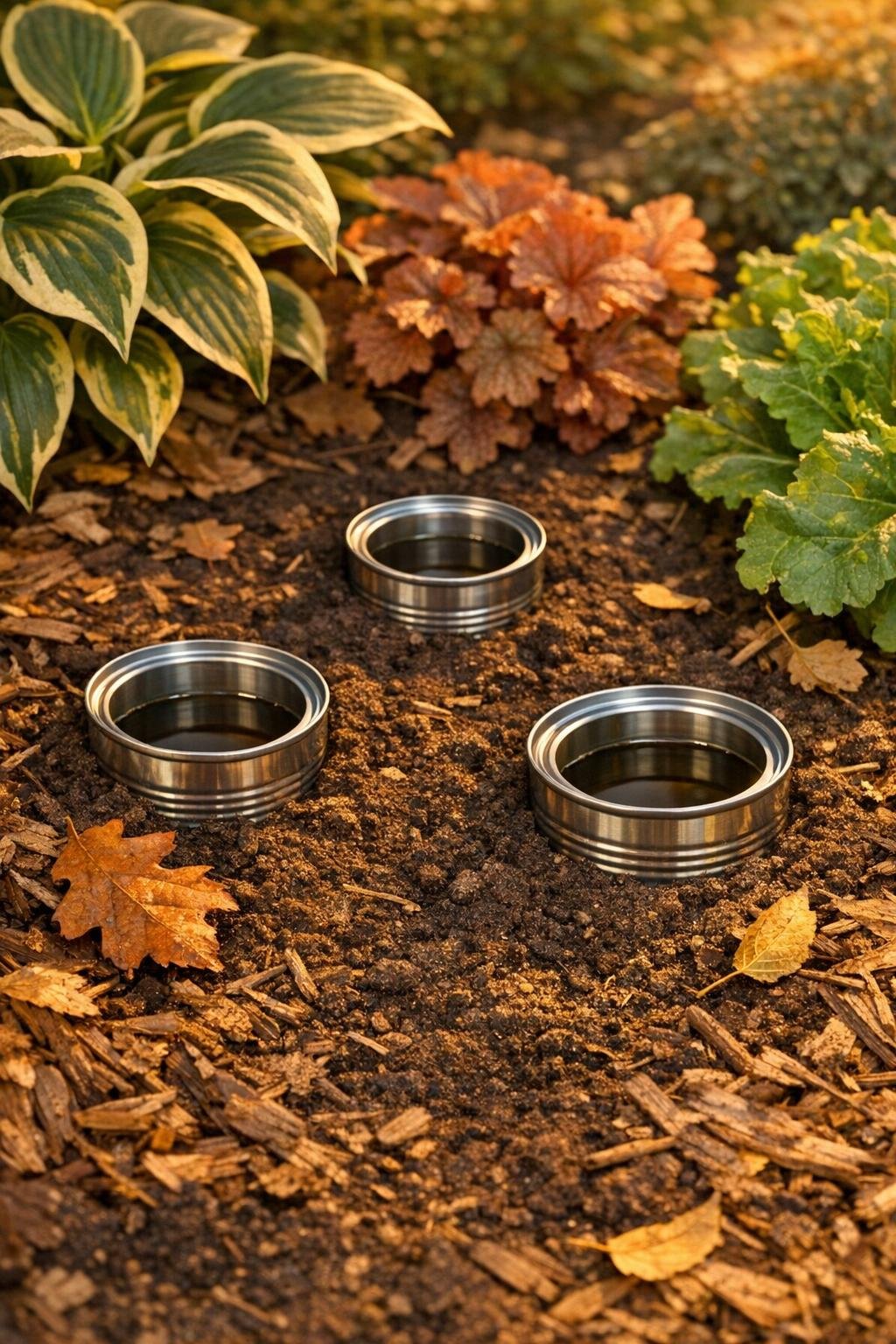
4. Dig a hole for the first can with your trowel and bury it so the rim sits about 1 inch above the soil line; repeat with the other two cans.
5. Pour 1/2 cup of beer into each can, filling them just deep enough to attract slugs without bringing the liquid too close to the drainage holes.
6. Scatter a light ring of dry leaves, pine straw, or mulch around each trap to help it blend into the bed while still leaving the can opening fully visible.
7. Check the traps each morning for several days, emptying and refilling them as needed until slug activity drops off noticeably.
8. Refresh the beer after rain or every 2 to 3 days during damp weather, and move any trap a foot or two if one area of the bed is clearly drawing more slugs than another.
Variations & Tips
Best placement: I’ve had the most success putting these traps in the shadiest, dampest part of the bed rather than out in open sun, because that’s where slugs are already traveling.
Why the rim stays above soil: Leaving the rim about an inch high helps keep ground beetles and other beneficial helpers from stumbling in, which is one of those small adjustments that makes an old trick work better.
Mulch choice: Light, loose mulch like pine straw or dry shredded leaves works better than heavy wet mulch because it keeps the trap discreet without covering the opening.
Beer substitute: If you don’t want to use beer, a mixture of 1 cup water, 1 teaspoon sugar, and 1/2 teaspoon yeast in each can will still give you an effective bait.
Fall cleanup habit: I like to set these right after I pull fading annuals and trim back ragged foliage, because fewer hiding spots and active traps together make a noticeable difference by the next week.
Cold-weather note: Once your ground begins to freeze hard, pull the cans, rinse them, and tuck them back in the shed so they’re ready for the first soft damp spells of spring.