
When I first heard old-school gardeners talk about warming garden beds with nothing more than broken clay pots and a basic yard staple, I assumed it was one of those half-true tricks that sounded better in memory than in practice. But this one is wonderfully practical. By baking terracotta shards to drive in stored heat, then using them as a low, heat-holding disc over soil in a raised bed, you create a simple thermal buffer that helps hold warmth around tender roots on those first chilly pre-frost nights.
This version is especially good for gardeners who already have a cracked pot pile behind the shed and want a fast, low-cost way to protect lettuce, herbs, seedlings, or late-season greens. I like projects that behave a little like good cooking: humble ingredients, smart technique, and surprisingly satisfying results. That is exactly what this is.
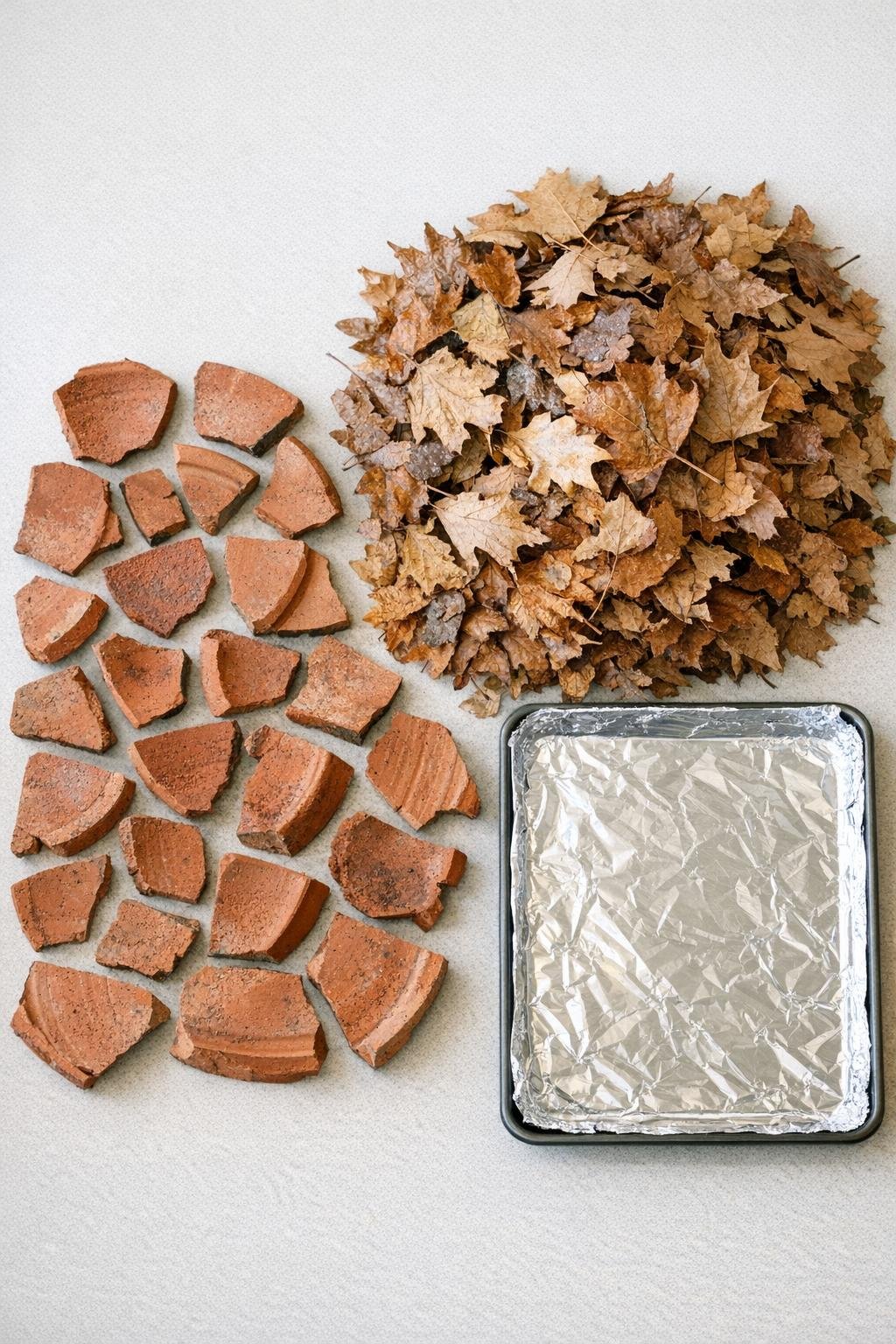
Materials
Instructions
1. Sort your broken terracotta and keep the largest curved shards, aiming for pieces roughly 4 to 8 inches wide so they hold heat well and make broad coverage over the soil.
2. Brush off dirt and loose grit, then line a baking sheet with foil and arrange the shards in a single layer with a little space between them.
3. Bake the terracotta at 250°F for 20 to 30 minutes, just long enough to warm it thoroughly and dry out any lingering moisture without scorching anything.
4. While the shards heat, clear the raised bed surface and gently mound the soil into a low, flat dome about 16 to 20 inches across where you want to preserve warmth overnight.
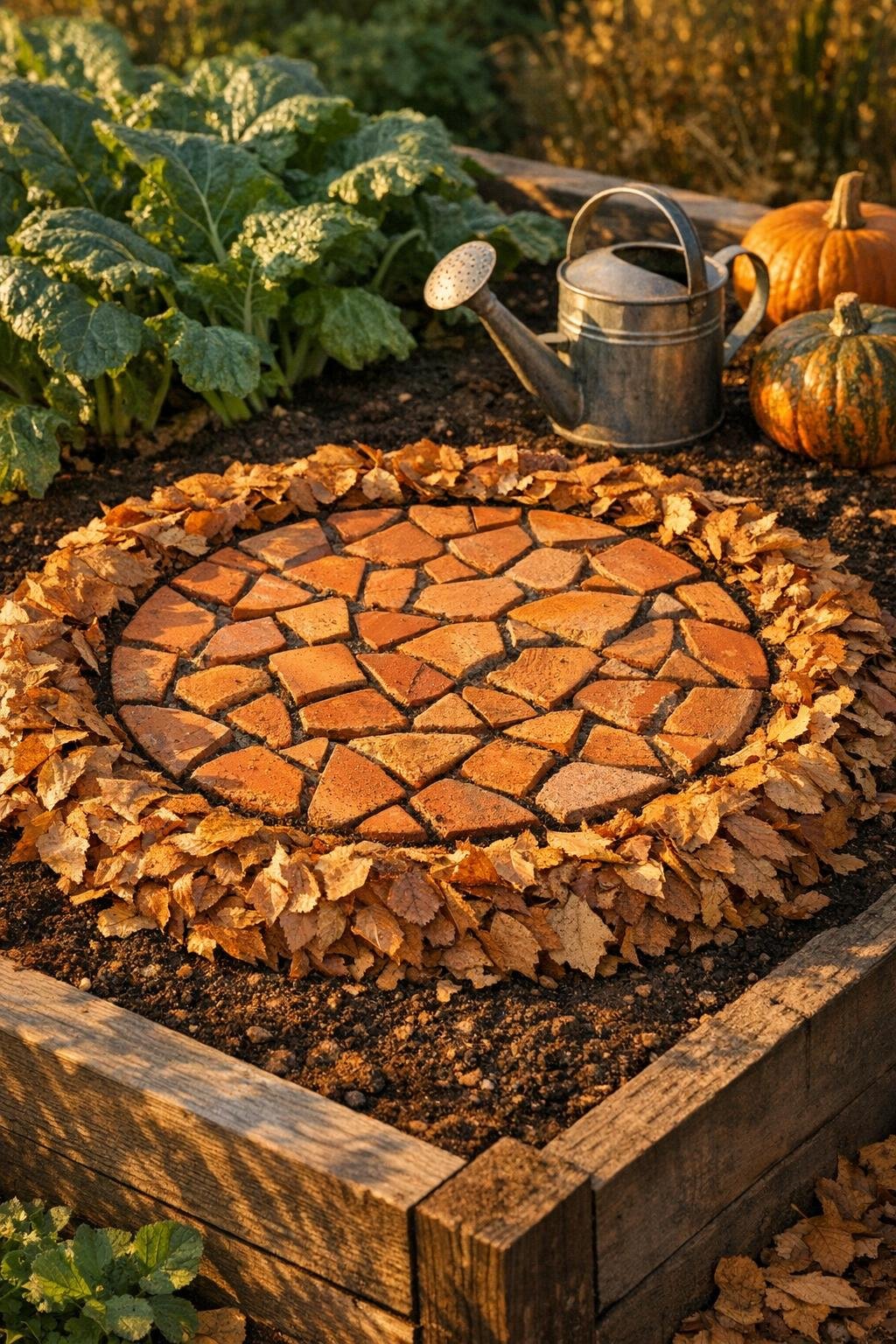
5. Spread a 3- to 4-inch-thick layer of dry leaves around the mound in a broad circle, leaving the very center mostly open so the warmed terracotta can sit directly over the soil.
6. Carefully transfer the hot terracotta outdoors and place the shards over the center of the mound like a fitted mosaic, overlapping edges slightly to form a round disc 16 to 20 inches wide.
7. Tuck extra dry leaves snugly around the outer edge of the terracotta disc so the clay stays exposed on top but insulated around the sides.
8. Set the disc in place before sundown on a cool day so the warmed clay starts with stored heat and the leaves act like a loose insulating collar as temperatures drop.
9. In the morning, lift the shards once the bed begins to warm naturally, let the soil breathe, and repeat on the next chilly evening as needed.
Variations & Tips
For smaller beds: Use 10 to 12 medium shards and make a 10- to 12-inch disc over one herb or seedling cluster instead of covering a larger patch.
Best leaf choice: Dry deciduous leaves work best because they trap air nicely; avoid wet leaves, matted grass clippings, or anything soggy that steals heat instead of holding it.
How this helps: Terracotta behaves a bit like a pizza stone in the garden—it absorbs warmth and releases it gradually, while the leaf ring slows heat loss at the soil surface.
Use timing wisely: This trick is most useful for light pre-frost dips and cold nights in the upper 30s, not for a hard freeze that lasts all night and into the next day.
Keep it safe: Always move hot shards with sturdy oven mitts and set them down gently; old terracotta can be brittle, especially along sharp broken edges.
Make it neater: If you want a tidier-looking disc, place the largest curved pieces around the outside edge first, then fill the center with smaller shards so the finished circle looks intentional and covers more evenly.