
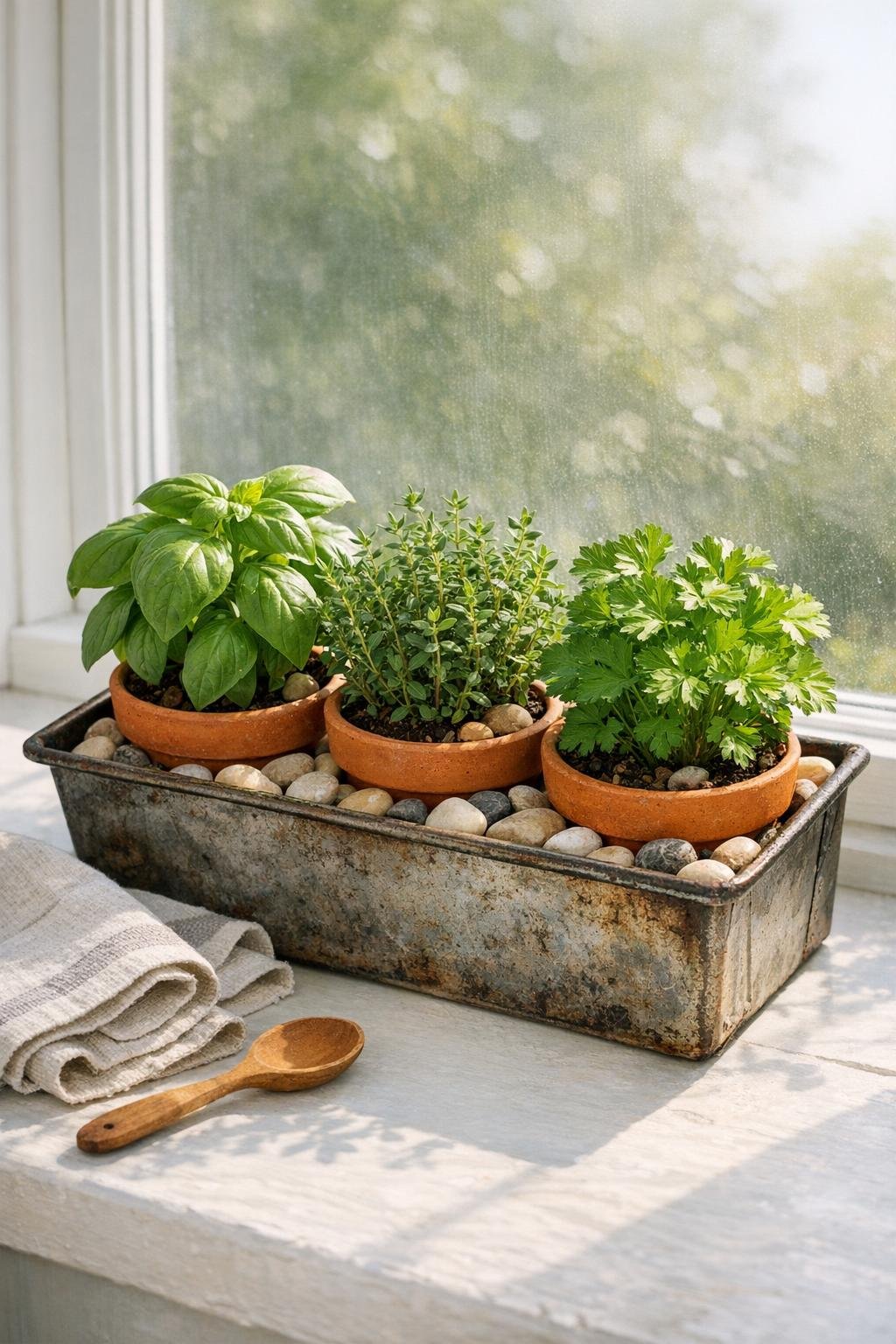
I love a project that makes my kitchen feel more pulled together without adding one more complicated thing to my week, and this windowsill herb planter does exactly that. The idea is wonderfully simple: small terracotta pots sit down inside a vintage metal bread loaf pan, with a bed of smooth pebbles underneath to catch drips, add weight, and make the whole thing look intentional instead of pieced together.
If you cook even a little bit, having basil, parsley, thyme, or chives right by the window is such a treat. I’m always looking for practical ways to make everyday spaces prettier, and this one has that nice balance I really appreciate as a busy person: it’s fast to put together, easy to maintain, and polished enough that it looks like something you’d spot in a cozy kitchen photo shoot.
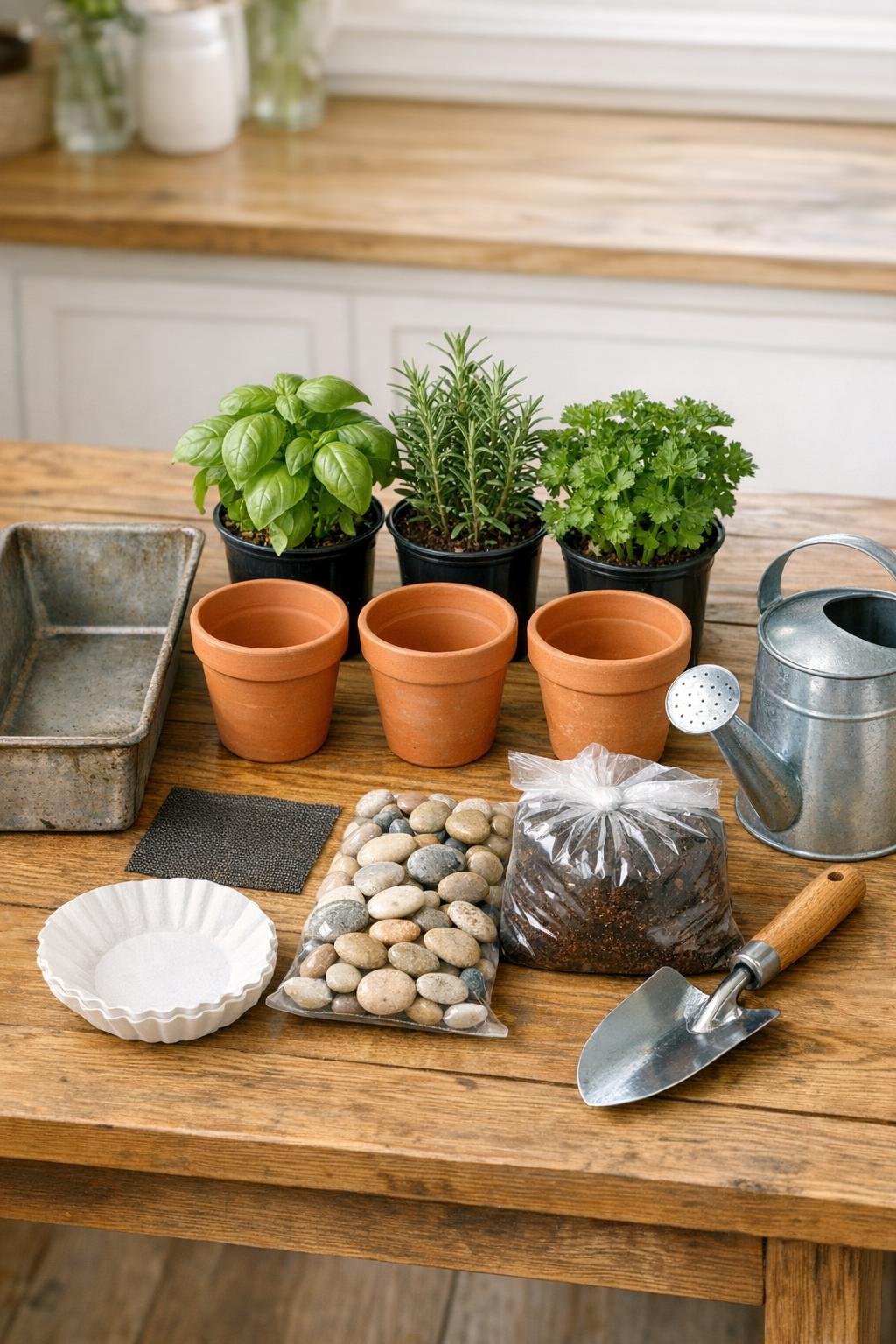
Materials
1 vintage metal bread loaf pan, about 9 x 5 inches
Instructions
1. Wash the vintage loaf pan with warm water and a little dish soap, then dry it completely so it won’t leave rust marks or moisture on the windowsill.
2. Pour the smooth pebbles into the pan and spread them into an even layer about 1 to 1.5 inches deep, covering the entire bottom from end to end.
3. Place a piece of mesh or a coffee filter in the bottom of each terracotta pot so soil stays in place while water can still drain through.
4. Gently remove each herb from its nursery pot, loosen any tightly circling roots with your fingers, and add a little fresh potting mix to the bottom of the terracotta pots if needed so each plant sits at the same height it was growing before.
5. Fill around each herb with potting mix, pressing lightly to remove large air pockets, and leave about 1/2 inch of space below the rim for easy watering; add the fertilizer now if you’re using it.
6. Wipe the rims of the terracotta pots clean, then set all three pots down into the pebble-lined loaf pan, nestling them slightly so they sit level and feel secure.
7. Add a few extra pebbles around the pots to fill visible gaps and give the planter a fuller, finished look while still keeping the tops of the stones below the pot rims.
8. Water each herb lightly until the soil is evenly moist, let excess drain into the pebble layer, and empty any standing water from the loaf pan after about 15 minutes if the pebbles become submerged.
9. Place the finished planter on a bright windowsill that gets at least 6 hours of sun, rotating the loaf pan every few days so all the herbs grow evenly toward the light.
Variations & Tips
Best herb combo: I like to pair one taller herb, one mounding herb, and one finer-textured herb so the planter looks full and balanced. Basil, parsley, and thyme are an easy mix for that.
For lower light kitchens: Try parsley, mint, and chives if your windowsill gets bright indirect light instead of strong direct sun. They’re generally more forgiving in everyday kitchen conditions.
Drainage tip: The pebble layer is there to catch drips and stabilize the pots, not to turn the loaf pan into a water reservoir. I always check after watering so the pot bottoms aren’t sitting in deep water.
Make it look fuller: Use herbs that already have multiple stems per pot, and tuck a few extra pebbles snugly around the bases so the arrangement looks generous and finished instead of loose.
Protect the windowsill: If your sill is painted wood or stone you worry about, set the loaf pan on a thin clear tray or wipe underneath it every few days. Vintage metal can sometimes hold a little condensation.
Easy upkeep: Snip herbs often, especially basil, to keep them bushy. This is the kind of project I love because it actually gets better with use, and having fresh herbs within arm’s reach makes weeknight cooking feel a little less rushed.