
Fall cleanup can feel never-ending when leaves, pine needles, and brittle plant stems are scattered through beds where a regular leaf rake is just too rough. This simple garden debris rake uses sliced foam pool noodles plus two common shed basics to make a wide, gentle tool that skims debris off mulch and around tender perennials without digging in. It’s one of those practical little fixes that looks almost too easy, then you use it once and wonder why you didn’t make it years ago.
I love projects like this because they save both money and energy, especially in that busy stretch when I’m trying to get the yard buttoned up before the weather turns. If you garden around hostas, hydrangeas, raised beds, or decorative gravel, this is a great weekend make. The finished rake is light, forgiving, and surprisingly effective for gathering a big swath of dry garden mess in just a few passes.
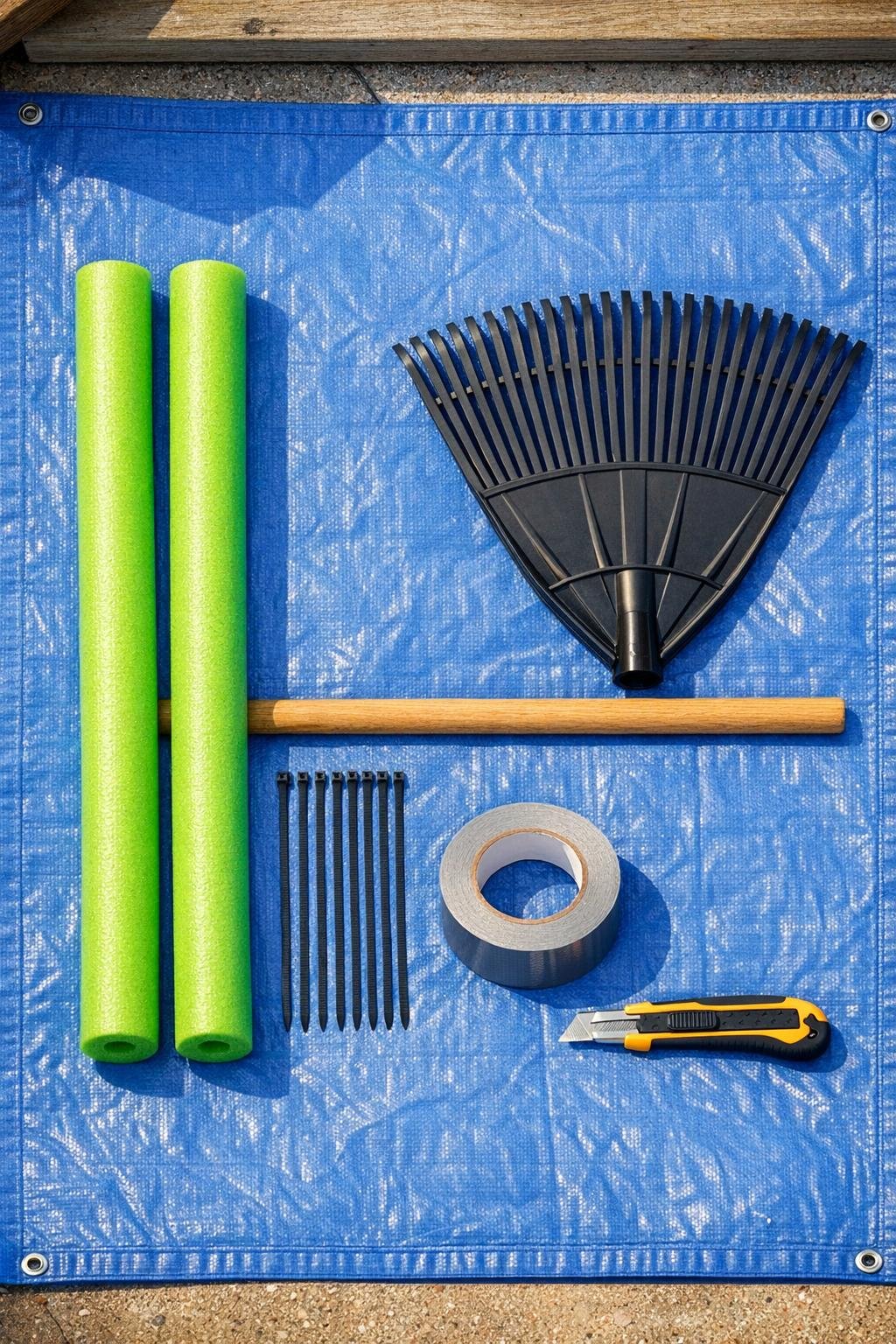
Materials
Instructions
1. Clean the rake head and broom handle so the tape and zip ties will grip well, then lay everything on a flat surface. If your leaf rake head is attached to an old broken handle, remove the stub and keep just the head.
2. Measure the width of your rake head and cut four noodle sections to that same length, usually about 22 to 24 inches each. These short sections will create the soft, wide contact edge that glides over the garden instead of scraping into it.
3. Slice each noodle section lengthwise down one side so it can open up and slip over the rake tines. Keep the cut straight and shallow at first, then deepen it until the slit reaches the center hole.
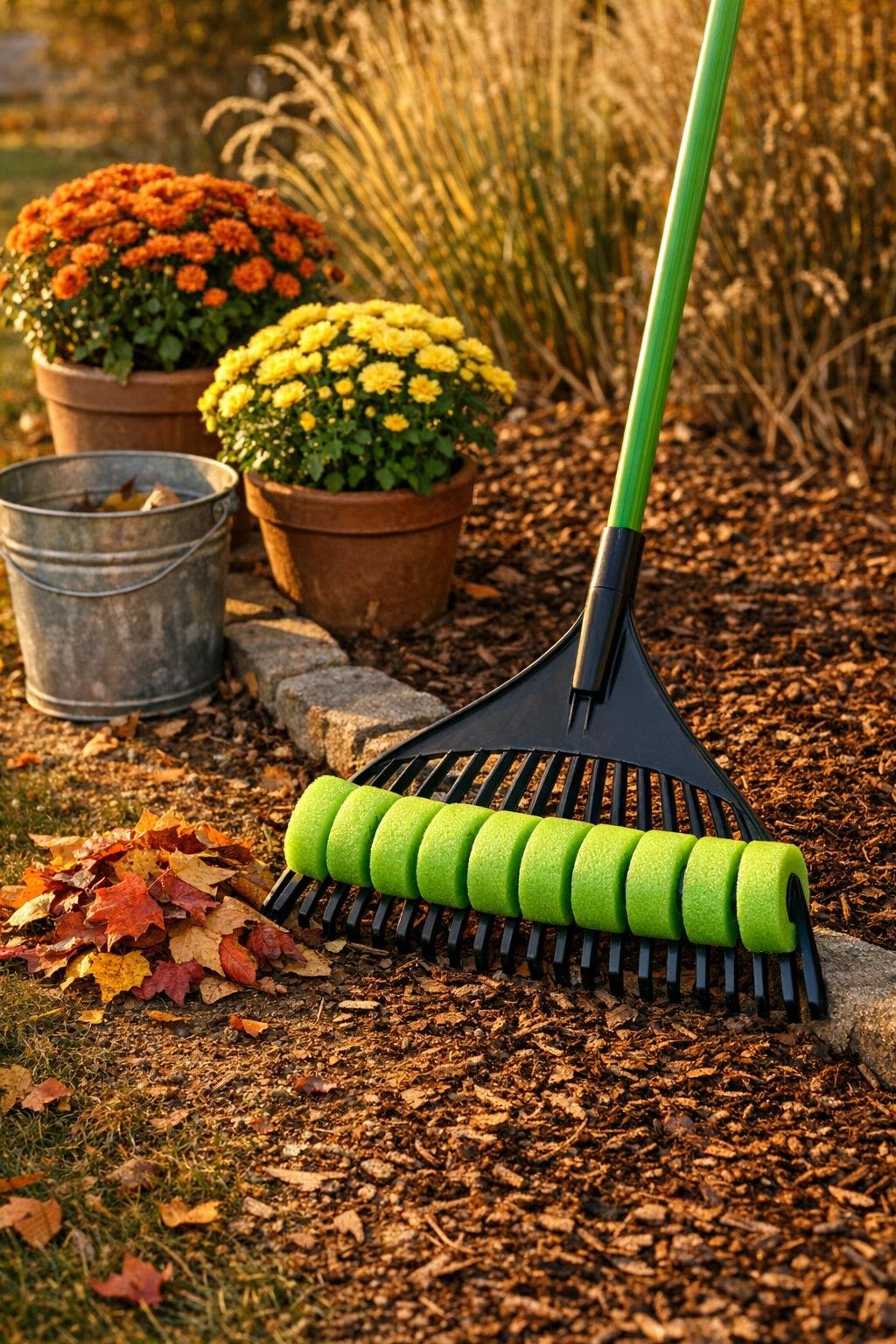
4. Press one sliced noodle section across the bottom third of the rake tines, starting at one outer edge and working across. Add the second, third, and fourth sections above it, overlapping slightly so the foam creates a dense padded face instead of leaving big gaps.
5. Thread zip ties around the rake head and through the foam rows, spacing them every 4 to 5 inches to keep the noodle sections from shifting. Pull each tie snug but not so tight that it crushes the foam flat.
6. Wrap duct tape around the back of the rake head in two horizontal bands, catching the zip ties and foam together for extra stability. This reinforcement matters because the tool works best when you can drag it through a full armload of leaves without anything twisting loose.
7. Attach the broom handle to the rake head, tightening it firmly so the finished tool feels balanced in your hands. If the fit is loose, add a wrap of duct tape at the joint before seating the handle fully.
8. Test the rake on a patch of dry leaves or plant debris and angle it low so the foam edge skims the mulch surface. If the tool catches too much, trim the bottom foam row back by 1 inch; if it misses fine debris, add a fifth narrow strip of noodle near the bottom edge.
9. Use the rake in long, light pulls to gather leaves, seed husks, spent annuals, and pine straw into manageable piles. The layered foam face acts like a broad soft comb, so it lifts loose debris while being much kinder to beds than bare plastic tines.
Variations & Tips
For raised beds: Cut the broom handle down to 36 to 42 inches if you want more control in tight spaces. A shorter handle makes the rake feel especially nimble around bed corners and trellises.
For picky garden spots: If you have gravel paths mixed with leaves, use only three noodle rows instead of four. That slightly firmer face still moves debris well but won’t scoop as much stone along with it.
Budget swap: If you already have a fan rake with a solid handle, you can build this right onto that tool and skip the separate broom handle. I’d still keep the extra zip ties and tape because outdoor tools take more abuse than we expect.
Make it wider: For big open beds, use a 24-inch rake head and five closely packed noodle rows for a fuller cleanup pass. It covers a lot of ground quickly without becoming heavy.
Best time to use it: This works best on dry debris rather than wet, matted leaves. I usually wait until late morning after dew has burned off, and the rake glides much more easily.
Storage tip: Hang the tool indoors or under cover so the foam stays cleaner and lasts longer. A season of sun and snow won’t ruin it immediately, but protected storage definitely helps.
Kid-and-pet safe yard tip: Always check for hidden sticks, plant labels, and metal supports before raking through beds. The soft foam edge is forgiving, but it works best when it’s only grabbing lightweight garden debris.