
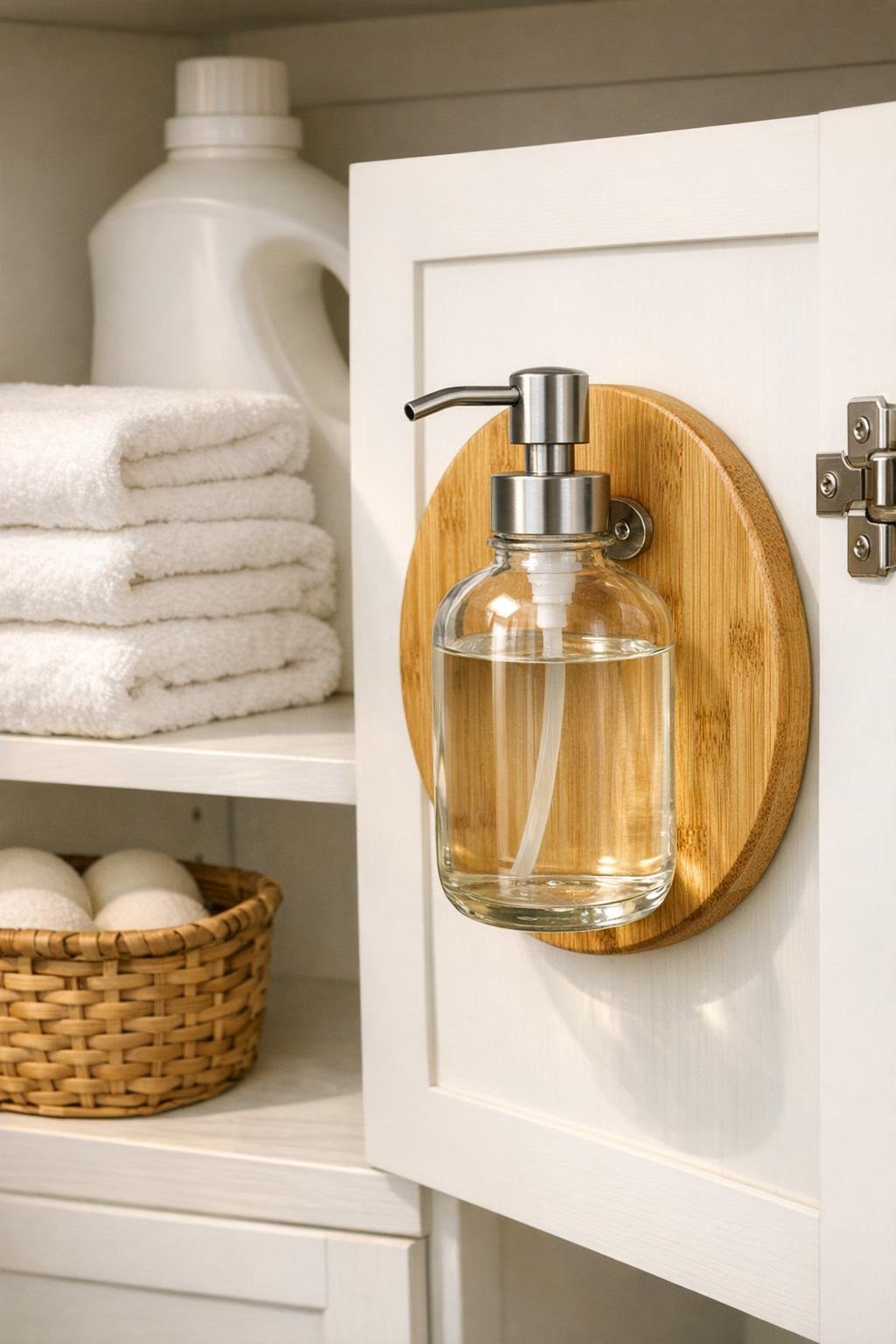
In a small laundry room, every inch has to work a little harder, and this simple mounted dispenser is one of those projects that makes the whole space feel more organized without needing a full makeover. I love this idea because it takes a basic clear glass soap pump and turns it into a dedicated fabric softener station that lives neatly inside the cabinet door instead of taking up shelf space or rattling around next to detergent bottles.
This is the kind of DIY I reach for when I want a quick win on a weeknight. It looks polished, keeps softener easy to access on laundry day, and uses a small round bamboo trivet as a warm, practical backing so the dispenser feels intentional instead of improvised. If your laundry area is tight like mine, this project gives you that custom-built look with very little effort.
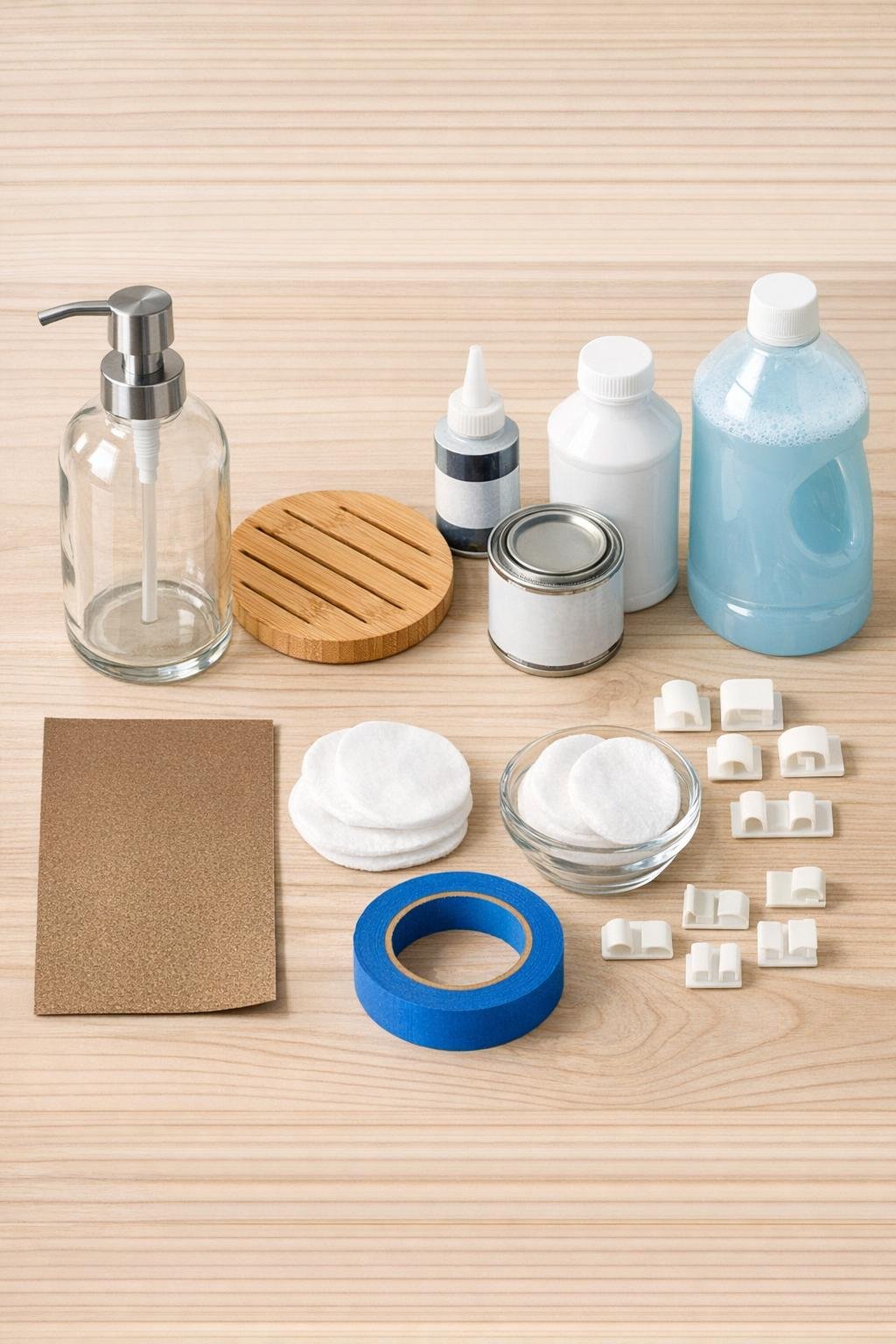
Materials
Instructions
1. Empty the cabinet door area and choose a mounting spot that lets the pump clear the shelf when the door closes; I like placing it at about chest height so pumping softener during a rushed laundry load feels natural.
2. Clean the inside of the cabinet door and both sides of the bamboo trivet with rubbing alcohol, then let everything dry fully so the adhesive bonds well.
3. Lightly sand the back of the glass pump bottle where it will touch the trivet, and lightly sand the center area of the trivet for extra grip; wipe away all sanding dust.
4. If you want a slightly more finished look, paint the outer edge of the bamboo trivet with white chalk paint and let it dry, then brush on a thin coat of clear sealer; leave the front face mostly natural so the bamboo still shows.
5. Apply a generous oval of construction adhesive to the center of the trivet, then press the back of the clear glass soap pump bottle firmly onto it, keeping the bottle straight and centered.
6. Wrap a short strip of painter’s tape around the bottle and trivet to hold the pump steady while the adhesive sets, then lay it flat according to the adhesive cure time listed on the tube.
7. Once the bottle is firmly attached to the trivet, run a thick bead of construction adhesive across the back of the trivet and press it onto the inside of the cabinet door in your marked spot.
8. Hold the mounted piece in place for a minute, then add painter’s tape or temporary support beneath it if needed so it stays flush while curing.
9. Remove the pump top, fill the bottle about three-quarters full with liquid fabric softener, trim the dip tube if it curls awkwardly at the bottom, and screw the pump back on tightly.
10. Test the pump with a bowl or measuring cup underneath, then open and close the cabinet door a few times to confirm nothing shifts and the pump head has enough clearance to work easily.
Variations & Tips
Use a larger bottle: If your household runs a lot of laundry, switch to a 20-ounce glass pump bottle so you refill less often, but keep the round trivet proportionally larger for better support.
Choose the right adhesive: A strong construction adhesive rated for glass, wood, and painted surfaces makes the biggest difference here. I would not trust a basic school glue or thin craft glue for something that gets pressed repeatedly.
Keep the bamboo look natural: I love the warmth of the bamboo against a white cabinet, so even if you paint the edge, leave the front mostly unpainted so the trivet still reads as wood and not just a backing disc.
Fill it thoughtfully: Don’t fill the bottle all the way to the top. Leaving a little headspace helps the pump work smoothly and makes spills much less likely when you screw the lid back on.
Match your cabinet style: For a cleaner built-in look, use satin white paint on the trivet edge to blend with the cabinet, or use clear sealer only if you want the dispenser to feel warmer and more decorative.
Make laundry day easier: If you use the same rinse amount every time, keep a small measuring cup on the shelf directly below the dispenser. It turns this from a cute DIY into one of those tiny systems that actually saves time during a busy week.