
When I’m trying to get one last stretch out of my garden before a hard frost, I want a fix that is quick, sturdy, and made from things I already have on hand. This raised bed thermal blanket anchor is exactly that kind of project: simple bent wire hoops and ground staples made from wire coat hangers, paired with one common yard item to hold your frost blanket down so it does not flap off the bed overnight.
What I love most is that it looks surprisingly tidy once it’s in place. Instead of random bricks, buckets, or boards weighing down the edges, you end up with a neat, reusable anchor system that keeps a row cover or thermal blanket snug over a raised bed. If you have vegetables, herbs, or even late flowers you are trying to protect, this is an easy afternoon project with a big payoff.
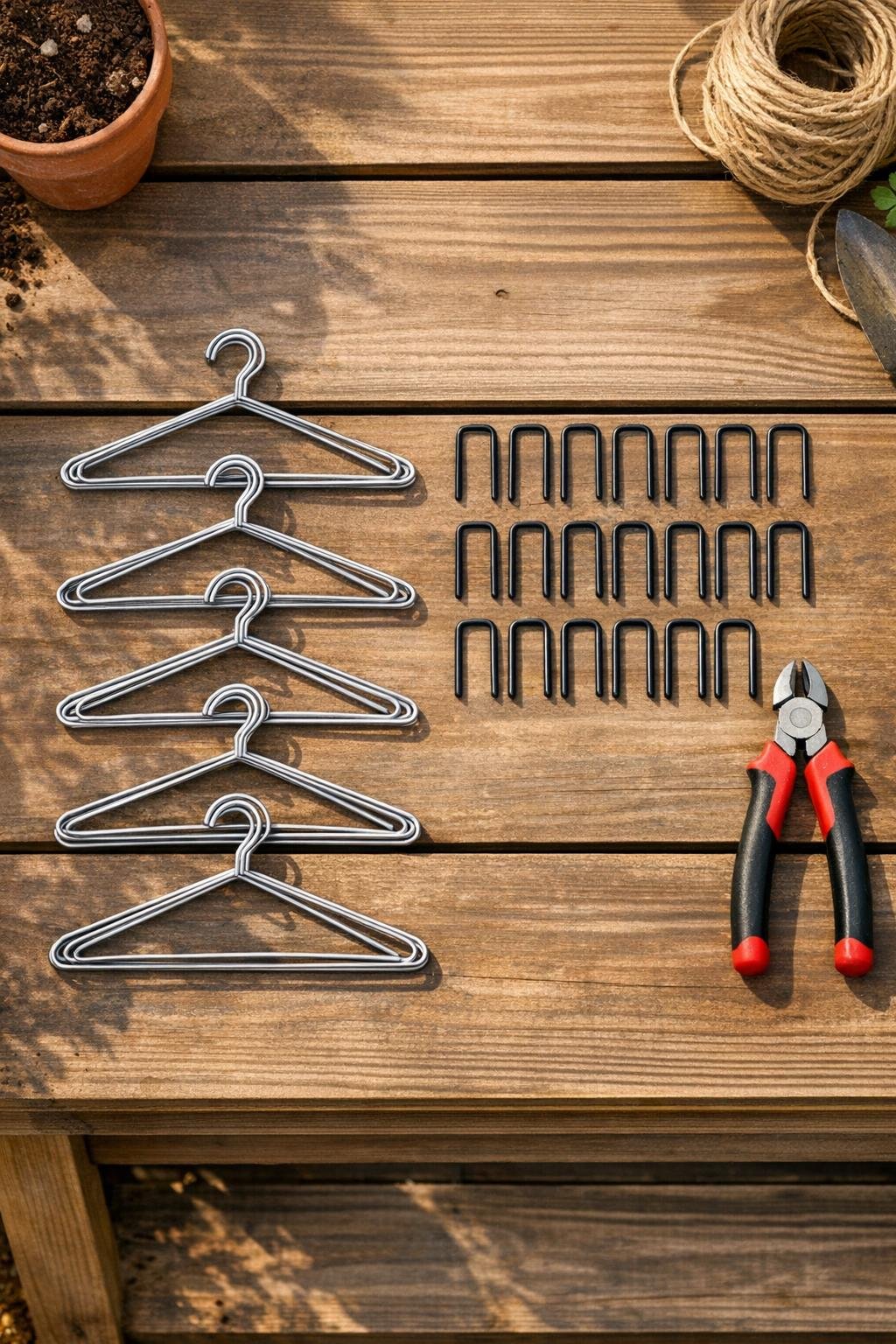
Materials
Instructions
1. Cut the twisted hook section and the bottom bar off each wire coat hanger so you are left with two long side pieces and one curved shoulder section from each hanger.
2. Straighten the two long side pieces from each hanger by hand or with light pressure against the bench, leaving a gentle curve rather than forcing them perfectly flat.
3. Bend each straightened piece into a wide upside-down U shape, making mini anchor hoops about 8 to 10 inches wide and 10 to 12 inches tall so they can bridge over the blanket edge and push into the soil.
4. Save the curved shoulder sections and bend them into smaller narrow U-pins or long staples to use anywhere the blanket needs extra hold along the sides.
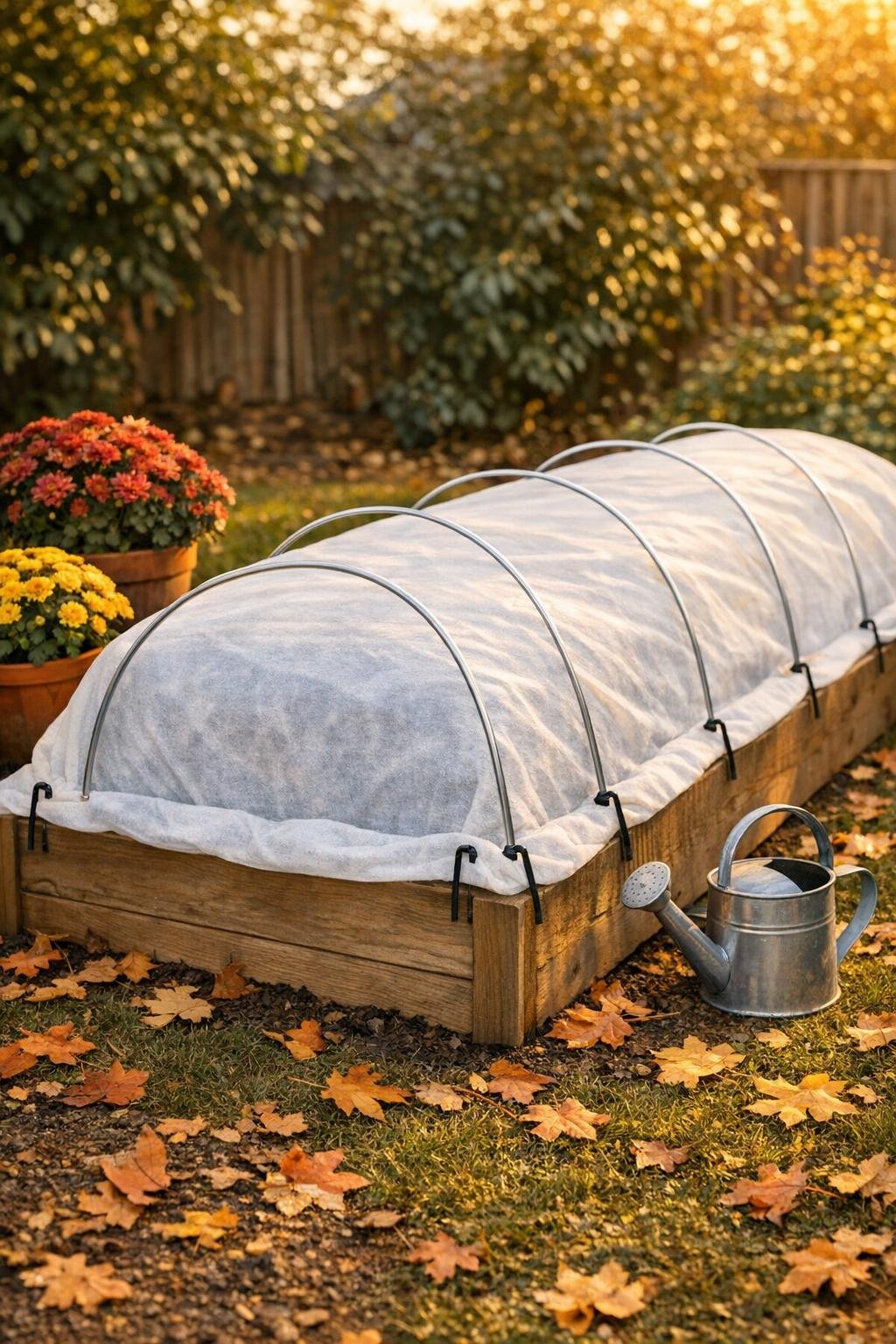
5. Drape your thermal blanket over the raised bed, keeping the fabric centered and loose enough over the plants that leaves are not pressed flat.
6. Push one large wire hoop over the blanket and into the soil every 18 to 24 inches around the bed perimeter, placing each hoop so it traps the fabric neatly without tearing it.
7. Add the 6-inch landscape fabric pins between the larger wire hoops, especially at the corners and along windy sides, to pin the blanket edge snugly to the soil.
8. Use the smaller homemade wire staples anywhere the fabric lifts, bunches, or gaps, pressing them in at an angle for extra grip.
9. Walk around the bed and gently tug each side of the blanket; if it shifts, add one more hanger hoop or landscape pin until the whole cover sits smooth and secure.
10. Leave the anchor system in place for frosty nights, then pull the pins and hoops in the morning if you need daytime pollinator access or warmer airflow.
Variations & Tips
For extra-windy yards: Place the large hanger hoops closer together, about every 12 to 16 inches, and double up landscape pins at the corners where lifting usually starts first.
For deeper raised beds: Make your hanger hoops taller instead of wider so the blanket tents over taller greens like kale, chard, or broccoli without crushing the tops.
To protect the fabric: If your cut wire ends feel sharp, curl the tips inward with pliers before pushing them through the blanket and into the soil. That tiny step makes the anchors much more reusable.
For picky weather: On mild afternoons, lift one side of the blanket for ventilation so tender plants do not overheat in the sun. I do this a lot in our Midwest shoulder seasons, when mornings are icy and afternoons are surprisingly warm.
For easy storage: Bundle the big hoops together with twine and drop the smaller staples in a coffee can or plastic tub so everything is ready for the next cold snap.
Best bed coverage: Let the blanket extend past the bed frame by at least 8 inches on each side. That extra drape gives the pins and hoops enough fabric to grab, and it keeps cold air from sneaking in around the edges.