
If you garden where the first hard frost always seems to show up right before you’re emotionally ready, this little bucket cloche is one of those wonderfully old-school tricks that still earns its keep. We’re turning a white 5-gallon bucket and one common yard item into a vented, low-effort cover that protects root vegetables from early cold snaps, buys you extra harvest time, and helps keep the soil a touch warmer without a big setup.
I love projects like this because they fit real life: quick, practical, and easy to do after work before the light disappears. If you’ve got beets, carrots, radishes, turnips, or even young parsnips still in the ground, this is a simple way to shield them before frost without hauling out row cover hoops or building a whole cold frame.
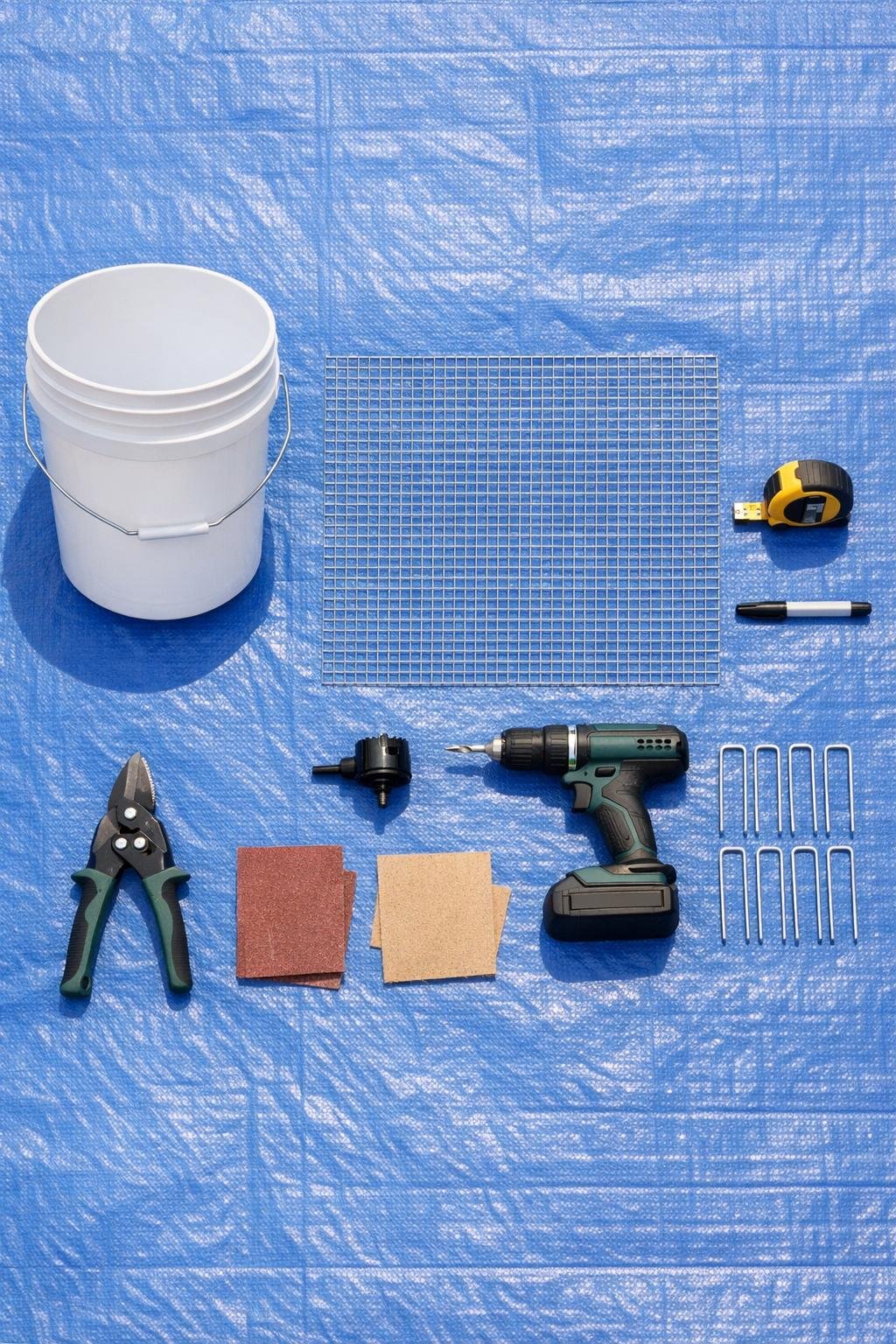
Materials
1 white 5-gallon plastic bucket, clean and empty
Instructions
1. Wash and dry the 5-gallon bucket, then set it upside down on a tarp or scrap cardboard so it stays steady while you mark and drill.
2. Mark two rows of ventilation holes around the bucket sides, spacing the holes about 3 inches apart and keeping the lowest row about 3 inches up from the rim that will sit on the soil.
3. Drill 1 1/4-inch holes at each mark, using light pressure so the plastic doesn’t crack, then smooth any rough edges with sandpaper.
4. Drill six to eight small 1/8-inch drainage and airflow holes in the bucket top, which becomes the highest point once the cloche is set over your crop.
5. Cut the galvanized hardware cloth into a wide dome or square cap large enough to cover the bucket opening with at least 2 inches extra on all sides.
6. Fold the cut wire edges under with gloved hands or pliers so there are no sharp points, then gently shape the hardware cloth into a shallow dome.
7. Set the hardware cloth over the bucket’s open end and test the fit; it should fully cover the opening while keeping the bucket shape clearly intact.
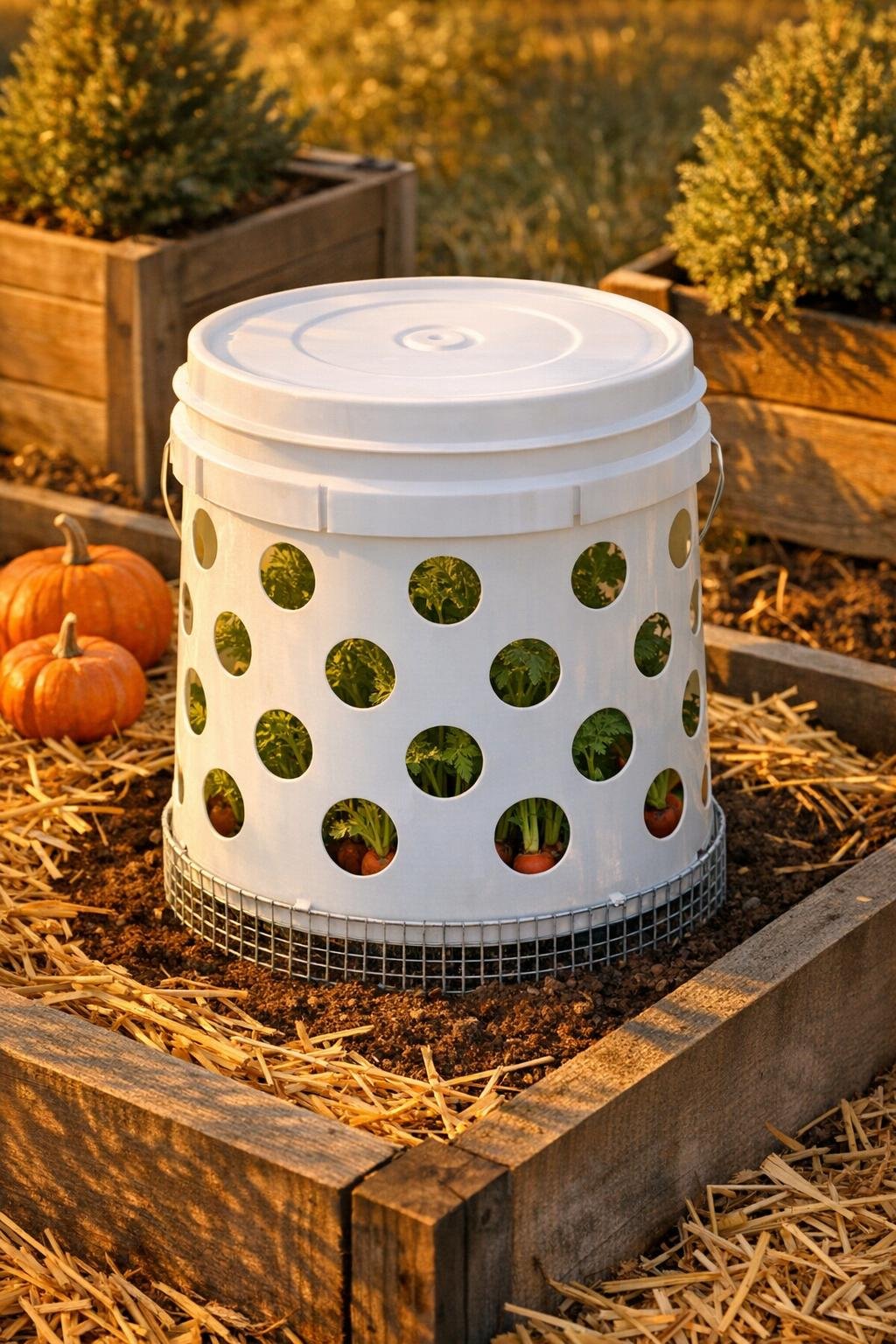
8. On a calm day before frost, place the bucket cloche over your root vegetable row with the open end down and the drilled top facing up, centering it so the foliage doesn’t press hard against the plastic.
9. Lay the shaped hardware cloth flat over the open bottom edge and pin it into the soil with the 6-inch landscape staples, one at each corner or evenly around the circle, to block rabbits and hold in a pocket of warmer air.
10. For nights below about 28 degrees Fahrenheit, mound 2 to 3 inches of loose straw, shredded leaves, or extra mulch around the outside base at dusk, then pull it back the next morning once temperatures rise.
Variations & Tips
For carrots and beets: This setup works especially well over short, dense tops. I like to water lightly earlier in the day before covering because slightly moist soil holds warmth better than bone-dry soil.
For taller greens on root crops: If your turnip or radish tops are tall, press the bucket a little deeper into loose soil around the edge for extra height, but don’t crush the foliage flat.
For colder nights: The vent holes matter, but on especially cold nights you can loosely drape an old towel or scrap frost cloth over the bucket after sunset and remove it in the morning.
Pest protection bonus: The hardware cloth base helps keep out rabbits and curious squirrels while still allowing airflow, which is why I prefer it over setting the bucket directly on bare soil.
Make a few at once: If I’m already dragging out the drill, I do three or four buckets in one go. It’s much faster assembly-line style, and then I’m not scrambling when the forecast suddenly changes.
Storage tip: When frost season ends, shake off soil, rinse the bucket, and tuck the hardware cloth pieces inside it so the whole setup stores as one compact unit in the garage or shed.