
I love a garden fix that feels a little clever and a lot useful, and this raised bed slug barrier is exactly that kind of project. By slicing open pool noodles and pairing them with two inexpensive dollar store basics, you can make a tidy protective edge that helps slow slugs down while giving your beds a surprisingly finished look.
What I especially like here is that it’s fast, forgiving, and practical for anyone with a small vegetable patch, herb bed, or a few backyard planters they’re tired of seeing nibbled overnight. The foam keeps the look soft and neat around the bed edge, while the added copper and stakes turn it into a real working barrier instead of a flimsy decoration.
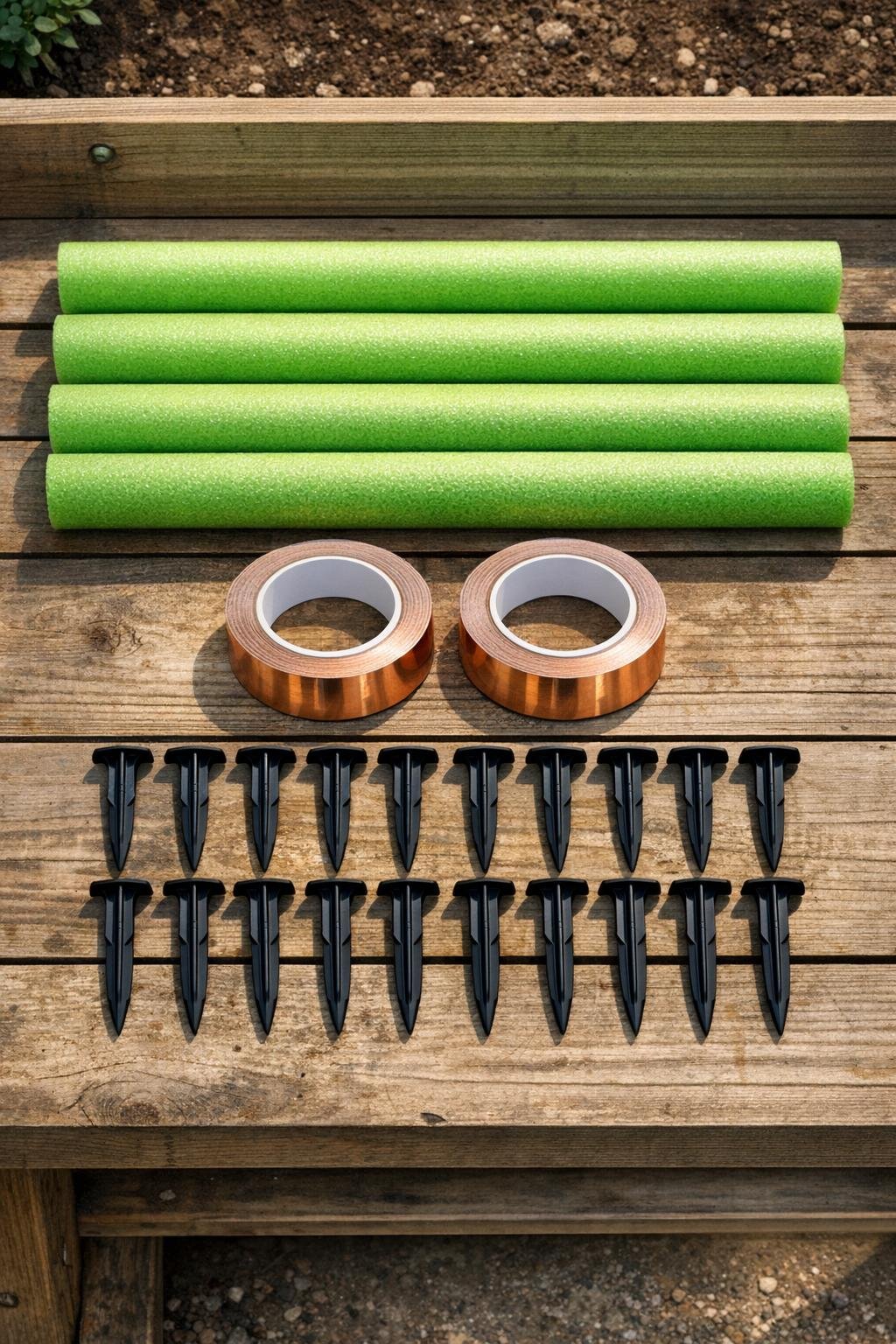
Materials
4 foam pool noodles, standard 52 to 55 inch length, bright green
Instructions
1. Measure the outside perimeter of your raised bed and decide where the barrier will sit; I place mine flush against the outer top edge so it protects the most vulnerable path slugs like to travel.
2. Slice each pool noodle lengthwise from end to end so it can open like a sleeve, keeping the cut as straight and centered as possible for a snug fit over the bed wall.
3. Press the opened noodles onto the top edge of the raised bed boards, fitting them one by one so the round outer side faces out and the slit grips the wood firmly.
4. Trim the noodle ends as needed so the corners meet neatly; for square corners, I like cutting slight angles so the joints look cleaner and leave fewer gaps.
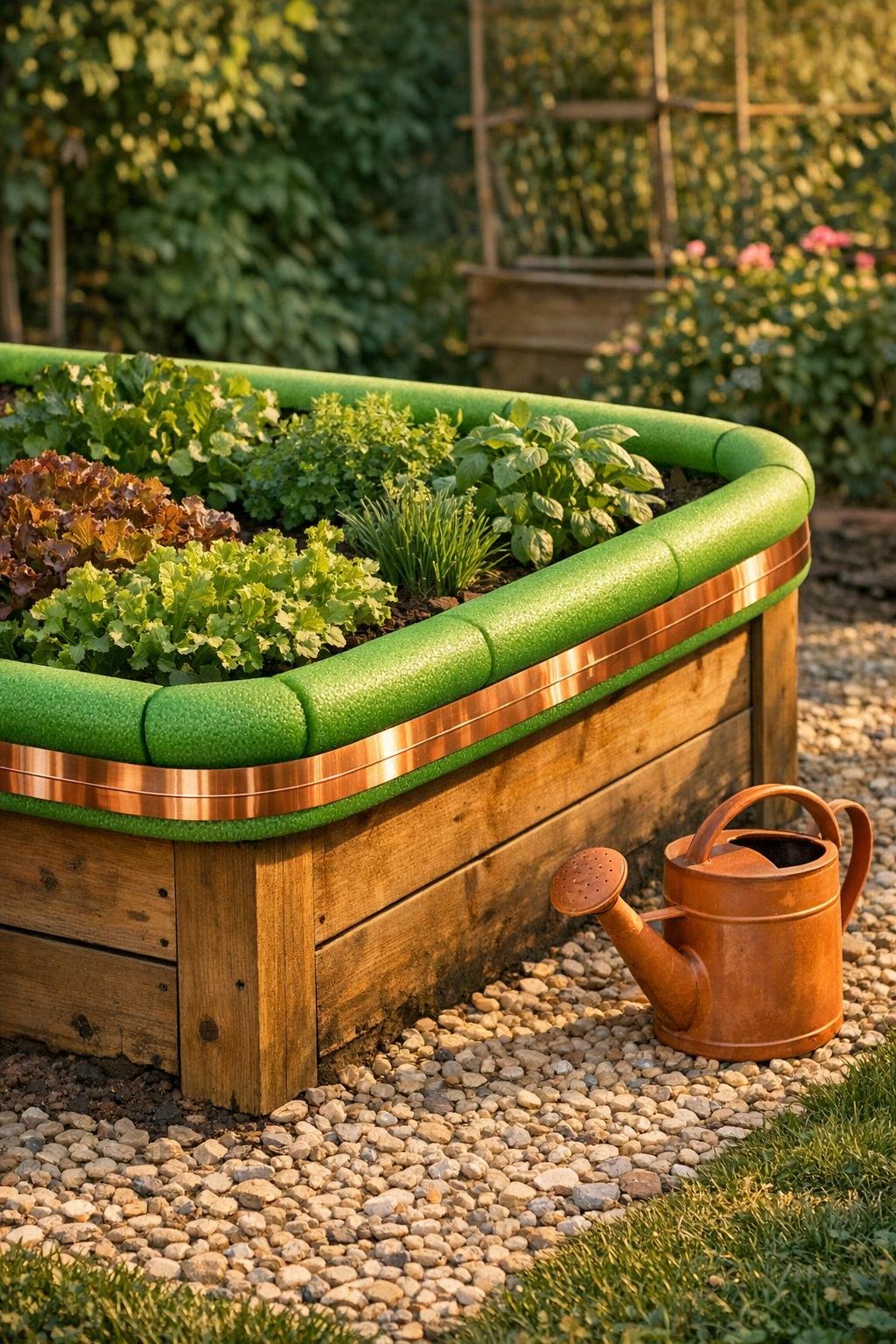
5. Run copper foil tape in a continuous strip along the outer face of each noodle, about halfway up the curve, smoothing it down with your fingers so it makes full contact without wrinkles.
6. Add a second parallel strip of copper tape about 1 inch below the first, because two close bands create a broader contact zone that slugs are more likely to touch.
7. Overlap the copper tape by 1 inch wherever one strip ends and the next begins, and press those joins firmly so the barrier looks continuous and polished all the way around the bed.
8. Push landscape stakes into the soil every 10 to 12 inches along the outside of the bed, angling each one inward so it pins the lower edge of the noodle in place against the wood.
9. Add extra stakes near corners and seams, where foam tends to shift the most after rain, watering, or a windy day in an open yard.
10. Walk the perimeter and close any visible gaps at corners, bed joints, or stake locations, because slugs will absolutely find the one lazy spot you leave behind.
11. Wipe the copper tape with a dry cloth after installation so it looks bright and clean, then check that the noodle edge still sits snugly and evenly all around the bed.
12. Monitor after the first watering and press any loosened sections back into place; once adjusted, the barrier should sit securely and give your raised bed a finished, custom-looking border.
Variations & Tips
For deeper bed walls: If your raised bed has a thick top board, choose thicker pool noodles so the slit can grip better and still keep that rounded outer profile.
For longer beds: On very long runs, stagger your noodle seams instead of lining them up at the corners; it looks neater and helps the barrier stay more stable.
For a cleaner finish: If the cut slit looks ragged in spots, trim loose foam bits before installing the copper tape. It’s a small kitchen-prep kind of detail, but it makes the whole project look far more intentional.
For wet climates: Check the stakes every week during rainy stretches and add a few extras if the soil softens. A snug fit matters more than perfection here.
Best placement: This works best when the barrier is the first outer edge a slug meets, so keep boards, trailing mulch, and tall weeds from bridging over it.
Budget note: Four standard noodles usually cover about 17 to 18 linear feet, so for a common 4-by-8-foot raised bed perimeter you’ll want enough noodles to match your total measurement before you start.
Maintenance tip: Wipe dirt off the copper and foam every so often. Even a practical garden project looks nicer when it’s kept tidy, and a clean barrier is easier to inspect for gaps.