
Cold spring soil can stall even the most eager garden plans, and this little setup is one of those wonderfully practical old-school tricks that still makes perfect sense. In this project, I use stacked cinder blocks and black plastic sheeting to create a simple heat-catching reservoir around a raised bed area so the soil warms faster before the last frost date. It is inexpensive, reusable, and easy enough to build in an afternoon.
I like this method for gardeners who want an early jump on lettuce, peas, brassicas, or even just warmer soil for seed starting outdoors without committing to a full cold frame. The cinder blocks add thermal mass and structure, while the plastic captures sun and keeps cold rain from re-chilling the bed. It is a very modest build, but it can make a noticeable difference right when spring feels maddeningly slow.
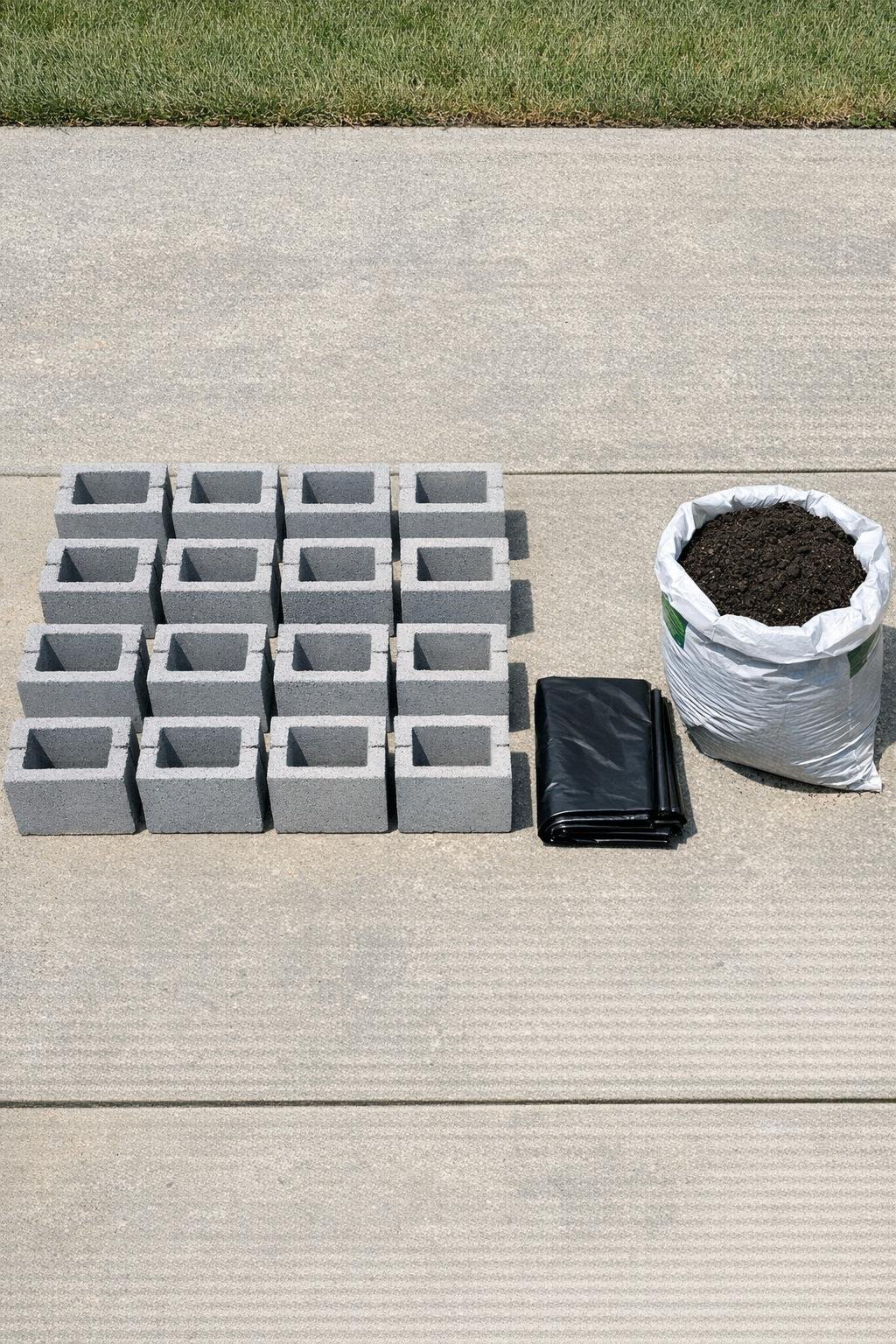
Materials
16 standard gray cinder blocks, 8 in x 8 in x 16 in
Instructions
1. Choose a raised bed or in-ground garden section that gets at least 6 hours of direct sun, and rake the soil surface smooth so the blocks sit flat and the plastic can lie tight over the area.
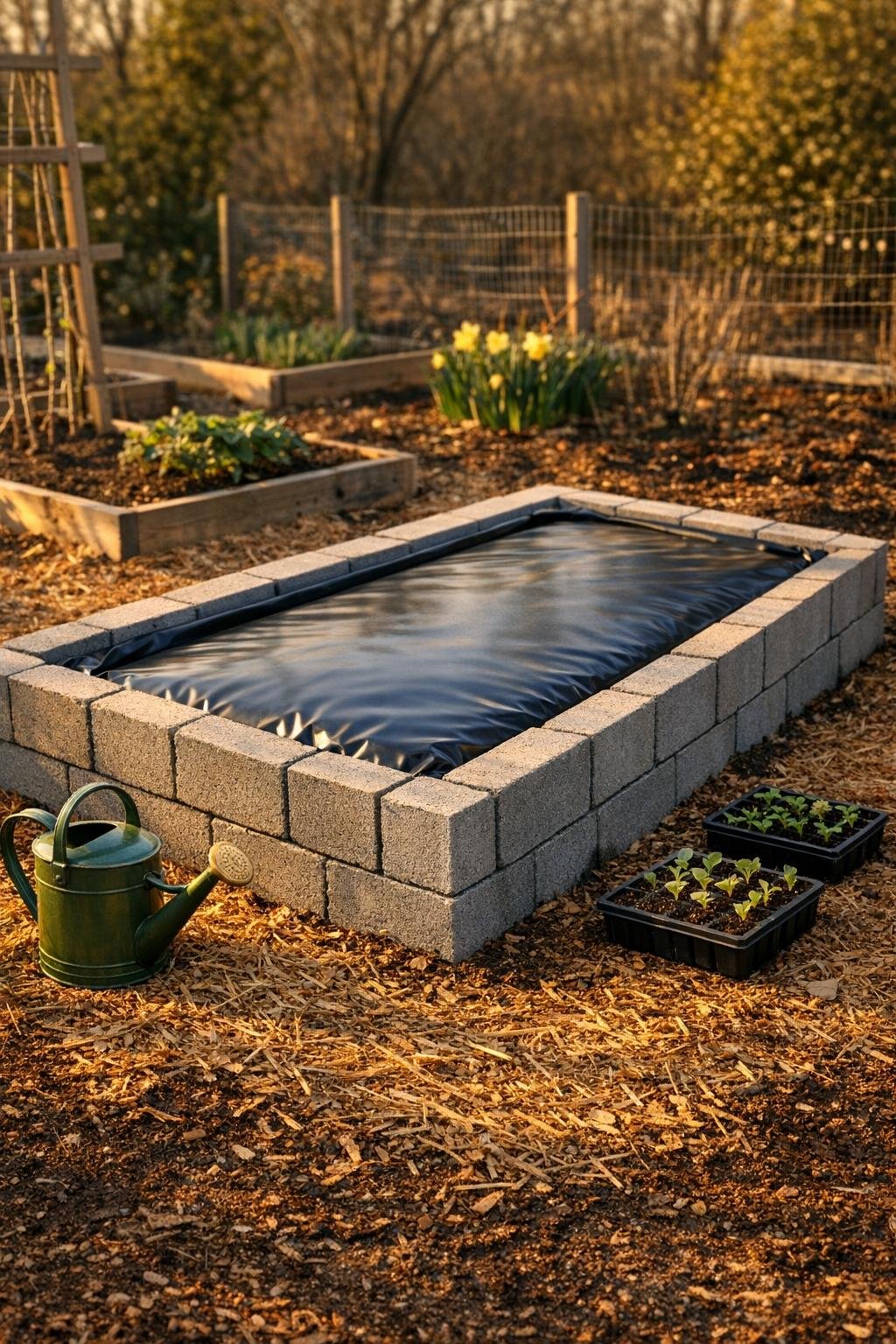
2. Stack the cinder blocks on their sides in a single perimeter around the bed, with the hollow cores facing sideways as shown in the hero setup, making a low wall 8 inches high.
3. Butt the blocks tightly together at the corners so they hold warmth as one continuous ring, and press each block down slightly into the soil so the wall feels steady and even.
4. Pull the black plastic sheeting over the entire bed and across the top edges of the cinder block ring, leaving enough extra on all sides to tuck securely.
5. Tuck the loose plastic down into the outer sides of the blocks and use the weight of the blocks themselves to pin it in place, keeping the top surface smooth and slightly taut so wind cannot flap it loose.
6. Leave the bed covered for 5 to 10 sunny days before planting, checking every day or two to make sure the plastic is still snug and the blocks have not shifted.
7. On warm days, lift one edge briefly to test the soil with your hand; when it feels noticeably warmer and crumblier than nearby ground, the reservoir has done its job.
8. For direct sowing, fold back only the section you need for planting and replace the plastic around the seeded area at night if frost is still in the forecast; for transplants, remove the plastic fully once the bed has reached your target planting window.
Variations & Tips
For smaller beds: Use 8 to 12 cinder blocks and cut the plastic with at least 12 inches of overhang on every side so it still anchors securely.
For extra heat gain: Orient the longest side of the bed east to west when possible so the plastic-covered surface gets a full arc of sun through the day.
Best crops for this trick: I find it especially useful for spinach, radishes, lettuce, kale, cabbage, and onions, all of which appreciate a head start in gently warmed soil.
How the blocks help: The cinder blocks absorb daytime warmth and release it slowly, which softens temperature swings and helps keep the bed from plunging right back to overnight cold.
Moisture check: If the bed was already damp before covering, leave it alone; if it is dry, water the soil lightly before putting the plastic on, because dry soil takes longer to warm evenly.
Windy-yard fix: If your site is gusty, double the plastic over the top before tucking it under the blocks so it resists tearing and stays flatter.
When to remove it: Once overnight lows reliably stay above freezing, remove the plastic during the day so the soil can breathe and avoid overheating tender seedlings.
Reuse tip: Fold the plastic dry and store it inside one of the block openings or in a shed, then restack the blocks as bed edging, temporary supports, or corner anchors for your next season.