
I love a project that turns something awkward from the garage into something unexpectedly handsome, and this crochet wall hanging does exactly that. An old bicycle wheel already gives you a strong circular frame and a ready-made grid of spokes, so weaving and crocheting jute through it creates a textured piece that looks rustic, sculptural, and far more intentional than the humble materials suggest.
This is a wonderful project for anyone who likes easy handwork but wants a big visual payoff without learning advanced crochet patterns. I approach it a little like building flavor in a good stew: we start with a sturdy base, add layers of texture, then finish with just enough detail to make the whole thing feel polished and complete.
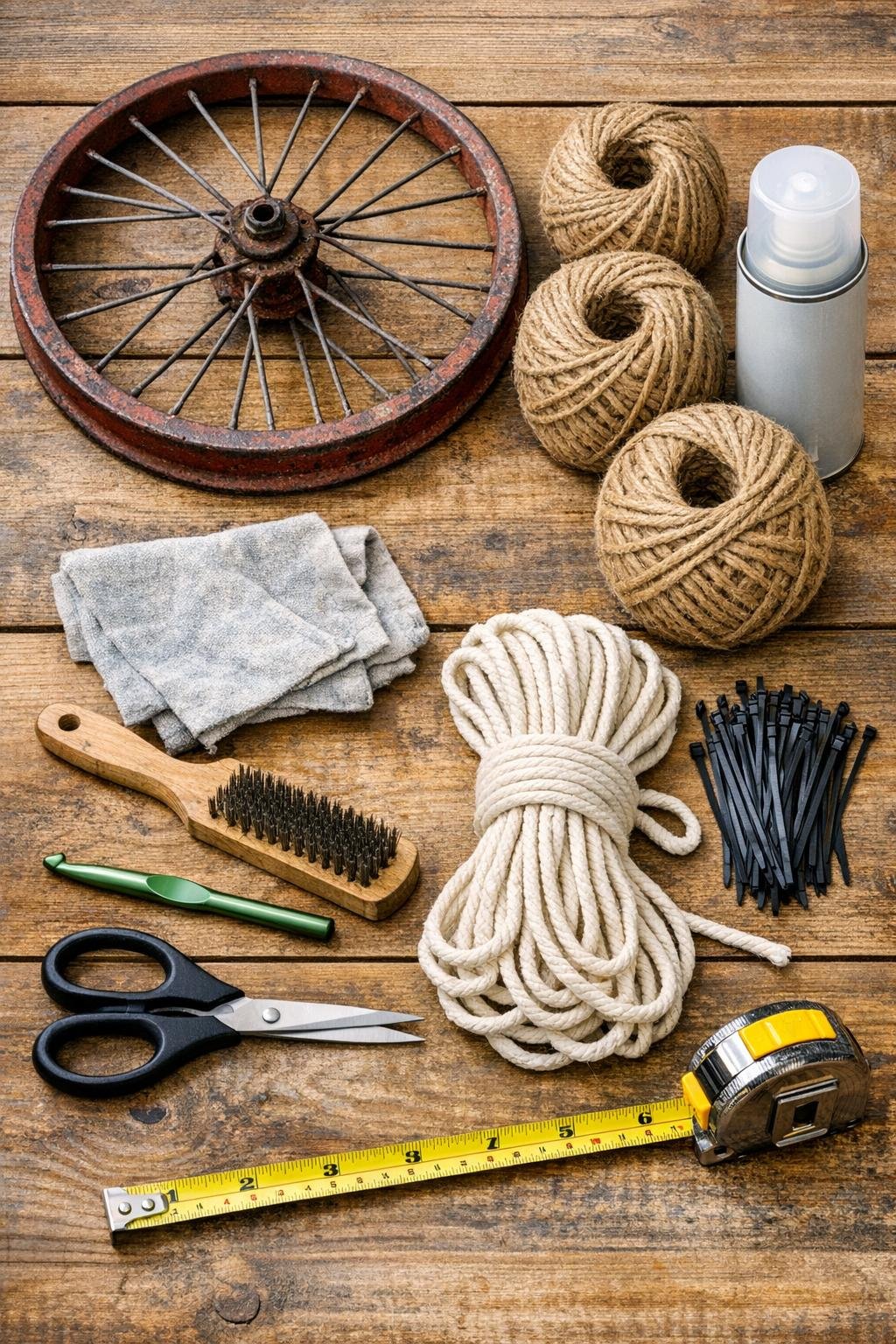
Materials
Instructions
1. Remove the tire, tube, and any loose hardware from the bicycle wheel, then scrub the rim and spokes with a wire brush to knock off flaky rust and dirt while keeping the weathered finish.
2. Wipe the wheel clean with a damp cloth and let it dry fully, then spray on a light coat of clear matte sealer to preserve the rusty red color and keep it from shedding.
3. Cut a 3-yard length of jute yarn and tie it tightly to the inner hub area, then begin wrapping it over and under the spokes to create 12 evenly spaced anchor lines radiating from the center to the rim.
4. Knot the jute securely at the rim and trim the tail, because these anchor lines give your crochet rows something substantial to grab and help the design read full instead of sparse.
5. Tie the working jute onto one anchor line near the center, chain 4, and begin single crocheting around each anchor line as you move in a circle, joining the round at the end.
6. Continue crocheting outward in rounds, alternating one round of single crochet with one round of half double crochet, and add an extra stitch every few anchor sections so the circle stays flat instead of cupping.
7. Keep filling the wheel until the crocheted section reaches about one-third of the way out from the hub, then switch to a more open pattern by chaining 3 between every second anchor line to create airy windows.
8. Work another 4 to 6 rounds, alternating open chain spaces and solid stitches, until roughly two-thirds of the wheel is covered with layered texture and the rusty rim still frames the design clearly.
9. Fasten off the crochet at the rim side, weave the tail around nearby stitches and spokes, and use small zip ties on the back anywhere a section needs extra support.
10. Cut 18 strands of cotton rope or thick jute cord at 24 inches each, fold them in half, and attach them evenly along the lower third of the rim with lark’s head knots to make a full fringe.
11. Trim the fringe into a soft shallow V or curved shape, then separate the rope fibers slightly with your fingers so the bottom looks fuller and more relaxed.
12. Cut a 36-inch length of rope, tie it securely to the top of the rim as a hanger, and hang the piece on a wall hook so you can check the balance and make a final fringe trim if needed.
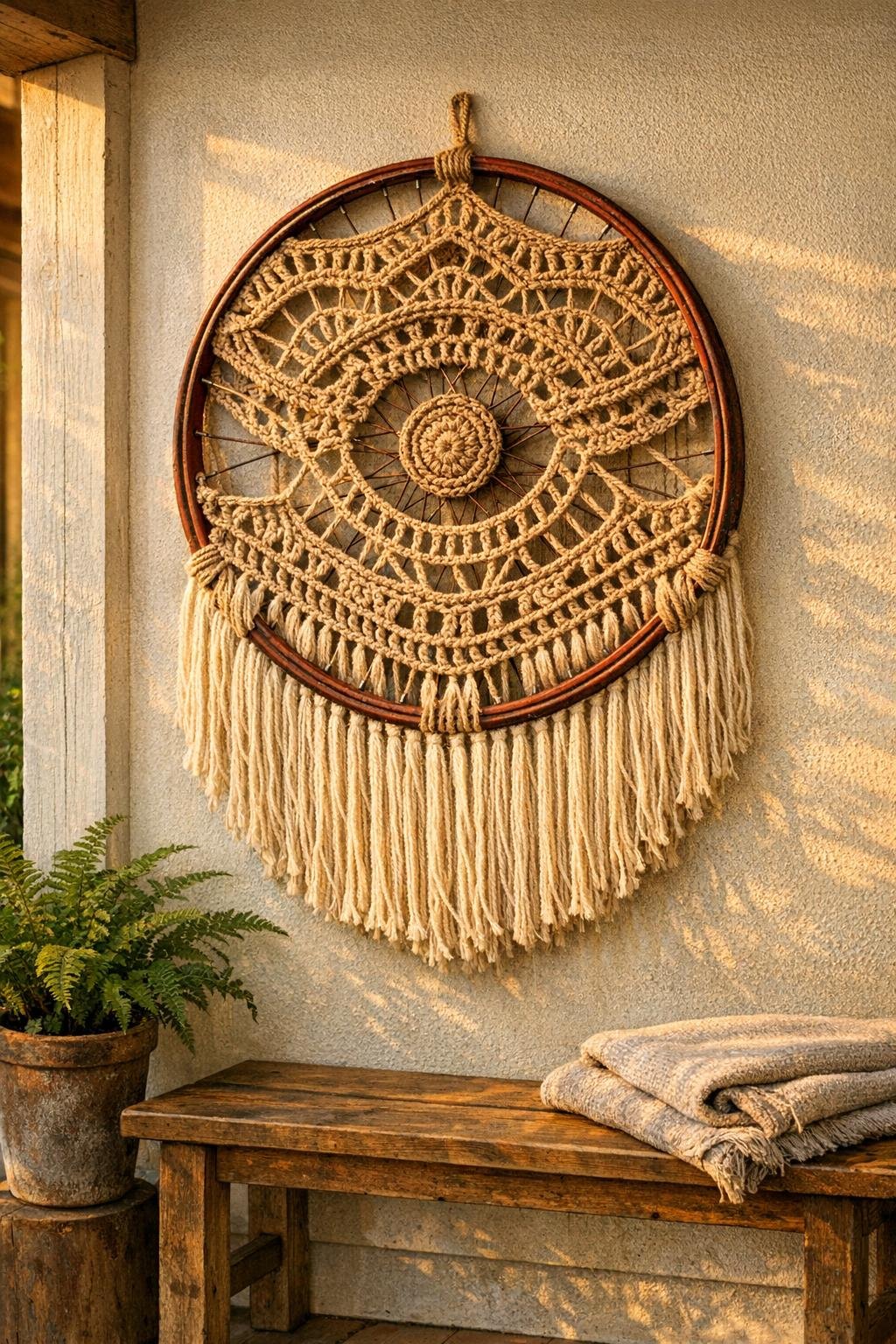
Variations & Tips
Softer color palette: If the red paint on the wheel is very chipped or too bright for your space, dry-brush it with a little matte ivory, taupe, or charcoal paint before crocheting so the wheel still shows but looks more blended and intentional.
More texture: Mix in a few rounds of knot stitch, puff stitch, or wrapped cords if you already crochet comfortably; with jute, even simple stitches read beautifully because the fiber has so much body.
Indoor hanging tip: I like this best in an entry, covered porch, sunroom, or above a console table, but if the wheel is still actively rusting, add a second coat of matte sealer to the back before bringing it indoors.
No crochet experience needed: You can fake the look by wrapping and knotting the jute around the anchor lines instead of making formal stitches, then keeping the center dense and the outer area more open for contrast.
Fringe options: For a fuller, more dramatic finish, double the fringe pieces and use 36 strands instead of 18; this is especially nice on a larger wheel because it gives the project the generous scale that makes it feel like wall art instead of salvage.
Stability tip: If a spoke is loose, anchor your crochet to the neighboring spokes and secure the weak spot on the back with two zip ties before you continue, so the finished hanging stays flat.