
There are a few old garden tricks that stick around because they truly earn their keep, and this is one of them. By using empty metal coffee cans and plain water, you can make simple little heat batteries for a raised bed before the last frost has fully let go. I’ve leaned on ideas like this for years out here where spring likes to tease us with one warm afternoon and then turn right back around with a hard, chilly night.
This project is for gardeners who want a little extra protection for seedlings without fussing with electricity, expensive season extenders, or complicated builds. The baked cans help dry them thoroughly, remove lingering odors, and warm the metal so they start clean and ready to work; once filled with water and set in the bed, they absorb daytime warmth and release it slowly overnight around tender plants.
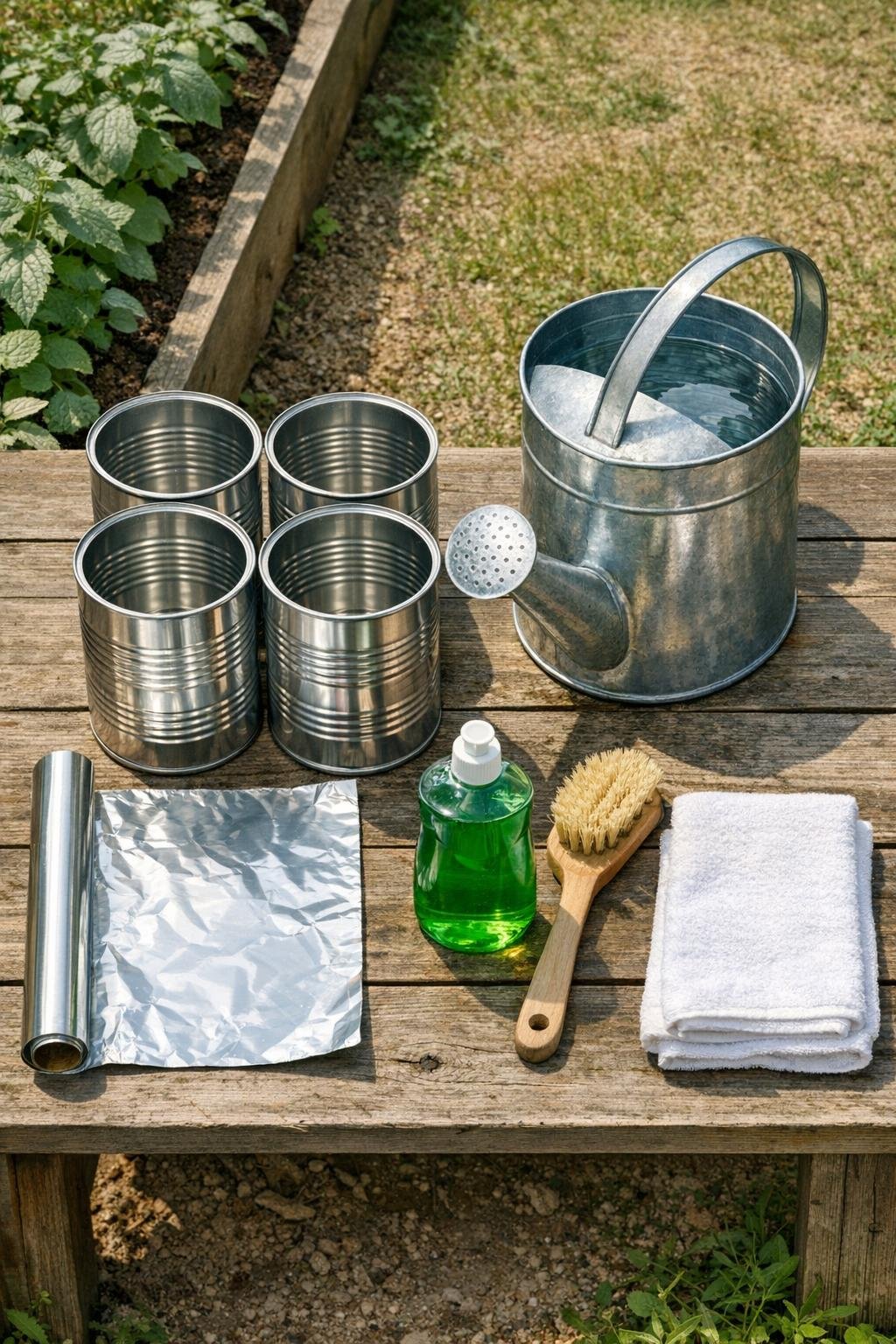
Materials
Instructions
1. Wash the coffee cans inside and out with warm water and dish soap, then scrub away any glue or coffee residue so the metal is clean and bare.
2. Dry the cans well with a towel and let them air-dry for 10 to 15 minutes; you want as little moisture left as possible before they go into the oven.
3. Line a baking sheet with aluminum foil and set the empty cans upright on it with at least 1 inch of space between them.
4. Bake the empty cans at 225°F for 20 minutes to dry them thoroughly and warm the metal gently without scorching anything.
5. Remove the tray carefully and let the cans cool until they are safe to handle but still slightly warm, about 15 minutes on the counter.
6. Fill each can with water to about 1 inch below the rim; leaving that little headspace makes them easier to move without sloshing.
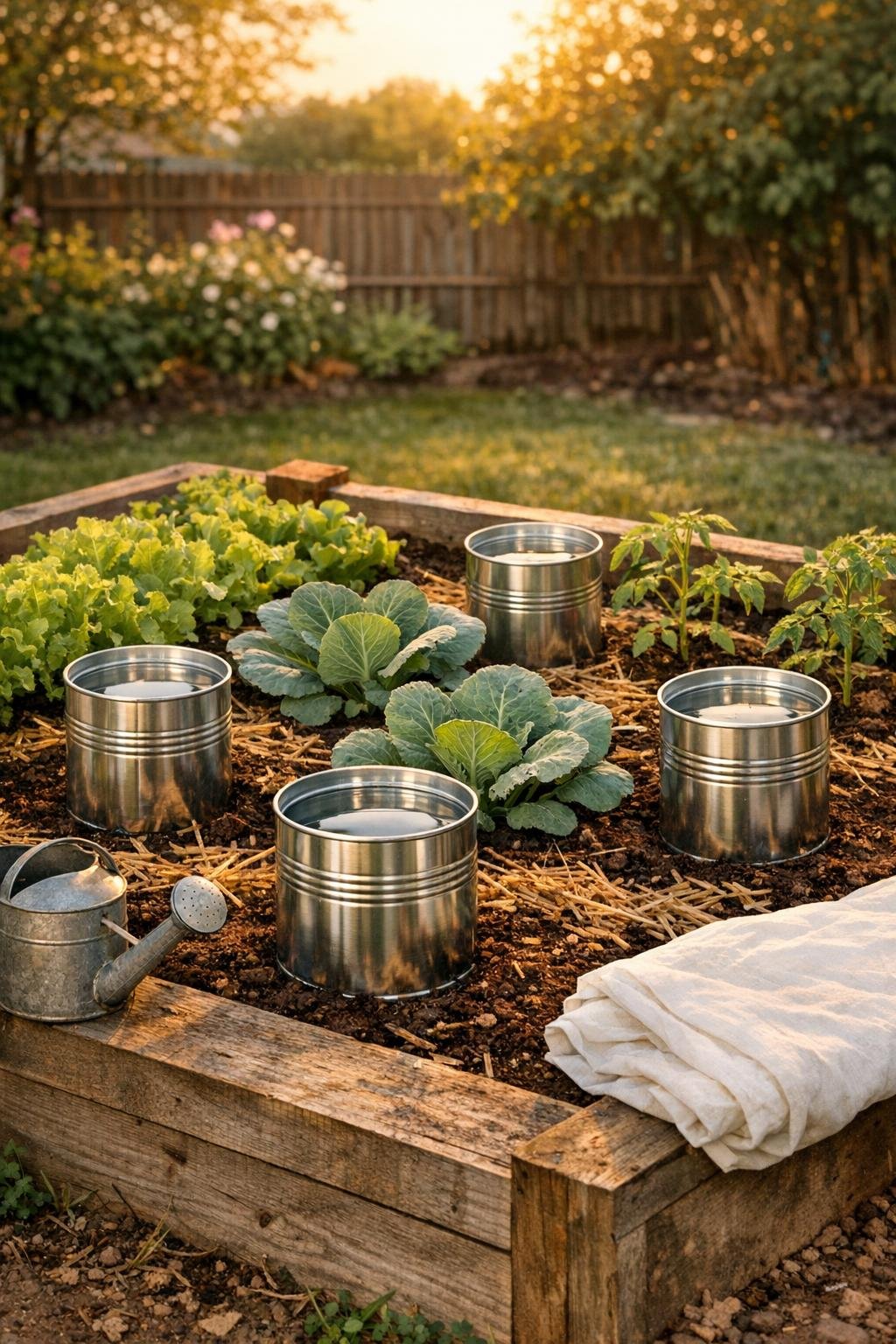
7. Set the filled cans upright in your raised bed, spacing them evenly among the plants or seedlings, about 8 to 12 inches from the most tender stems.
8. Push each can slightly into the soil, about 1 inch deep, so it stays steady and does not tip if the bed is watered or the wind picks up.
9. Place the cans where they will catch the best daytime sun, usually along the north or west side of small plants so they can soak up warmth all afternoon.
10. Leave the cans in place through cool nights and refill them as needed; on sunny days the water stores heat, and by evening that stored warmth helps soften the temperature drop around your young plants.
Variations & Tips
For extra chilly nights: Pair the cans with a lightweight row cover or an old bed sheet draped over hoops. The cans do the best job when they’re helping warm trapped air, not trying to heat the whole open garden by themselves.
Best crops to protect: I use this around early lettuce, cabbage, kale, onions, and newly set transplants that need a little grace during spring swings. It’s not a cure for a deep freeze, but it can help with those nagging near-frost nights.
Choose dark placement wisely: If your bed gets strongest afternoon sun on one side, cluster the cans there first. Water stores more heat when it has a full day to warm up.
Keep the cans plain metal: Since your hero setup shows silver metal cans, leave them unpainted for this version. Bare metal looks tidy, stays true to the original trick, and is easy to clean and reuse season after season.
Use enough cans for the bed size: Four cans work well for a small raised bed or one section of a larger one. For a 4-by-8-foot bed, I’d often make 8 to 12 cans so the warming effect is spread more generously.
Refresh the water: Dump and refill the cans every week or so if debris blows in. Clean water warms faster in the sun and keeps the bed looking cared for instead of cobbled together.
Know the limit: This is an old-fashioned buffering trick, not a hard-frost guarantee. In my experience, it helps smooth out brief cold snaps best, especially when used early in the season before plants are fully established.