
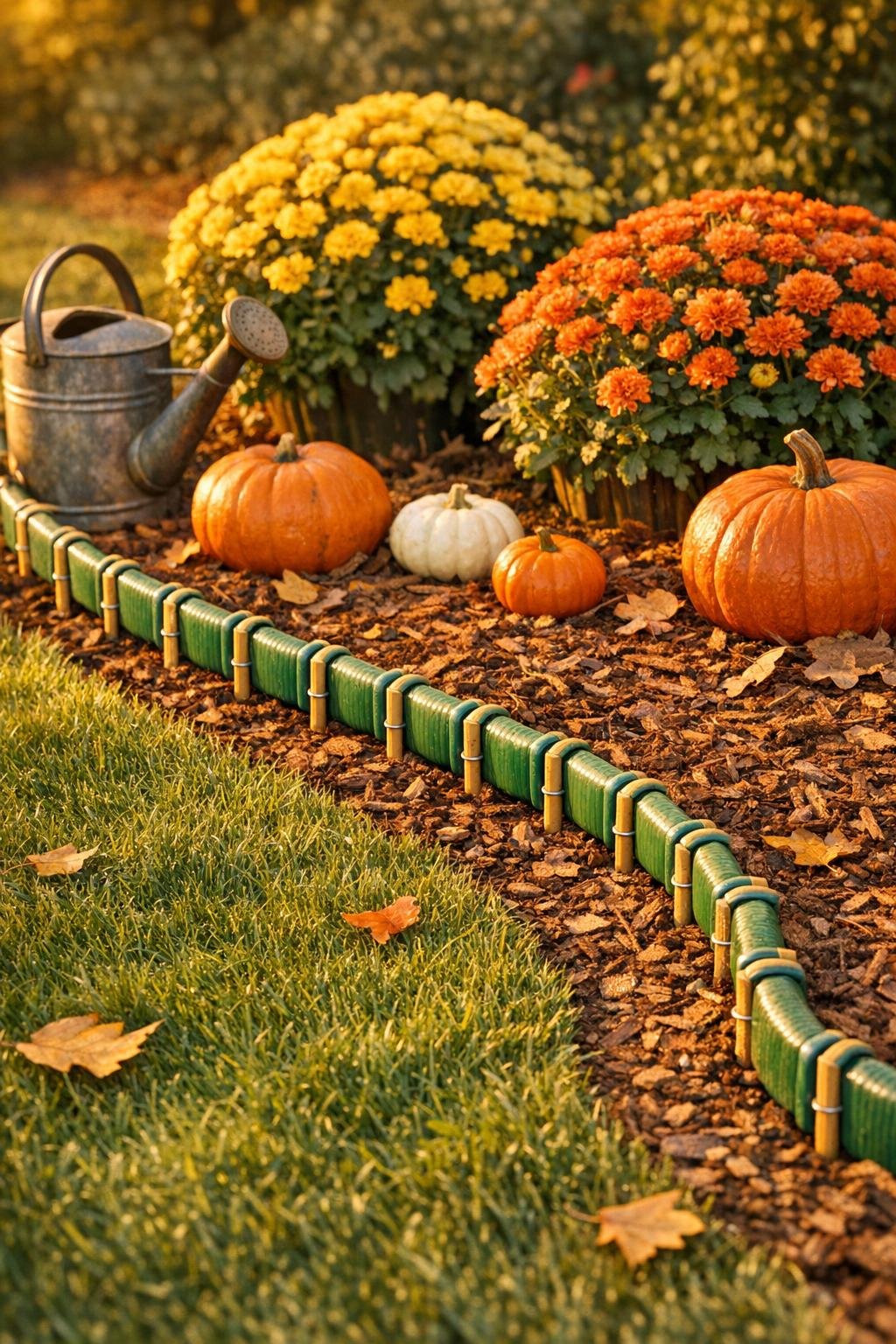
There’s something mighty satisfying about turning the odds and ends from the shed into something that looks tidy, useful, and just plain clever. This little garden bed edge protector is made from old green garden hose offcuts, a handful of landscape staples, and a bundle of bamboo stakes, and once it’s in place it gives a flower bed a neat, finished border while protecting tender edging plants from string trimmers and foot traffic. It has that “Where did you buy that?” look, but it’s built from pieces many of us already have tucked in a corner.
I’m fond of projects like this because they solve a real problem without asking for fancy supplies or a whole Saturday afternoon. If you’ve got a fall cleanup pile going and a garden bed that could use a little definition before winter sets in, this is the kind of practical make-do project that feels right at home in a Midwestern yard.
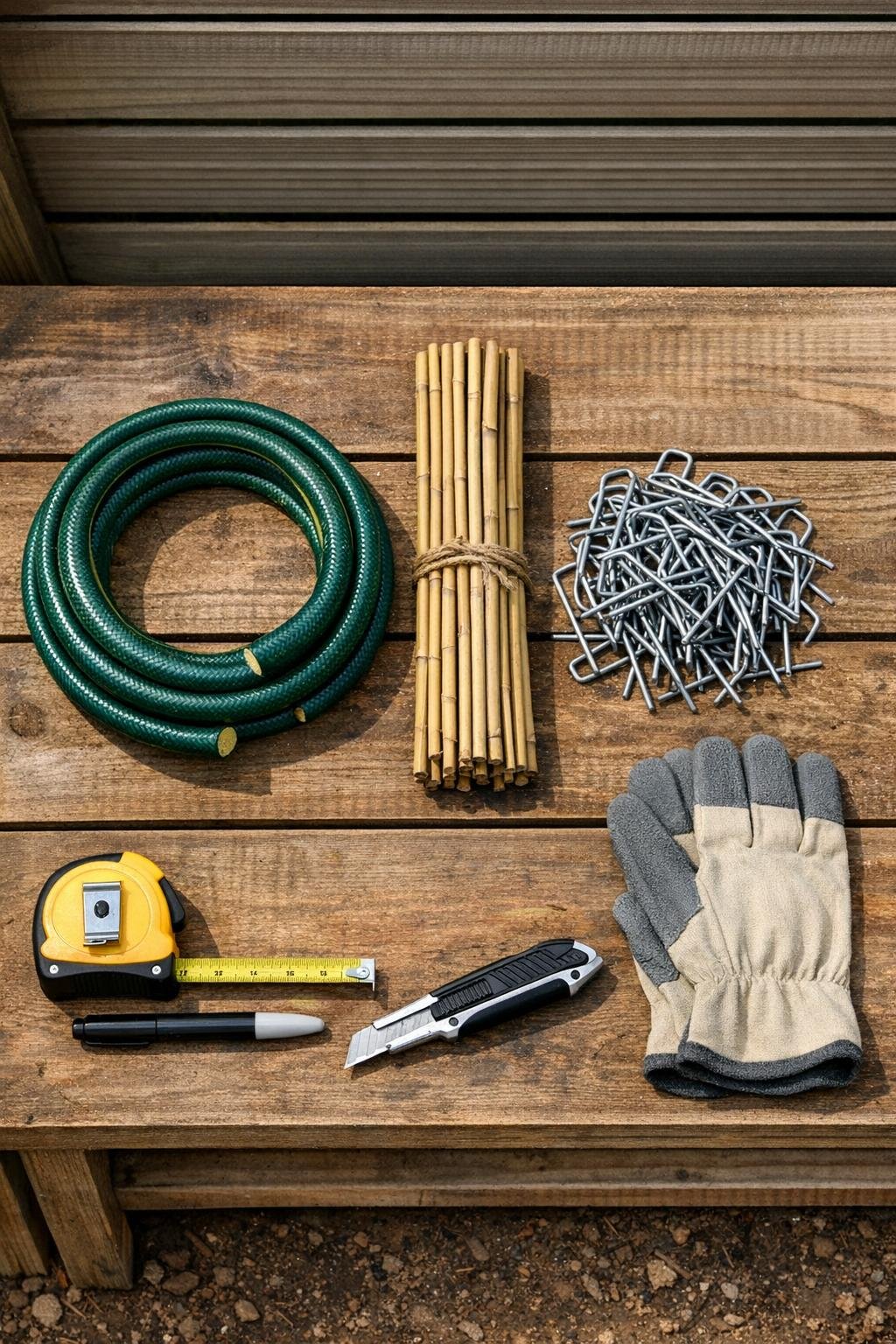
Materials
Instructions
1. Wash the hose offcuts and bamboo stakes with warm water and dish soap, then let them dry fully so the finished border looks clean instead of cobbled together.
2. Cut the hose into 24 pieces, each 10 to 12 inches long, keeping the cuts as square and even as you can so the border reads as intentional once installed.
3. Slice each hose piece lengthwise down one side with a utility knife so it can open slightly and slip over the stakes; if the hose is stiff, warm it in the sun for 10 minutes first.
4. If you want a more polished look, wipe the hose pieces and bamboo stakes with rubbing alcohol and spray them matte black or dark bronze; let them dry according to the can directions.
5. Mark the garden bed edge with twine or a garden line, following the curve you want and allowing enough room for the hose pieces to sit shoulder to shoulder in a generous row.
6. Push a bamboo stake into the soil every 8 to 10 inches along the marked edge, leaving 8 to 9 inches above ground so the hose sections will show clearly and create a substantial border.
7. Open one slit hose piece and press it over each bamboo stake so the stake runs up through the center of the hose, with the bottom end resting right at the soil line.
8. Set the pieces close together, adjusting the spacing so the row looks full and rhythmic, almost like a low rustic fence hugging the bed.
9. Anchor every second or third piece with a metal landscape staple pressed into the soil at the base, straddling the hose lightly to keep the border snug and from shifting.
10. Tap or press any uneven stakes down until the top line feels consistent, then backfill a little mulch around the bottoms so the whole edge looks settled into the bed instead of perched on top.
11. Walk the border once more and tighten the curve by nudging pieces together where needed; a dense run always looks better than wide gaps, especially from the street.
12. Water the bed lightly to settle the soil and mulch, then stand back and enjoy a clean, sturdy edge protector that still plainly shows off the curved shape and familiar texture of the repurposed garden hose.
Variations & Tips
Painted Cottage Look: If your hose pieces are mismatched shades of green, paint them all one dark color so the border reads as a deliberate design choice instead of leftovers from three different summers.
Extra-Tough Version: For a high-traffic edge near a path, use thicker bamboo or thin metal rods in place of lightweight stakes, and add a landscape staple at the base of every piece.
Deeper Bed Curves: Shorter hose sections, around 8 to 9 inches long, handle tight curves more neatly and let you shape the border without awkward gaps.
Best Placement: I like this type of protector around front flower beds, mailbox plantings, and vegetable corners where weed trimmers tend to nick stems and edging plants.
Clean Finish: Keep the top heights as even as possible; that one small detail is what makes a homemade border look surprisingly shop-bought.
Winter Prep: If your ground freezes hard, press the staples in well before the first real cold snap so the border settles in and stays put through the season.