
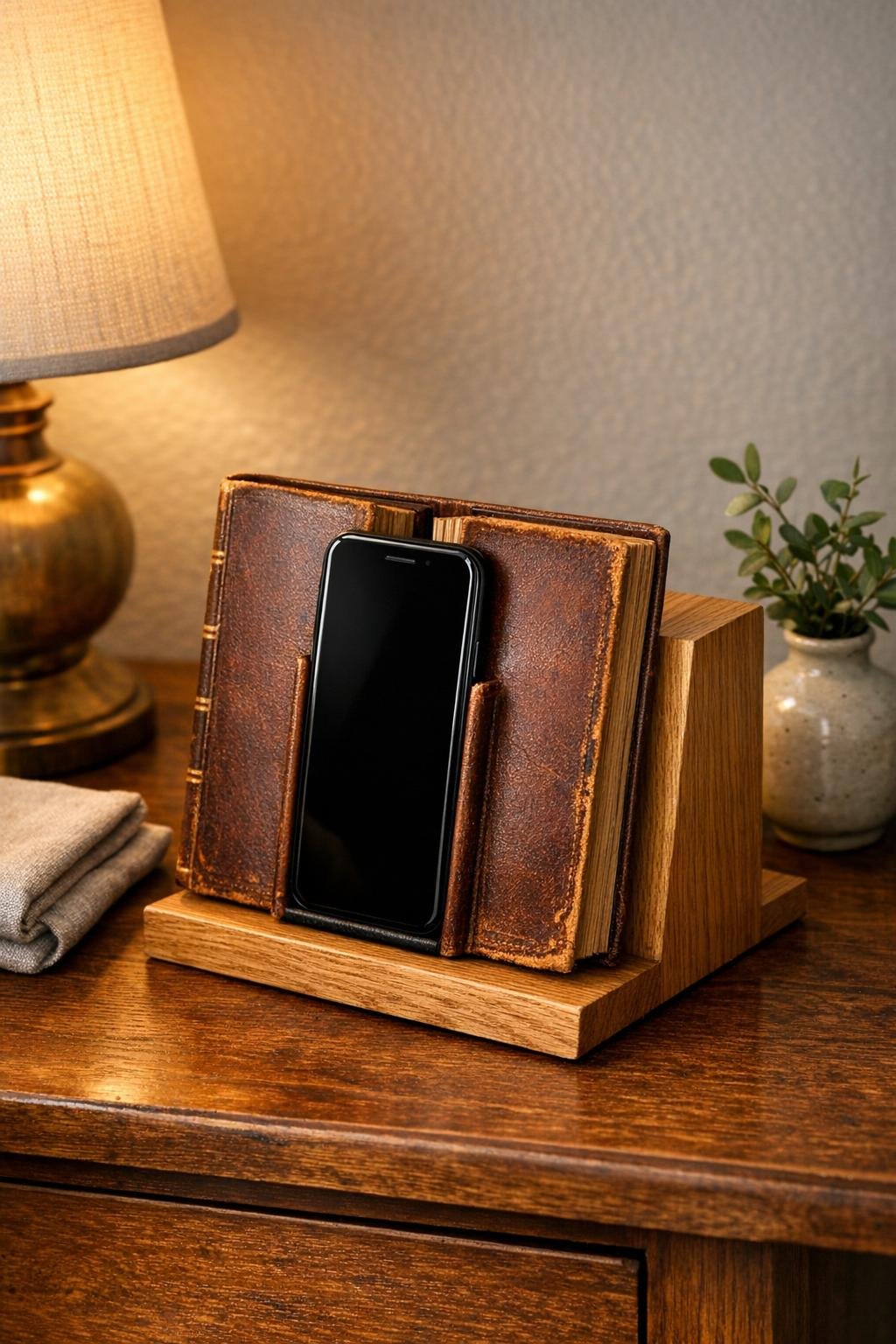
This little bedroom phone stand is one of those projects that looks surprisingly clever even though it takes just a few minutes to set up. The idea is simple: you use the center fold of a sturdy hardcover book as the phone slot, then brace the book at an easy viewing angle with a wooden bookend. The result feels cozy, polished, and a lot more interesting than a basic plastic stand on a nightstand.
I love projects like this because they solve a real everyday problem without sending me to the store for something overly specialized. If you already have a pretty hardcover book and a solid bookend, you can make a stand that feels intentional in a bedroom, guest room, or reading nook—and yes, it absolutely becomes the thing people ask about when they see it.
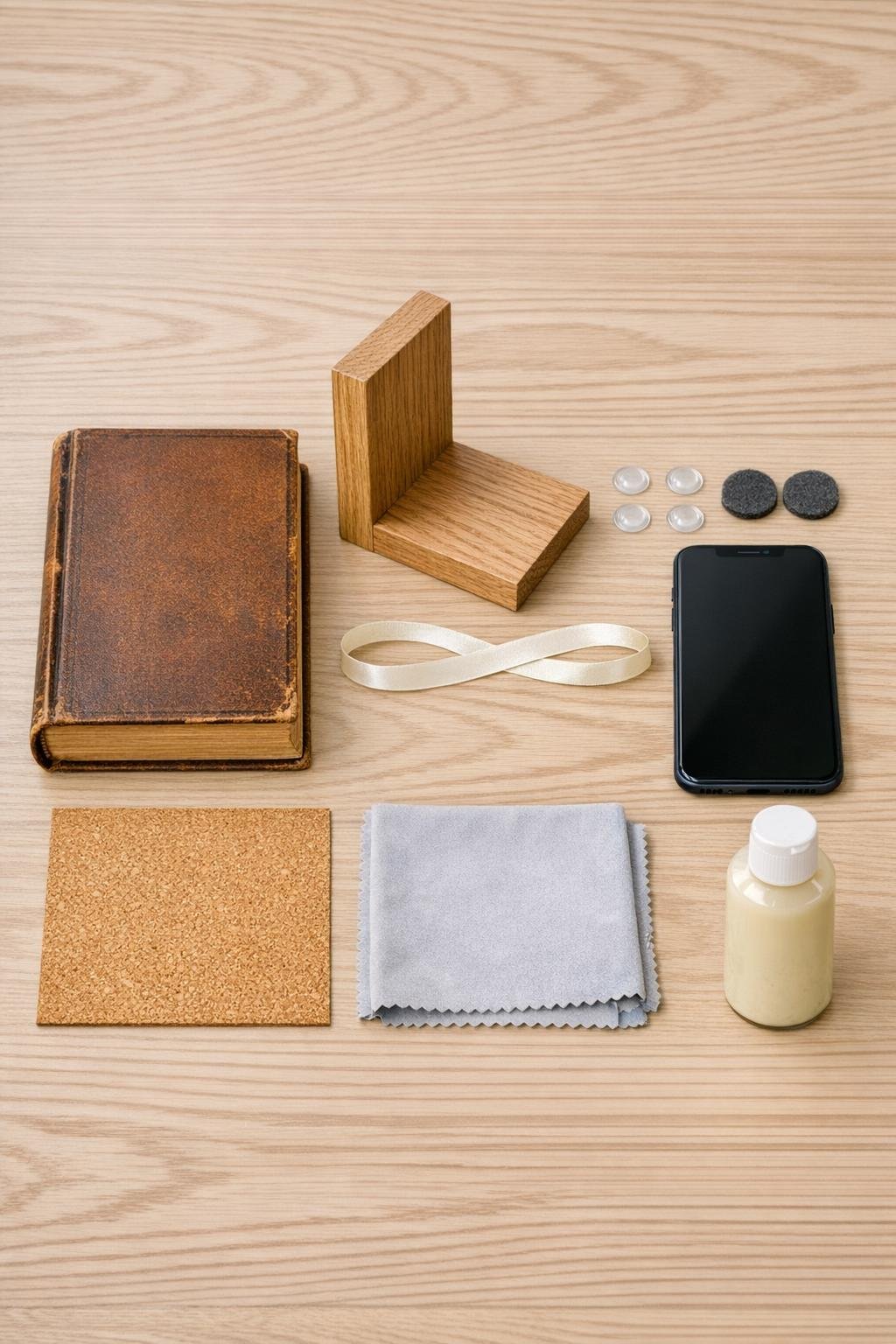
Materials
Instructions
1. Choose a hardcover book with a firm spine and a center fold that opens cleanly without cracking. I like using a vintage leather book because it gives the stand that collected, bedroom-styling look instead of feeling improvised.
2. Wipe the book cover and the oak bookend with a microfiber cloth so dust does not scratch the surfaces or weaken the adhesive pieces later.
3. Open the book to the middle and test your phone inside the fold, placing the bottom edge of the phone about 1 inch down into the V-shape. Make sure the phone sits upright and the book still holds its shape without the pages collapsing.
4. Cut a piece of adhesive cork about 1 inch by 4 inches and press it along the lower inside portion of the book fold where the phone rests. This gives the phone grip and keeps the pages from becoming slick.
5. Add 2 clear silicone bumper dots near the lower inside edges of the fold, spacing them evenly so the phone rests on them instead of sliding too deep. Keep them low enough that they stay hidden once the phone is in place.
6. Place the oak bookend behind the back cover and prop the book at an angle of about 60 degrees. Slide the bookend forward or back until the book feels solid and does not tip when you tap the page edges.
7. Stick the 2 felt pads onto the bottom of the oak bookend if it will sit on a painted nightstand or dresser. This small step makes the whole setup feel more finished and prevents scraping when you reposition it.
8. Slide your phone back into the fold and check the viewing angle from the bed. If you use your phone for alarms, videos, or recipes while folding laundry in the bedroom like I sometimes do, tilt the book a little more upright for easier visibility.
9. Tie the satin ribbon around the lower part of the closed side of the book and knot it neatly at the spine side or in a small bow if you want a more decorative look. This is optional, but it helps the book read as a styled decor piece instead of just a book leaning on furniture.
10. Rub a tiny amount of leather-safe conditioner onto the book cover or furniture polish onto the oak bookend, then buff dry. Once everything is clean and slightly polished, leave the stand on your nightstand and slide the phone in whenever you want a soft, bookish bedside setup.
Variations & Tips
Use a thicker book: If your phone is large or heavy, choose a book at least 2 inches thick so the fold has more support and the pages create a deeper cradle.
Add charging access: If you charge your phone overnight, leave a little gap at the bottom of the fold and angle the charging cord out to one side before propping the book in place.
Protect delicate pages: For an older book with fragile paper, line the fold first with a strip of felt instead of cork for a softer contact surface.
Match your bedroom style: Dark leather and oak look classic, but a linen-bound book with a painted white or natural maple bookend works beautifully in a lighter room.
Keep it stable: If the stand shifts on a slick nightstand, place a small rectangle of shelf liner under the bookend and the bottom edge of the book.
Choose display-worthy books: I always recommend picking a book with a cover you genuinely love seeing every day, because this project works best when it feels like part of the room decor, not an afterthought.