
There are a lot of fancy garden tools out there, but I’m always happiest when I can solve a real backyard problem with a few things already hanging around the shed. This simple fall cleanup bed aeration fork is one of those wonderfully practical projects: it helps loosen compacted soil, open up planting beds for compost, and tidy the garden before winter without dragging out a heavy cultivator.
What makes this version especially satisfying is that it uses just three basic items, with PVC pipe doing the hardworking part once the bottoms are cut into pointed tines. If you’ve got tired raised beds, compacted perennial borders, or vegetable rows that need a little breathing room, this is an easy afternoon build that gives you a surprisingly effective hand tool.
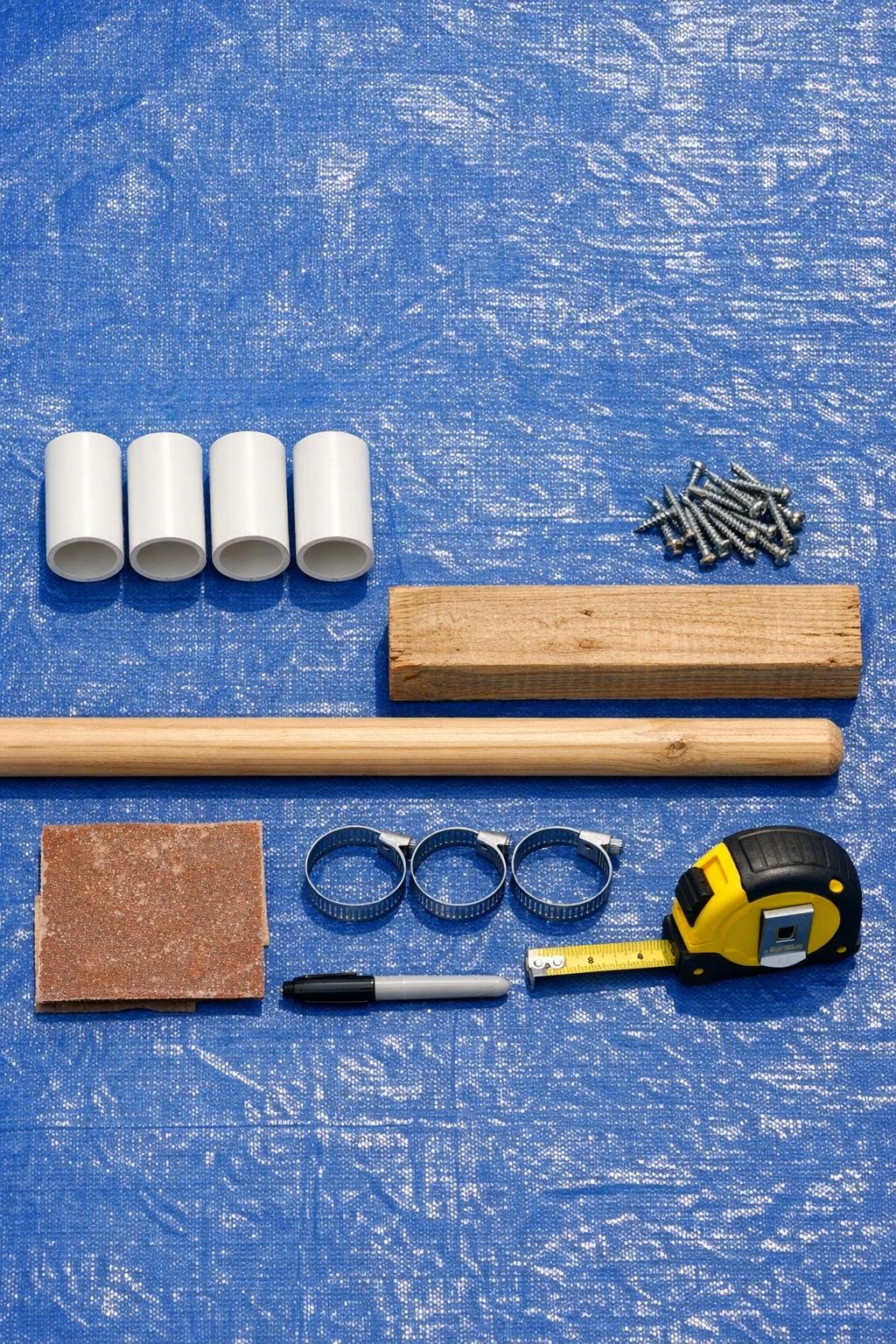
Materials
Instructions
1. Cut four 8-inch PVC sections if they are not already cut, then mark a 45-degree line across one end of each piece so the bottom can be trimmed into a pointed opening.
2. Cut along each marked line to remove the bottoms at an angle, creating four scoop-like tines that will press into soil more easily than flat pipe ends.
3. Sand the cut PVC edges until smooth, then slightly round the pointed tips so they penetrate compacted soil without leaving razor-sharp corners.
4. Cut the 2x4 scrap to 12 inches if needed, then mark four evenly spaced positions across one 4-inch face, keeping the outer pipes about 1 inch in from each edge.
5. Stand the PVC pieces on the marked spots with the angled openings all facing the same direction, then fasten each one to the wood block using a hose clamp wrapped around the pipe and secured into the block with two screws.
6. Test the tine spacing by pressing the block lightly into loose soil or mulch; if one pipe sits crooked, loosen the clamp, straighten it, and retighten before moving on.
7. Find the center of the top face of the 2x4 block and attach the wooden handle vertically by driving four screws through the block into the end of the handle, adding a little wood glue first for a tighter joint.
8. Sand the handle and wooden block smooth, especially around the grip area and edges, so the tool feels comfortable in your hands during longer cleanup sessions.
9. Brush on a thin coat of exterior polyurethane or outdoor sealer over the wooden handle and block, then let it dry fully to protect the tool from damp fall soil.
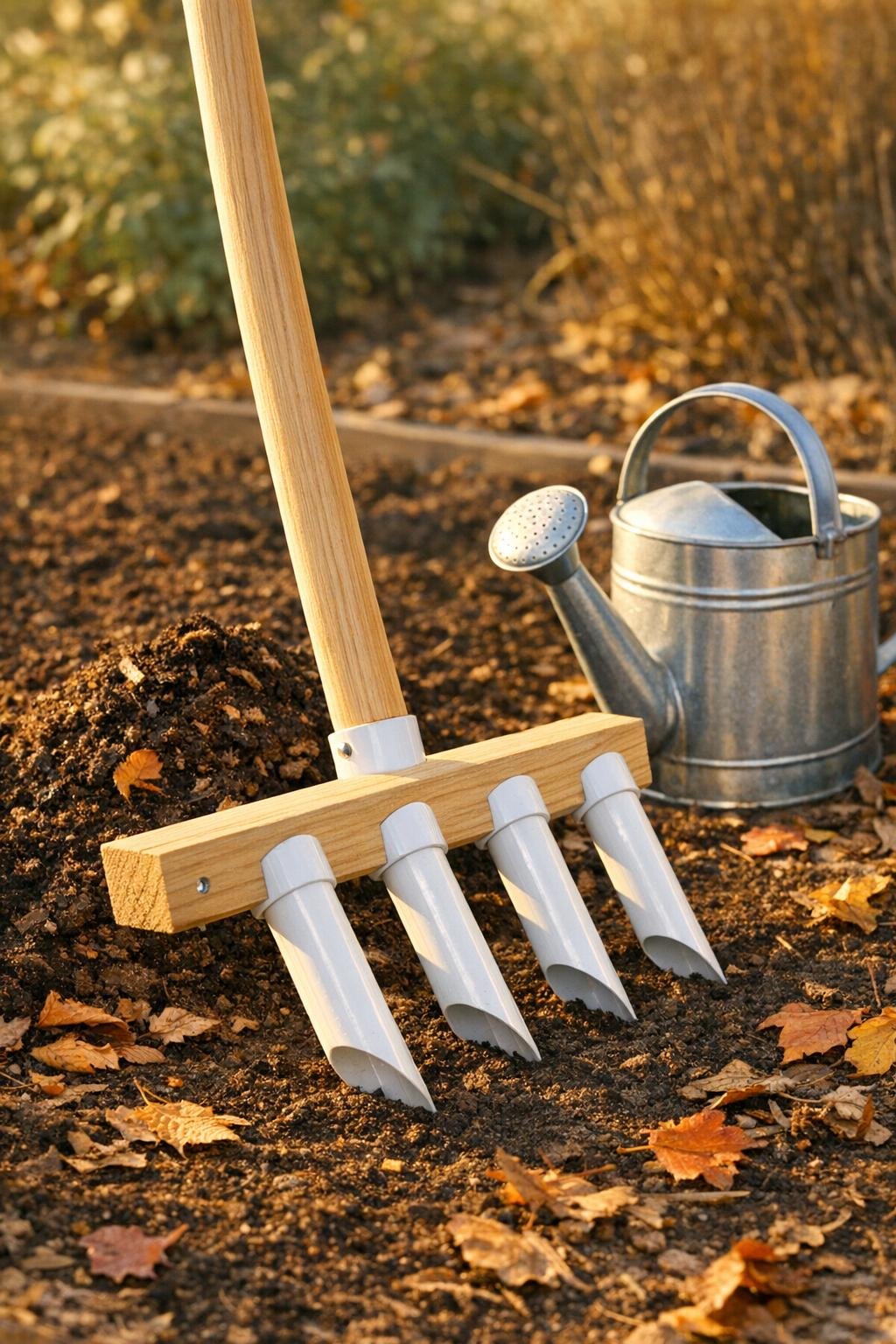
10. Use the finished fork by stepping the PVC tines into empty or lightly planted beds, rocking back gently to open the soil, then lifting and repeating every 4 to 6 inches across the bed.
Variations & Tips
For raised beds: Keep the handle at 36 inches instead of 48 if you mostly work in compact raised beds where a shorter tool gives you better control.
For tougher soil: Use 2-inch diameter PVC cut into three tines instead of four if your soil is dense clay; the wider spacing makes it easier to drive the tool down.
Tine direction matters: I like all the angled openings facing forward, because the tool slices in neatly and lifts the soil with less effort when I rock it back.
Add foot pressure: If you want more driving force, screw a second 12-inch scrap board flat across the top of the tine block to create a wider step plate for your shoe.
Best timing: This works especially well after a light watering or the day after rain, when the ground is moist enough to open cleanly but not muddy.
Why I like PVC here: In the kitchen I’m always thinking about tools that do one job cleanly, and this is the garden version of that idea; the smooth PVC releases soil easily and doesn’t cling to damp debris the way some narrow metal tines do.