
If you grow even a modest patch of potatoes, you know the tricky part is not harvesting them, it’s keeping them firm and usable once cool weather starts teasing frost. This old-fashioned storage bin is one of those wonderfully practical garden fixes I love most: a galvanized trash can turned into a roomy potato keeper with just one other common yard item to help with airflow and insulation. It’s simple, sturdy, and big enough to hold a truly useful harvest instead of just a token few pounds.
I like projects like this because they solve a real household problem without asking for fancy supplies or a whole weekend. If you want an easy way to store potatoes in a garage, shed, or other cool sheltered spot, this is a smart little setup that feels very much like something our grandparents would have made and used hard for years.
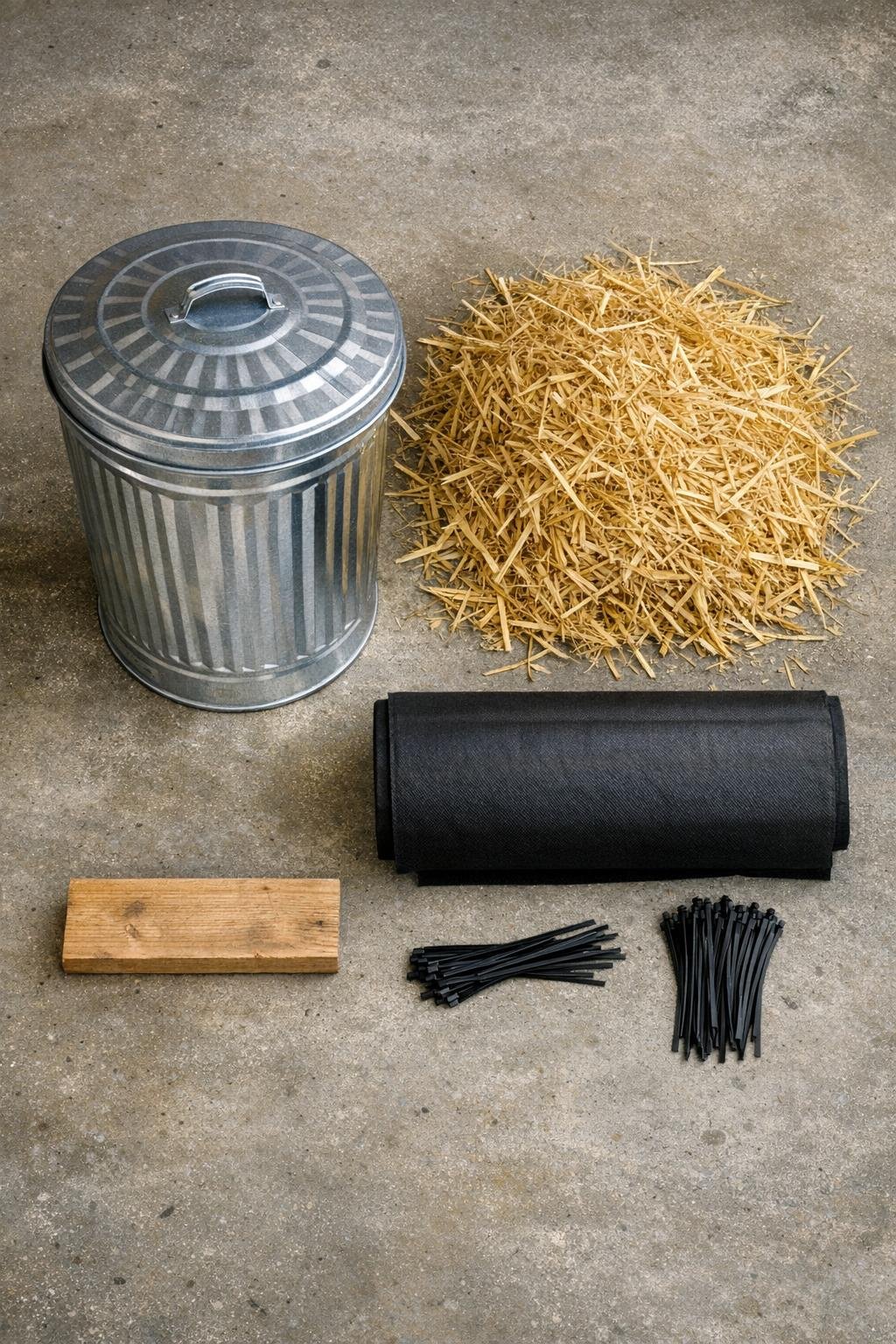
Materials
Instructions
1. Wash out the galvanized trash can if needed and let it dry fully, because potatoes store best in a clean, dry container with no trapped moisture.
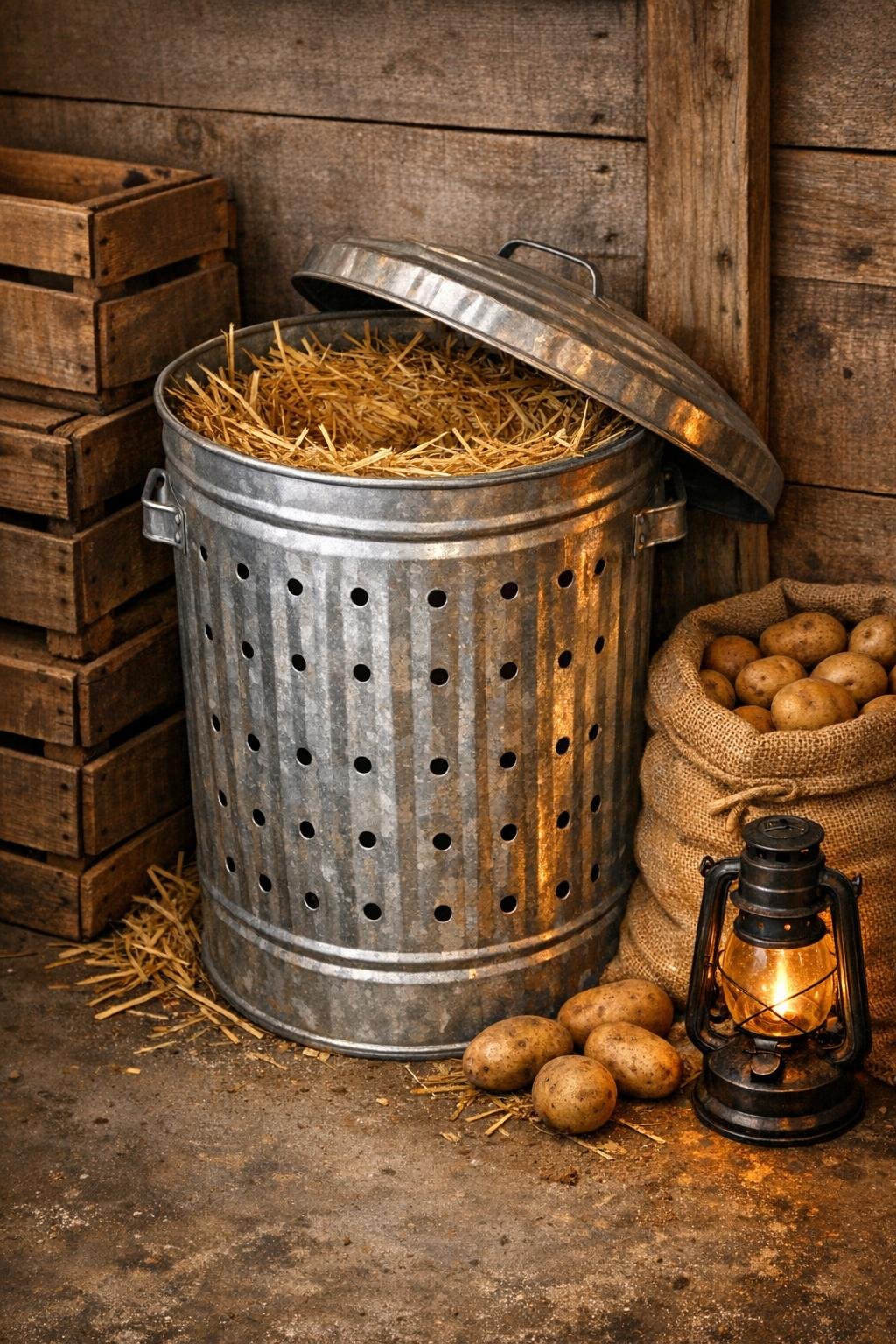
2. Turn the can upright and mark drainage and airflow holes around the lower sides, placing them 2 inches up from the bottom and spacing them about every 3 inches all the way around.
3. Mark a second ring of holes around the upper sides, about 4 inches down from the rim, again spacing them roughly every 3 inches so the bin can breathe from top to bottom.
4. Place the scrap wood block inside the can behind each mark as you work, then drill 1/2-inch holes at every marked spot to create generous ventilation without weakening the can.
5. Drill 6 to 8 more 1/2-inch holes in the bottom of the can, spacing them evenly so any extra humidity can escape instead of settling under the potatoes.
6. Cut the landscape fabric into a strip long enough to line the inside wall of the can and tall enough to reach from the bottom to just below the rim.
7. Press the fabric inside the can to cover all the side holes, overlap the ends by 2 inches, and fasten it in place through a few upper holes with zip ties so the potatoes stay dark while air still moves.
8. Spread 3 inches of loose straw in the bottom of the can, fluffing it instead of packing it down so it creates a soft, breathable cushion.
9. Add cured, unwashed potatoes in a layer about 8 inches deep, then tuck loose straw around the sides and over the top so the potatoes are cushioned on all sides.
10. Continue layering potatoes and straw until the can is nearly full, ending with a 4-inch blanket of straw on top and leaving 2 inches of headspace below the rim.
11. Set the lid on loosely rather than snapping it tight, then place the bin in a cool, dark, sheltered spot where temperatures stay close to 38 to 45 degrees Fahrenheit.
12. Check the bin once a week, remove any soft or damaged potatoes right away, and fluff the top straw if it ever feels damp so the whole batch stays fresh longer.
Variations & Tips
For larger harvests: If your family grows a lot of potatoes like we sometimes do, make two bins instead of overfilling one. Shallower layers breathe better and are easier to inspect.
Best straw choice: Clean, dry straw is better than hay because it has fewer seeds and less moisture. I always give it a quick shake outside first to remove dust and loose bits.
Keep potatoes in the dark: The landscape fabric matters because light can turn potatoes green. If you do not have landscape fabric, a double layer of burlap can work, but keep it dry.
Good location: An attached garage, unheated mudroom, root-cellar corner, or insulated shed is usually a better choice than a heated basement. You want cool and dark, but not freezing.
Skip washing: Store only cured, unwashed potatoes with the soil brushed off gently. Around my house, this is the step that saves the most disappointment later, because scrubbed potatoes spoil much faster.
For picky household cooks: I like to sort my potatoes as I load the bin, putting the small ones together and the bakers together. It makes weeknight cooking easier when I can grab exactly what I need without digging around in the cold.
Watch moisture: If condensation forms inside the lid, increase the airflow by propping the lid open just a touch more and replacing any damp straw. Potatoes want humidity, but not wetness.
Do not store with onions: Keep onions in a separate container across the room. Storing them together shortens the life of both, which is a lesson I only needed to learn once.