
I love any garden hack that saves me time later, and this one absolutely does. This little rust-prevention station uses an aluminum pie tin, clean sand, and lightweight machine oil to make a simple dip-and-store spot for hand tools, pruners, and trowels right in the shed. If you already have a busy week and you don’t want to baby your tools after every round of fall cleanup, this is the kind of practical setup that earns its space fast.
The reason I come back to this trick every year is that it’s easy, inexpensive, and surprisingly effective. Baking the aluminum pie tin helps dry it thoroughly and gives you a clean, ready container to fill, and once the station is assembled, you can swipe soil off a tool, dip the metal into the sand, and leave a thin protective coat behind. It’s perfect for gardeners, new homeowners, and honestly anyone who is tired of finding orange rust spots on their favorite hand tools by November.
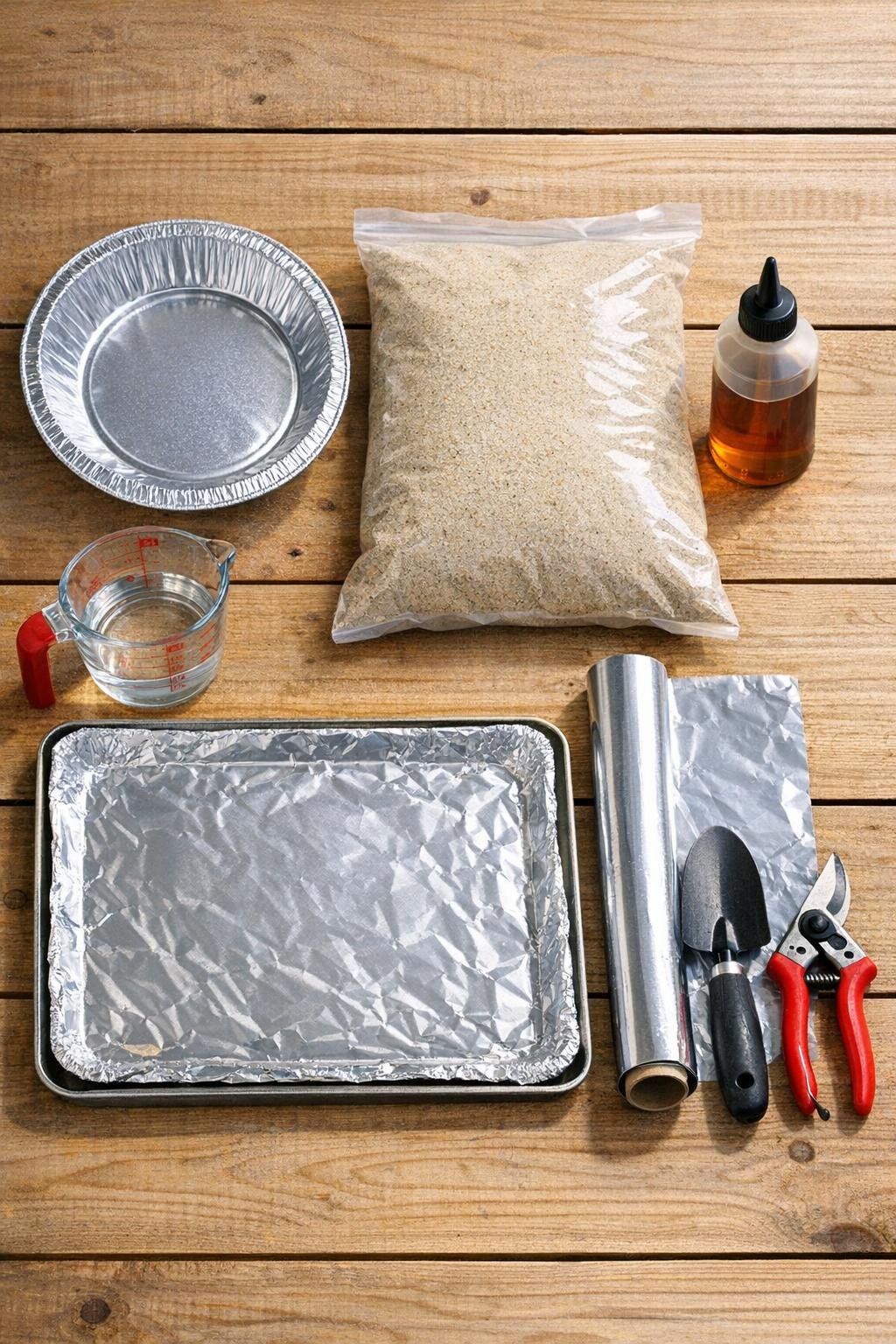
Materials
Instructions
1. Check that your sand is completely clean and dry; if it looks dusty or damp, rinse it with 2 cups of water, drain well, and spread it out to air-dry until no moisture remains.
2. Line a rimmed baking sheet with the 12 x 18-inch sheet of foil and set the empty aluminum pie tin on top so it stays stable in the oven.
3. Bake the empty pie tin at 225°F for 10 minutes to warm and fully dry it, then remove it carefully and let it cool for 5 minutes on a heat-safe surface.
4. Pour 4 cups of dry play sand into the pie tin, filling it about three-quarters full so tools can dip in without spilling the contents over the edge.
5. Drizzle 1/4 cup of lightweight machine oil evenly over the sand, then stir with the trowel until the sand is uniformly coated and feels slightly damp, not soggy.
6. Test the mixture by pushing the metal blade of the trowel into the sand and pulling it back out; the tool should come out clean with a very thin oily film and no puddled oil.
7. Add 1 to 2 more tablespoons of oil if the sand seems dry, or 1/2 cup more sand if it looks greasy; mix again until the texture is balanced.
8. Wipe dirt and moisture off pruners, hand forks, or trowels before each use in the station so you are conditioning clean metal instead of trapping grime.
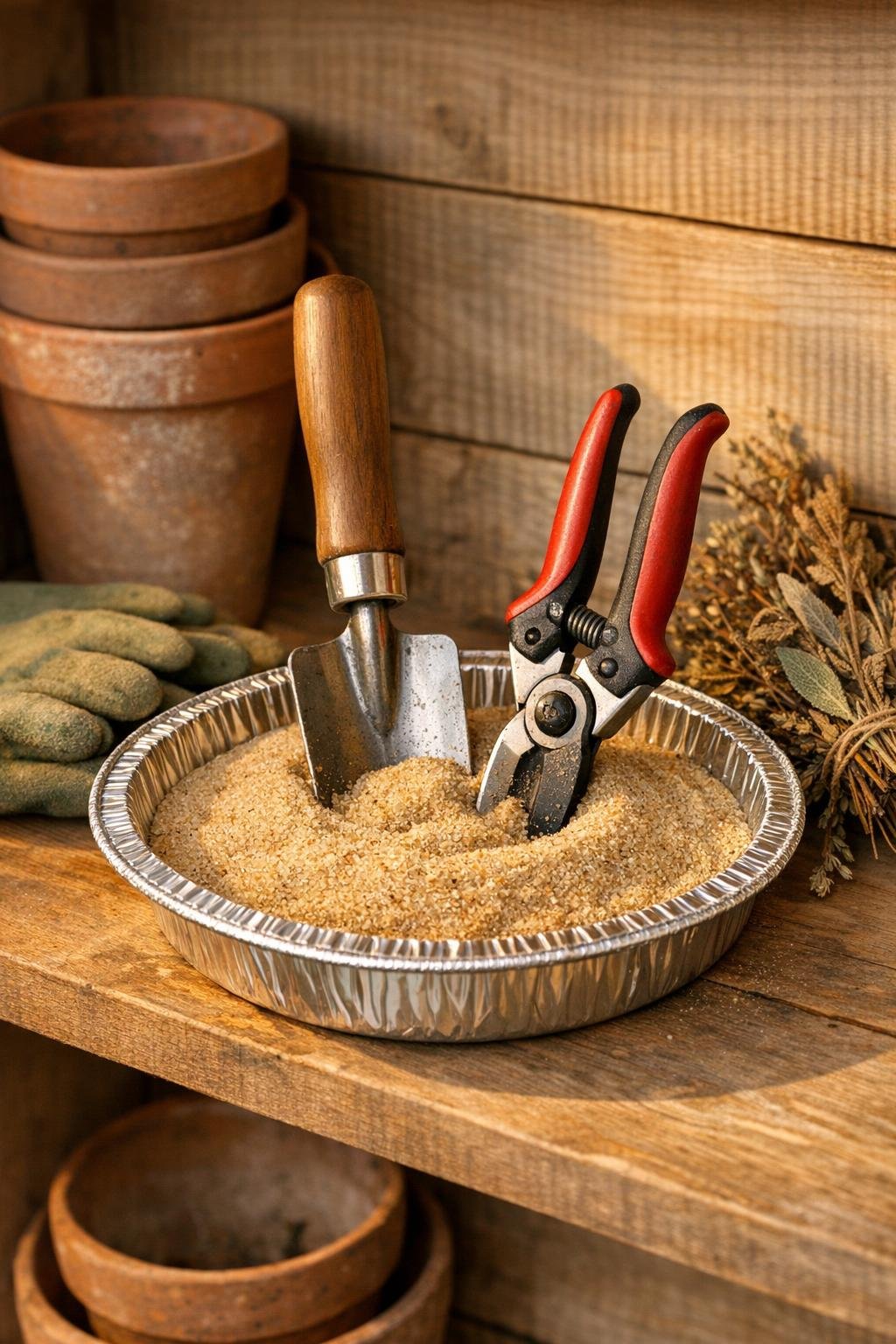
9. Sink the working ends of your tools blade-first into the sand after each use, twisting once or twice to scrub off residue and leave a protective coat on the metal.
10. Place the finished station on a stable shed shelf near the door or potting bench so it becomes part of your fall cleanup routine instead of something you forget in the back corner.
Variations & Tips
For larger tools: Use a deeper 10-inch aluminum pie tin or make two stations side by side if you want one for pruners and one for narrow digging tools.
Best oil choice: Lightweight machine oil works beautifully, but food-grade mineral oil is a good option if you prefer a low-odor substitute for frequently handled tools.
Keep it mess-free: I like to slide the finished tin onto an old saucer or small tray on the shed shelf, especially because I’m usually rushing between work emails and yard chores and I don’t want oily sand drifting everywhere.
Refresh schedule: Stir the sand once a month during heavy garden season and add another tablespoon or two of oil whenever the tools stop coming out with that barely-there protective sheen.
What not to store in it: Skip tools with electrical parts, padded fabric grips that are already deteriorating, or heavily muddy tools that should really be washed first.
Fall cleanup habit: If you pair this station with a rag right beside it, you can wipe, dip, and store tools in under a minute, which is exactly the kind of low-effort routine I can stick to on a weeknight.