
There are a lot of clever garden tricks that look homemade in the not-so-good way, and then there are the ones that stop people in their tracks because they look tidy, useful, and surprisingly intentional. This little raised bed row cover anchor falls into that second category. By stacking cinder blocks on their sides and pairing them with one simple common yard item, you can make a sturdy pre-frost cover system that holds fabric down neatly, adds weight right where you need it, and even gives you handy planting pockets along the edge.
I love projects like this because they solve a real problem without asking for a whole afternoon or a shed full of tools. If you grow lettuce, kale, carrots, herbs, or fall greens in raised beds, this is an easy way to get ready for chilly nights before frost sneaks up on you. It is especially nice for busy families, because once the blocks are in place, covering the bed takes just a minute at dinnertime when the temperature drops.
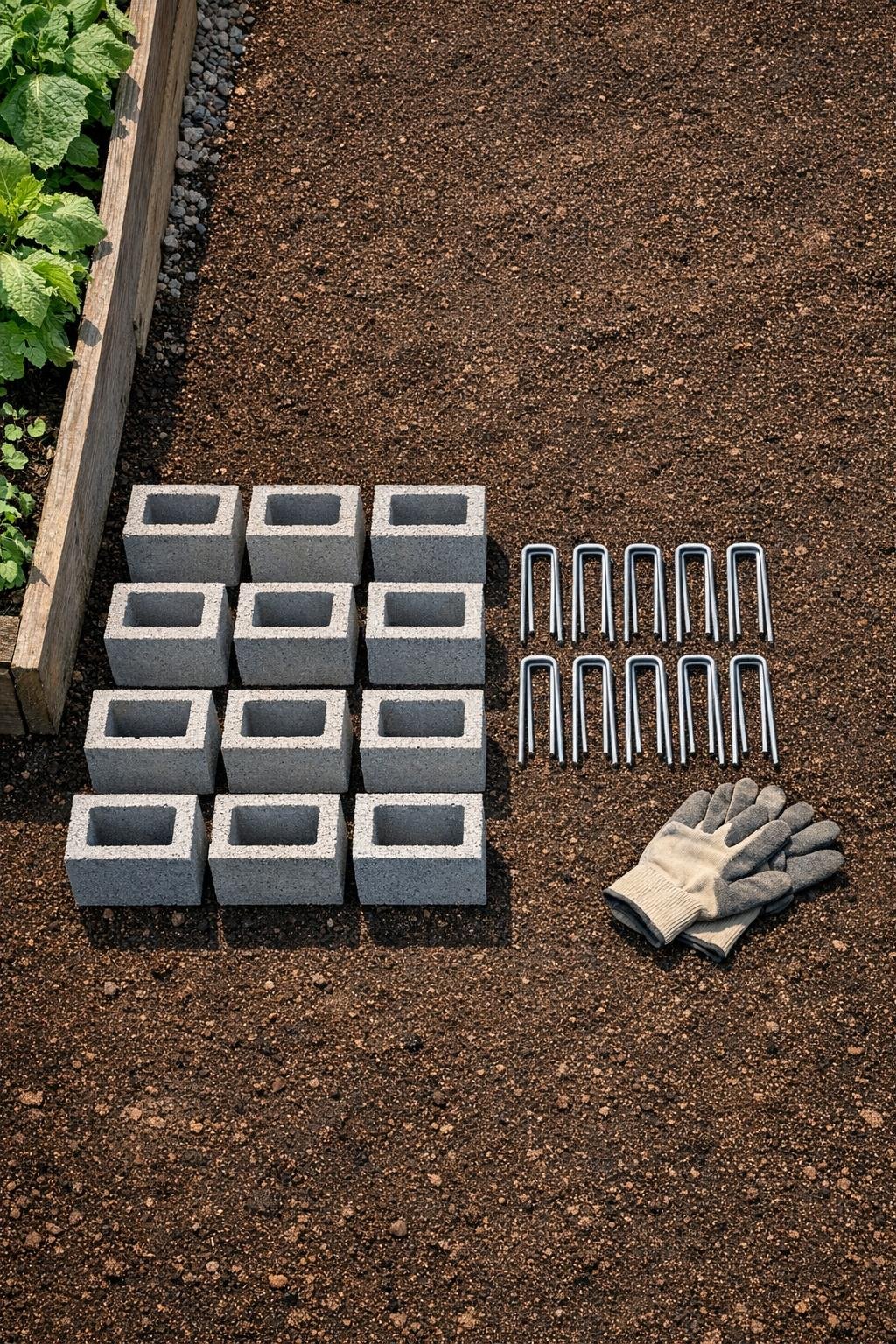
Materials
Instructions
1. Clear a 4- to 8-foot section along both long sides of your raised bed so the soil is level and free of mulch, sticks, or rocks where the blocks will sit.
2. Set the cinder blocks on their sides with the hollow openings facing up, placing them end to end in a straight line along the outside edge of the bed.
3. Butt each block tightly against the next one so there are no wide gaps, then check that the row looks even and parallel to the raised bed.
4. Push one 12-inch landscape staple into the soil through the center opening area at one end of each block, angling it slightly inward toward the bed so the block cannot shift outward.
5. Add a second landscape staple at the opposite end of each block if your bed gets strong wind, or use one staple per block for sheltered beds with lighter frost cloth.
6. Repeat the same layout on the other long side of the raised bed, matching the spacing so both rows of blocks sit directly across from each other.
7. Press down on each block with gloved hands to settle it into the soil by about 1/2 inch, which helps the whole anchor line feel more locked in and polished.
8. If you use hoops later, center them across the bed so the ends land just inside the block rows, leaving the block tops open and easy to work around when you drape your row cover.
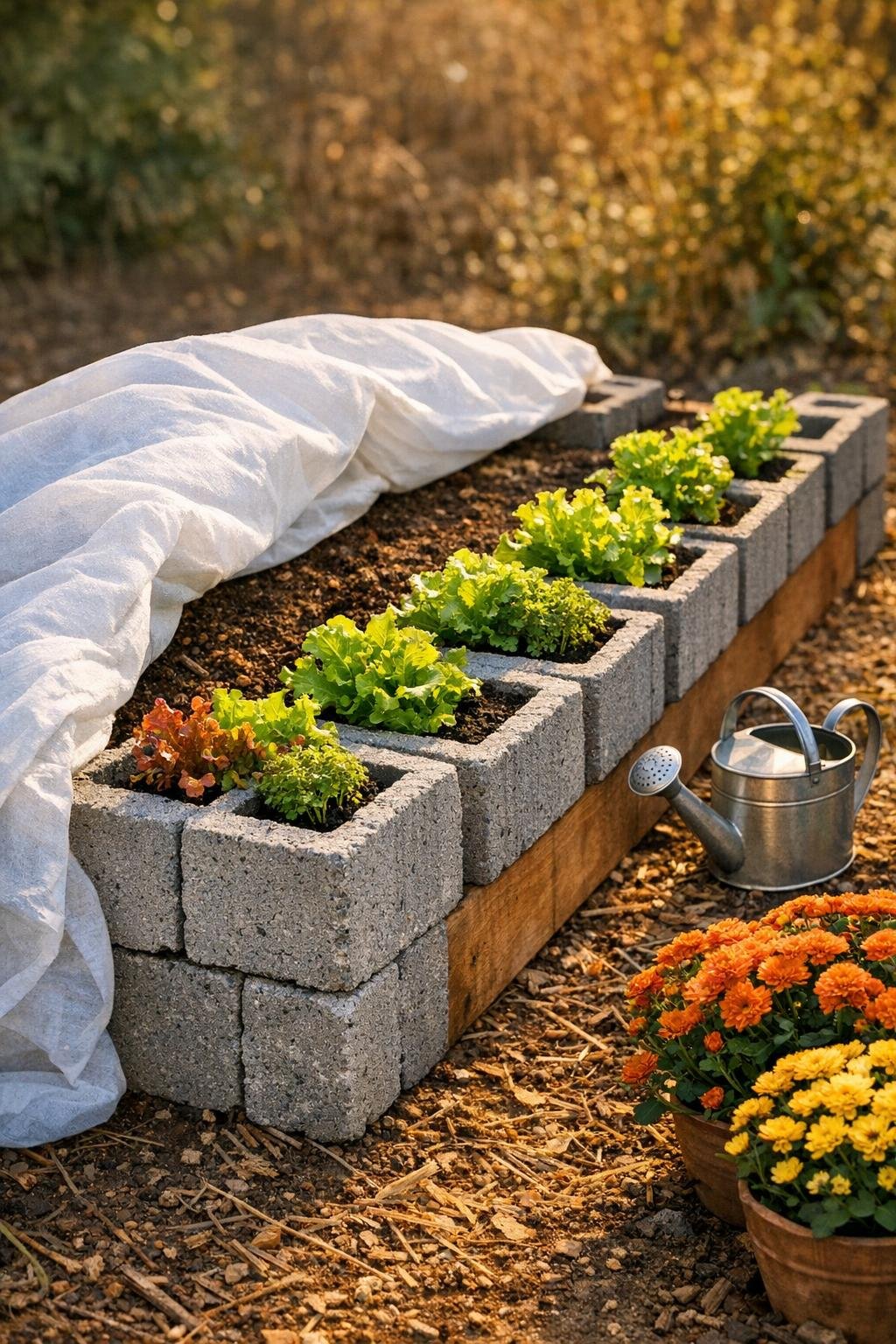
9. When frost is forecast, drape your row cover over the bed and weigh the fabric edges down against the inside edge of the block rows, tucking any extra cloth neatly between the blocks and the bed if needed.
10. For a finished look and extra usefulness, fill a few top block openings with soil and plant shallow-rooted herbs, alyssum, or lettuce so the anchor doubles as a planted garden border through the season.
Variations & Tips
For extra windy yards: Use two landscape staples per block and stagger the staple angles in opposite directions so the block row stays put during gusty weather.
For picky gardeners who do not want flowers mixed in: Skip the planted pockets and leave the openings empty for a clean, practical look that is still very tidy and attractive.
For a prettier border: Plant the top openings with low herbs like thyme or parsley, or tuck in alyssum for a soft edge that makes the whole setup look more custom than utilitarian.
For wider beds: This anchor works especially well with hoop supports over 30 to 40 inches wide, because the blocks give you a dependable weighted edge on both sides without needing boards or extra hardware.
To keep it level: If one block rocks, scrape a little soil from the high spot and tamp the area flat before staking it down; that tiny adjustment makes the whole row look straighter.
To make covering easier at dusk: Fold your frost cloth accordion-style and store it right beside the bed, so when the temperature drops you can cover everything in under two minutes before heading in to start supper.