
Late-fall gardening in the Midwest teaches you to respect two things: wind and surprise cold snaps. This little trick turns plain tennis balls into simple blanket weights for a raised bed, and it works because the balls are bright, easy to spot, soft around tender edges, and heavy enough once filled with sand to keep a frost cloth from lifting overnight.
I like this project because it is truly low-effort but very useful, especially if you cover greens, young brassicas, or early spring seedlings in a raised bed. You only need two basic items for the weights themselves, and the finished set is reusable season after season. If you want a quick garden fix that solves a real problem without fuss, this is exactly the kind of project worth making.
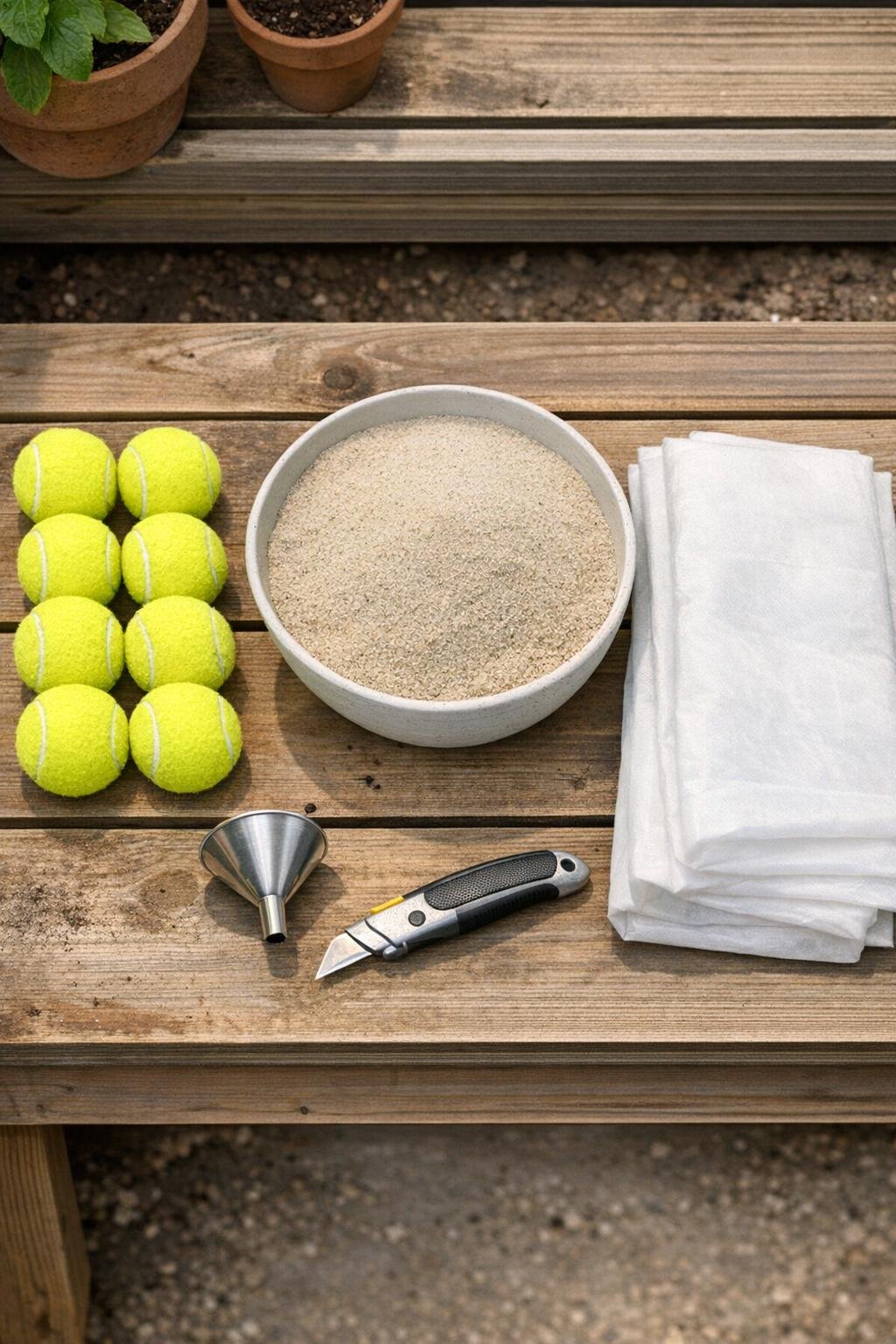
Materials
Instructions
1. Wipe the tennis balls clean and let them dry fully so the sand does not cling inside and make filling messy.
2. Cut a 1 1/2-inch X or jagged slit in each tennis ball, making the opening just large enough to press apart with your fingers.
3. Set a funnel into one opening and pour in sand until the ball feels firmly weighted but still slightly flexible when squeezed.
4. Repeat with the remaining tennis balls, aiming for roughly 1 1/4 cups of sand per ball so the set feels even and stays put around the bed.
5. Press the cut flaps together and shake each ball once or twice; if sand spills easily, remove a spoonful so the slit can settle more tightly closed.
6. Spread your frost cloth over the raised bed so it drapes evenly with at least 8 to 12 inches hanging past the edges on every side.
7. Place one sand-filled tennis ball every 18 to 24 inches around the perimeter, resting each weight on the fabric over the wooden edge of the raised bed.
8. Tug the cloth gently between the weights to remove big air gaps while still leaving enough looseness for the cover to sit lightly over plants.
9. For a windy night, cluster two weights at the upwind corners and one at the center of each long side to keep the cover from creeping upward.
10. After the cold spell passes, lift off the weights, brush them clean, and store them in a dry bucket or crate right by the raised-bed supplies.

Variations & Tips
Use dry sand only: Damp sand clumps and is much harder to funnel neatly into the balls. Dry play sand gives you the cleanest fill and the most even weight.
Adjust the weight for your weather: If your raised bed sits in a sheltered yard, fill the balls a little less so they stay easier to handle. In a windy, open garden, fill them a bit fuller for a firmer hold.
Keep the slit modest: I have learned that a smaller opening works better than an oversized cut. The tennis ball grips itself surprisingly well when the slit is just big enough for filling.
Pair with clips if needed: On extra blustery nights, use the tennis ball weights at the corners and along the sides, then add a couple of garden clips on hoops for extra insurance.
Make a full set: For a standard 4-by-8-foot raised bed, 8 filled balls is a very practical number. If your bed is longer, make 10 to 12 so you can keep the cover snug all the way around.
Store them clean: Brush off soil before storing so the slits do not collect grit and moisture. A simple lidded bucket in the shed keeps them ready for the next frost warning.